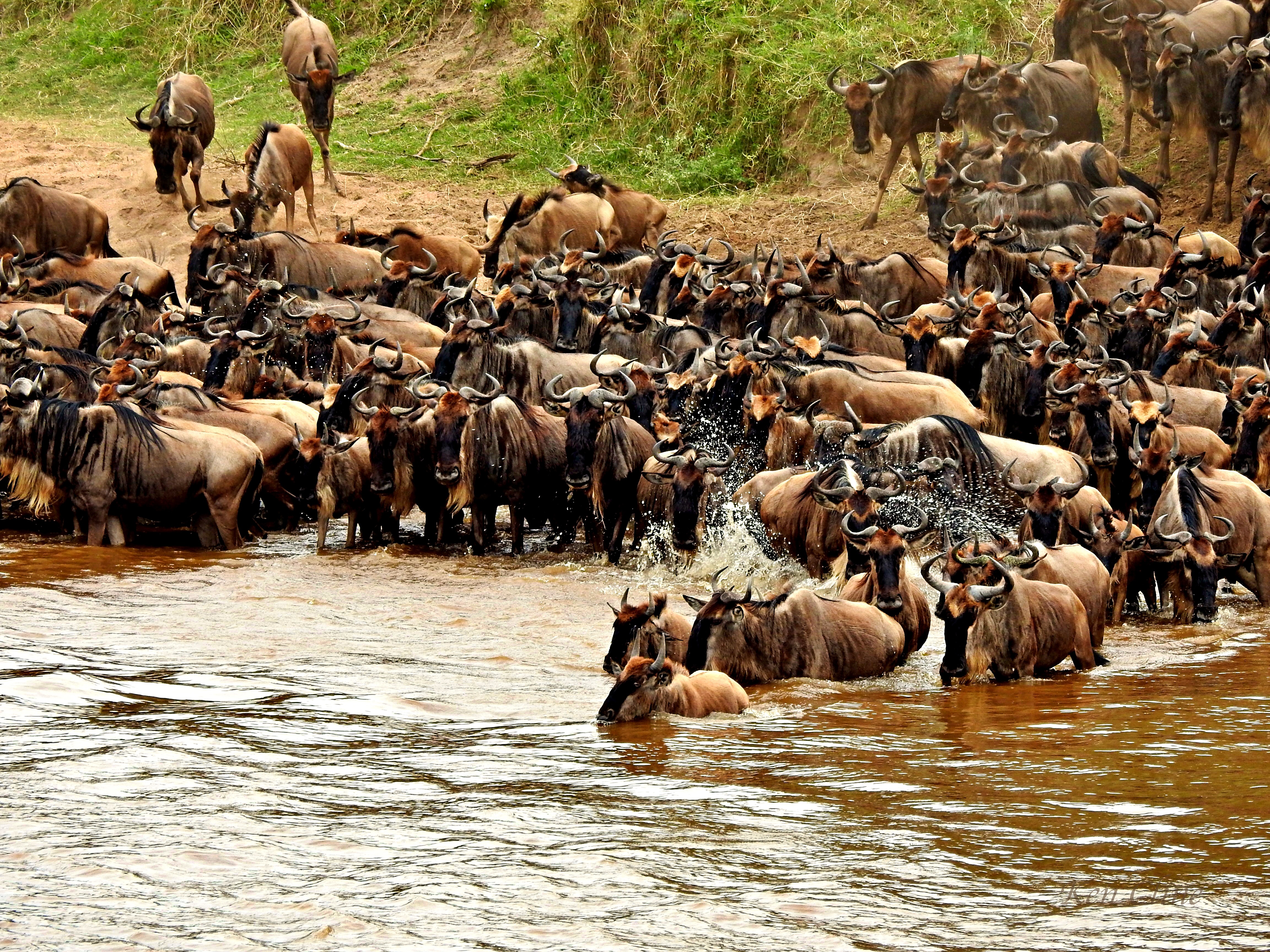
It was the morning of October 9, the last day of our 10-day Tanzanian safari, and we were on our way to view the famed river crossing of the “Great Migration,” the largest mammal migration on earth.
Every year, nearly two million wildebeest travel in an enormous loop from the grasslands of Tanzania’s Serengeti plain to Kenya and then back again. This odyssey in search of better grazing, 800 to 1,000 km long, is often termed one of the Seven Wonders of the Natural World.
Yet, there was some uncertainty we would actually see it.
The wildebeest, often accompanied by zebras, leave Tanzania, typically in May and June, at the beginning of the dry season. They return in October/November, ahead of the rains. In both directions, they have to cross the crocodile-infested Mara River, where tourists gather with their cameras.
However, while we were still in the central Serengeti, our guide, Hassani, had been hearing negative reports from other drivers coming back from the Mara River in the north. Crossings, they said, were scarce. Bina and I had spoken to a young Dutch couple who waited a day and a half a day to see a crossing, with no result.
The problem is that wildebeest, a species of antelope, do not follow a regular schedule when making these river crossings. They can mill around all day on the bank and do nothing. Or, as if flipping a switch, they suddenly storm across the river.
There’s no way to predict or anticipate when this will happen; you simply have to sit there and wait. Today marked our one chance to see the crossing, since we would begin our return to Portugal the following day.
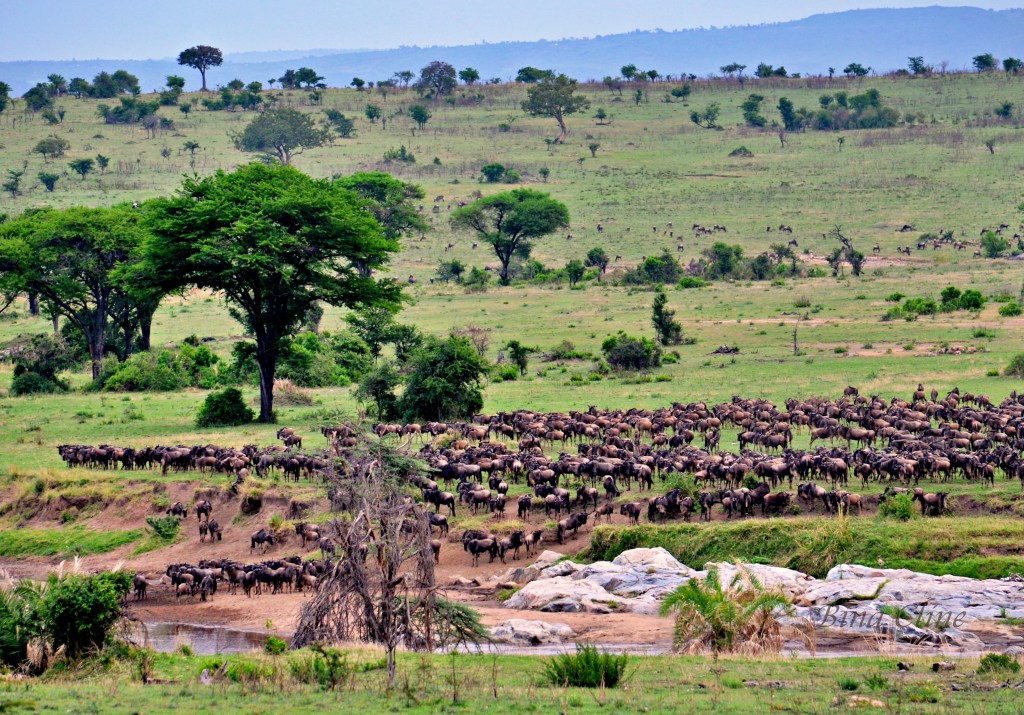
Arising before dawn in our tent camp, we had a quick breakfast in the communal dining tent before climbing into the Toyota Land Cruiser. By 6:45 a.m., just after sunrise, we were on our way over the bumpy, rutted roads heading to the river.
Hassani joked about how the wildebeest base their crossing decisions on the presence of “immigration officers,” by which he meant crocodiles. “If they go to the water and see an immigration officer, they turn back because they don’t have proper papers. If they find no immigration officer, they cross.”
Funny, but wildebeest actually operate on instinct and habit. Lacking natural leaders, or really any brains, they literally just go with the herd. One wildebeest heads toward the water, they all move toward the water; somebody reverses course, they all follow.
We saw this process in action after we reached the river, shortly after 7 a.m. For nearly 20 minutes we watched several hundred wildebeest gathered on the opposite shore mill about in a seemingly random fashion, to the edge of the river and back again. We were resigning ourselves to a long wait when, without warning, a group leaped into the water.
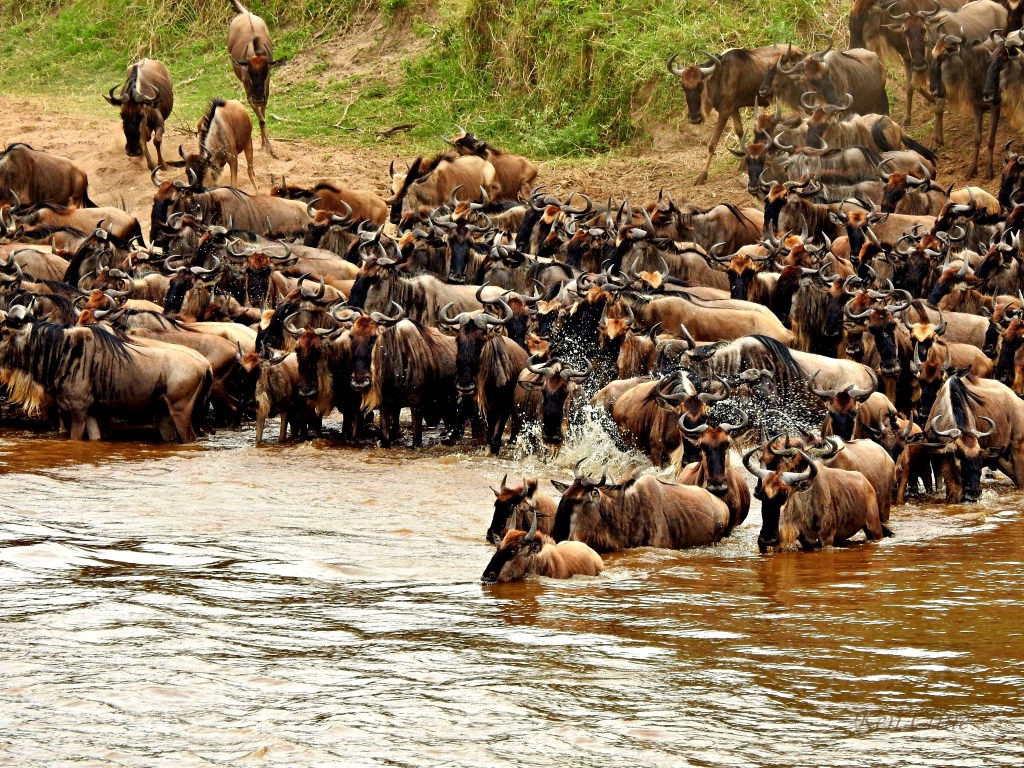
Bina and I sprang up from our seats, cameras in hand, to position ourselves around the raised roof of the jeep. Since Hassani had parked on a steep riverbank, we had a good viewing point for the crossing below.
The spectacle in front of us was spellbinding: a massive horde of horned animals leaping into the swift current and frenziedly paddling across, shoving each other, stumbling over rocks, desperate to grain the other shore. The air thrummed with their low, bleating sound. Was this how wildebeest express terror?
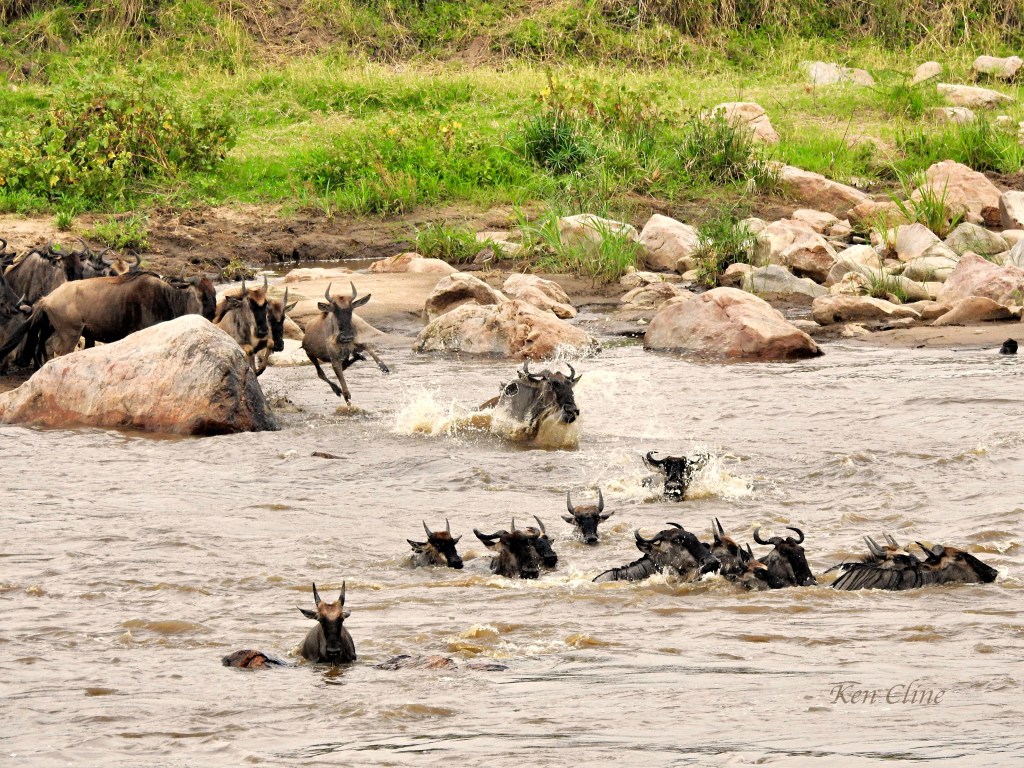
They had reason to fear. Within minutes, we spotted the narrow snout of a crocodile, paddling downstream, heading directly for them.
The wildebeest cross en masse, which provides some protection, but they leave plenty of isolated targets on the fringes. The snout disappeared for second, then erupted in a splash of water in the midst of several of these outliers near the shore. One appeared to be flailing, more frenzied than the others.
Crocodiles don’t maneuver well in deep water, but are supremely deadly in the shallows, where they can use their tails, as well as teeth, to pull an animal under. Once he had a firm grip, this croc dragged his prey back into the current. A last agonized surge of horns and the wildebeest was gone, joining the estimated 6,000 who succumb to crocodile attacks every year in the Mara River. (Nearly 120,000 others die from lion attacks, injury or disease while making the land trek.)
After this crossing had finished — some wildebeest remained on the other side, to try another day — we drove along the riverbank to follow the crocodile as he dragged his kill downstream, depositing it in the shallows to feast upon at leisure.

In the course of this morning, we witnessed four separate crossings before embarking on our last excursion of the day, a trip to Kenya, the border being just a few kilometers north of the river. We drove across the river on a bridge, which struck us as ironic. Couldn’t at least some of the wildebeest save themselves all that crossing drama by strolling across here?
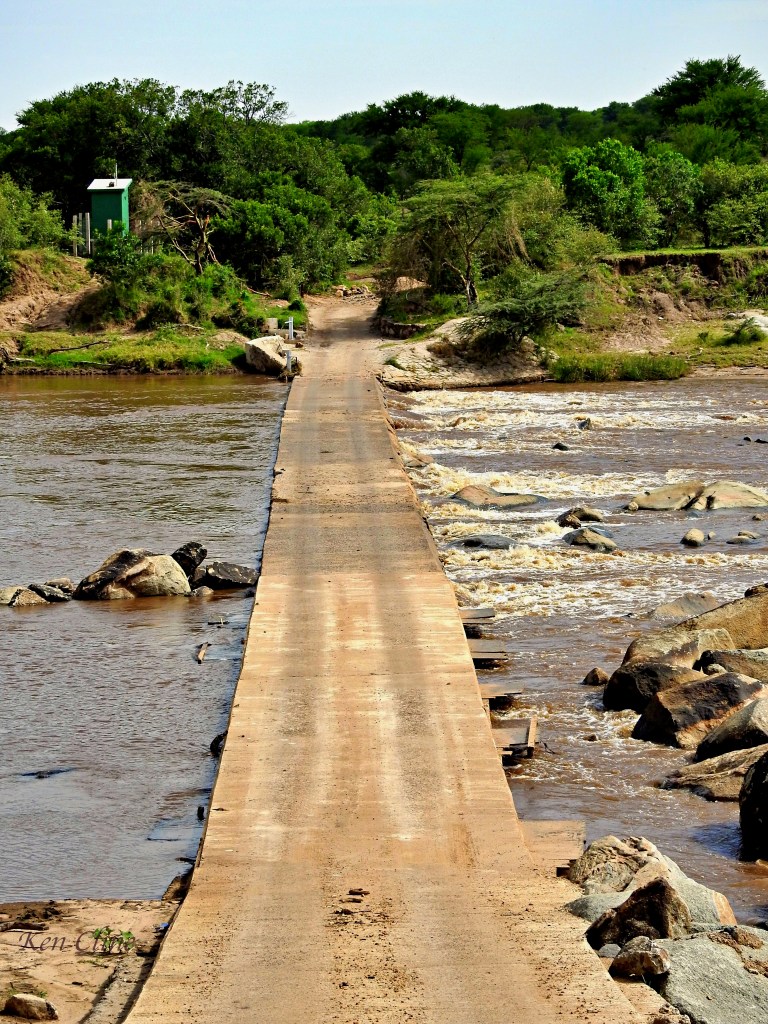
Once over the bridge, we encountered open grasslands stretching to the horizon. The herds of wildebeest, zebras, gazelles and antelopes dotting the landscape reminded us the Great Migration wasn’t over yet — it would continue for the rest of the month.
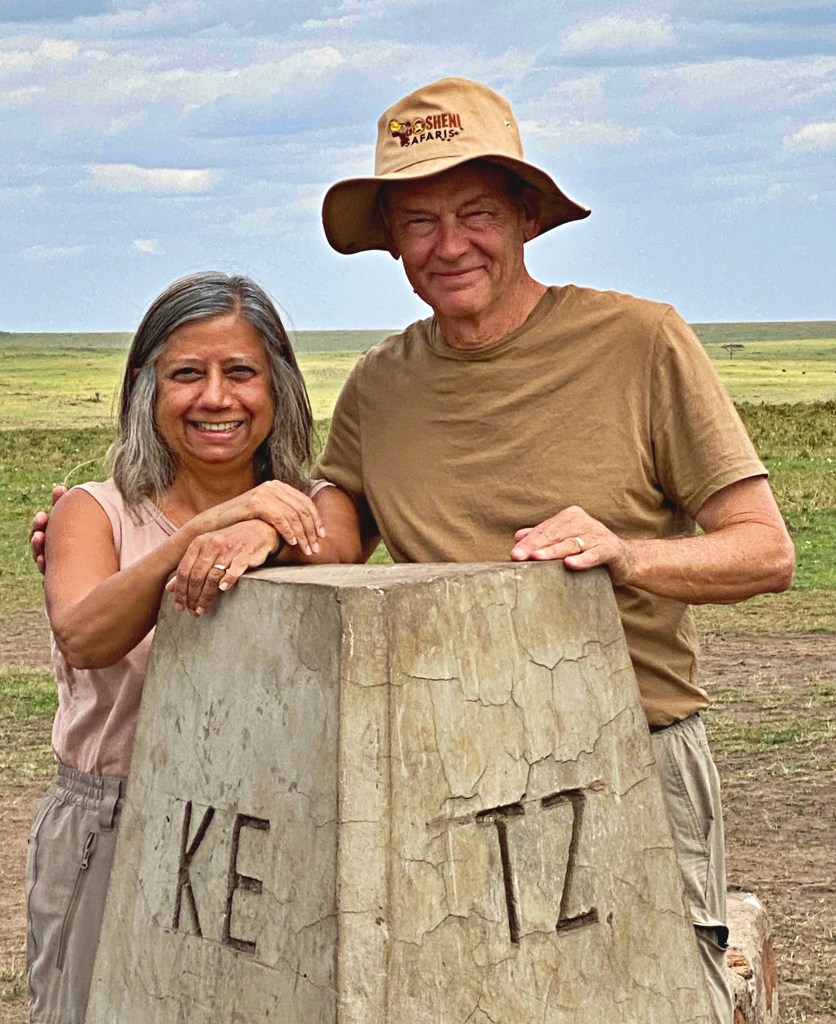
In 20 minutes, we reached the Kenya/Tanzania border, which is marked by stone markers. Here, we encountered a middle-aged English couple and their driver engaged in the same activity as us — viewing the Great Migration, except from the Kenyan side of the river. We snapped some photos to commemorate the occasion.
It seemed a fitting way to end the day, and bring our African safari to a close.


Great post and pix! Life and death on the river. The Clines are the best kind of travelers. They bring us along. 😊 Thanks!
LikeLiked by 1 person
Many thanks, Clint. Glad you enjoyed it!
LikeLike
Wow! I can only imagine how thrilling that was in person because my heart was pounding rapidly here on my couch in Costa Rica! What a thrill to witness!
LikeLike
WOW! What an experience. Love living vicariously with you durning you never ending travels. I applaud you for continuing your memories with us. Always looking forward to the next adventure Ken and Bine. Miss you both!
LikeLiked by 1 person
Thanks for the kind words, Debbie.
LikeLike
How beautiful the animals and scenery are!
LikeLike
Thanks, Karen, glad you liked it!
LikeLike
Marvelous!
LikeLike
What a wonderful experience! Great write up and photos! Safe travels.
LikeLike
Thanks for your kind comments, Peggy. Glad you enjoyed it!
LikeLike
That would be amazing to see! I’ve watched it on TV several times but to be there!!
LikeLike
It certainly was remarkable to see it up close!
LikeLike
Thank you for the inspiration and anticipation of a Kenya/Tanzania safari of our own, probably in 2024. It looks like a great trip!
LikeLike
Yes, it was our best ever. Lot of planning involved but well worth the effort!
LikeLike
Ken/Bina…..send us your lucky charm, we’ll be over there next year, alas its it November. Will they be migrating back then?
Safe travels…..
LikeLike
Hard to say what you’ll see next November. The wildebeest migration roughly follows the same pattern every year, but can vary depending on the timing of the rains. You could still see some crossings in early November but probably fewer as the month goes on. Good luck! Feel free to email/message us if you have additional questions.
LikeLike
These are wonderful shots and great narrative. I’ m glad I found you two. My email is below
LikeLike
Great to hear from you, Paul, and thank you for your kind words.
LikeLike
Absolutely amazing. Your photos are so professional as always and would be nice for you to publish a book of all your travels. Waiting for you to blog your next adventure!
LikeLike
Thanks so much for the wonderful share. The Migration has been on my my bucket list for decades; I think because of the pressures of climate change I think the time to go is now.
LikeLike