We woke up to an overcast morning, but the forecast promised bright sunshine by noon, with a high of 26 C. (79 F.) Looking better!
After enjoying a breakfast prepared by Belmira’s daughter (the hostess herself was running errands that morning), we left the Villa d’Arcos shortly after 9:30. We immediately noticed a dramatic increase in numbers of other peregrinos (pilgrims), probably 30 throughout the entire day, compared to a scattered few the previous day. Could better weather be a factor?
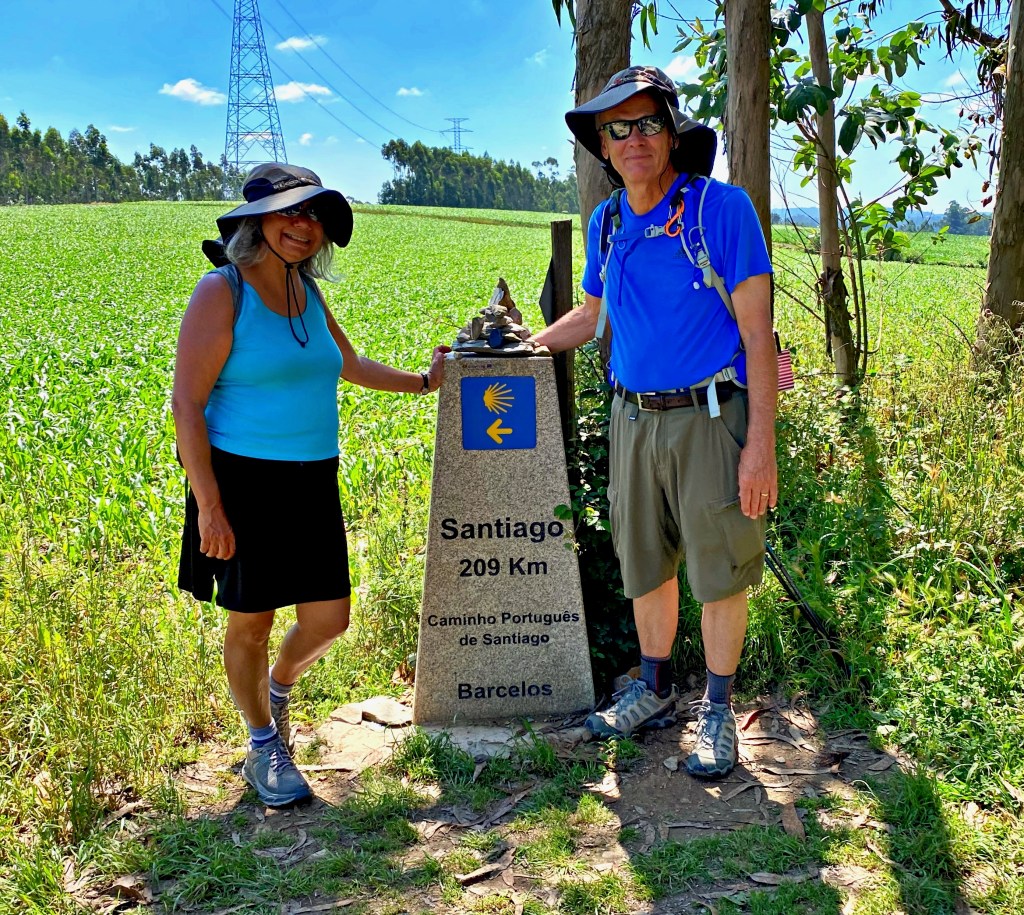
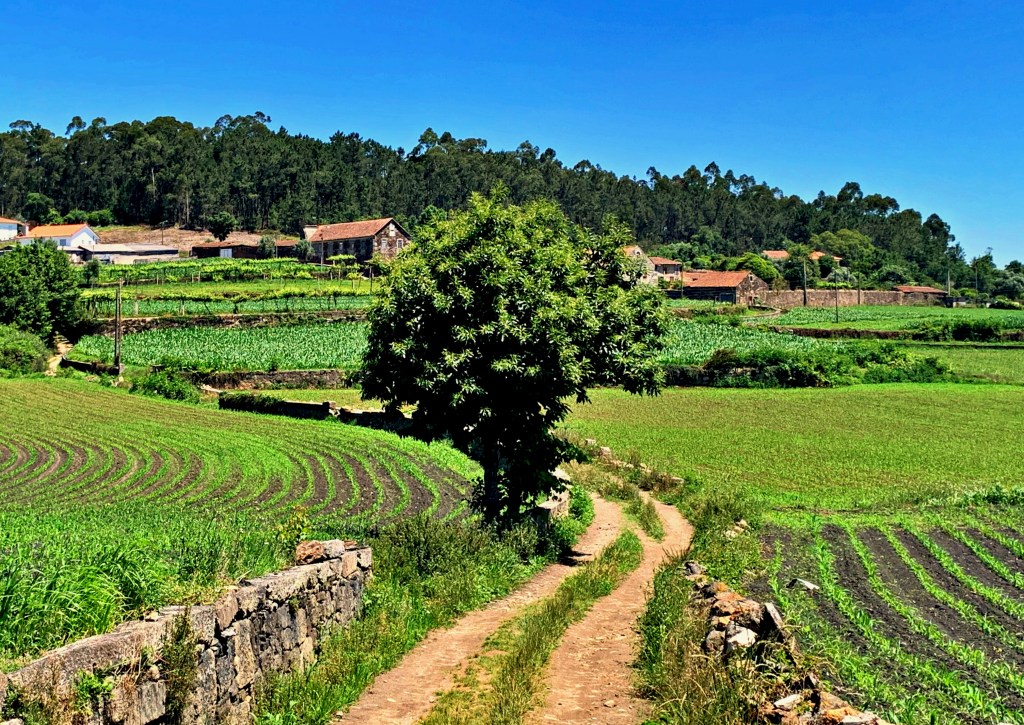
We encountered no medieval bridges today, just gentle, rolling hills of farmland with corn fields and grape trellises. Eucalyptus, with its distinctive bark and smell, was the most common tree, interspersed with pines. For us, the green, fertile, well-watered landscape of northern Portugal provided a pleasant contrast to the dry, scrubby Algarve where we live.
In the town of Rates, we stopped at the D’ Volta cafe to use the toilet and have a coffee. While I went off to find an ATM to replenish our cash, Bina chatted with the waitress, who turned out to be the owner. Bina suggested the cafe could do more to attract customers from the Albergue de Peregrinos de S. Pedro de Rates, which was located right across the street. Since this albergue did not serve breakfast, why not advertise a “Pilgrim’s Breakfast” to catch their eye in the morning?
The woman wasn’t sure she could handle the extra traffic. While she was happy the end of the Covid pandemic had brought the pilgrims back, she had trouble finding workers, leaving her and her daughter to shoulder the burden. Too many people had become accustomed to relying on government Covid-related payments while sitting at home, a common problem across Portugal.
Leaving the cafe after about an hour, we continued along the trail for some pleasant countryside walking. In one small park outside Rates with picnic tables, we found the top of a low stone wall covered with old shoes, painted rocks, ribbons and other knick knacks left by peregrinos over the years to commemorate their journey.

The park also included a brightly colored metal representation of a rooster, large enough for children to play on. Why a rooster?
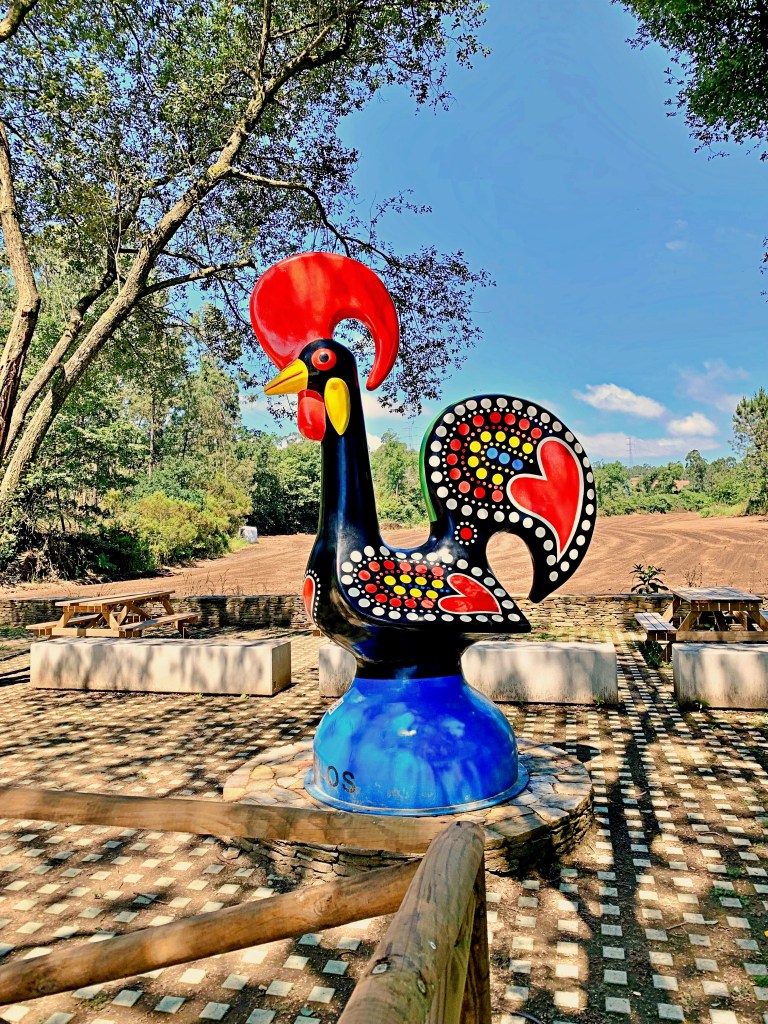
That, my friends, is the “Barcelos Rooster.” Barcelos is a large town further north on the Camino. According to a Portuguese folk tale, first written down in the 17th century, a Spanish man on his Camino de Santiago pilgrimage trek was falsely accused in Barcelos of stealing silver and sentenced to hang. At a banquet where the judge was preparing to feast on a rooster, the condemned man, making a final appeal, pointed to the serving plate and said: “Just as I am innocent, it is certain that rooster will crow when they hang me.”
The man was taken away and a short time later, the roasted bird did indeed rise from the plate to crow. The terrified judge hurried to the gallows to find that the prisoner had indeed escaped death, thanks to a poorly-made knot. Today, the Barcelos Rooster lives on as a popular souvenir for tourists, typically sold as a wooden or clay figurine.
By 2:30, we reached our destination for the day, the Casa Dona Maria, a two-story albergue in the town of Pedra Furada. Our private room on the second floor proved to be a clean, comfortable place to spend the night, with modern furnishings and a communal kitchen downstairs.
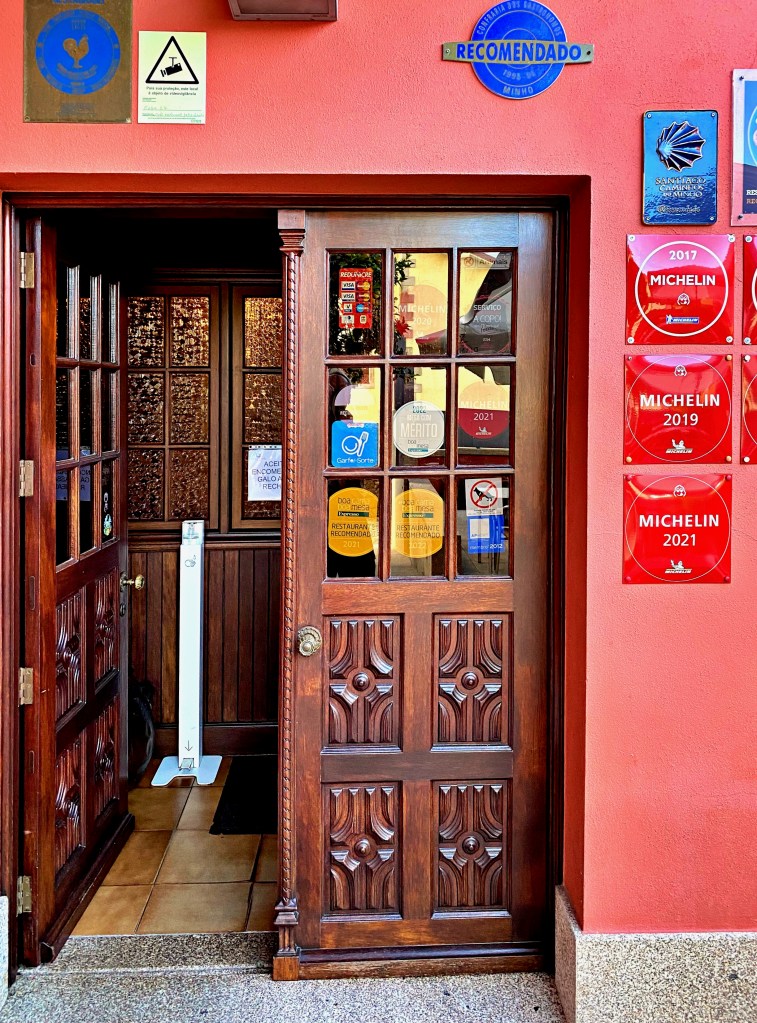
No breakfast was provided, however, so I went out and bought some eggs to boil for consumption the next morning. Later, in the early evening, Bina and I walked up the main street to have dinner at the Restaurante Pedra Furada. Imagine our surprise when we found it to be Michelin-rated!
We enjoyed a meal of cabritos (goat meat), potatoes and vegetables, followed by chocolate mousse (for Bina) and almond tarte (me) with wine, all for 54 euros. It certainly made up for some of the simpler meals of the previous few days.

Checking out the Antonios Bar next door, which is part of the restaurant, I found the walls decorated with photos of Miles Davis, John Coltrane, Charlie Mingus and Bill Evans — a kind of shrine to American jazz?
“I just like good music from the 1950s and ‘60s,” the bar owner explained to me. “But modern jazz — not so much.”

 Two Clines Traveling
Love this!! It’s making me want to travel and walk again!
LikeLiked by 1 person
Bill Evans. That would make the trip for me! 🙂
LikeLiked by 1 person
Thanks, Ann. Glad we can inspire you as you inspired us to do our first Camino in 2018!
LikeLiked by 1 person
Thanks, Clint. I mostly knew about Bill Evans for his collaborations with Miles Davis but after a quick scan of Wikipedia I can see he did a lot more than that!
LikeLike