The city of Salzburg is located in the western part of Austria, right near the country’s border with Germany, about a two-and-a-half hour train ride from Vienna. The scenic ride provides a striking contrast between Vienna, which is situated on relatively flat country close to the Hungarian plains, and Salzburg’s location in the foothills of the Austrian Alps, noted for its lush green pastures and snow-capped peaks.
The name “Salzburg” is German for “salt castle,” which derives from the town’s role during the Middle Ages in protecting (and taxing) the salt barges passing by on the River Salzach. The town’s rulers built a fort on a mountain overlooking the river. Over the centuries, this expanded into the Hohensalzburg Fortress, one of the largest medieval castles in Europe.
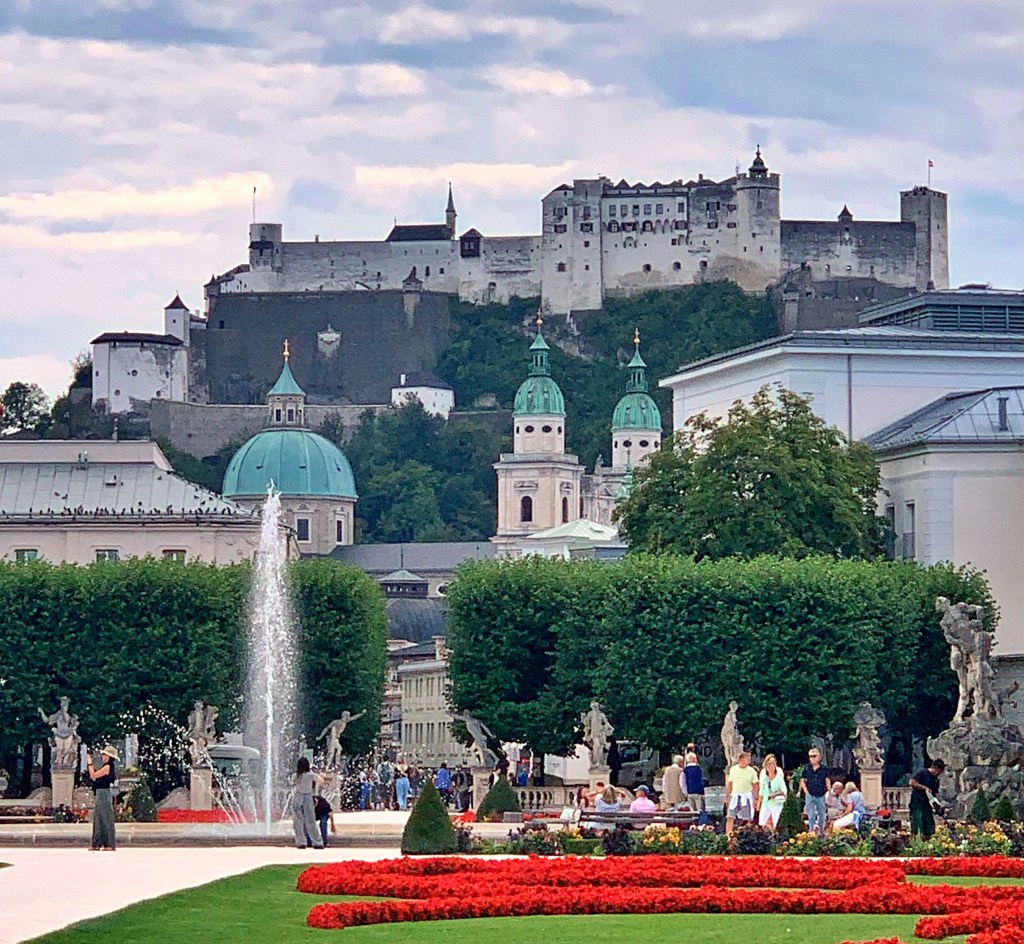
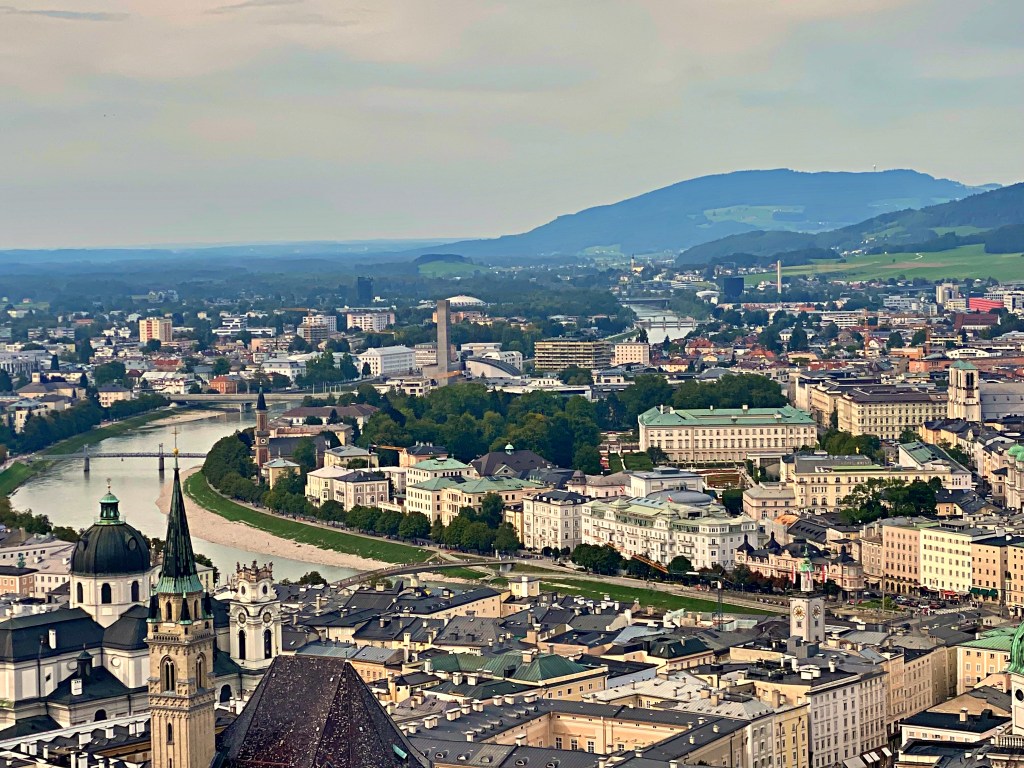
We reached the fortress by funicular, avoiding the 506-meter (1,660 feet) walk up the hill. At the top is a well preserved fortification housing several small museums. The best reason for visiting the site, however, is the sweeping views it offers of Saltzburg and the surrounding countryside.
Before the 1960s, Salzburg’s greatest claim to fame, other than the castle, was its role as the birthplace of Wolfgang Amadeus Mozart (1756-1791). The city is full of historic sites, museums and concert opportunities devoted to one of the world’s most famous composers.
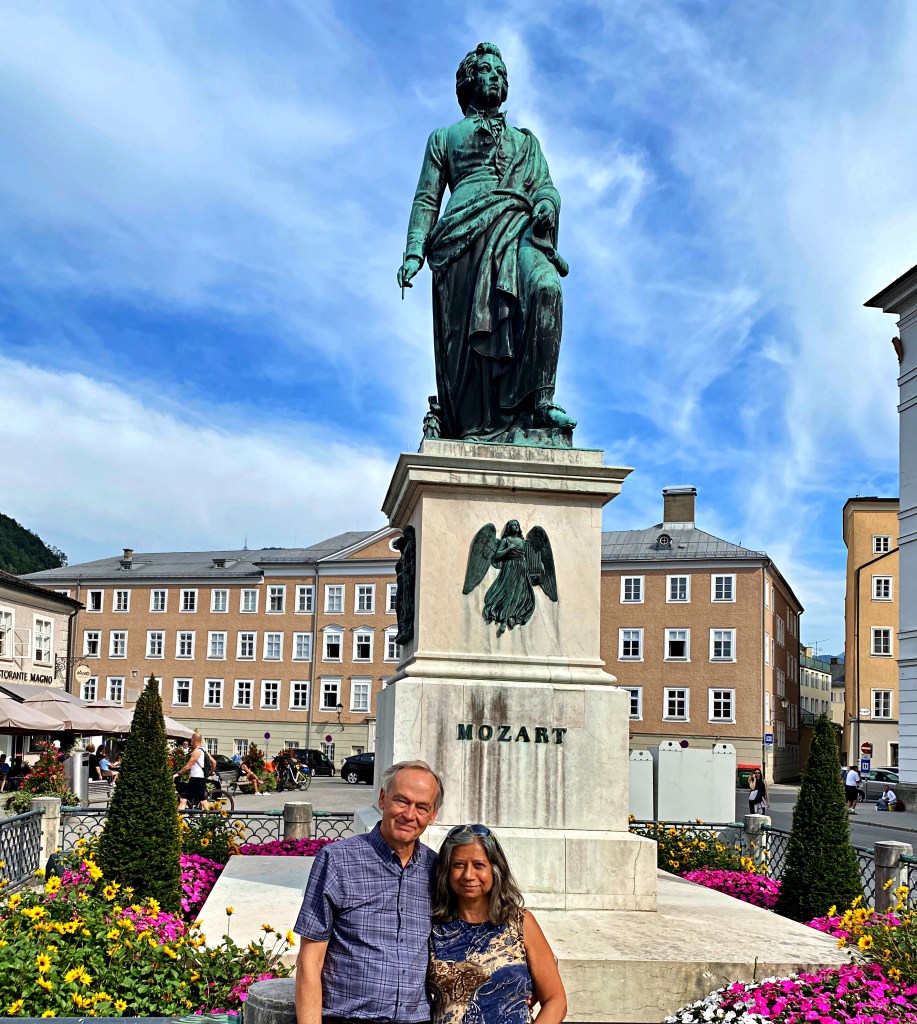
It’s ironic, then, that Mozart himself considered Salzburg a boring, provincial town unworthy of his talents. “There isn’t a penny’s worth of stimulation in this town,” he complained. “There is nothing going on there musically, and I don’t want to have anything to do with it.”
Mozart was obliged, nevertheless, to live there until he was able to move to Vienna in 1781. His family stayed in two homes in Salzburg. The first is the small, cramped apartment where Mozart was born, the second a larger eight-room apartment known as the “dancing master’s house,” where the family lived when their finances had improved. Both houses contain displays and exhibits detailing Mozart’s life in Salzburg, where he first honed his skills on violin and piano concertos.
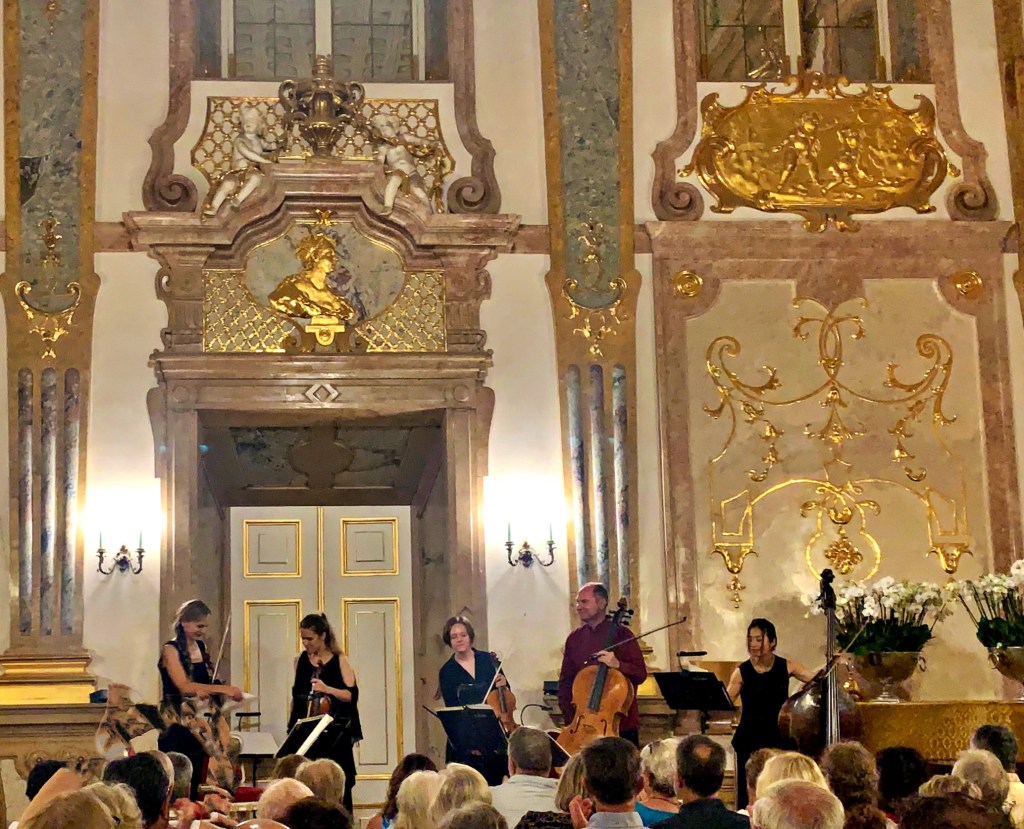
Bina and I enjoyed several Mozart pieces at an evening concert by the Amadeus Consort Salzburg in the consummately elegant Marble Hall of the Mirabell Palace (more about the palace later). The featured clarinetist, Marius Birtea from Romania, stood out particularly and got a standing ovation at the end after the group performed an encore from “The Magic Flute.”
While Salzburg will always remain associated with Mozart, the city gained another claim to fame in 1965, with the release of The Sound of Music, one of the top ten highest grossing films of all time. Each year, an estimated 300,000 Sound of Music fans visit Salzburg to view the locations where the movie was filmed.
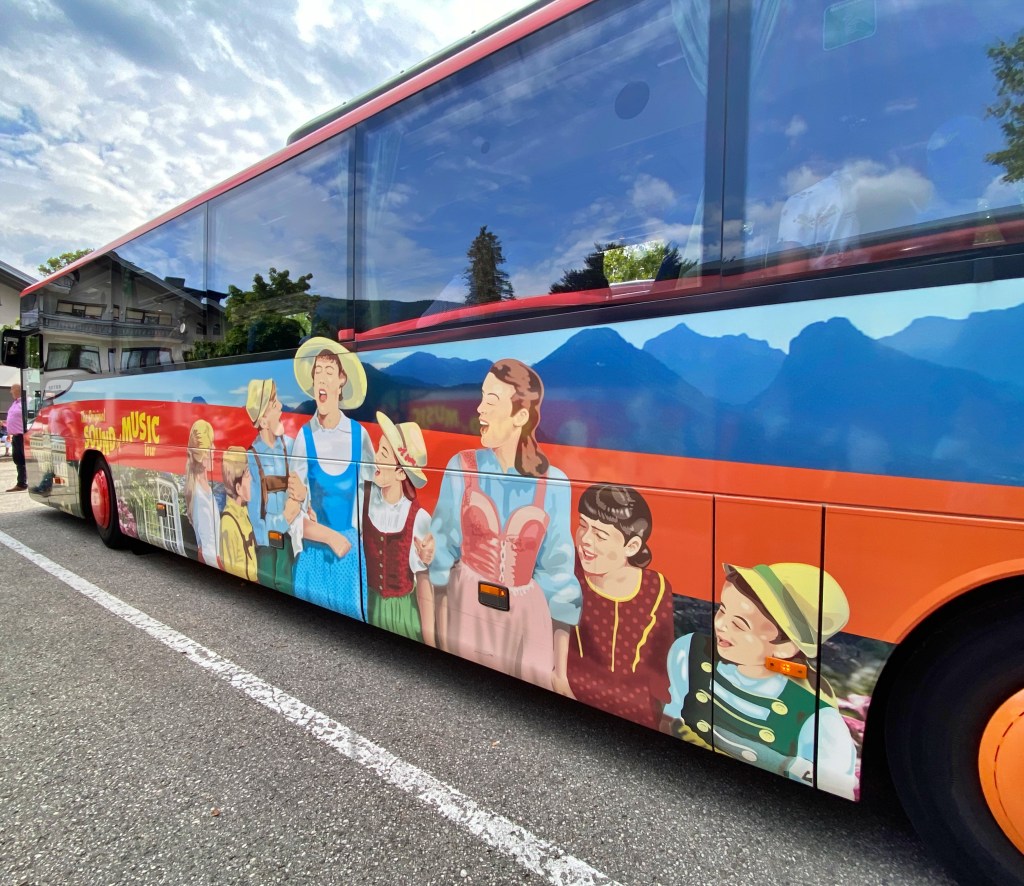
Having watched the movie prior to embarking on this trip, we felt obliged to join the Sound of Music bus tour.

We expected this tour to be a rather cheesy experience but it turned out to be both informative and fun. Yes, our ebullient and slightly irreverent guide, Sonya, did cajole everyone into singing songs from the movie as the bus tooled down the highway, but she also provided lots of little tidbits you wouldn’t get anywhere else. For example:
Cristopher Plummer, who played the doting father, didn’t actually like hanging around the set with the children and kept to himself in Salzburg’s Bristol Hotel. He also resented the fact that his singing was dubbed in the movie and complained for years afterward that the role of Captain von Trapp hadn’t really done much to advance his career.
The last scene in movie shows the von Trapp family fleeing across a mountain meadow to Switzerland. Only this particular meadow is in Germany, which means the family is escaping to the wrong country! The location chosen by the film crew happened to be the most scenic in the area. The farmer who owns it today refuses to allow visitors to disturb his cows, so the only way to view it is by drone or helicopter.
The exterior shots of the von Trapp family home include a large pond but this is a composite of two different houses — Leopoldoken Palace and Hellbrunn Palace — that are located some distance from each other outside Salzburg.
Charmian Carr, who played Liesl and sang “Sixteen Going on Seventeen,” sprained her ankle during the filming of her gazebo dance and had to do the song while taking painkillers.
Austrians have never really cottoned on to the movie, considering it inauthentic, which is somewhat true. No true Austrian eats “schnitzel with noodles,” and “Edelweiss,” far from being the Austrian national anthem, was written by Rodgers and Hammerstein expressly for the movie.
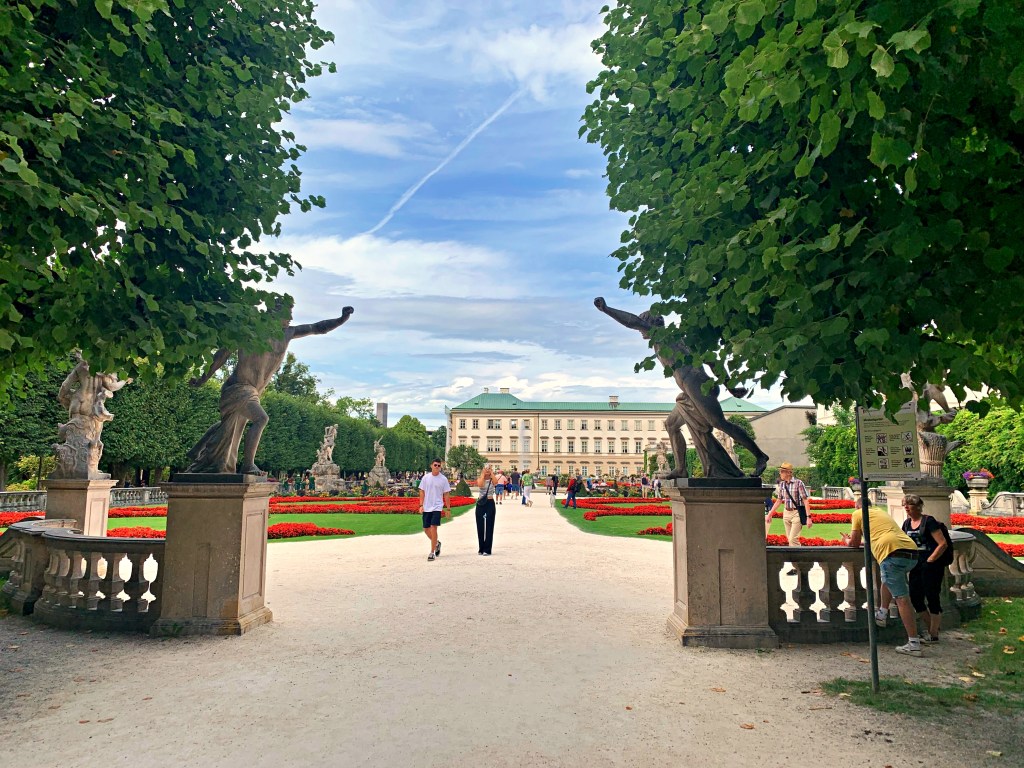
Our four-and-a-half hour bus tour concluded at the Mirabell Palace gardens, where the von Trapp children danced around the flower beds and statuary as Maria led them in “Do-Re-Mi.” This palace, which we had earlier visited for the Mozart concert, dates to the early 16th century but was rebuilt in its current lavish Baroque style a century later. The gardens are quite lovely and made a great backdrop for the song.
In both Salzburg and Vienna, the sound of music — of one kind or another — is everywhere.

 Two Clines Traveling
Nice shot of the fortress from the Mirabell Gardens, showing the cathedral downtown! I had the good luck to be at the garden one night when they placed candles all around and under a sky sparking with stars played a Mozart concert.
But where did you find the gazebo? Last time I looked, it had been moved from the movie site. I never did see it that trip.
There were many trips as I worked nearby. Berchtesgaden, Gemany, had been taken over by the U.S. forces post-WWII and made into a soldier recreation area. It was part of my reporter’s beat. It was only a half-hour drive to Salzburg, and the city drew me often. I studied German at the university there one magical summer and hung out with German majors from Ohio University.
Oops! Better stop. My wife’s warning me I’m unconsciously whistling “My Favorite Things.” Thanks for this great reminder.
LikeLike
My gosh, Mozart under the stars in the Mirabell Gardens! Doesn’t get much better than that. As for the gazebo, yes, that was moved. It had originally been at the Leopoldskron (one of the two houses used for the von Trapp family home in the movie) but because of trespassing by diehard fans was relocated to the ornamental gardens of Schloss Hellbrunn, Morzger Strasse, toward the south of Salzburg. And “My Favourite Things” is my personal favourite song from the film; I particularly like the John Coltrane and Tony Bennett versions, which really swing.
LikeLike
Thank you for the wonderful ‘tours’ and photos! Hope to see you soon.
LikeLike
Thanks, we’re looking forward to seeing you soon.
LikeLike
Thank you for the memories rekindled. Visited in 2016. It was mid November but still a lovely day.
LikeLiked by 1 person
Thanks for the comment, glad you enjoyed the rekindling!
LikeLike
I am so enjoying your travels. THANKS!
LikeLiked by 1 person
I am so enjoying your travels. THANKS!
LikeLike
Thanks, Jannyp2000. Glad you enjoyed it.
LikeLike
Thanks, Anonymous.
LikeLike