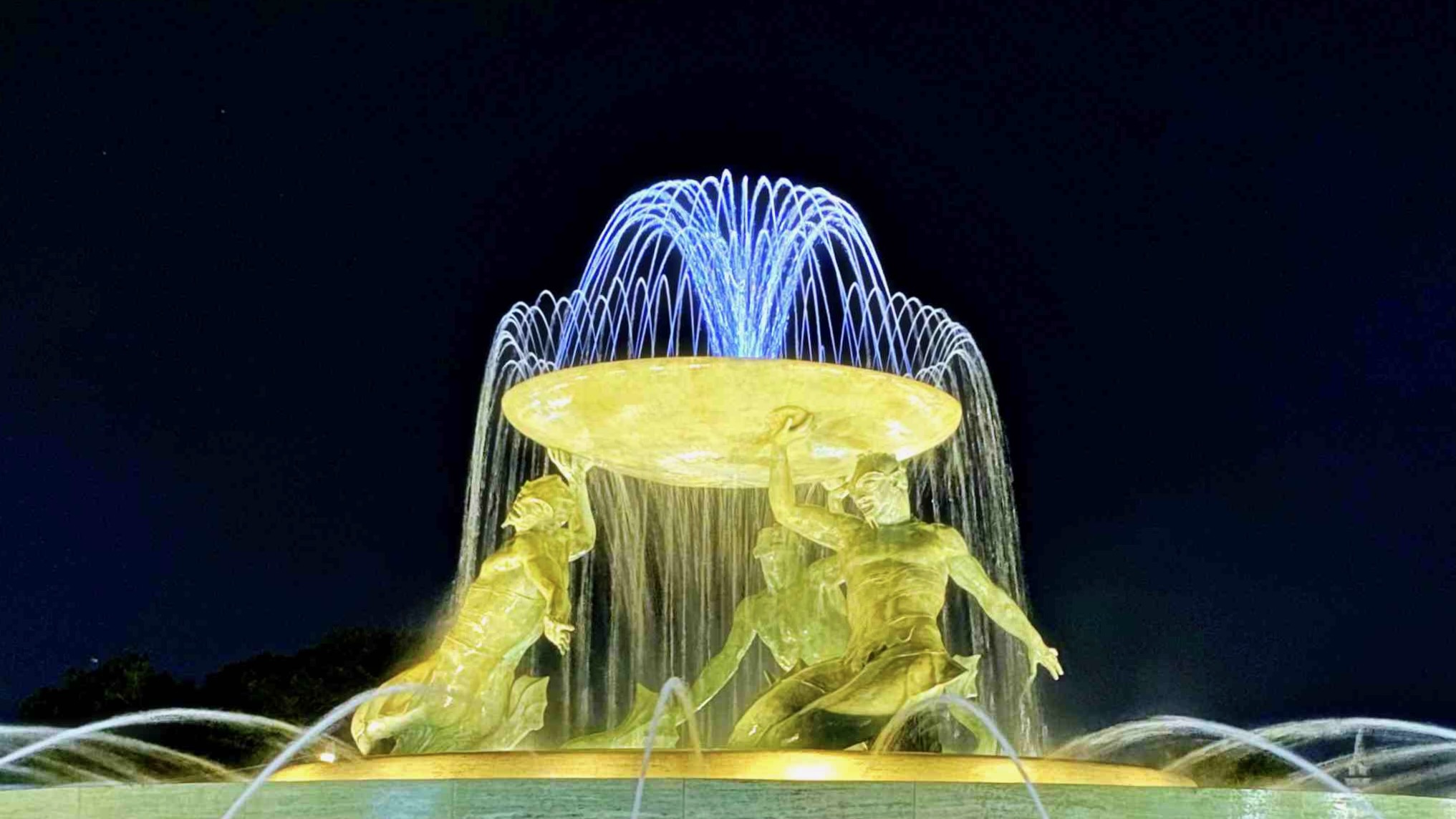
What comes to mind when you think of Malta? Sun-drenched island in the middle of the Med? For sure. But what if you go at a time when it’s not exactly sun-drenched but more like sun-dappled, with a bit of chill in the air? Bina and I decided to find out in the middle of February 2024.
We were looking for some relief from a rather dreary winter in the Algarve, but didn’t want to go too far south on a four- or five-day getaway. So, we settled on Malta, where daytime temperatures were very similar to our own (16 to 17 C., or 60-62 F.) but offered some different scenery. We could also reach the island in a day from Faro via easyJet or British Airways.
We were fortunate in our choice of lodging, a third floor apartment with a balcony overlooking Spinola Bay in an area just west of Valletta known as St. Julian’s. Each morning, the sunrise lit up the water with its bobbing boats as we enjoyed the view from our living room balcony.
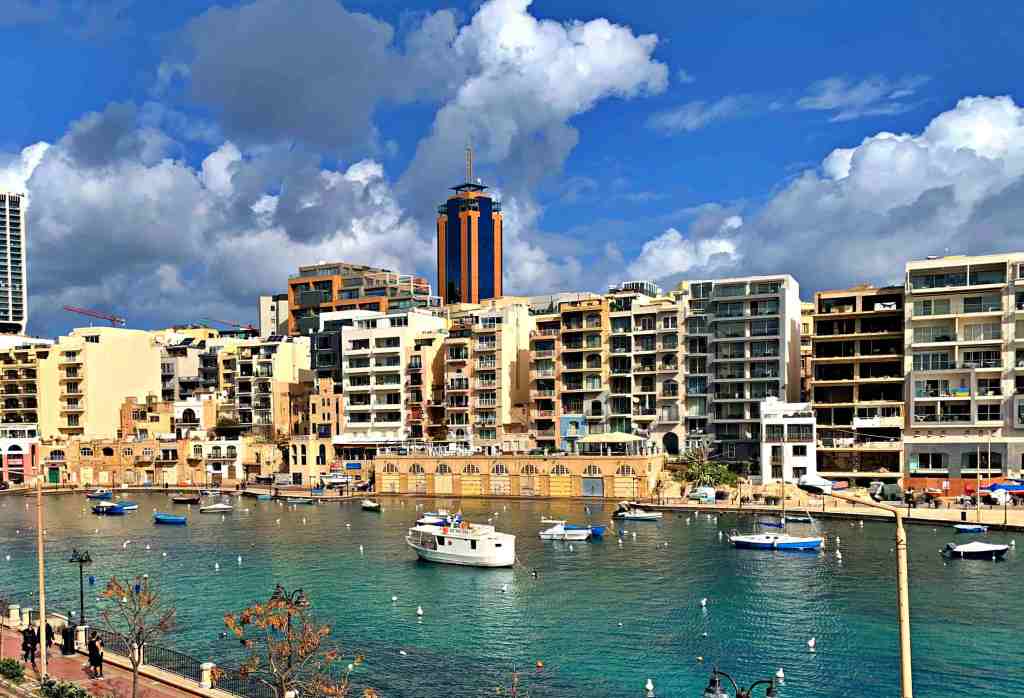
As for that sun, it was hit or miss the first couple of days, with some light rain thrown in briefly. But the weather improved each day and became quite comfortable toward the end. We appreciated that, because Malta had been blustery and chilly just prior to our arrival. In fact, Carnival celebrations had been cancelled due to hail (!) on February 11, the evening we flew in.
Carnival was back in operation the next day, however, when we took the 45-minute bus right into Valletta. Costumed marchers, floats and crowds of both locals and tourists paraded up Republic Street, the main pedestrian avenue.

Valletta, the capital of Malta, offers much to see. The Cathedral of St. John’s is a key stop for its lavish Baroque interior and two paintings by Caravaggio, the famous late Renaissance artist.
Bina and I are familiar with Baroque church interiors from Portugal and Italy, but St. John’s is a bit over-the-top, even by those standards. It appears that the Knights of St. John, Malta’s rulers in the 17th century, had noticed the spread of gilt-and-gold Baroque art elsewhere in Europe and were determined to “keep up with the Joneses” in their own main cathedral.
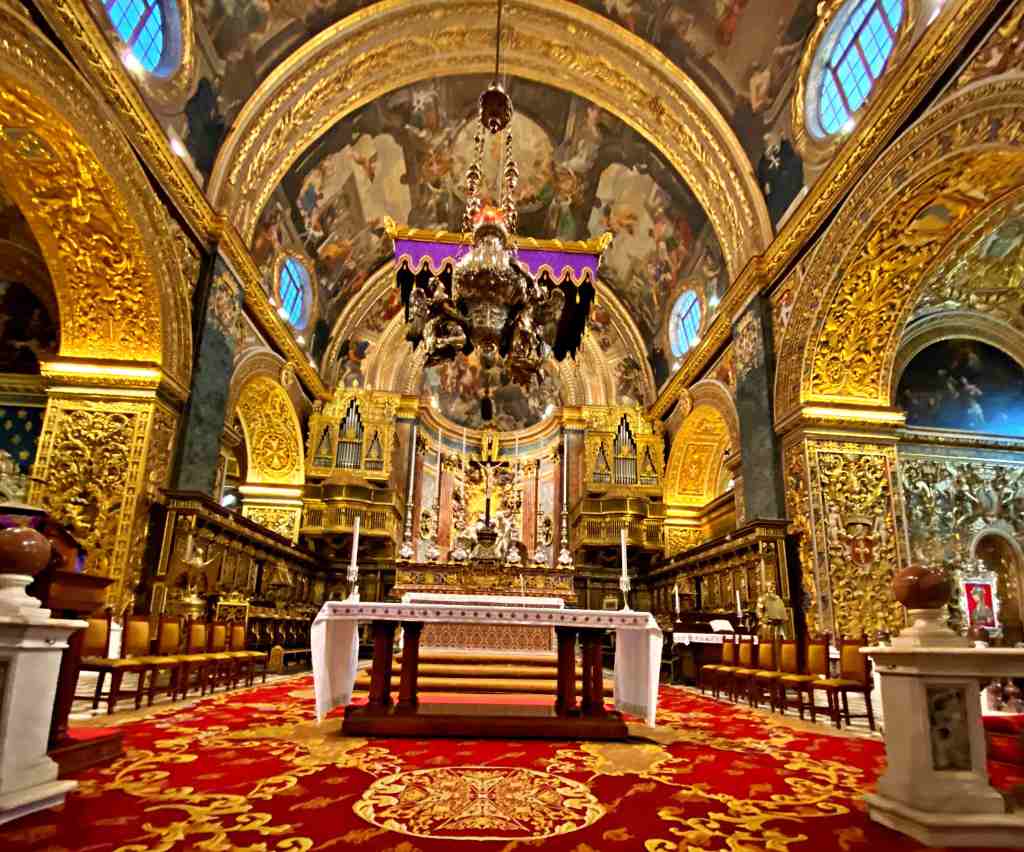
In 1607, Malta had the good fortune to receive a visit from Caravaggio, the notoriously talented-but-volatile painter, who had been banned from Rome for killing a man in a brawl. Caravaggio finished several paintings while on the island, two of which are exhibited in the cathedral: The Beheading of St. John the Baptist and St. Jerome Writing. Both provide good examples of his chiaroscuro technique, the contrast of bright light and dark tones.

Caravaggio’s stay in Malta, alas, proved short-lived because he got into another brawl in August 1608, wounding several several knights of the ruling order. They clapped him into prison but he managed to escape back to Italy.
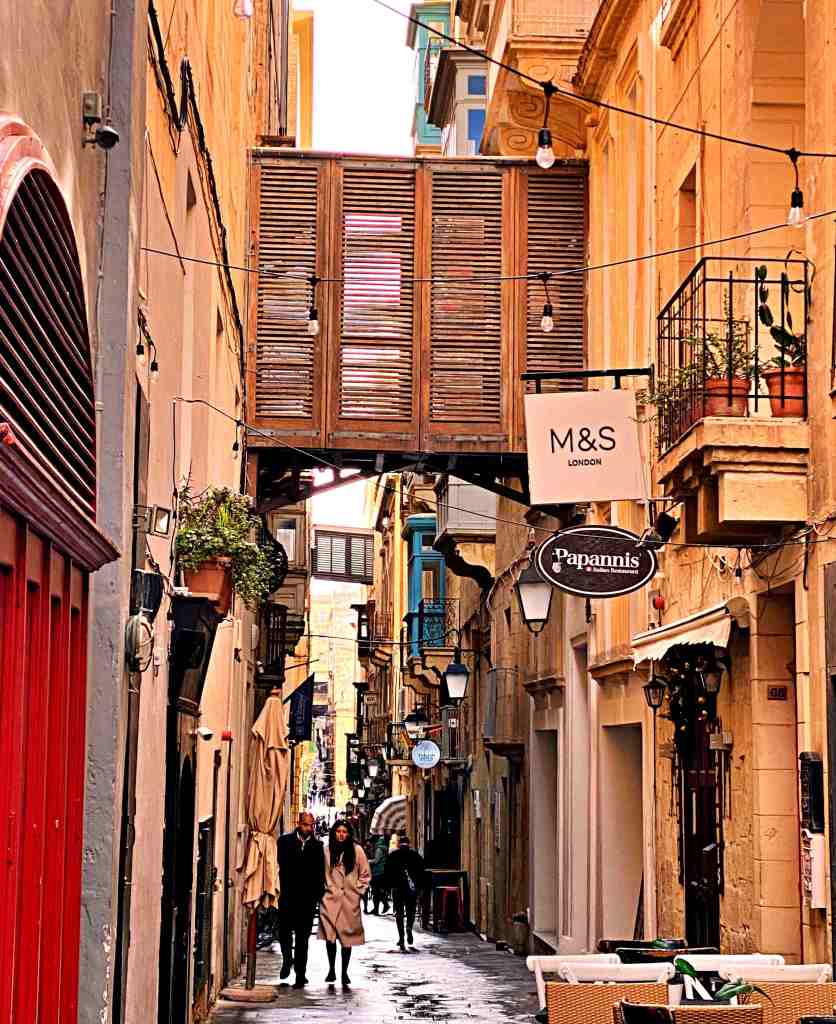
An interesting feature of Valetta architecture is the wood or stone balcony windows (gallarija or “galleries” in Maltese) that project over the narrow streets. Although the basic design is clearly Arabic (Malta was under Islamic rule from 870 to 1091), the colorfully painted wooden ones did not appear until the 18th century, when imported timber became more available on the island. The government now tries to preserve this architectural heritage by subsidizing homeowners who renovate their balconies.
The National War Museum, in Fort of St. Elmo, at the very tip of the city’s small peninsula, tells the story of Malta’s two great sieges: by the Turks in 1571 (known as the “Great Siege of Malta”) and the multi-year blockade and aerial bombing conducted by the Germans during World War II.
Both battles were close-run things for the defenders, but left the besiegers with major defeats. Rommel’s Afrika Korps would likely have triumphed in North Africa had British aircraft based on Malta (the “unsinkable aircraft carrier’) not been able to sink about half his supplies shipped over from Italy. Grateful for the resilience of the Maltese population during the siege, King George VI awarded the George Cross to the entire island in April 1942.

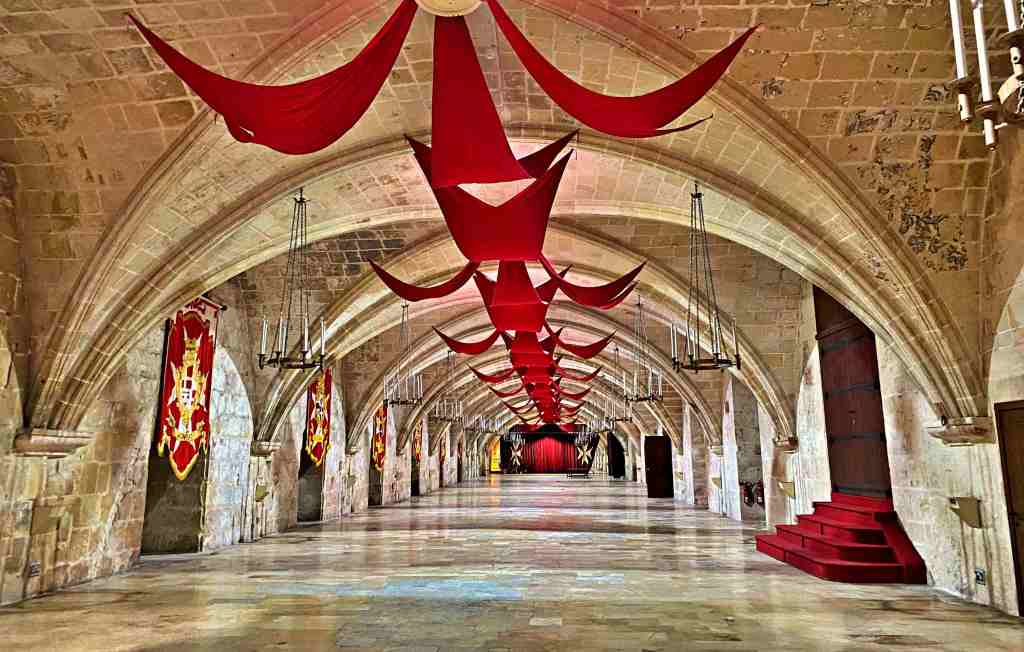
We also took in the Sacra Infermeria, the Sacred Hospital, which is located next door to the war museum. This cavernous 400 year-old building once housed the largest hospital ward in Europe and, for its day, represented high standards of medical care. During World War I, the hospital became known as the “Nurse of the Mediterranean” when the British used it to care for thousands of their wounded soldiers.
By the standards of Malta, whose history goes back to prehistoric times, Valleta can be considered a relatively “modern” city. Far older is the island’s former capital, Mdina (from Arabic medina, “city”), which was founded by Phoenician settlers in the 8th century B.C. Much of its current layout and structure dates from the Middle Ages, providing visitors a scenic walk-around in a relatively small space within the old city walls (one square kilometer, with only 250 inhabitants).

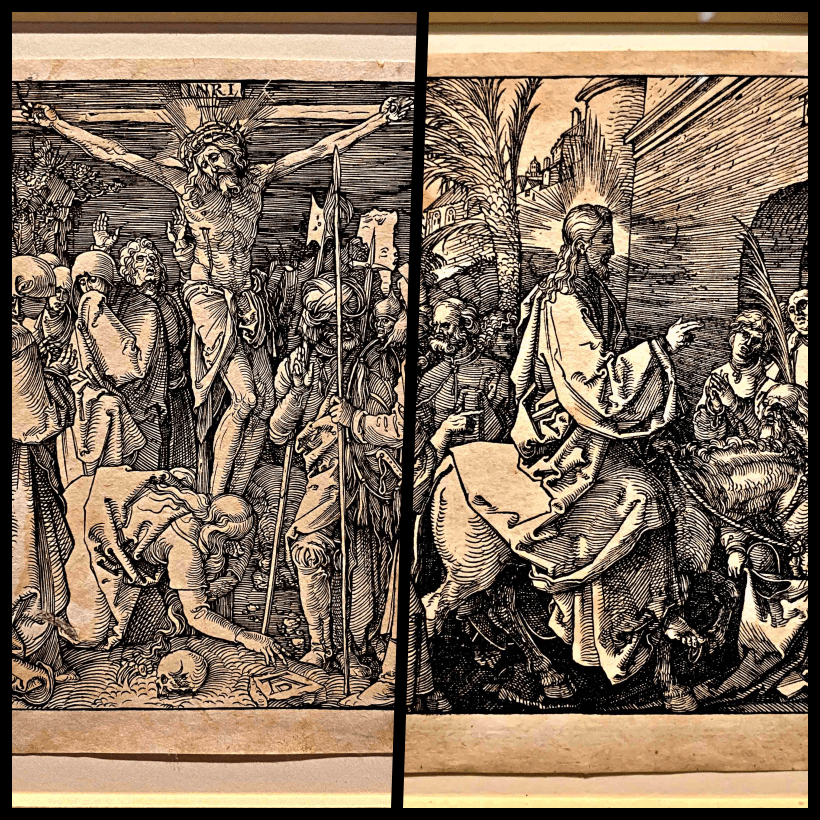
Highlights of Mdina include St. Paul’s Cathedral, which dates from the 12th century and is said to mark the spot where the Apostle St. Paul was greeted by the Roman governor of the city following his famous shipwreck off Malta. Also of interest is the cathedral’s attached museum, which houses original woodcut and copper plate engravings by the German Renaissance artist Albrecht Dürer; it’s one of the largest Dürer collections outside Germany.
The Republic of Malta today actually comprises five islands, of which we visited two: Malta the largest, and Gozo, the second largest. They are quite different; Malta is mostly rocky sandstone with lots of urban congestion compared to a greener and lightly populated Gozo. We spent one day exploring Gozo on a hop-on/hop-off bus.
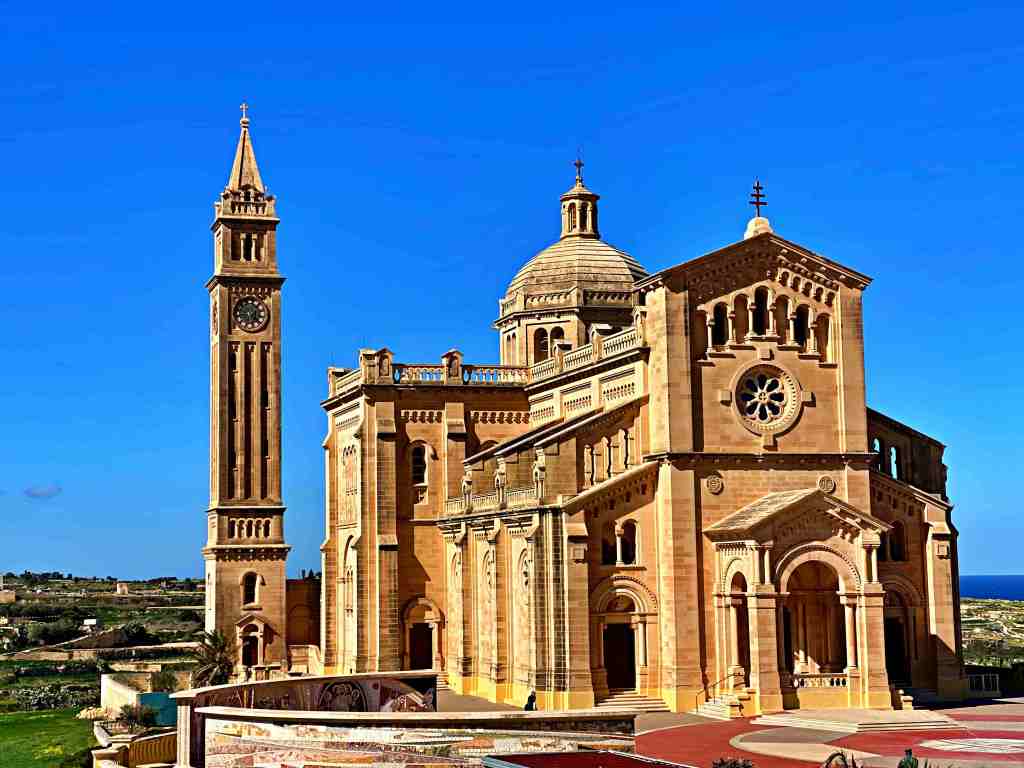
We began the day with an hour-long bus ride from St. Julian’s to the harbor of Circewwa, where we took the 25-minute ferry to Gozo. Boarding our bus in the ferry terminal at Gozo’s Mgarr Harbor, we followed a route that took us through Victoria, the capital; Dwejra, a waterfront village, where we had lunch; the enormous Ta’ Pinu Sanctuary, built between 1920-32 on a local pilgrimage site; and the Ggantija Temple.
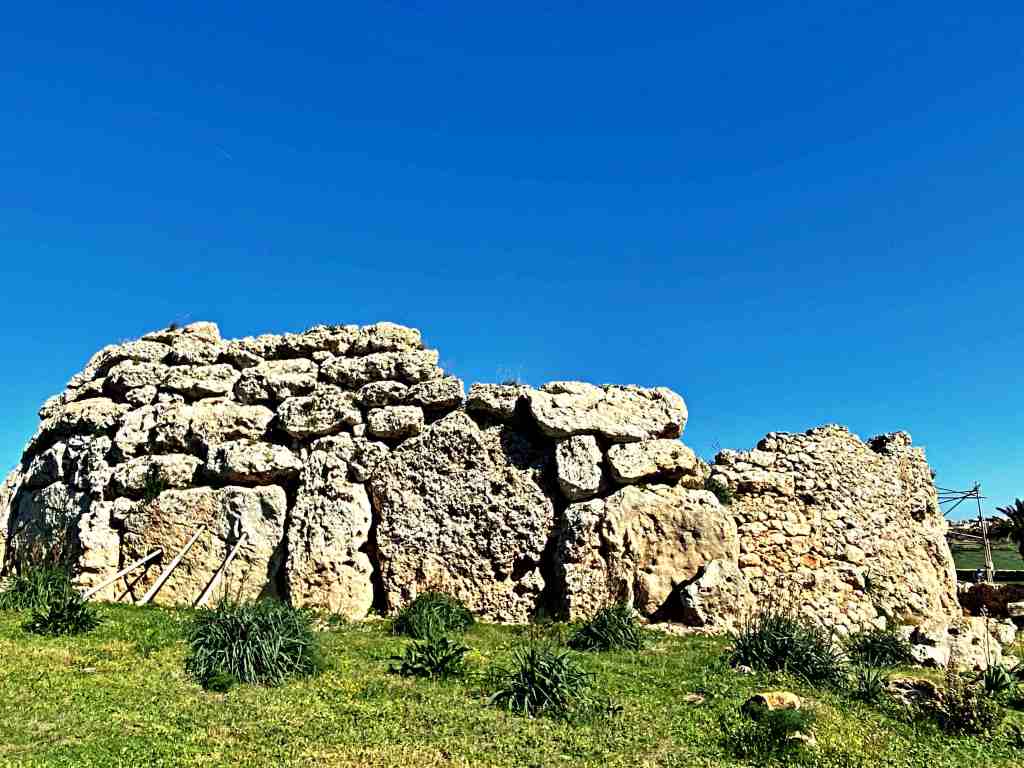
The temple of Ggantija is impressive in its own right, but more so when you consider that it’s more than 5,500 years old, older than the Pyramids and probably even Stonehenge. Looking at those enormous stone slabs arranged in a circle, we could only marvel at the how the builders moved them to the site before the wheel had been invented; they seem to have dragged them on small stones that functioned as ball bearings.
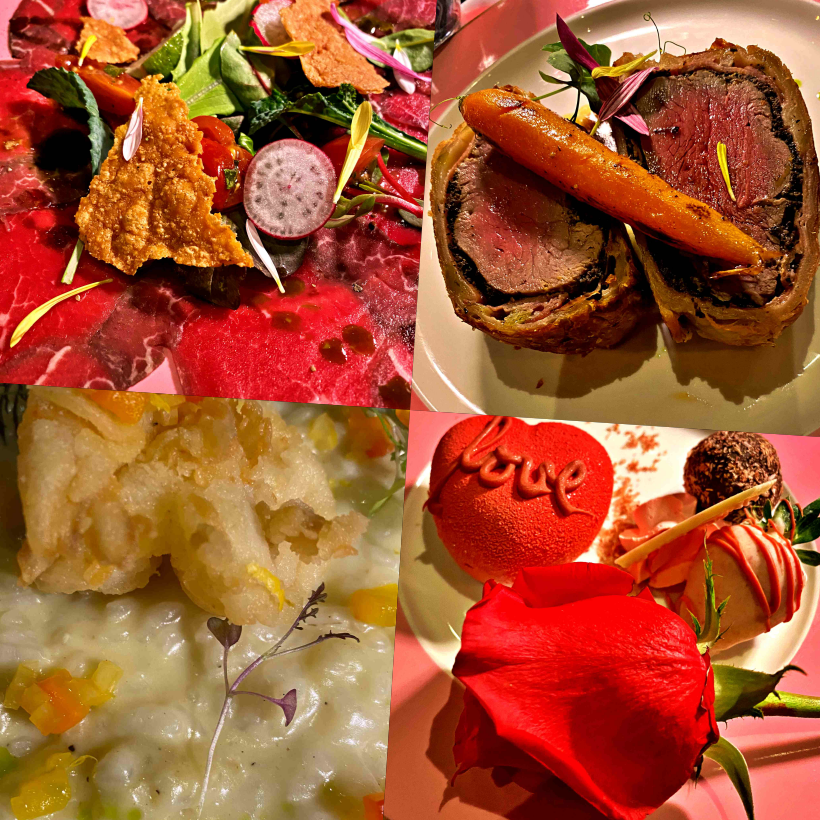
Malta is well known for its boating, watersports and nightlife. February was too early in the year for us to enjoy any beach time, but we did sample some of the island’s excellent restaurants. We had our Valentine’s Day dinner at Valletta’s 59 Republic Restaurant, enjoying a five-course meal centered on Beef Wellington and featuring Maltese wine. The wine industry in Malta is small but produces some Cabernet and Merlot blends of surprising quality.
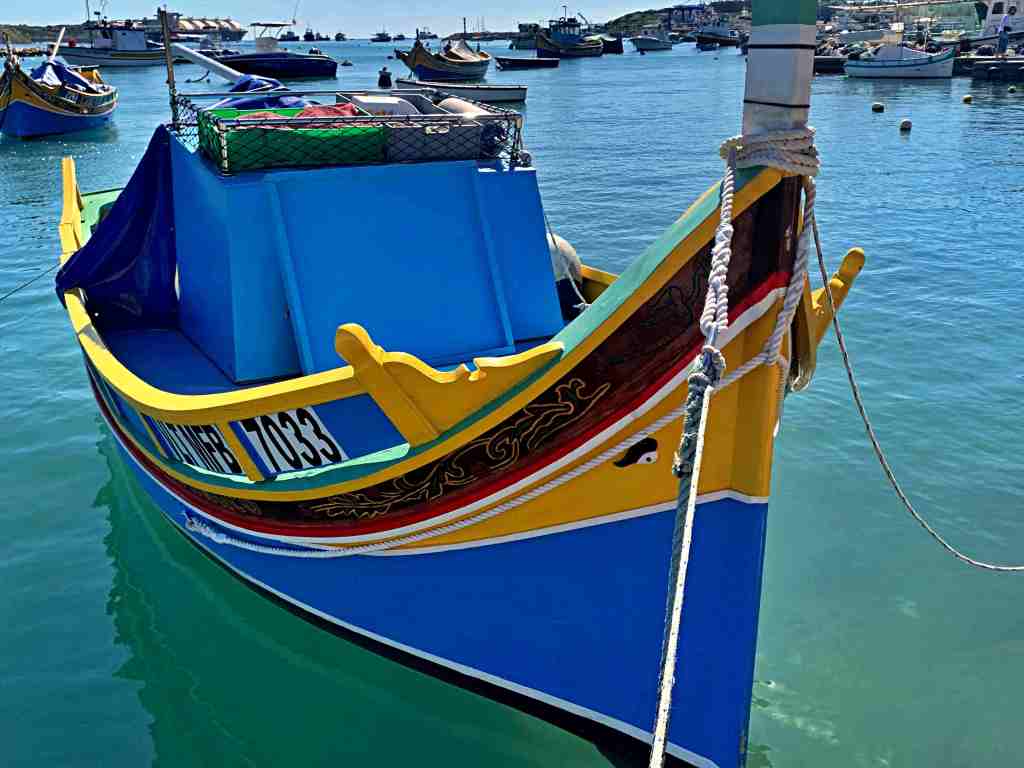
On our last day, we enjoyed a seafood lunch outdoors on the waterfront of Marsalxokk, a fishing village on the eastern side of the main island. The harbor is crowded with luzzus, the traditional Maltese fishing boat, with the iconic eyes painted on the bow. The use of these eyes is believed to date from Phoenician times as a means to ward off evil when voyaging on the sea — one more reminder of Malta’s long history.
Note on language: English-speaking travelers will feel completely at home on Malta because virtually everyone speaks fluent English, a legacy of British rule (1813 to 1964) and a strong tourism industry. But there is an actual Maltese language that evolved out of the country’s cultural stew. It is basically a Semitic language, with strong Arabic roots and lots of loanwords from around the European part of the Mediterranean, particularly Italy.


Mmm. Ready to taste Beef Wellington. Glad you’re keeping the focus on you two with the country as context. Reading what caught your eye and what you did helps me “see” what I might be interested in there. Keep me on the list for more posts of your travels. Thanks.
LikeLike
Thanks, as always, Clint. Next up: Luxembourg. Cheers!
LikeLike
Wh
LikeLike
Fascinating and beautiful. Great view from your balcony and the cathedral is amazing. Another excellent post. Malta is one of those places that I imagine few from the west get to visit. Glad you were able to do it.
LikeLike
Thanks Ed, glad you enjoyed it!
LikeLike
thank you so much for sharing your experiences of Malta. I may never get there but I thoroughly enjoyed your pictures and commentary. Almost like being there!
June Abbott
LikeLiked by 1 person
Thanks for your kind words, June. We’re delighted you enjoyed the post!
LikeLike
Beautiful photos! Thank you for sharing your travels and the history lesson that goes with it! Jan
Sent from Yahoo Mail for iPad
LikeLiked by 1 person
Thank you for your kind words, Jan!
LikeLike