Our two excursions outside of Luxembourg City gave Bina and me a chance to enjoy that free transportation so generously provided by the country’s government. We traveled to Echternach by bus and to Vianden by both train and bus.
Echternach is located about 35 km northeast of the capital, right on the German border. We sat at the front of the bus during the 45-minute ride, near the driver, who was listening to a football match on his radio as we traversed the winding, hilly roads.
It didn’t take Bina and me long to start picking out Portuguese words from the radio announcer; this match was being played in Portugal, where we live. “Obrigado (thanks),” we said, while disembarking. “De nada (you’re welcome),” the driver replied with an amused smile.
Of the many nationalities that come to reside and work here, the Portuguese contribute the largest group, representing 14% of the country’s population. The major contingents below that, French, Italian, Belgian and German, are in single digits.
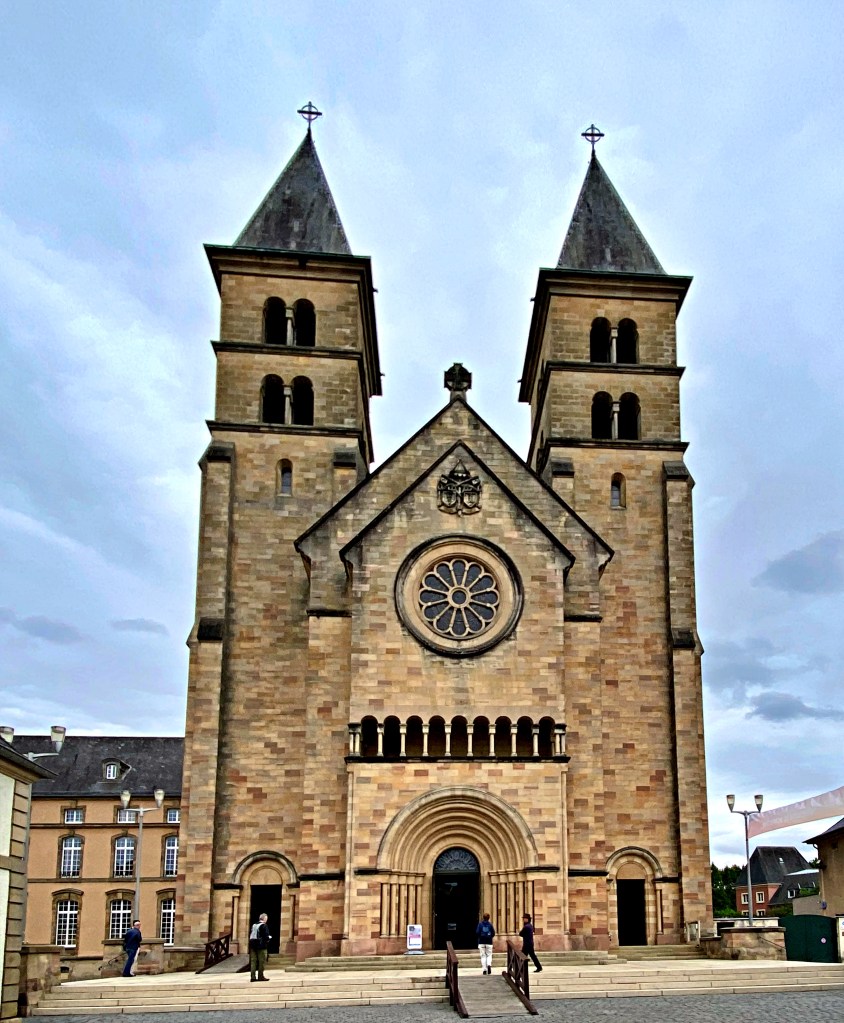
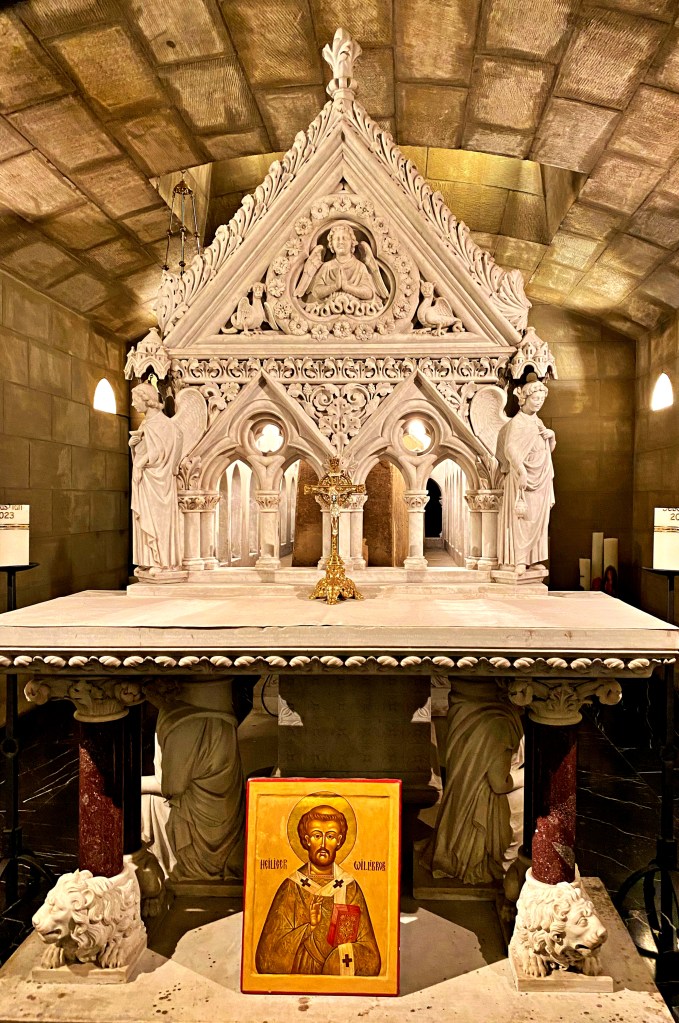
The main thing to see in Echternach is the Basilica St. Willibrord, the oldest church in the country, dating back to the 7th century, although rebuilt and enlarged six times since then. St. Willibrord himself is buried in the 8th century crypt in the basement.
Born in Anglo-Saxon England, Willibrord joined the Benedictine order and became a missionary to the Frisians, Germanic tribes living in what is now the Netherlands. He travelled to Rome twice and is believed to be the first Anglo Saxon to make that then-arduous journey. He established a monastery and cathedral in Utrecht before moving on to found an abbey in Echternach, where he died in 739.
Bina and I crossed the bridge over the Sauer River to step briefly into the German town of Echternacherbrück on the other side — really just to say we had “visited Germany.” It was now about 12:30. We had planned to spend the afternoon walking the forested trails on the Luxembourg side of the river but gathering clouds gave us pause; the forecast on our Weather Channel app predicted rain by 3 p.m. Did we want to risk traveling back to Luxembourg City in the rain?
Nah. We grabbed some sandwiches for lunch at a small supermarket and took the 1 p.m. bus back to the Luxembourg City. We did have to pull out our umbrellas for the walk back to the hotel, although this rain dwindled to a mere mist by 3.
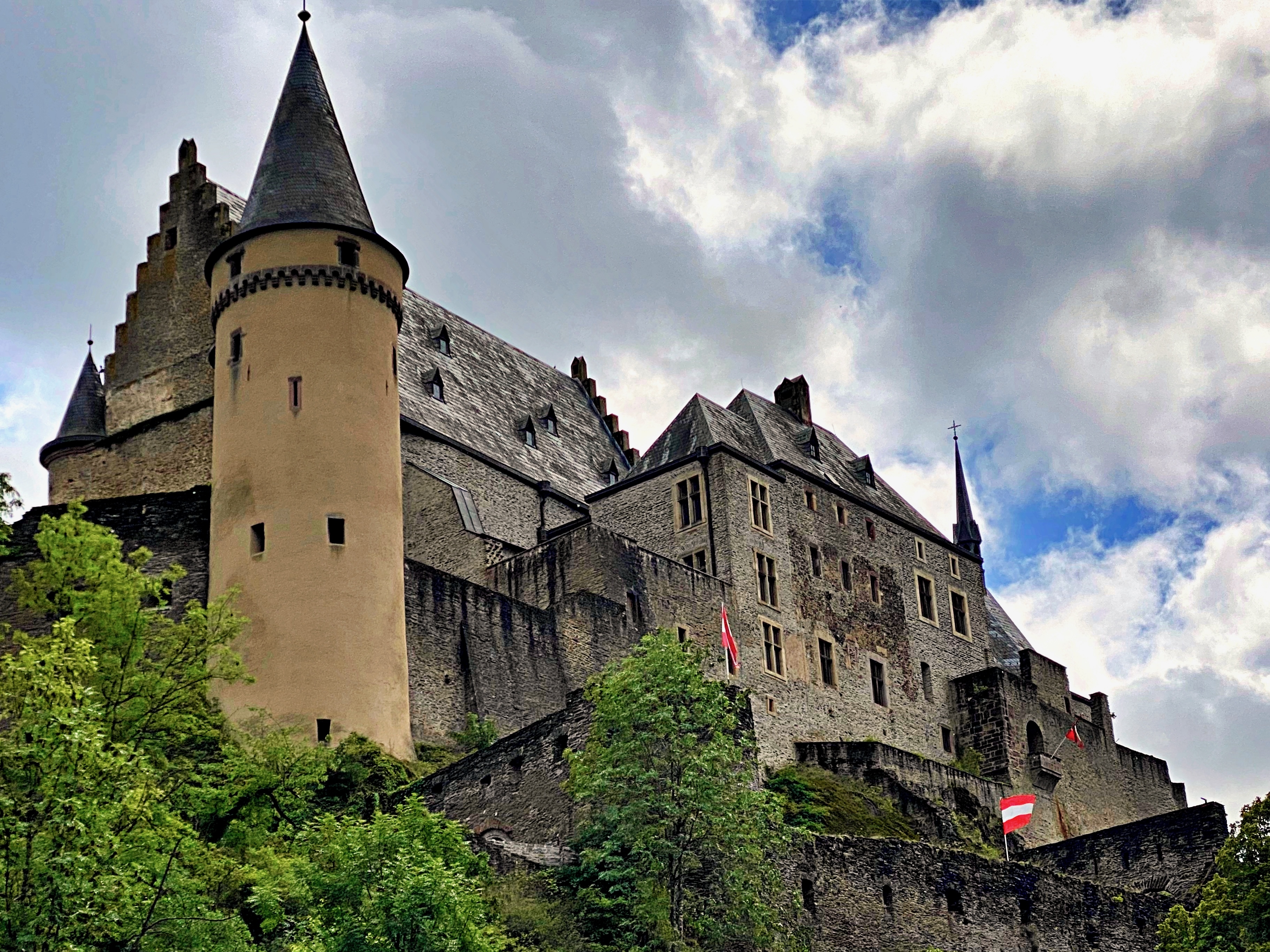
The next day, we ventured out to Vianden, noted for its picturesque castle, which is located 20 km north of the capital, deep in the Ardennes Forest, taking a combination of both train and bus.
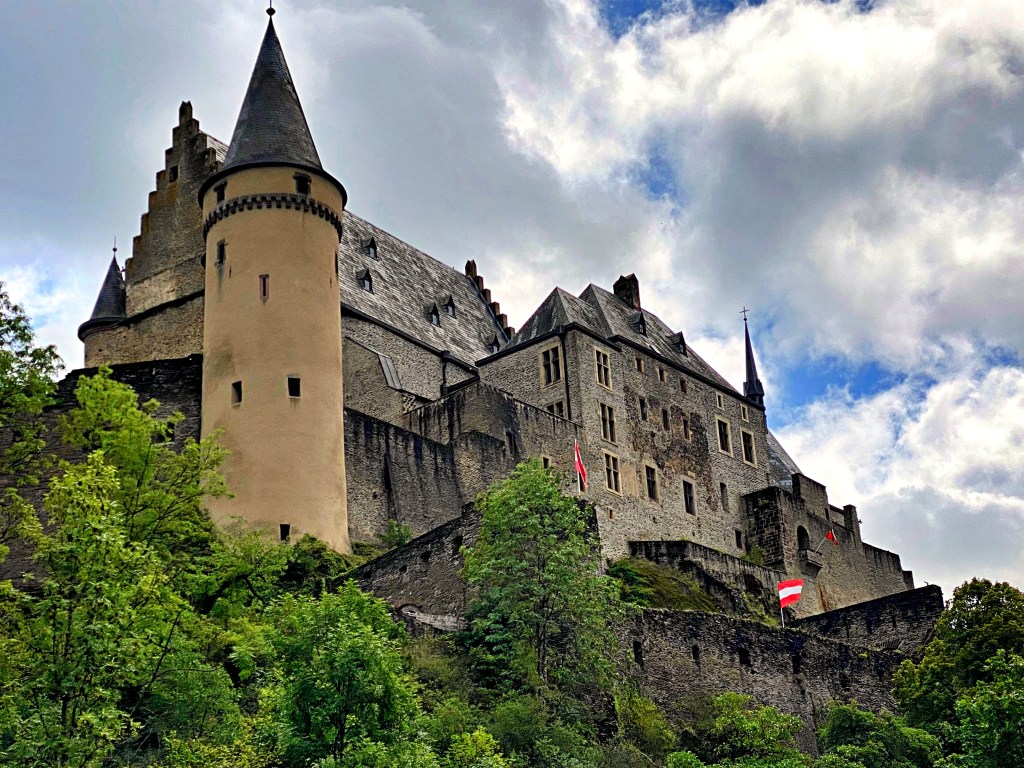
This is a castle that lives up to its hype of being one of the most beautiful in Europe, perched on a hill overlooking the Our River in a region of dense, forest-green valleys. Built on the site of a Roman castellum, or watch tower, it was constructed between the 11th and 14th centuries, when the counts of Vianden were influential in European politics, with connections to the royal families in France and Germany. It fell into ruins in the 19th century but was lovingly restored after 1977, when the government of Luxembourg purchased it from the royal family.
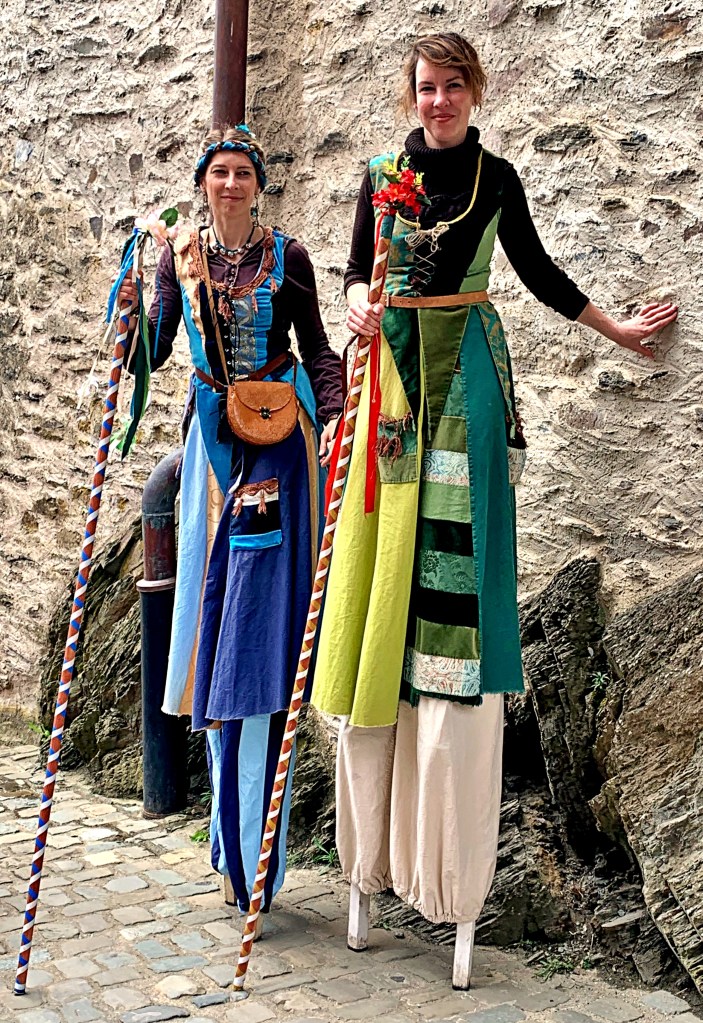
We had the good luck and bad luck to arrive on August 1, when the castle was midway through its annual medieval reenactment festival. On the positive side, we got to watch some musical and fencing demonstrations, including a belly dancer — who was more Middle Eastern than Middle Ages!
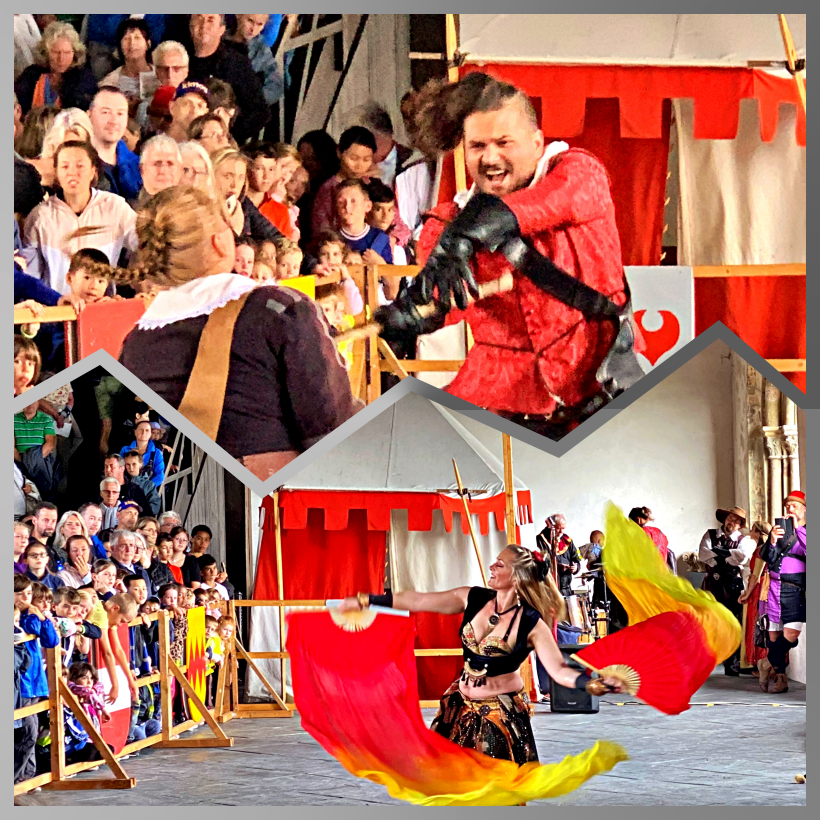
The downside was having to push and squeeze through an incredible press of people in every room and narrow turret corridor. The castle itself, with clean stonework, electric lighting and no original furnishings, sometimes felt more like a movie set than medieval site. By 1:30 p.m., all we could think of was escaping back to town for lunch, which we found at the Bistro citycorner, overlooking the bridge across the river.
Our timing was good because, shortly after we had been seated, a heavy rain descended. Warm and dry, we tucked into two traditional Luxembourg dishes: thick ham with a bean stew and chicken in pastry with mushroom sauce (Luxembourg cuisine incorporates German and French influences). When the rain lifted, around 3, we walked back to the bus stop to do the morning journey in reverse, arriving back in our hotel by 5:30.
When the bus passed through the town of Ettelbruck, I noticed a statue in the park — a soldier in an American uniform holding binoculars. Checking later with Mr. Google, I discovered this was none other than General George S. Patton. The town had erected this bronze copy of an original, commissioned for West Point, to honor Patton’s Third Army, which liberated Luxembourg in December 1944 as part of the campaign to lift the siege of Bastogne during the Battle of the Bulge. The American troops pushed the last German soldiers out of Ettelbruck on Christmas Day.
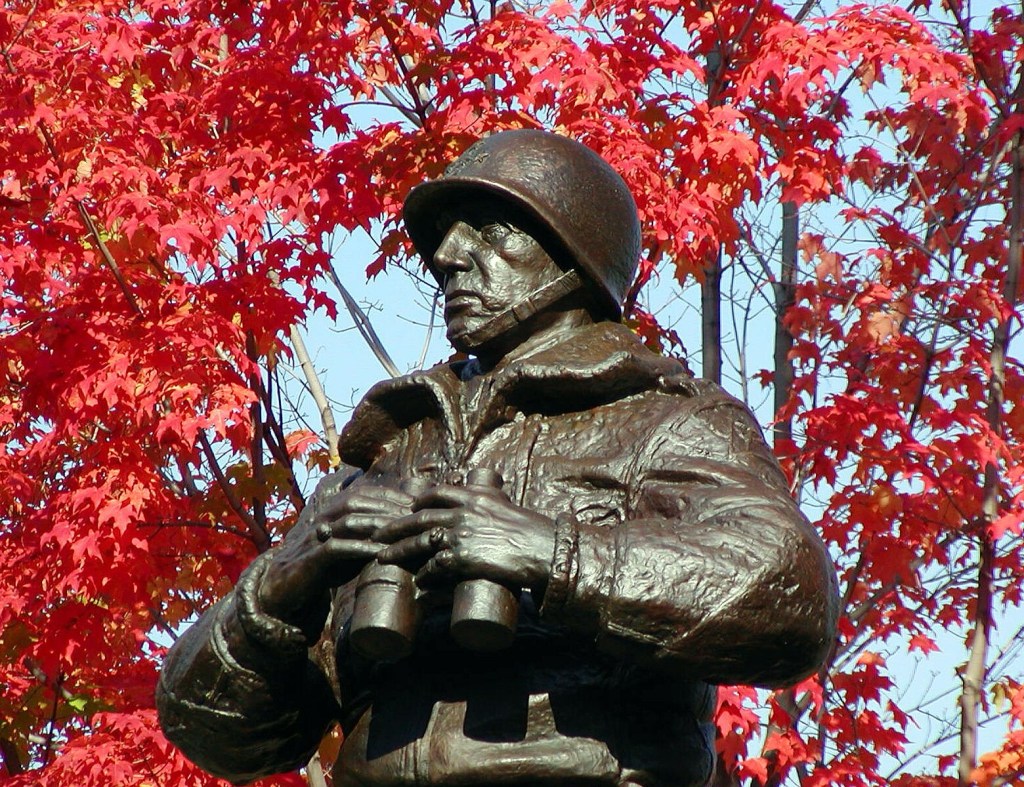
Patton himself, in accordance with his wishes, was buried at the American Cemetery in Luxembourg in 1945, along with 5,076 of his army’s soldiers who died in the fighting here 79 years ago.
Note: World War II history buffs might consider Luxembourg a place from which to explore key sites in the the Battle of the Bulge. The American Cemetery in Luxembourg, where Patton is buried, is located in Hamm, a suburb of the capital. Ettelbruck features both the statue and a museum dedicated to Patton and the liberation of Luxembourg, while the nearby town of Diekirch hosts a larger museum focused on the fighting in the Ardennes. Bastogne itself, in Belgium, is only an hour’s drive from Luxembourg City.

 Two Clines Traveling
Merci, muito obrigado, thank you. As usual, your descriptions are so vivid and engaging. I appreciate reading them.
LikeLiked by 1 person
As always, thanks for your kind words, Sim!
LikeLike