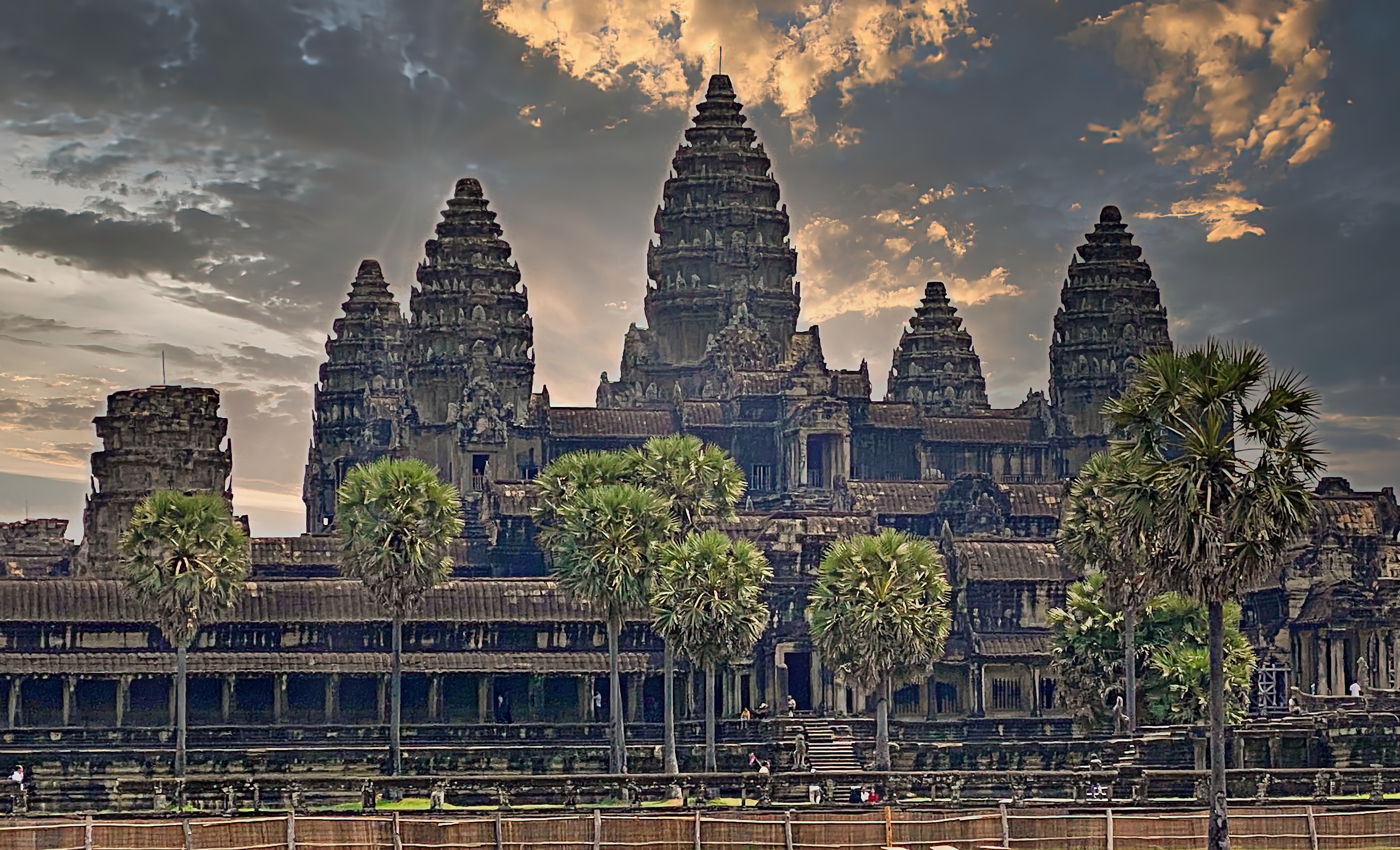
We had an easy hour-long flight from Bangkok to Siem Reap, Cambodia, disembarking at that city’s amazing new $1 billion Chinese-built airport (more about that later). At the airport entrance, we easily found our guide, Samuth Muon, who operates a tuk tuk but had shown up with a car and driver we had hired to take us into town, 45 km away.
We were glad to have him show us around for the next two days, since Cambodia is one of those countries where you’re best off escorted by someone with local knowledge. Bina had found him highly recommended on social media and he lived up to his reputation as a trustworthy, efficient fellow to show you the sites and keep you out of trouble. He was friendly and personable to boot.
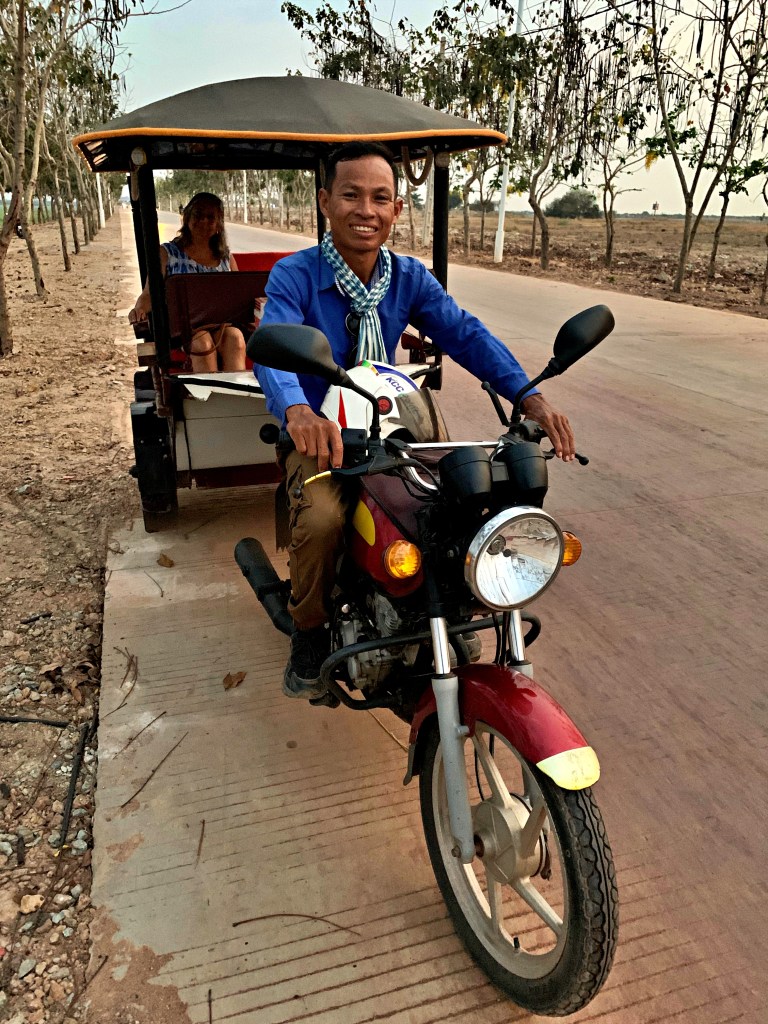
After the car dropped us off at the Siem Reap Palace Hotel for check-in, Samuth returned a few hours later on his tuk tuk to take us to a dinner show at the Kanell Restaurant. This consisted of dances performed in the traditional “Aspara” style, as well as a demonstration of “Bakator, a Cambodian martial art. We enjoyed some excellent fusion food, and found the show touristy but entertaining.
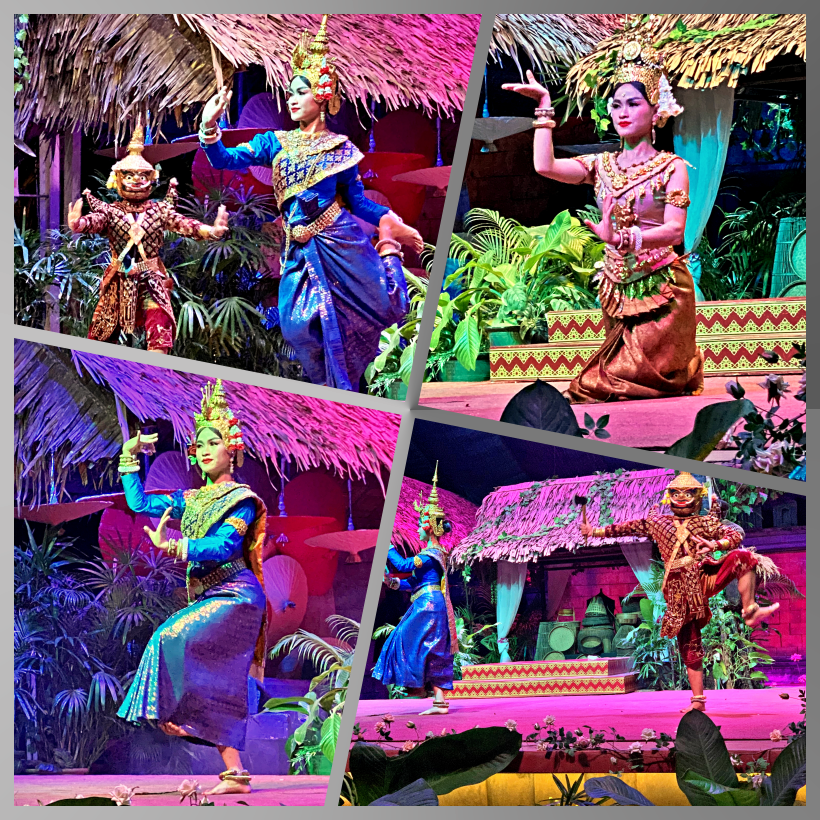
We devoted the next day to Angkor Wat itself. The site contains 72 major temples covering 400 square km (154 square miles), the largest religious complex in the world. “It is of such extraordinary construction that it is not possible to describe it with a pen,” said Portuguese friar António da Madalena, the first western visitor in 1586.
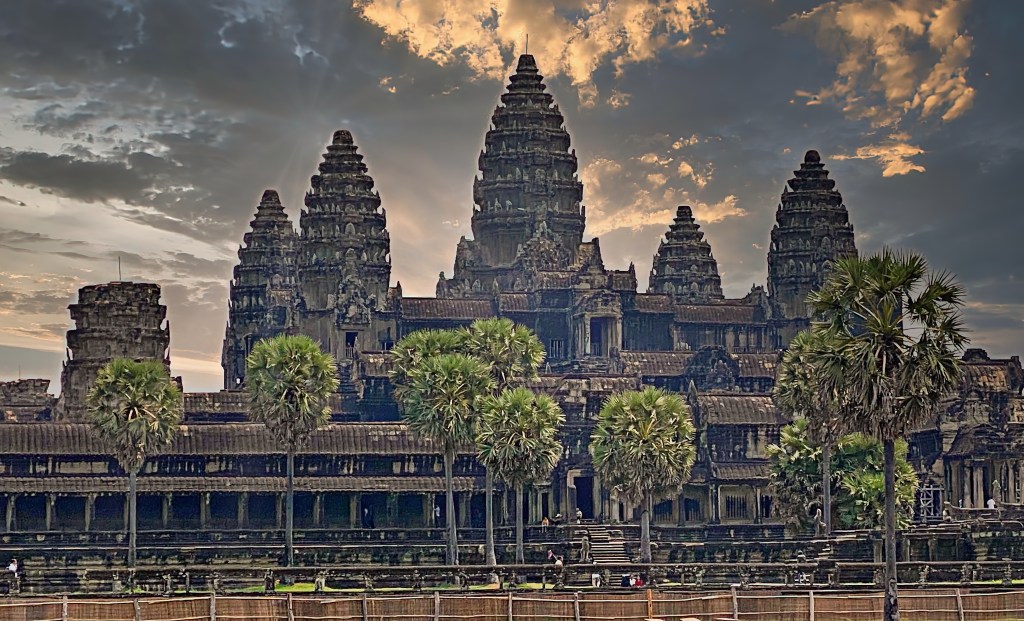
Today’s tourist will likely be similarly overwhelmed, unless you’re a serious student of Cambodian architecture, art and history. That’s not us, so like most visitors, we confined ourselves to just a few of the major sites: Angkor Wat itself, Bayon, Angkor Thom and Ta Prohm (setting for the 2001 film, Tomb Raiders with Laura Croft).
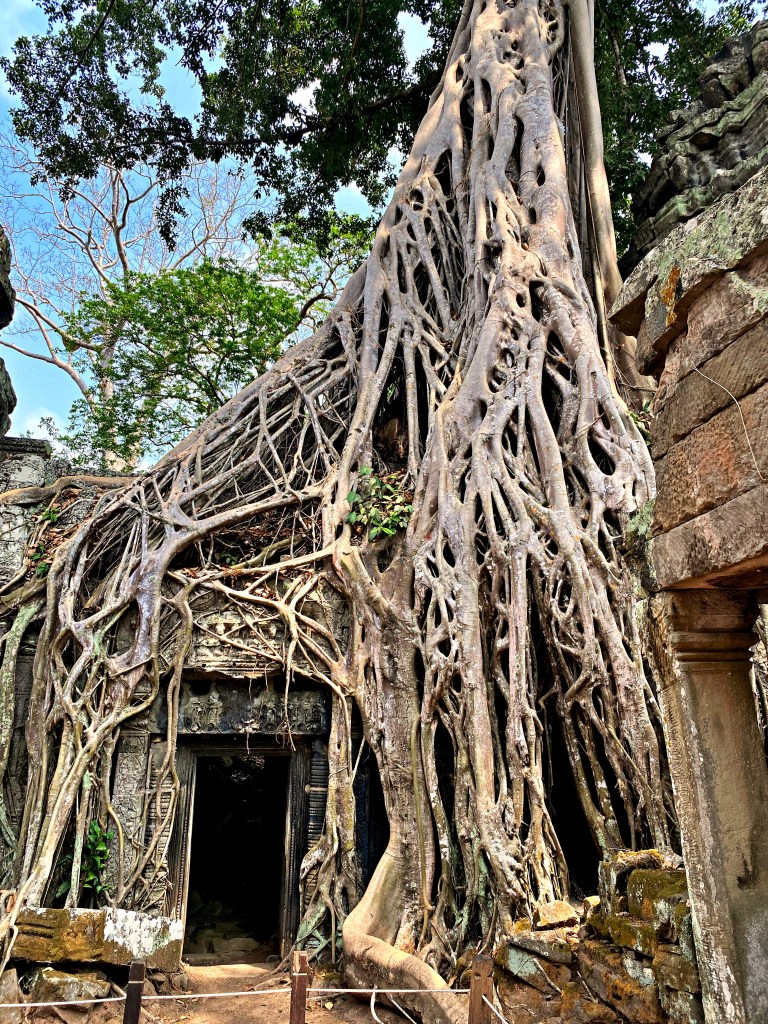
Fortunately, we had Samuth with us to connect some of the dots. Although not a trained scholar, he had done a lot of reading on his own, driven by personal interest and curiosity. He explained how the temples were first constructed in the early 12th century to honor the Hindu god Vishnu but converted to Buddhism later in the century.
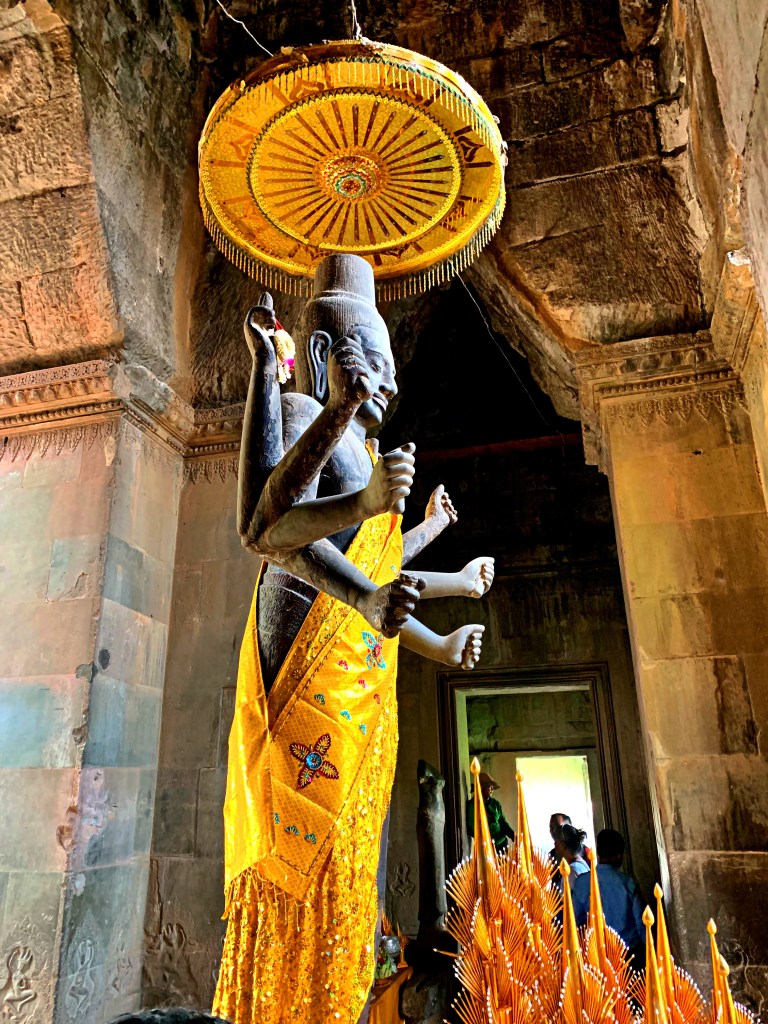
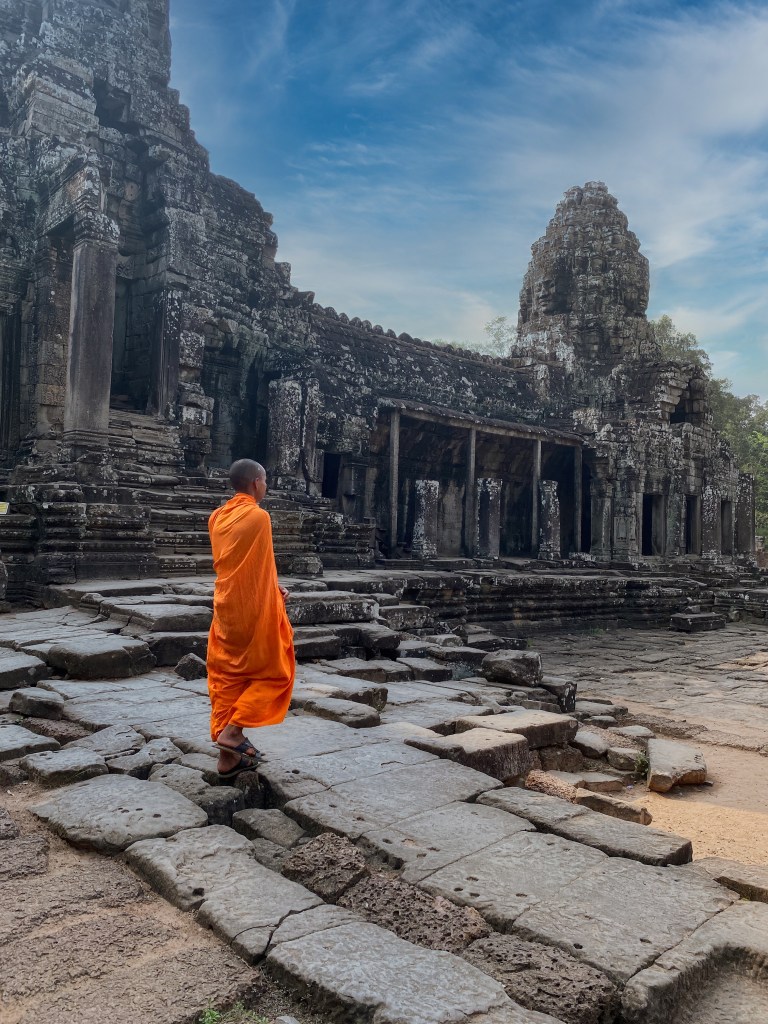
Sammuth was also good at explaining the wall carvings, which typically featured military events (similar to Egyptian hieroglyphs), and distinguishing soldiers of various nationalities who fought with or against the Khmers (Cambodians): Chams (Austroasiatic people who lived in modern day Vietnam), Chinese and Thai. In medieval times, as is the case today, Cambodia served as a ping pong ball in the competition between neighboring powers stronger than itself.
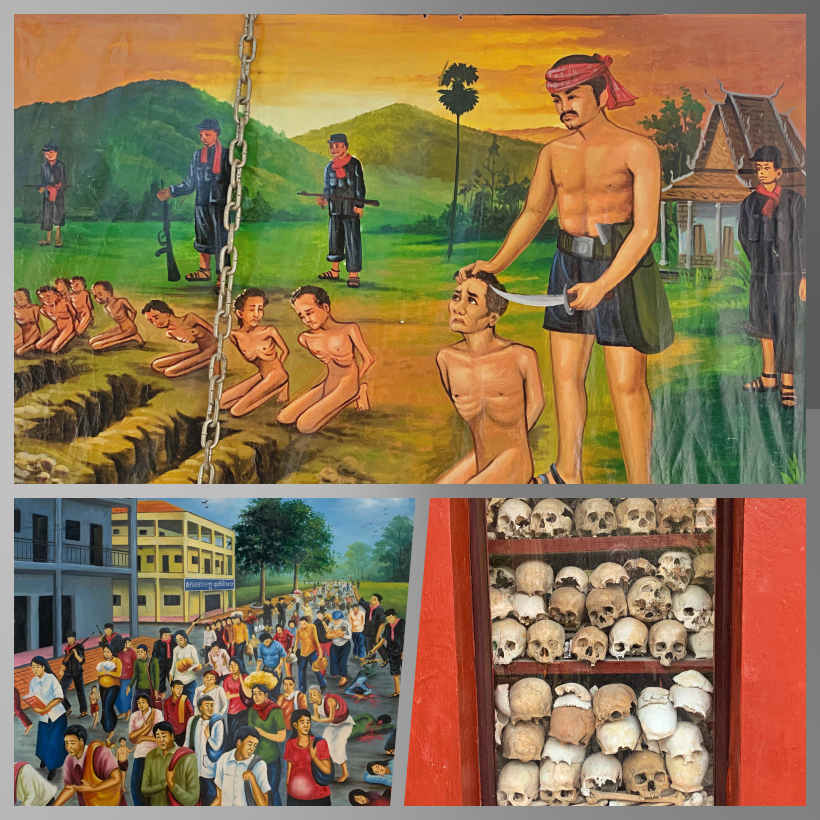
During the late afternoon ride back to the hotel, I asked Samuth to drop me off at the Wat Thmey Pagoda on the outskirts of Siem Reap. While he and Bina waited in the tuk tuk, I went inside for a quick look at the “Killing Fields” museum. This is one of several exhibitions the Cambodian government maintains throughout the country to remind people of the most horrific episode in their history: the death by execution or starvation of about two million people, a quarter of the population, at the hands of the Communist Khmer Rouge between 1975-79. It is thoroughly depressing to be reminded of all that, but important for understanding where Cambodia is today — and how far it’s bounced back.
The next day, we travelled to the Kulen Elephant Forest, located about an hour’s drive out of Siem Reap, to spend some up-close-and-personal time with “retired” elephants who had previously carried tourists around at the Angkor Wat park. The NGO group that runs the camp takes care of about 75 of them on 1,100 acres of protected forest land.
With about 15 other visitors, we began at the group’s lodge by helping make rice balls for the elephants, a combination of sticky rice, wheat bran, bananas and tamarind. The last ingredient is to promote digestion, always a problem for elephants, who extract nutrients from only half their food, which is why they spend most of the day eating.
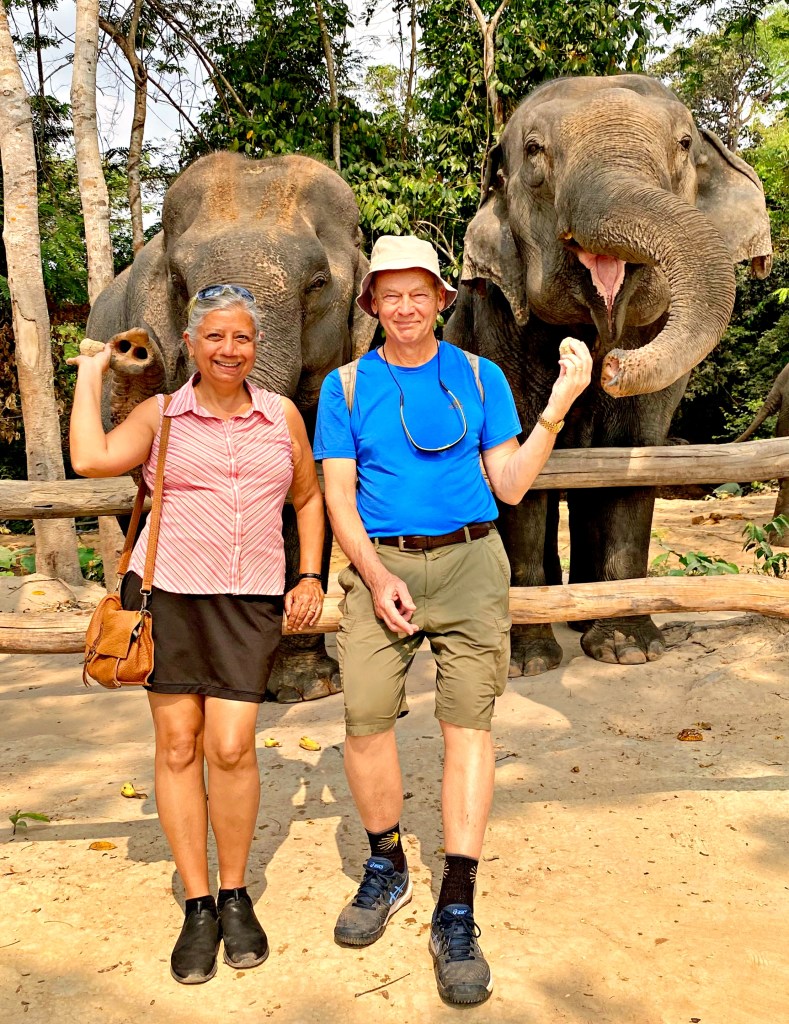
We then fed these rice balls to a few of the elephants at a nearby corral. Bina and I gravitated to the one named “Granny,” who was older than the rest and not as aggressive in taking her food as some of the others.
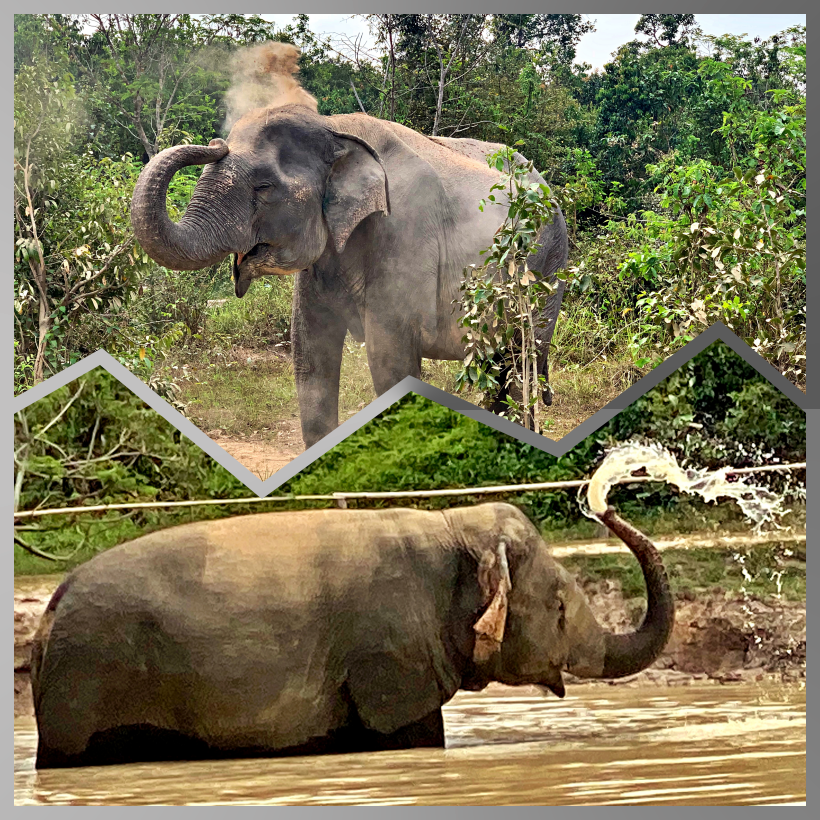
Next, we all took an hour-long walk into the forest with these animals to give them some exercise. We did a circle through the forest that ended at a large pond near the lodge where some of the elephants used their trunks to spray water on themselves. They immediately got dirty again, however, by applying mud in the same manner; the guides said this helps ward off the horse flies, which constantly pestered them during the walk.
Following a communal lunch at the lodge (chicken, rice, omelette and vegetables), we headed back to Siem Reap to spend a few hours of down time at the hotel before venturing out again at 4 p.m. to visit Tonle Sap Lake. This is the largest freshwater lake in Southeast Asia, reaching a maximum area of 16,000 square kilometres (6,200 square miles) during the rainy season from May to October.
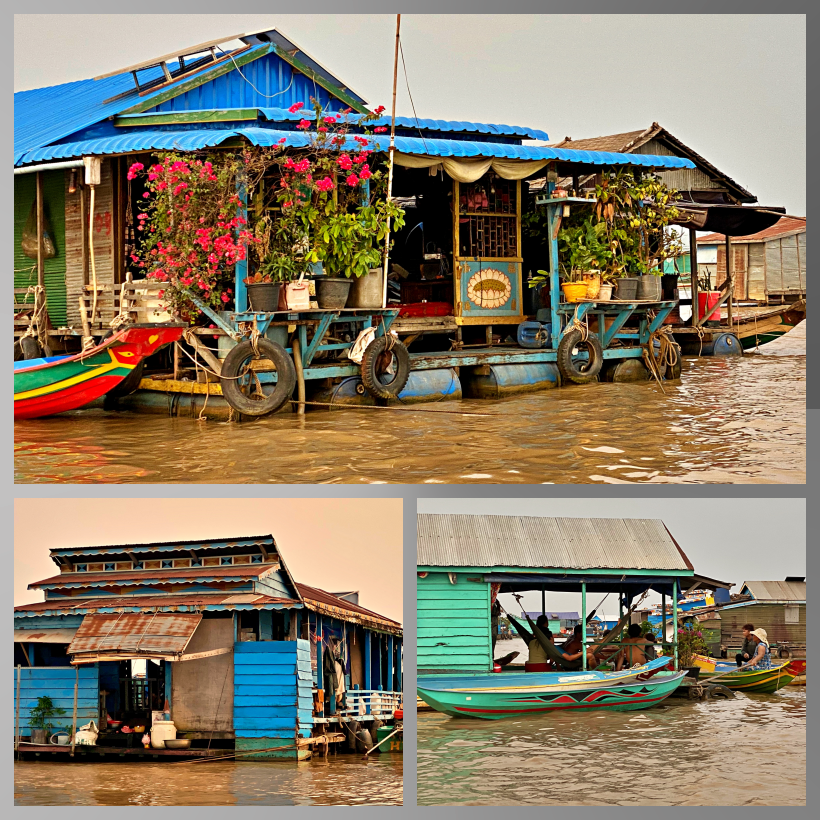
Samuth had hired a boat to take us on an hour-long ride into the lake, where we could view an entire village erected on stilts, with houses, shops and restaurants.
Now, about that airport … when Samuth’s hired car dropped us off the next day at the front entrance, we found the same situation as on our arrival: virtually nobody there. It was positively eerie walking through these half-deserted terminals. Siem Reap is Cambodia’s primary tourist destination, but would the traffic here ever justify the airport’s $1.1 billion price tag?
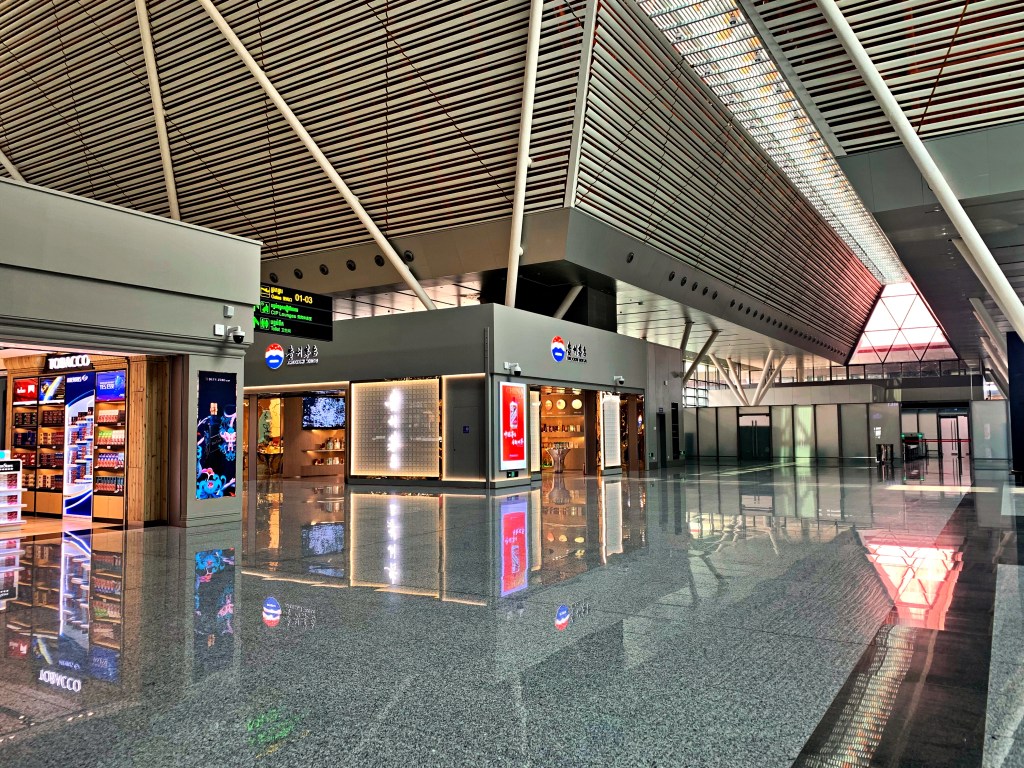
The Chinese have also bought up large tracts of the surrounding land to construct shops and apartments, to the point where locals now refer to the whole airport area as “Chinatown.” Is the end game here commercial profit or political advantage, given Cambodia’s strategic positioning between Vietnam, Thailand and Laos?
Those Angkor Wat carvings may provide a clue.
Note: Cambodia is an eager participant in the “Belt and Road Initiative,” China’s program to expand its influence around the world via infrastructure projects such as the Siem Reap airport. Since 2002, Cambodia has received nearly $3 billion worth of grants and concessional loans from China, to whom it now owes 41% of its $10 billion in total foreign debt. Quite a burden for one of the poorest countries in Southeast Asia.


thanks for sharing! Beautiful photos!!
LikeLiked by 1 person
Thanks, glad you enjoyed Bina’s photos!
LikeLike
As a couple of followers have pointed out, these photos really are outstanding. Nice juxtaposition of color in one place. A tribute to the photographer and also to the subjects Cambodia offered to shoot. Ken, glad you stopped in at the killing fields museum. Even a short story on Cambodia would be missing something without it. Loved the elephants!
LikeLiked by 1 person
Thanks, Clint, for that nice tribute to Bina’s photography. She does work hard on that. And yes, I agree that you can’t ignore what happened back in the 1970s. Thankfully, the country has come a long way since. And the elephants were lots of fun!
LikeLike