On the third day of our visit to Morocco, we met our full-time driver, Aziz. He spoke fluent English and turned out to be urbane and relaxed, the ideal person to show us a bit of the country. We even liked the music he played on his car stereo: traditional Berber tunes performed with modern electric instruments, a kind of Middle Eastern cool jazz.
We began with a day trip from Marrakesh to Essaouira, a town on the coast. The landscape was dry scrub for most of the way, with patches of cultivation serviced by wells. Watermelons must have been in season because we saw lots of them being sold from roadside kiosks.
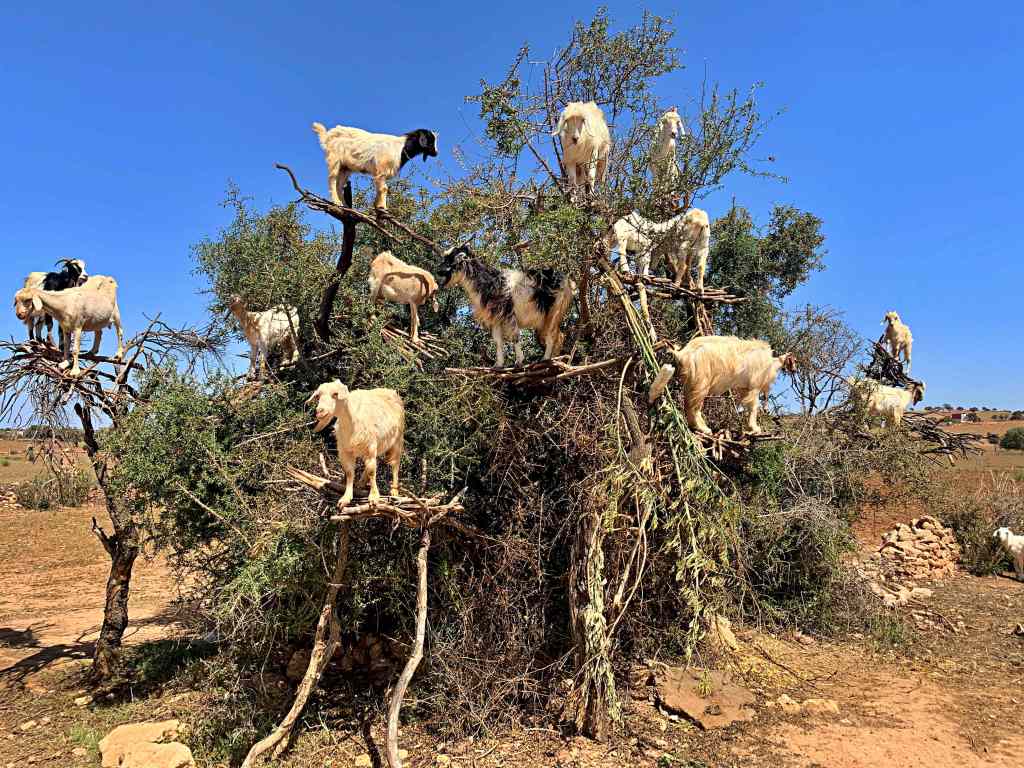
We did stop for the obligatory goats-in-the-Argan-trees photo. Argan is a drought-resistant tree that grows only in parts of Morocco and Algeria, producing an oil used for cooking and medicinal purposes. Since the early 2000s, farmers living alongside the highway have been stationing their goats in the trees on platforms made of branches to attract gawking tourists, who typically leave the farmers a tip.
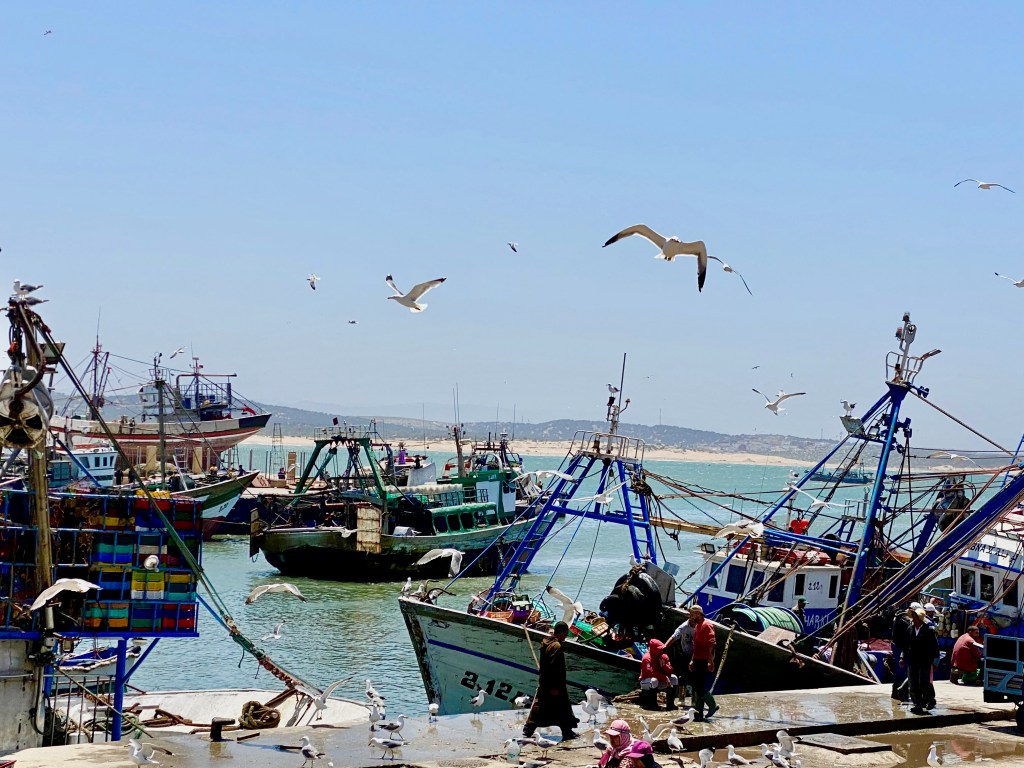
We enjoyed Essaouira, with its port area for fishermen to unload their catches of the day and a walled quarter of handicraft shops selling silverware and wood products. The vibe here is a lot more relaxed than in the Marrakech medina; the vendors let you browse at your own pace without lots of sales patter. For a westerner, it’s more shopper-friendly.
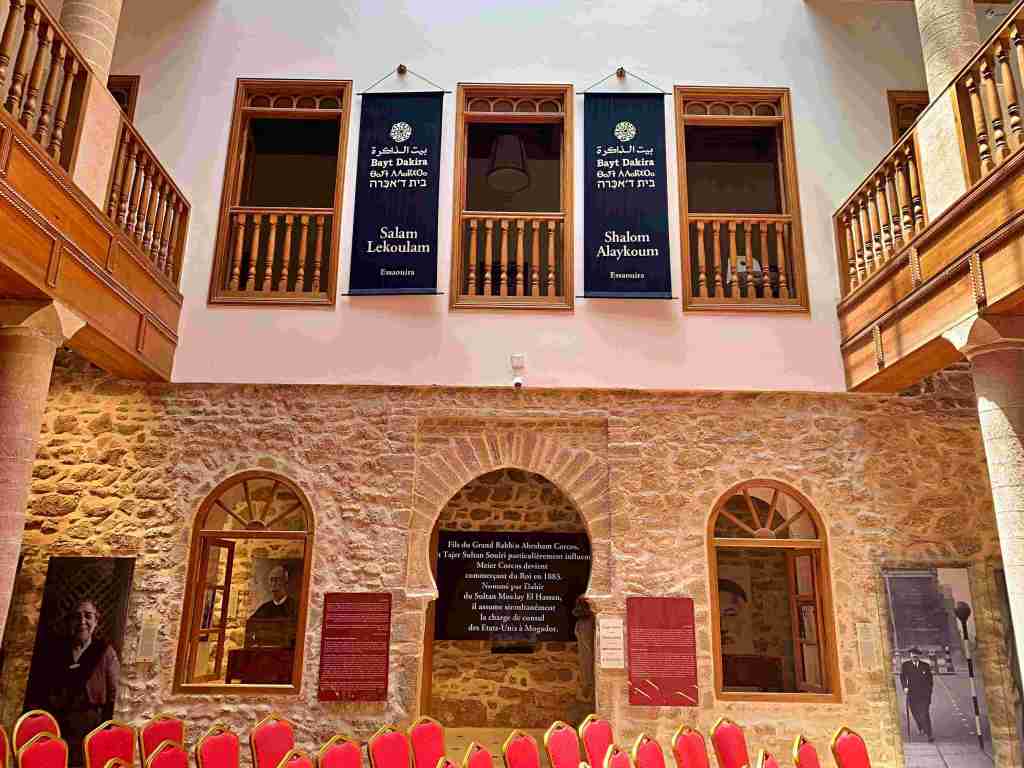
We were particularly intrigued by the Bayt Dakira (“House of Memory), a museum dedicated to the large community of Jews that once lived in Essaouira. Most of them left after the creation of the state of Israel in 1948. We ended our visit with a delicious meal of fish tagine and grilled seabass in one of the town’s restaurants.
The following day, we set off from Marrakech on a two-day excursion to Morocco’s eastern desert, nearly to the Algerian border. This involved crossing the Atlas Mountains, which provided some scenic views on the N9 highway, which is known for its vertiginous drops. Fortunately, Aziz drove carefully and the highway had been widened in recent years to make it safer.
At one junction, we diverted from the N9 to make a visit to the Kasbah at Telouet. Sometimes called the “Palace of Glaoui,” this complex of stone and mud brick buildings had been the stronghold of the politically powerful El Glaoui family, one of whom served as Pasha of Marrakech from 1912-56.

We made another interesting stop at Atlas Studios, 5 km west of Ouarzazate on the N9, which attracts film crews requiring a Middle Eastern or Asian setting. Notable movies partially made here include Jewel of the Nile, Cleopatra and Kundun. During a guided tour, we noticed some extras wandering around in Pharaonic costumes. The guide said they make between 30 to 40 euros a day, comparable to what extras would make in Europe per-hour.

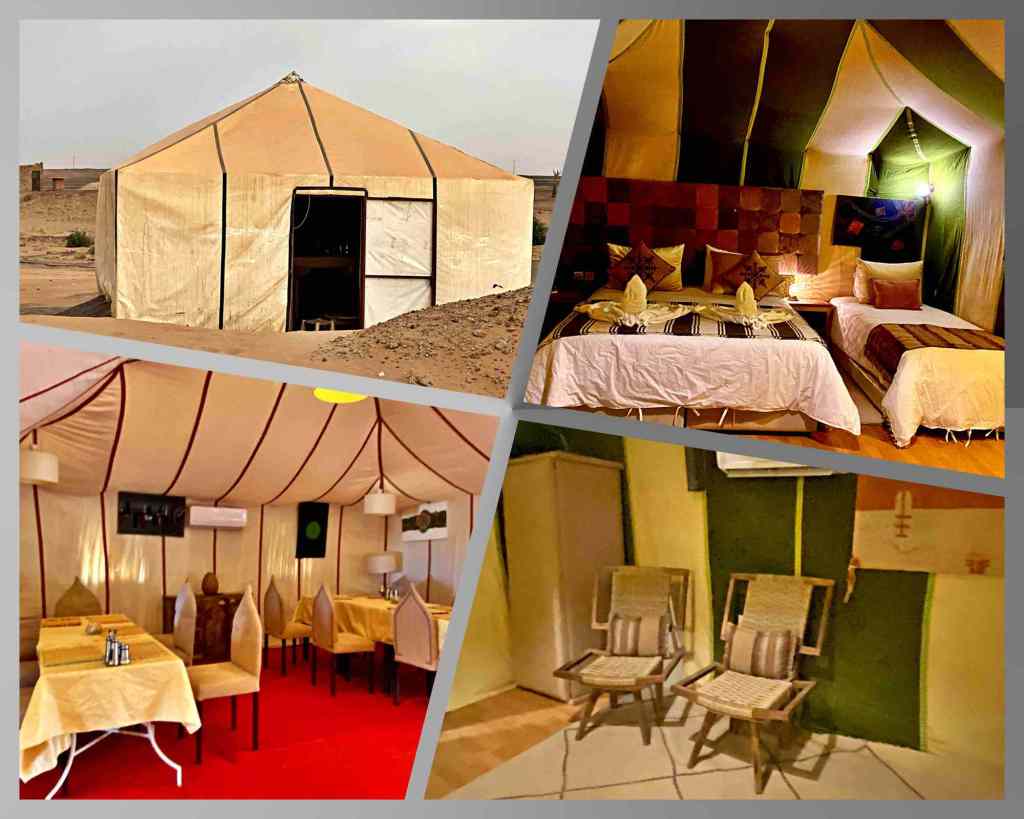
After spending the night in the Xaluca Dades Hotel nearby, we continued on to the edge of the Erg Chebbi Desert to enjoy glamping and camel rides, our last adventure before driving to Fez for our flight back to Portugal. Just before reaching our lodging for the night, Aziz made a diversion off the main road to show us a ruined mud brick house that had belonged to his father. The arid desolation impressed on us how much progress the family had made in two generations —from father raising goats in the desert to city-dwelling, educated son driving his own Toyota Prado LandCruiser.

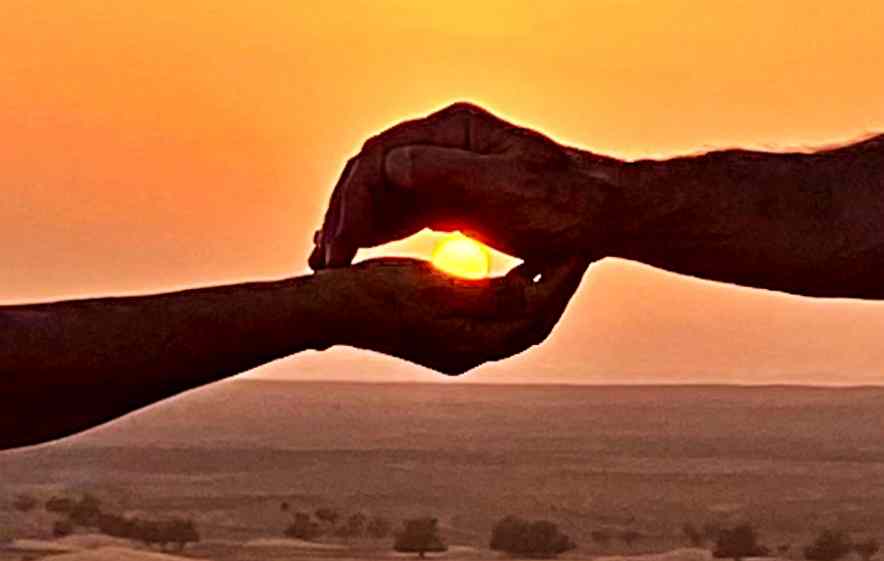
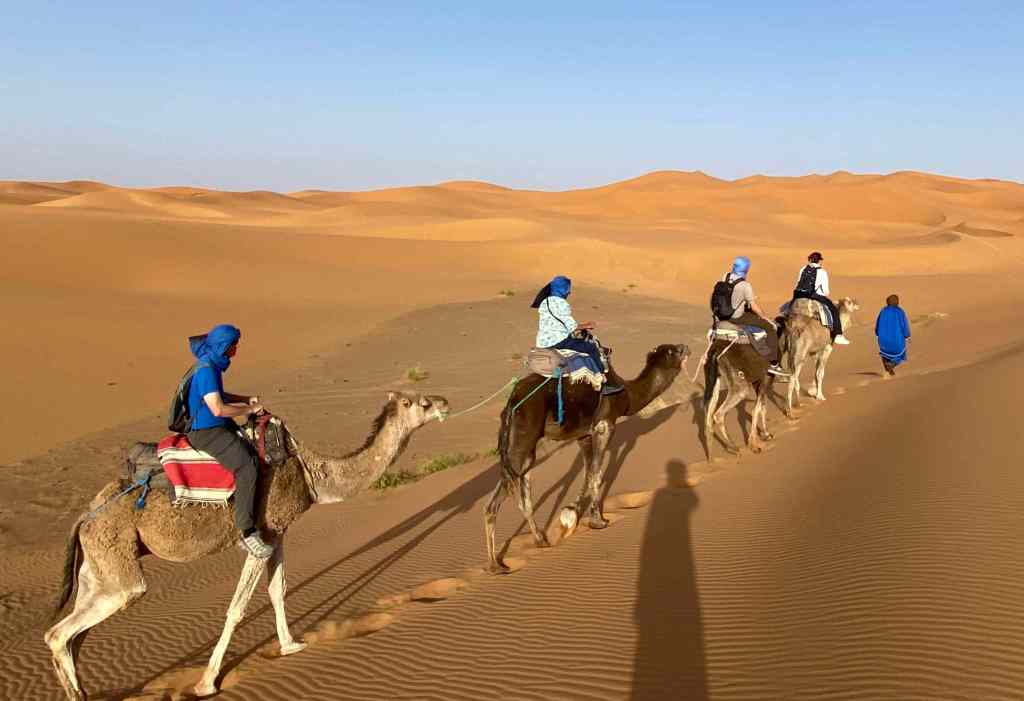
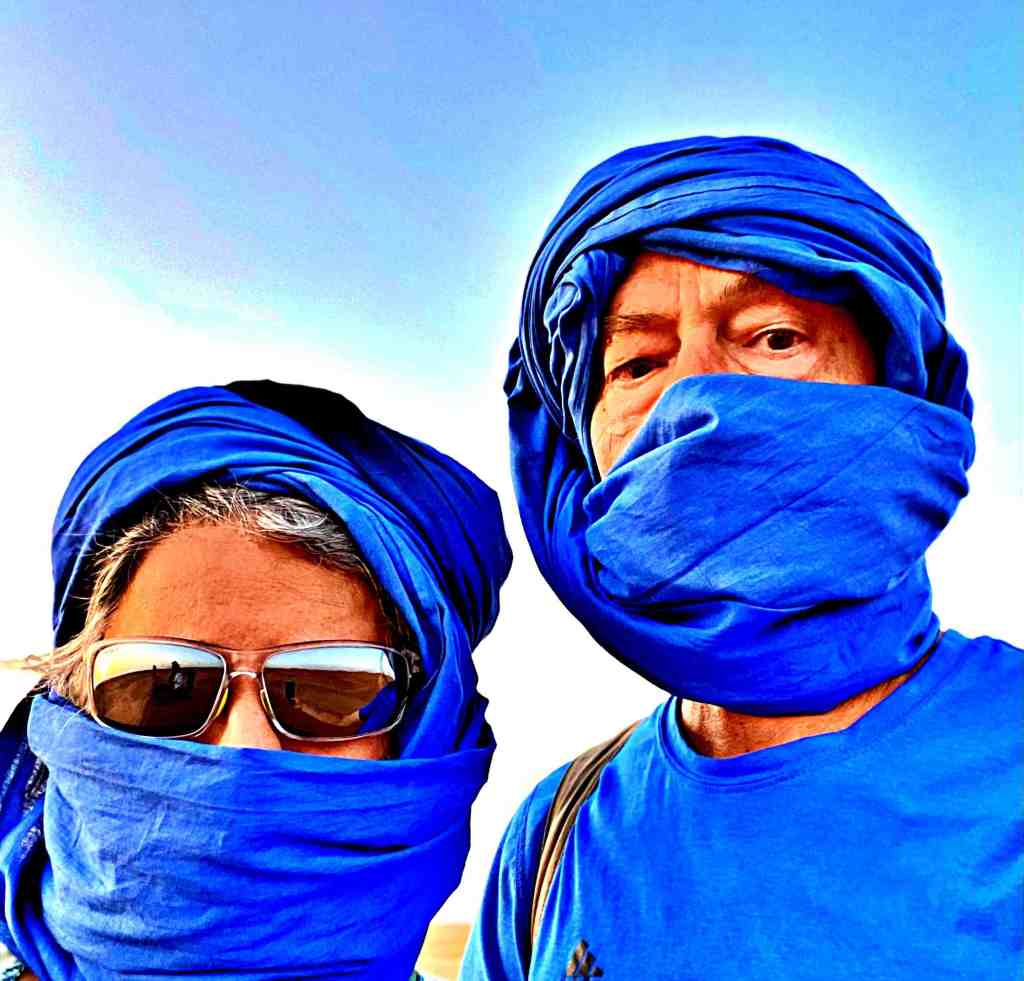
That LandCruiser, by the way, got a flat tire from a sharp rock shortly after we resumed the journey and Aziz had to spend 45 minutes in the 37 (98 F.) degree heat to change it. Despite the delay, we managed to reach the Auberge Sud Hotel by 4 p.m., just enough time for Bina and me to join that evening’s camel excursion into the nearby sand dunes. This slow, plodding ride, which lasted until sunset, provided us with some photo highlight of the trip.
Let me hear you now: “Colored cottons hang in the air/ Charming cobras in the square/Striped djellabas we can wear at home.”


Enjoying reading of your adventures! It gives me ideas for my next excursion. Hope you both are well.
LikeLiked by 1 person
Thanks, Anonymous. Glad you enjoyed the post.
LikeLiked by 1 person
Hi. You both actually rode a camel?
2006, attended Sunday Morning worship at the Anglican Church in Gibraltar. Morocco was a focus. The worship was broadcast via Radio Morocco and it had to be completed in 60 minutes. No mean feat for Anglicans. Enjoy your time. Love following your travels.
LikeLike
Thanks, Anonymous. Yes, indeed, we both rode camels, albeit a short distance. The radio broadcast sounds like a challenge!
LikeLike