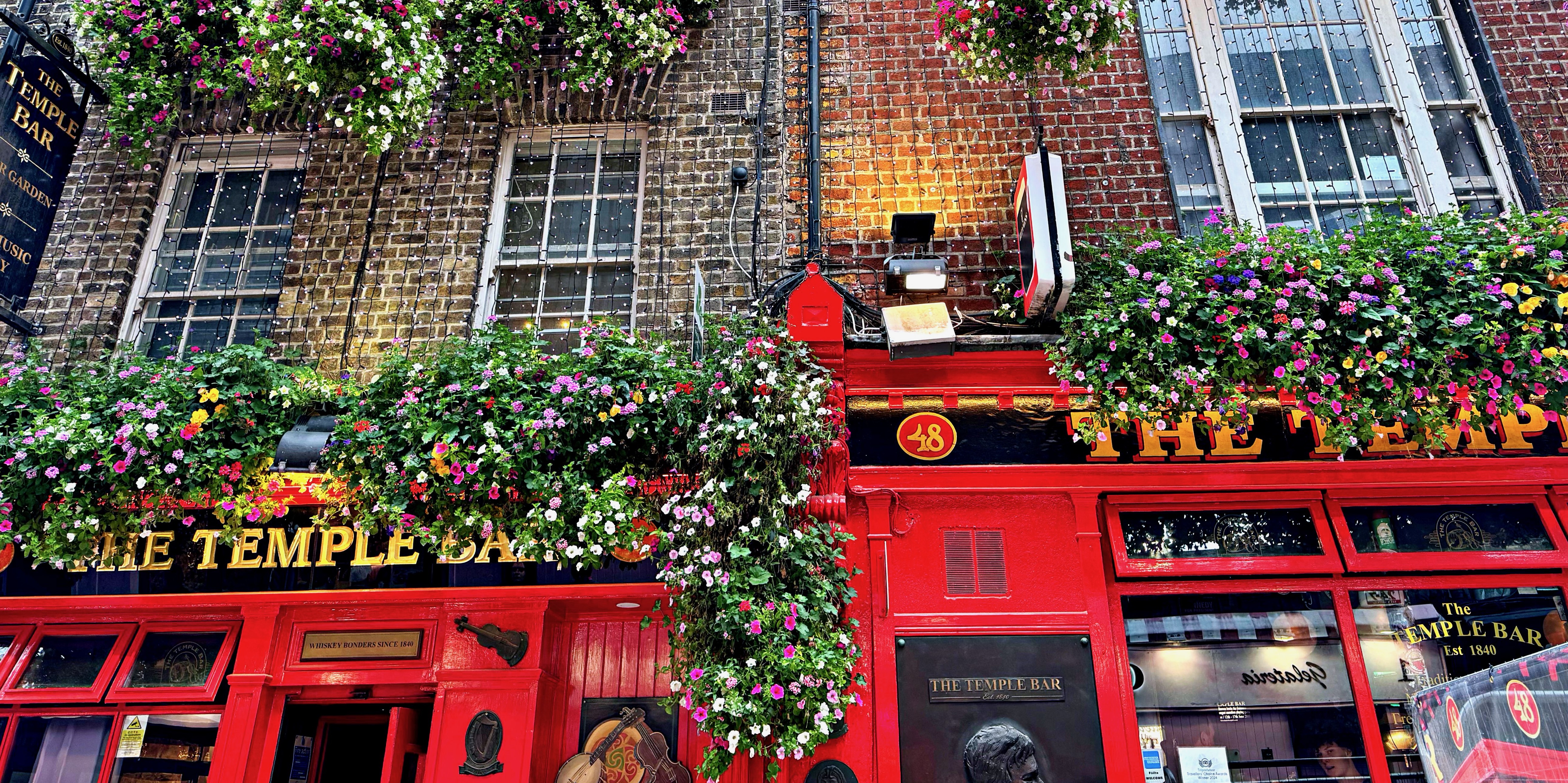
Our Dublin hotel was perfectly situated by the River Liffey within walking distance of the city’s prime tourist areas: Grafton Street, Dublin’s pedestrian-only avenue for high-end shopping; St. Stephen’s Green, the city’s central park; and the Temple Bar nightlife district near the river, where the original pub of the same name has served drinks for the past 220 years. Having easy access to all three areas proved an efficient way to experience the city.
Most memorable for us was seeing Riverdance at the Gaiety Theatre, which is just off Grafton Street and near the park. The shows were selling out quickly but Bina managed to navigate the mysteries of Ticketmaster — what, provide your foreign address with an Irish postal code? — to snag two tickets for our last night in Ireland.

For those who have watched Riverdance on television, there’s no comparison with a live performance, where you viscerally experience the rhythm of the dance steps in time to the sprightly Irish music. And to see this show in Dublin in a restored 19th century theatre made it particularly special.
At Trinity College, which faces the northern end of Grafton, we viewed the Book of Kells, the 9th century illustrated manuscript of the four gospels. Visitors are allowed to see only one page of the book, which is kept under glass and closely guarded; the pages shown are changed every eight weeks. During our visit, it displayed the first names in Luke’s presentation of Jesus’ genealogy.

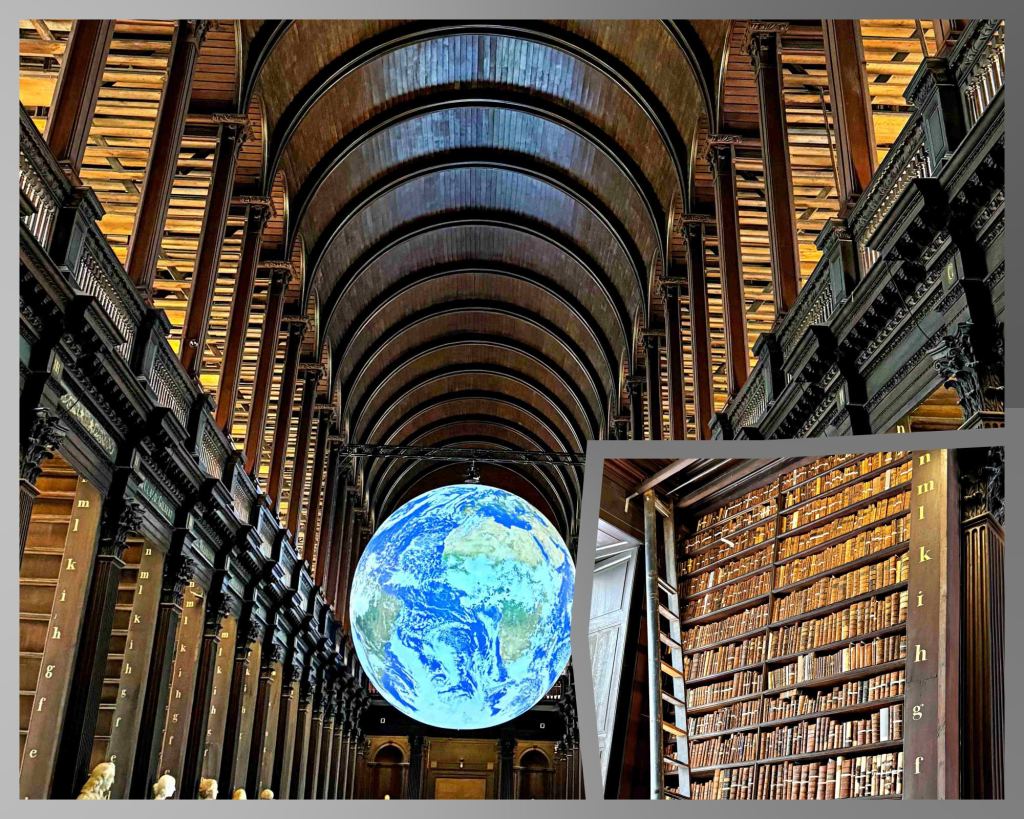
The “Book of Kells Experience Tour,” which you must reserve in advance, includes an excellent museum that explains how the book was created out of vellum (calfskin), illustrated and then preserved over the past 1,200 years. We also got a look at the “Long Room” at Trinity, which housed 200,000 of the library’s oldest books until most were removed to make way for a major renovation of the entire facility that will begin next year. The room’s dominant feature currently is a three-dimensional sculpture of the earth, entitled “Gaia,” that is based on NASA photographs taken from space.
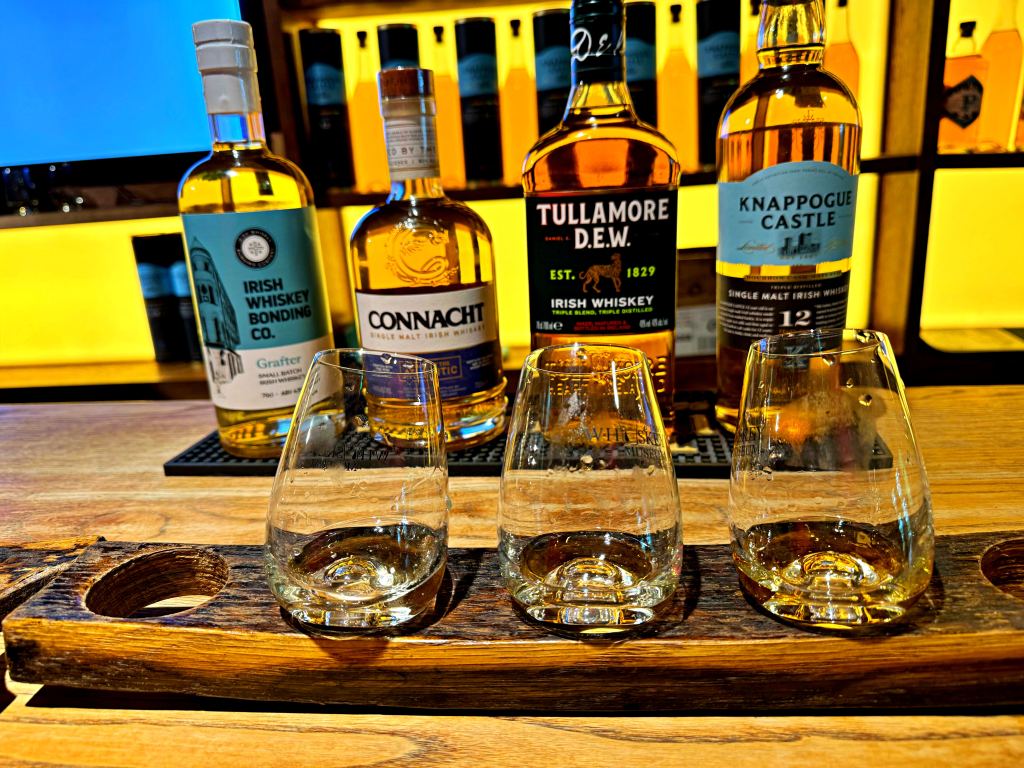
In a rather different vein, we also took in a tour at the Irish Whiskey Museum, which is located right across from Trinity College. The stories dispensed by our wisecracking guide were certainly entertaining — for example that the Irish Wake developed as a way to make sure that people were fully dead. That was necessary, he said, because the Irish love for moonshine whiskey sent many of them into comas, from which they awoke while interred in coffins underground!
Moving to more solid ground, the guide also explained how Irish manufacturers developed a three-step distillation process in the late 19th century that made their product smoother than Scottish or American alternatives. And we got to sample several of those whiskies at tour’s end. We didn’t realise that there was such a difference in the taste of whiskies!
We gained other insights into Irish culture at the Epic Migration Museum, located right across the river from our hotel. This large and modern museum was founded by a former CEO of Coca-Cola, Neville Isdell, who left Ireland with his family when he was 10 years old. The exhibits tell the story of Irish migration throughout the centuries, including the potato famine of 1845-52, during which nearly a fourth of the population departed, mainly to the U.S.
The impact of that event can be measured by the fact that today nearly 35 million Americans claim some Irish ancestry, compared to a population of only 6.6 million for the entire island, north and south. We also learned that John, Paul and George (but not Ringo) had Irish ancestors; Liverpool attracted so many Irish immigrants during the potato famine that they constituted 20% of the population by 1852. When the Beatles played Dublin in 1963, Lennon proclaimed, “We’re all Irish!”
Which reminds me … In 2019, Bina and I volunteered for two weeks at the Pilgrims’ Office in Santiago de Compostela, where we issued certificates to people who had completed the Camino de Santiago. One of the hikers who approached my station was a middle-aged fellow with an Irish passport. Noting that he had the same name as me, Kenneth, I asked, “Isn’t that an unusual name for an Irishman?” (“Kenneth” is Gaelic in origin, but Scottish rather than Irish.)
Irish Kenneth nodded and smiled. “My Dad used to say, ‘I gave you that name because you were intended for export.’ Ireland being a poor country in those days, young people had to go overseas for jobs. My father named me ‘Kenneth’ because he always intended for me to go to London to work. He must have thought I would fit in better if I went under that name instead of ‘Sean’ or ‘Patrick.’”
Irish Kenneth actually ended up in Rochester, New York, where he spent his career in the photographic film business at Eastman Kodak. “I really consider myself half American,” he said.


So happy to see you both enjoying your lives through these amazing travels. God bless you both and keep us posted with these wonderful stories and photos.
Trixie and Ingo!
LikeLiked by 1 person
It was great hearing from you, Trixie and Ingo! We hope that both of you are healthy and enjoying your lives in Costa Rica. And glad to hear that you enjoy our travel blogs!
LikeLike
What a great post! Sorry I didn’t get to it sooner. This is where Anne and I want to go first after she retires. Would you identify where you stayed?
LikeLiked by 1 person
Oh, and ask Bina to say how she did that photo inset. Thanks.
LikeLiked by 1 person
Hi Clint. Thanks as always. In Dublin, we stayed at the Travelodge PLUS Dublin City Centre. This place is clean, modern and reasonably priced (by Dublin standards) and is very well situated for exploring the city, as we noted. It’s also air conditioned, which a lot of hotels in Ireland are not. On warm days, you want that. Finally, it’s far enough on the periphery of the central city so that it’s fairly quiet. One area you don’t want to stay is in the middle of the Temple Bar district, with all the bars and night clubs.
LikeLike