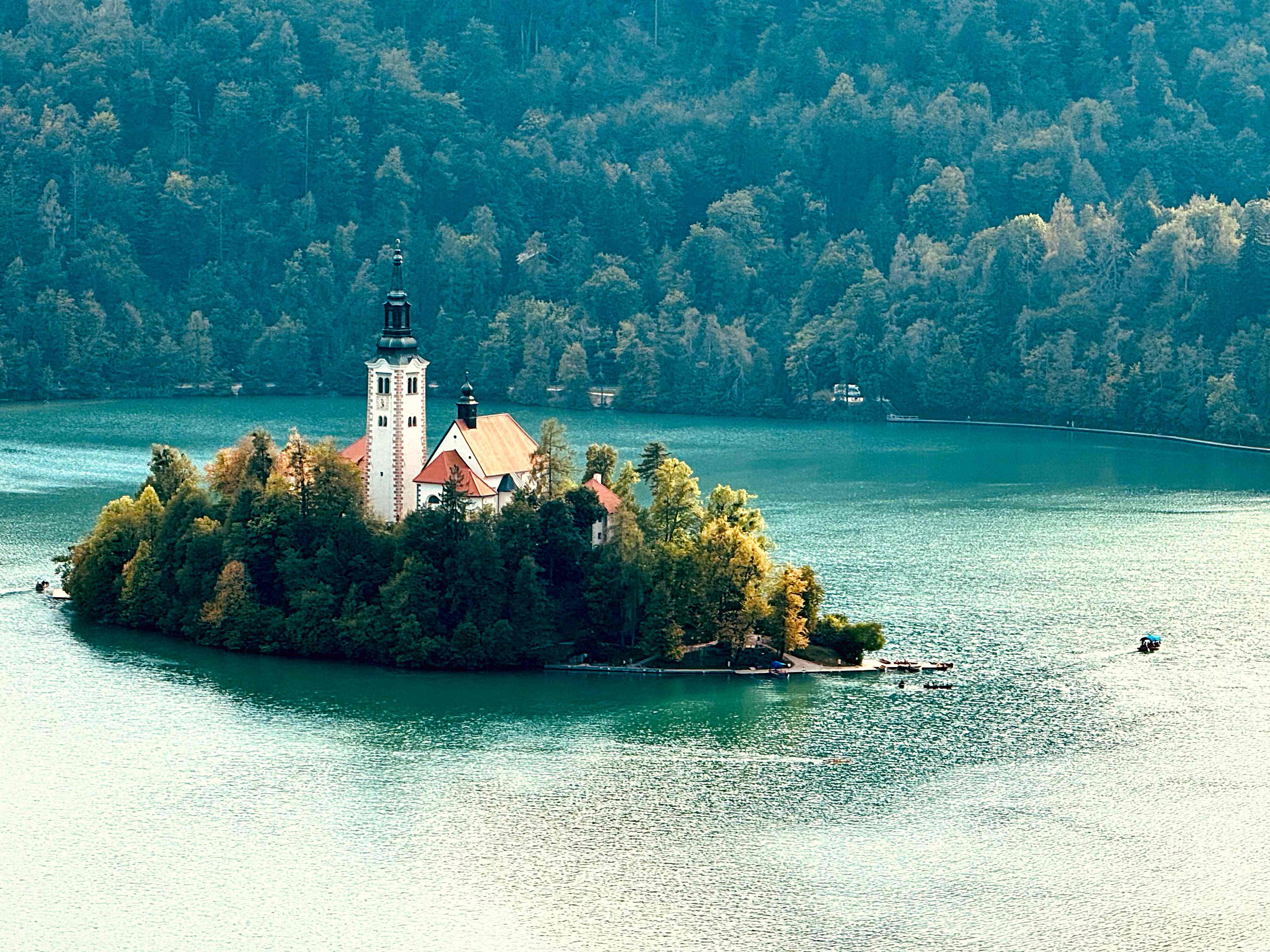
We chose to focus our Slovenia stay on Lake Bled. This made sense for us given that Lake Bled is undeniably the most celebrated area of the country in terms of scenery. It’s also convenient to access, being only a 45-minute drive from the capital of Ljubljana, where we landed.
Since our flight arrived late in the evening, at 9:30 p.m., too late for a bus, our landlord agreed to pick us up at the airport, for a moderate extra fee. The apartment we had rented for three nights in Bled proved ideal, within easy walking distance of the lakefront area, but far enough away to avoid the traffic noise and crowds.
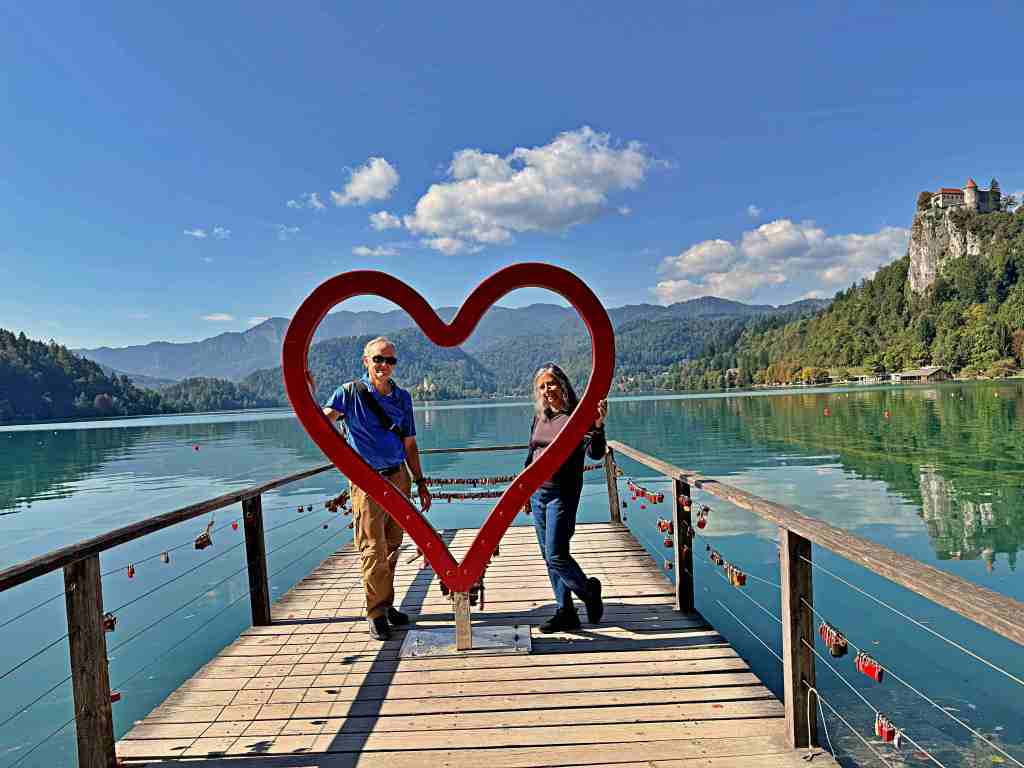
Lake Bled’s status as a tourist mecca makes sense the minute you see it — camera bait in its purest form: a green, wooded lake, with an island in the middle featuring a white-walled church topped with red tile roof, all of this overlooked by a castle perched on a lakeside mountain. The Julian Alps, which stretch from Slovenia to northern Italy, frame the scene nicely.
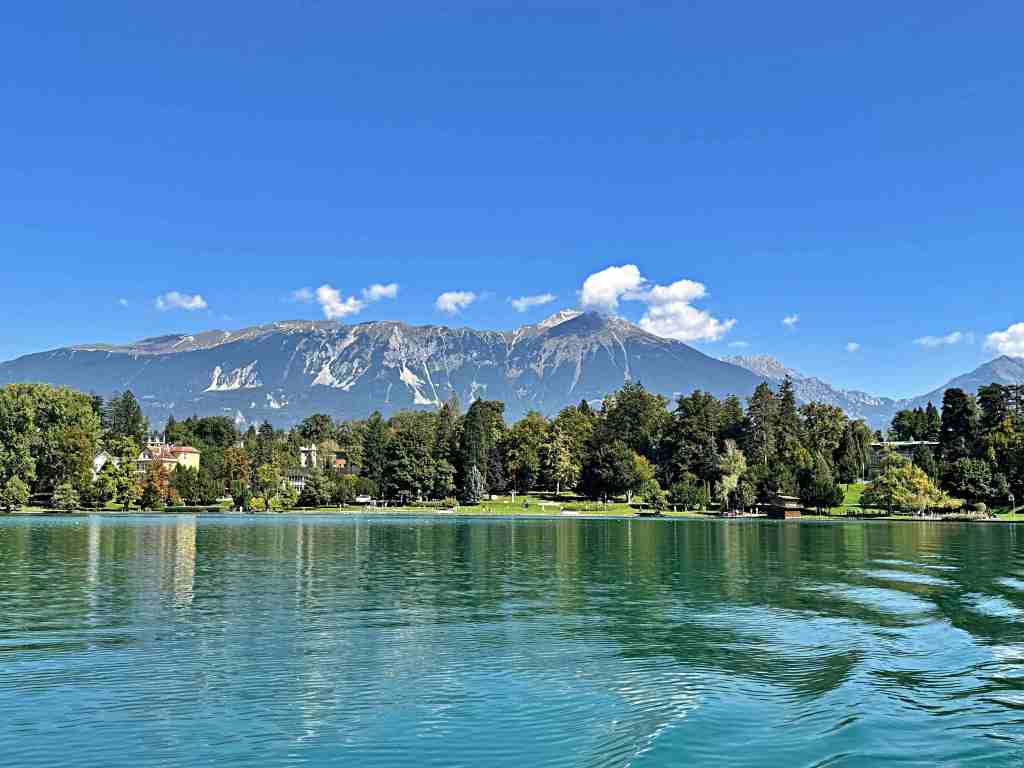
The island and church first gained fame in the 12th century as a site for venerating the Virgin Mary, attracting pilgrims from Slovenia and surrounding countries. In 1855, Swiss naturopath Arnold Rikl built an Institute of Natural Healing in Bled to take advantage of the area’s thermal waters.The opening of a railroad station nearby in 1870 encouraged more visitors, and by 1906 Bled was officially classified as one of the top spots for tourism in the Austro-Hungarian Empire.
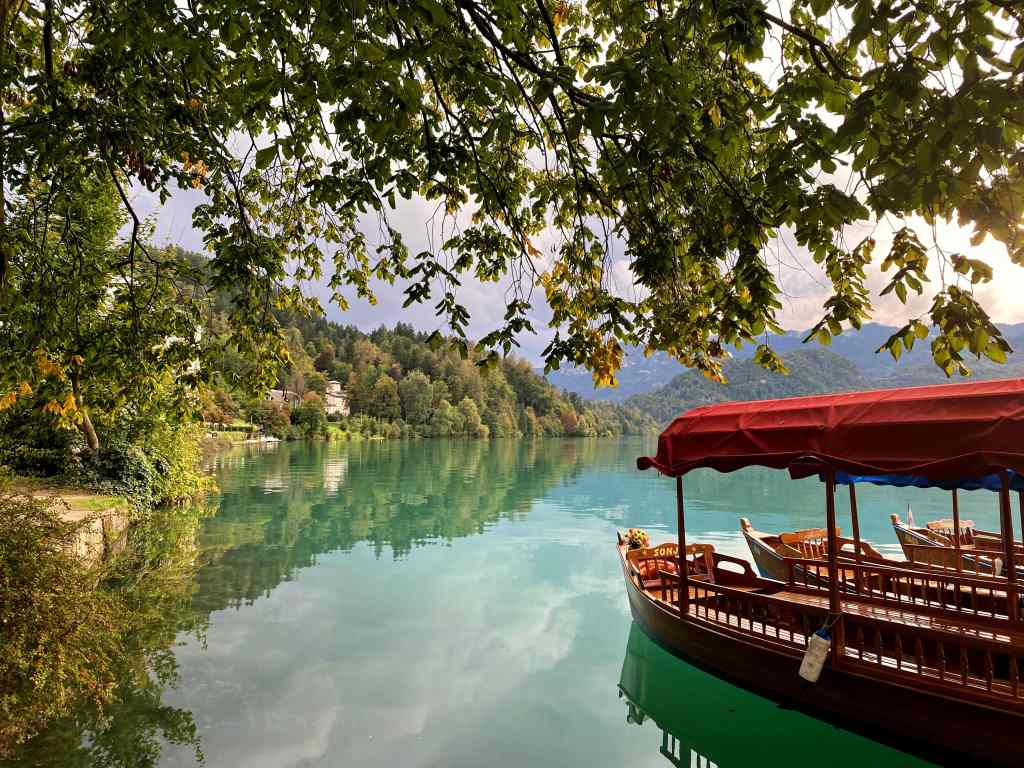
You can still find thermal baths in Bled, but the real focus today is the lake, attracting nearly half a million tourists in 2023, the top contributors being Germany, the UK and U.S. One must-do activity for these visitors is to take a flat-bottomed pletna boat to visit the church on the island. The traditional pletna resembles a Venetian gondola in that it is powered by an oarsman standing in the back. We actually took one that was powered by an electric engine — less crowded and got us to the island quicker.
The main attraction on the island is the Church of the Assumption of the Blessed Virgin Mary. Although some form of chapel has been on the site since the 7th or 8th centuries, most of the the current building dates from the 17th century, with a key feature being a “wishing bell.” Pull on a rope hanging down from the dome and you will ring a bell that sounds out across the lake — and hopefully carries your wishes and prayers to the right ears above.
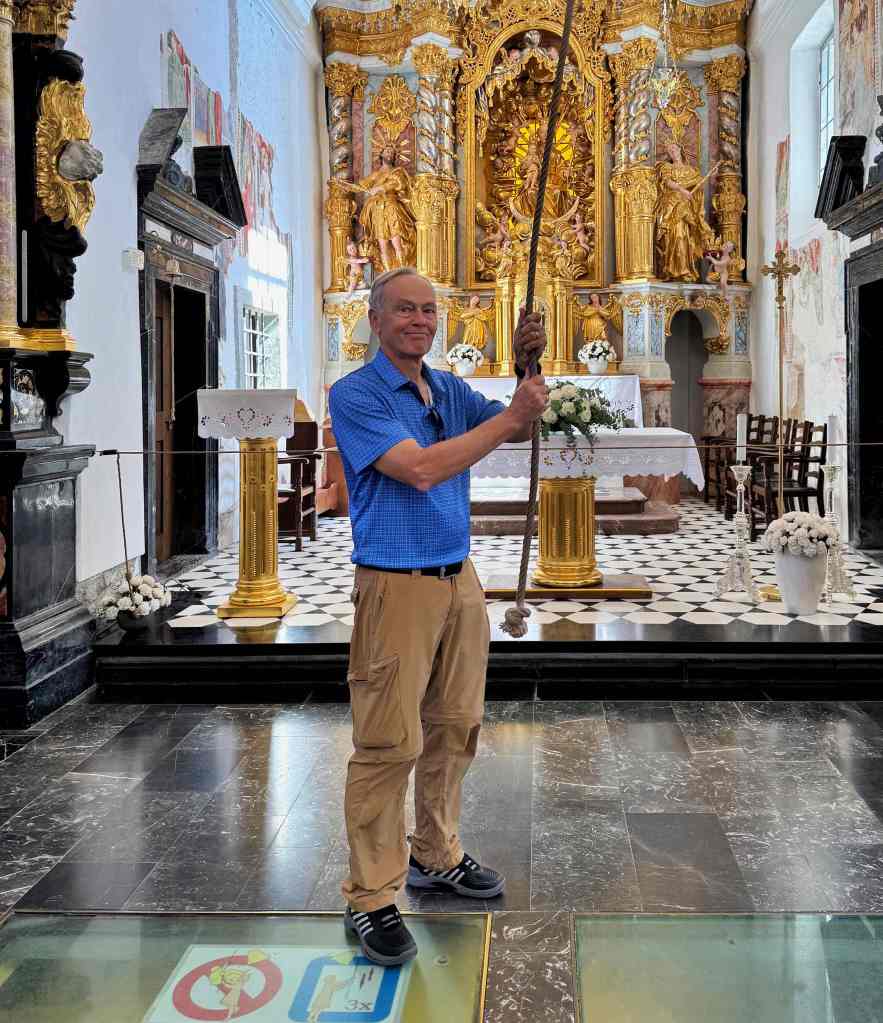
Next to the church is a tower featuring a pendulum clock, which can be viewed by climbing 90 steps to reach the top. This tower was first built in 1511, following an earthquake that destroyed a previous structure on the site, and then renovated in 1680, with the clock installed in the late 19th century. This device, which corroded over time, was completely restored in 2013 and today serves as a monument to the lost art of mechanical time pieces.
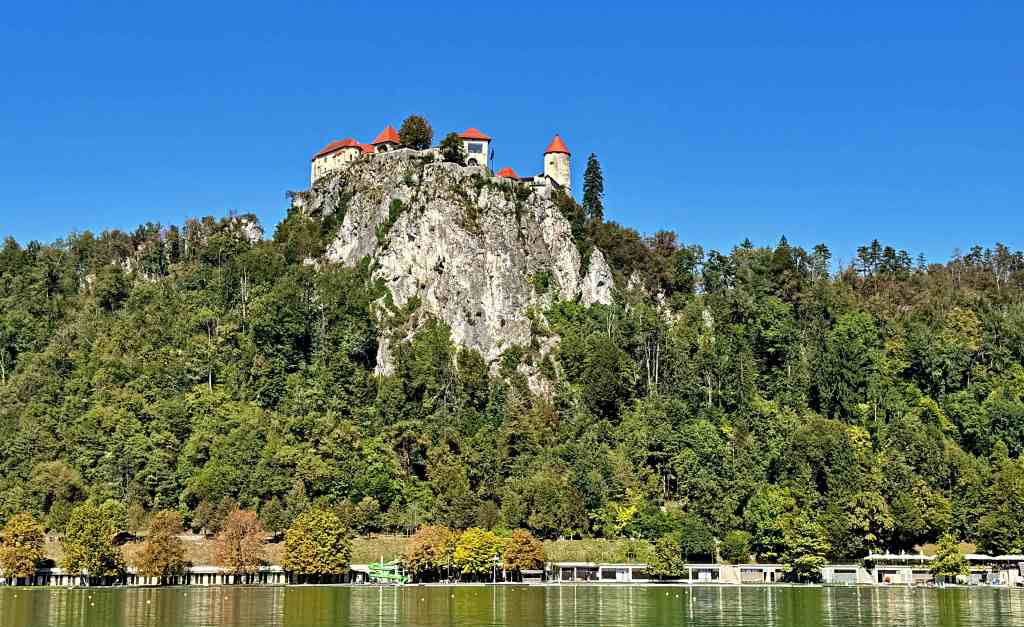
The other “must-see” place is Bled Castle. Perched on a 125-meter (410 ft.) cliff overlooking the lake, this fortress dates to the early 11th century but attained its current form after renovations in 1511 and 1690. Completely looted during World War II, the castle is in good shape today following recent restorations and contains several small museums. From the ramparts, you get superb views of the lake and surrounding area.
Bina and I originally considered visiting some other scenic sites outside of Bled, such as Vintgar Gorge and Lake Bohinj, but rain derailed those plans. Stuck in the apartment for most of our second full day, we used the time to book the last of our reservations for the trip. We were relieved that the sun returned the following day, when we took the bus into Ljubljana.
We hadn’t been sure what to expect of this city; it’s not one of Europe’s more celebrated capitals. But we immediately liked the compact layout of its historic quarter. Virtually everything of interest clusters around a bend in the Ljubljanica River that wraps around part of the hill topped by Ljubljana Castle. The district by the riverbanks is chock full of cafes, restaurants and shops, and our hotel sat right in the middle of it all.
Our enjoyment of the city owed much to the presence of Nusa Javornik, a native Slovenian we had met back in 2019 in Spain’s Santiago de Compostela, where we had volunteered to help pilgrims who had completed the Camino de Santiago. Having stayed in touch with her since then, we took the opportunity to reconnect with her in person. (Note: In 2023, we visited another of those Camino volunteers, Alex Pederson, in Tromsø, Norway.)
After lunch, Nusa showed us around the riverside to view Ljubljana’s celebrated bridges and squares and to take the funicular up the hill to the castle, which dates to the 11th century. The castle remains an impressive sight today and serves as one of Ljubljana’s prime cultural venues for concerts and exhibitions.
Nusa then showed us a path down the hill back into the city, taking us to the 17th century Church of St. James. This happened to have an office dedicated to the Camino de Santiago next door, which provided a sentimental link to our shared Camino experience.

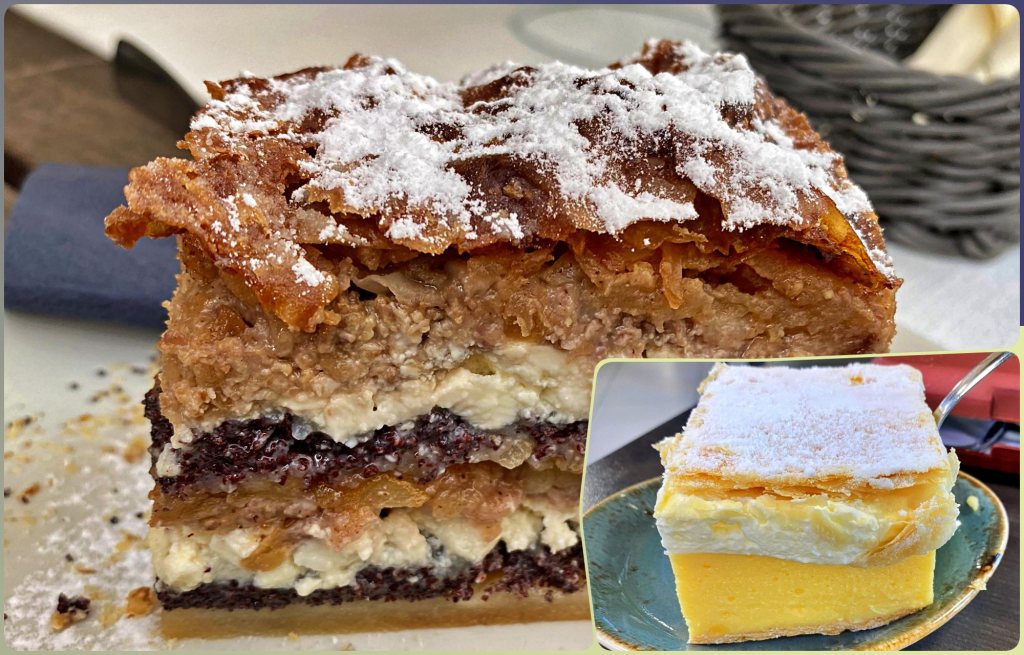
We finished our visit with Nusa at a cafe specializing in the traditional Slovenian dessert known as Prekmurska Gibanica, which is phyllo pastry filled with poppy seeds, walnuts, cheese and apple. We enjoyed this more than the famous Lake Bled Creme Cake we had tried a few days before in Bled.
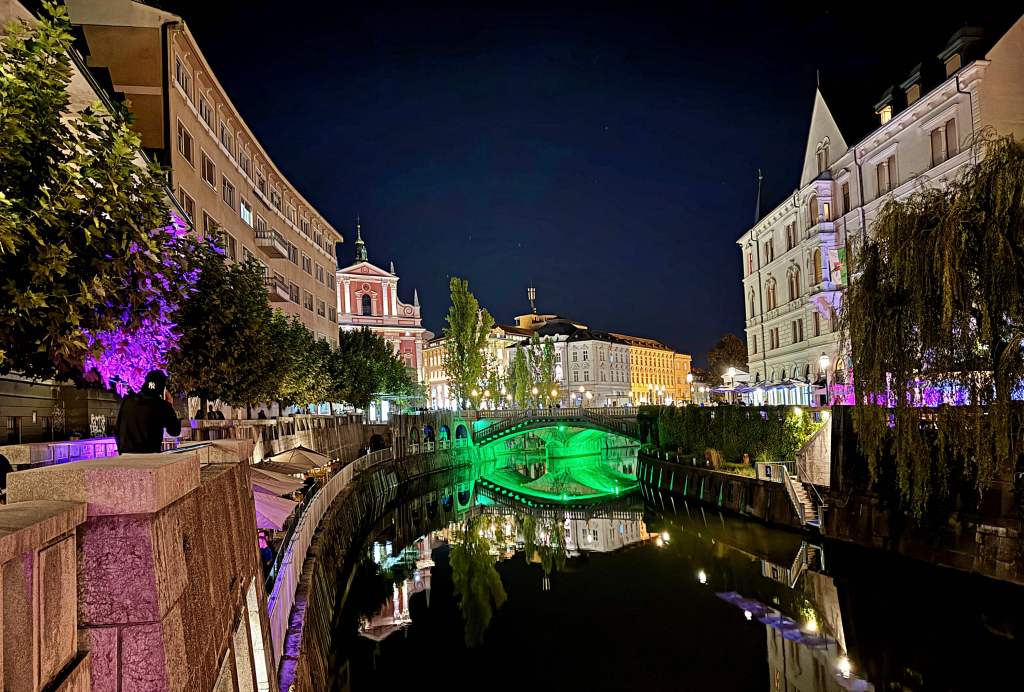
After Nusa left, we had an hour or so back at the hotel before venturing out again for dinner and a nighttime stroll along the riverside. We found several buskers hard at work on the bridges, including one three-man group that specialized in American rockabilly music, such as “Blue Suede Shoes.” Bina also took the occasion to take some nighttime photos of the river and bridges, a fitting way to end our visit to Ljubljana.
Travel Notes: Slovenia is an easy country for English-speaking travelers; among non-Anglophone countries, it ranks ninth in the world for English fluency. It also uses the euro and features good bus connections between towns. Bina and I were particularly struck by how clean and tidy everything was in a country that emerged from Communism only three decades ago. Throw in the green meadows, chalet-style roofs and snow-capped Julian Alps and you can justify labelling it the “Switzerland of the Balkans.”


what a wonderful trip! And to reconnect with a traveler from the past had to be very special! Thx for sharing!
LikeLiked by 1 person
Thanks, Anonymous. It was great re-connecting with both Nusa in Slovenia and Alex in Norway. Utilising their local knowledge also adds tremendously to the trip.
LikeLike
Looks awesome!
LikeLiked by 1 person
Thanks Anonymous.
LikeLike
You guys have graduated from ex-pats to citizens of the world. Glad we’re connected so I can learn about the places you go.
LikeLiked by 1 person
Well, thanks for that vote of confidence, Clint! We’ve got some more interesting places to post about after Illyria.
LikeLike