Doha was our “bonus” stop on this trip, which we booked through Qatar Airways. In return for staying a day or so in their capital city, the company provides you with a hotel voucher at a reduced rate. Having done something similar in Dubai last year, when we flew Emirates to Thailand, we thought we’d take a similar look at Doha on our way back to Portugal.
Doha proved more interesting than we had expected, combining Singapore-level modernity with a Middle Eastern flavor. You begin by arriving in what routinely ranks in surveys as one of the world’s “best airports,” Doha Hamad International, known for its futuristic architecture and high-end shops and eating places. With lots of duty-free options, it’s known as a place to make the most of your layover.
The mind-boggling architecture and high-end luxury carries over into the city, as we discovered in a tour with a guide named Subhan, who drove us around town for four and half hours one afternoon. In 2024, Qatar ranked as the fifth wealthiest country in the world, by GDP per-person, just under Singapore. Native Qataris — only 12% of the total population of three million — pay no taxes and benefit from free medical care and education with guaranteed access to government jobs and a share in the country’s oil revenues.
All these benefits, however, need to be viewed in the context of life here before the oil boom of the 1970s, when Qatar ranked as one of the poorest countries in the world.
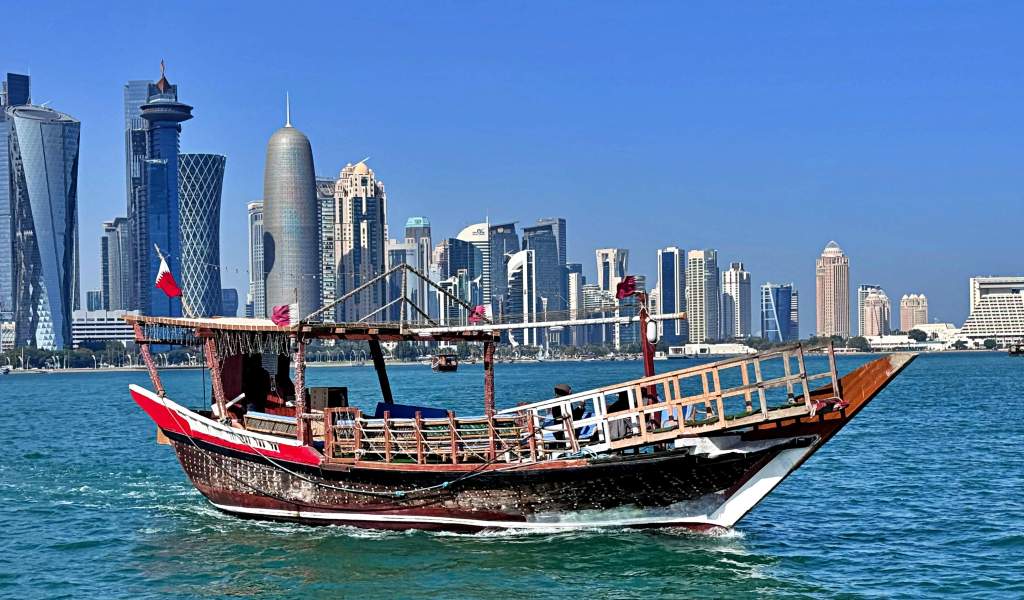
As one would expect in a desert land, the sunlight was relentless all day, yet the temperature remained relatively comfortable in the mid-20s (mid-70s F.). Subhan first took us to the waterfront Corniche, where we boarded a motorized dhow for a cruise around the bay, providing us a good view of the splendor of the Doha skyline.
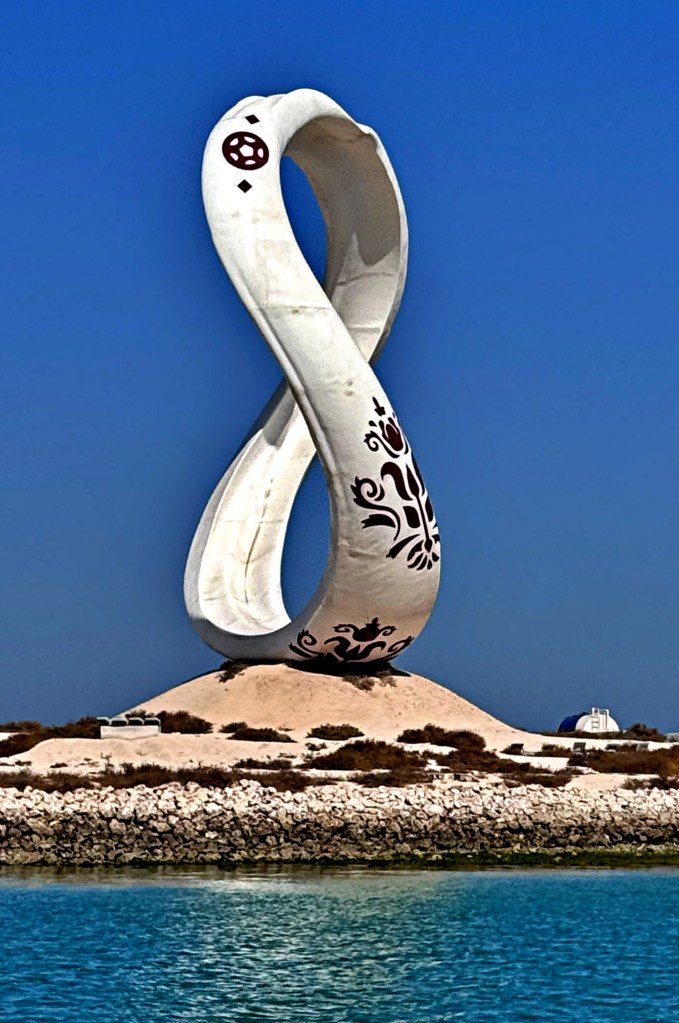
Our tour around the bay also took us past the FIFA World Cup 2022 monument, a 26.5 meter sculpture located on a small island in the harbour. Qataris are still proud of their moment in the international spotlight, despite the cultural controversies that accompanied the games.
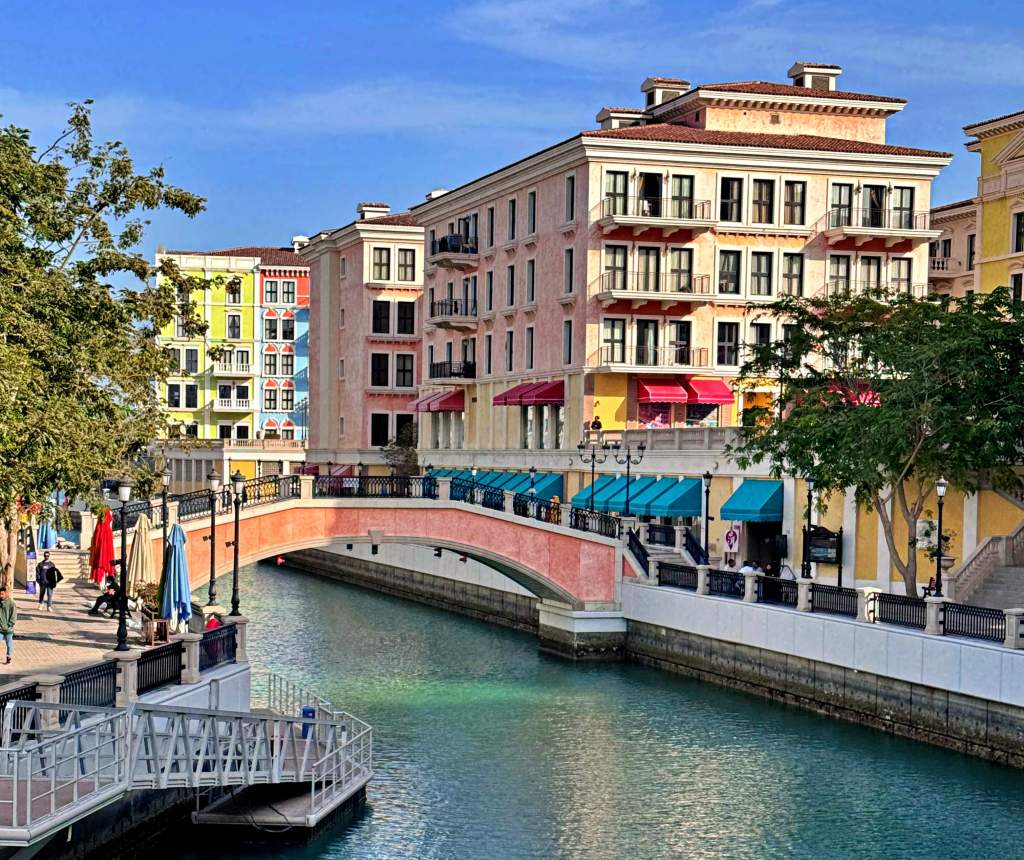
Subhan next drove us through some of Doha’s well known neighborhoods and shopping areas. On Pearl Island, for example, there’s “Little Venice,” featuring canals with Italian-like bridges, which is popular with the city’s expats.
In Katara Village, a high-end shopping center, you can find the finest international brands while walking over air conditioning grates in the outside pavement. That gave us pause: this city can afford to air condition the outdoors?
Yes. By utilizing solar technology, Doha is able to pump cool air through these grates as you walk over them. And that’s much needed in mid-summer, when temperatures here can soar above 40 degrees (104 F.) Subhan said his mother once left a purse in the trunk of his car and when she went to get it an hour later, it had literally melted from the heat.
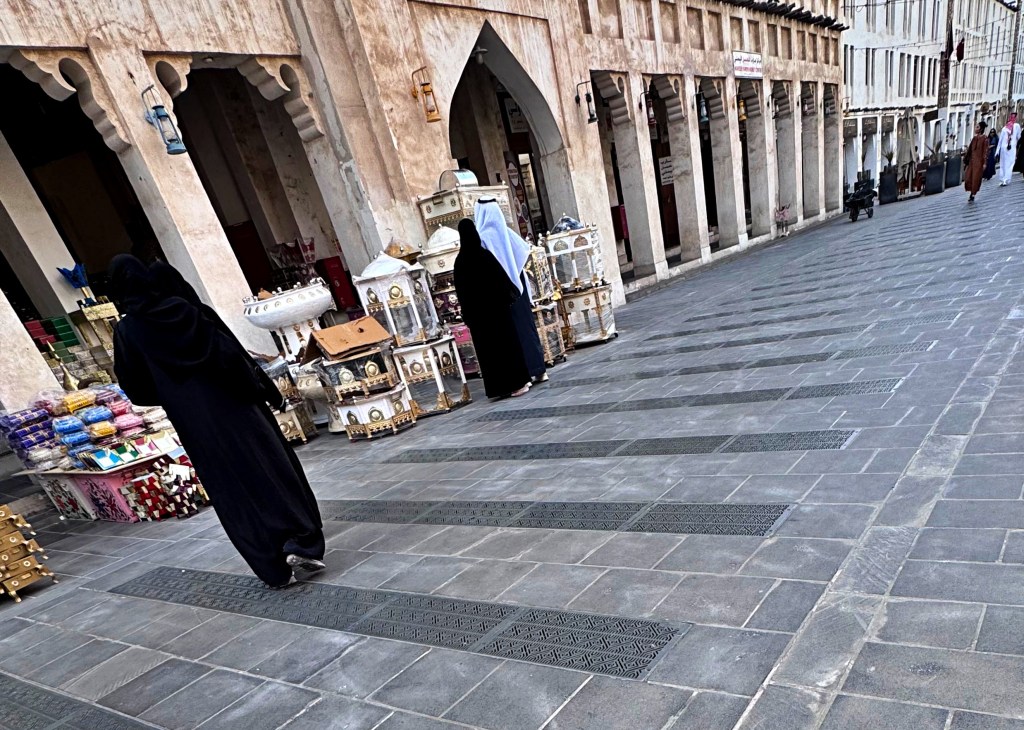
The shopping area we found most interesting was the Souk Waquif, which is built in the traditional style and features the most polite vendors we’ve ever seen in the Middle East. People will welcome you into their shops but never in an aggressive or cajoling manner.
You can buy a wide array of products in Souk Waquif, including food, spices, clothing and falcons. Falconry being a traditional hobby for Qataris, a section of the market is set aside for shops selling these birds, which are hooded to keep them calm and amenable to being handled by customers. There is even a falcon hospital available, should your bird need a vet visit.
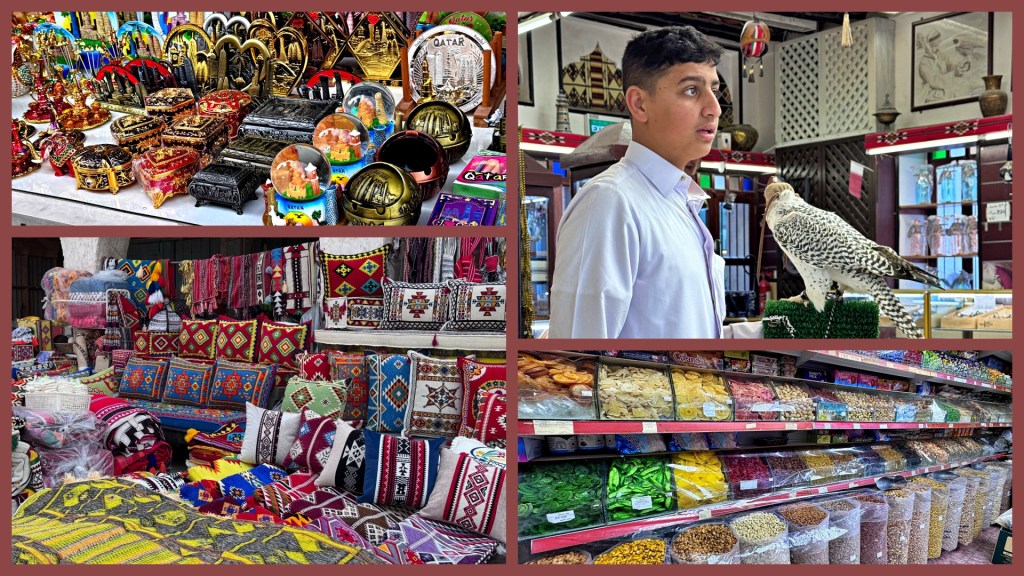
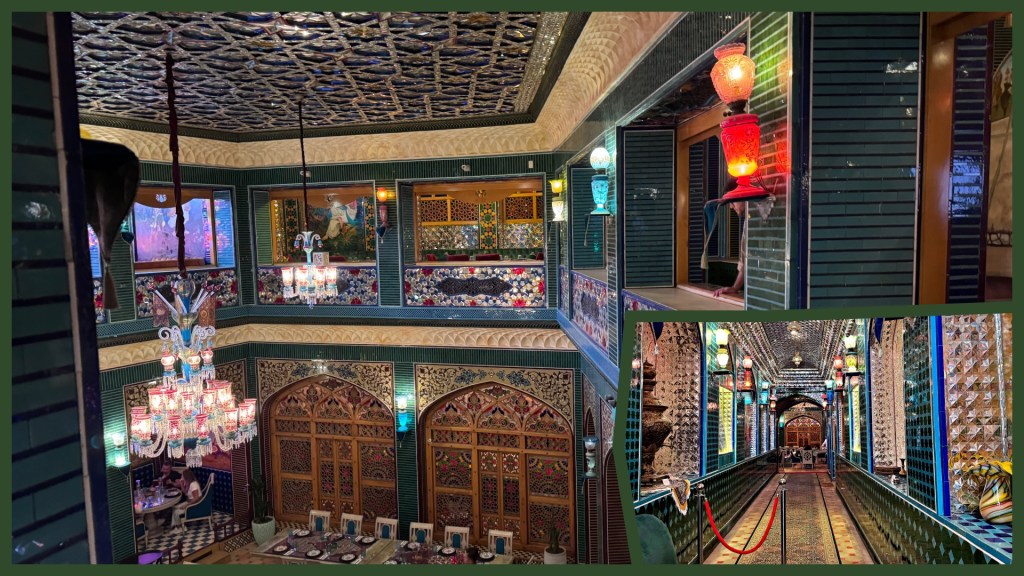
Subhan helped Bina find some spices she was looking for and also showed us a Persian restaurant that we returned to the next day for lunch. It was the best meal of our trip.
After enjoying that lunch, we spent a couple of hours in the National Museum of Qatar. Designed in the shape of a desert rose by French architect Jean Nouvel, the building itself is considered a work of art, with world class displays and exhibits inside exploring the country’s history, culture and natural features/wildlife. The oryx (type of antelope) is the national animal of Qatar, by the way, seen on the logo of Qatar Airways, as well as attached to the name of our hotel.

Pearling is a big part of the country’s story. Before the oil boom of the 1970s, most Qataris shepherded their flocks of sheep and goats to the desert during the winter, searching for whatever grazing they could find, and then returned to the coast in the summer for the pearling season. In that hazardous, low-tech business, divers would jump off the dhows to scoop up as many oysters as they could before their lungs gave out. The best pearls were then exported to neighboring countries, particularly India.
We also enjoyed looking at the women’s costumes on display. As is typical of Arab cultures, village women distinguished themselves with varied types of embroidery and scarves reflecting their tribal connections and personal status.
Travel Tips: Travel around Doha is easy for westerners. Credit cards can be used for most transactions, so you really don’t need Qatari riyals, although you might want to keep an equivalent of $25 in your pocket for tips and other odds and ends. There is a metro and bus system but we got around easily with Uber and taxis at reasonable prices. And English is the lingua franca for most businesses serving the public.
It has to be. Eighty-eight percent of the population here consists of foreign workers, typically from Southeast Asia or the Indian subcontinent; they need some way to communicate with each other, at least on a basic level. In our hotel restaurant, we were greeted by a Russian maitre’d and served by wait staff from India and Myanmar. Subhan, our tour guide, had been born and raised in Doha by a Pakistani father and Kuwaiti mother. He spoke English as his first language since that’s what his parents used at home.
A “global village,” for sure, albeit one that speaks English.
To follow the continuing adventures of Two Clines Traveling, please click here.

 Two Clines Traveling
Your blogs regularly send me to Google Maps, and this one did, too. Always enjoy a glimpse into how other people live — after I find them. I try to remember to ask “for whom” any time I think life seems good in a different land. Thanks for the trips and tips.
LikeLiked by 1 person
Your “for whom?” question is a good one. In the case of Qatar, obviously, the natives are living on easy street. With guest workers, on the other hand, Human Rights Watch has noted abuses. But overall, I’d assume most foreign workers find Qatar an improvement over their situation at home; it’s all relative. One of the waitresses at our hotel restaurant was from Myanmar, which has a brutal military dictatorship and nasty civil war. She told us that she’s worried that if she does go home for a visit the government will keep her from returning to Doha. So, she meets her family once a year in neighbouring Thailand.
LikeLike
Loving reading your posts!
LikeLiked by 1 person
Thanks, Anonymous. Glad you enjoy them!
LikeLike