The region of Occitanie (also known by an older name, Languedoc) has been our favorite part of France since 2013, when we spent a week in the town of Caunes-Minervois. Bina and I followed that up in 2021 with a trip to the city of Albi and some of its surrounding villages. Both of those visits took place on the eastern side of Toulouse, which is Occitanie’s capital.
For Bina’s birthday in 2025 in late July we decided to venture west of Toulouse, in the direction of the Pyrenees. This visit focused on three areas: the independent (and tiny) country of Andorra, nestled right in the Pyrenees; Perpignan, on the Mediterranean coast near the Spanish border; and Mirepoix, an inland town closer to Toulouse.
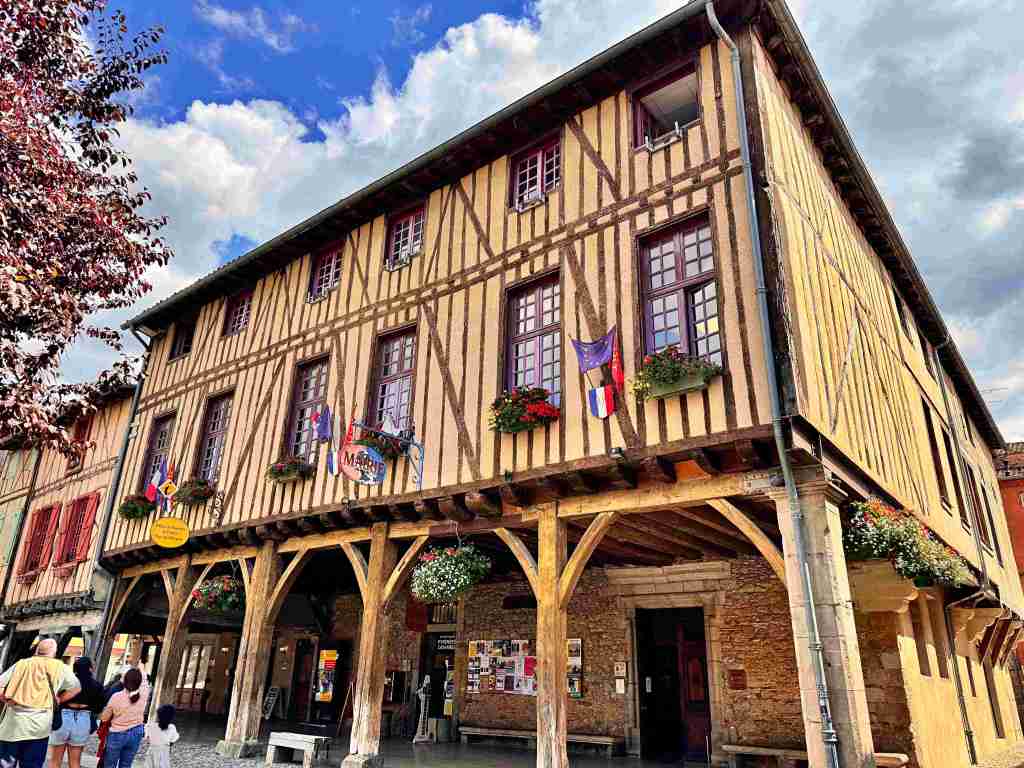
Mirepoix provided the major focus. It’s a smallish place, only 3,100 residents, prosperous and low key, best known for its medieval bastide (square) featuring covered arcades and the fact that its name became attached to a culinary enhancement. The recipe for the famous Mirepoix flavor base, made of carrots, celery and onions, was said to have been first developed (or at least written down) by the chief cook of the family of the Duke of Mirepoix in the 18th century.
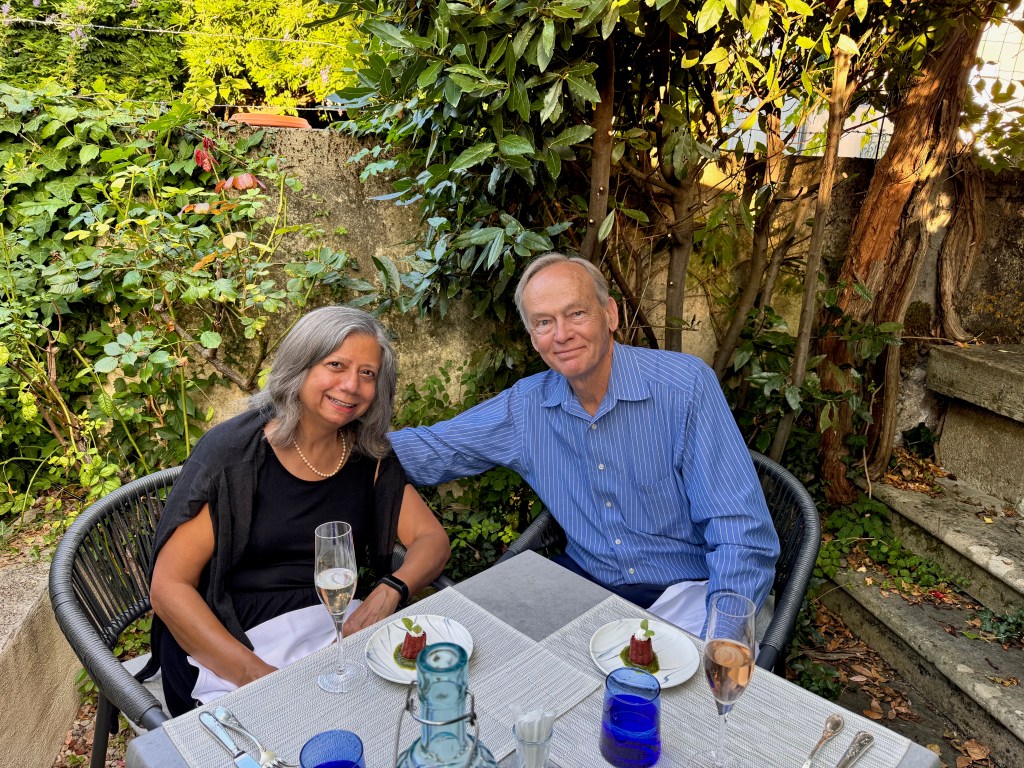
Mirepoix’s culinary tradition was upheld by the owners of our lodging, the Clos des Oliviers, which served gourmet-quality meals in its attached garden. We can still smell the freshly-baked croissants made every morning for breakfast and the beef medallions and lamb shank that we had for Bina’s birthday dinner as European goldfinches serenaded us from nearby bushes.
In addition to good meals in Mirepoix restaurants, we took in a classical music organ concert at the main church, the Cathedral of St. Maurice, which began construction in 1298 but wasn’t completely finished until the 19th century. We also spent a morning walking through the main park alongside the Hers River, where we spotted some bee eaters, colorful birds we’re familiar with from the Algarve.
Most of the towns in this region host a weekly morning market. Having missed Mirepoix’s market on the Monday we arrived, we made a visit the following day to Bram, a half hour drive to the east on the Canal du Midi. This market proved a good choice — large enough to be interesting in its selection of foods and handicrafts, but small enough to be comfortable for browsing around. A vocalist and horn player performing many French classics, including Joe Dassin’s 1969 hit “Les Champs Elysée,” helped put us in the right mood.
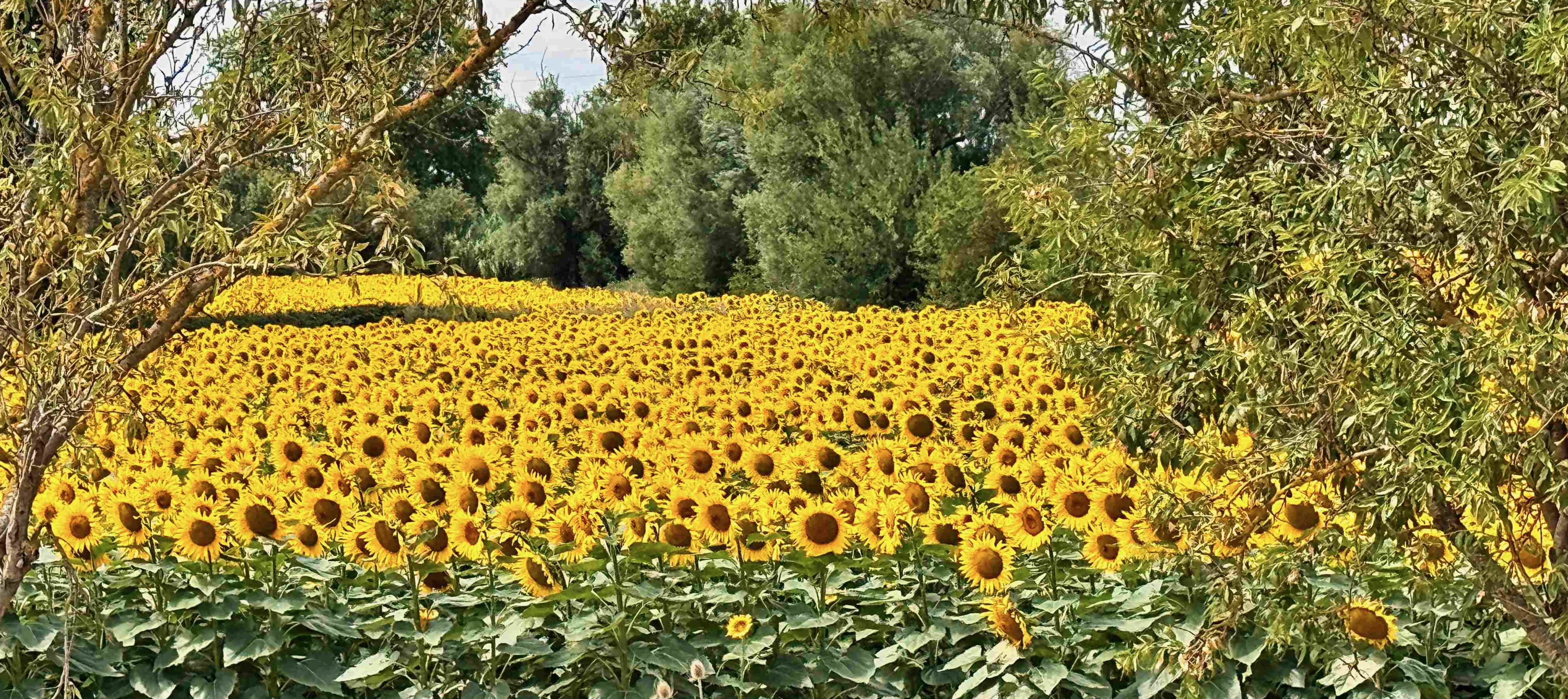
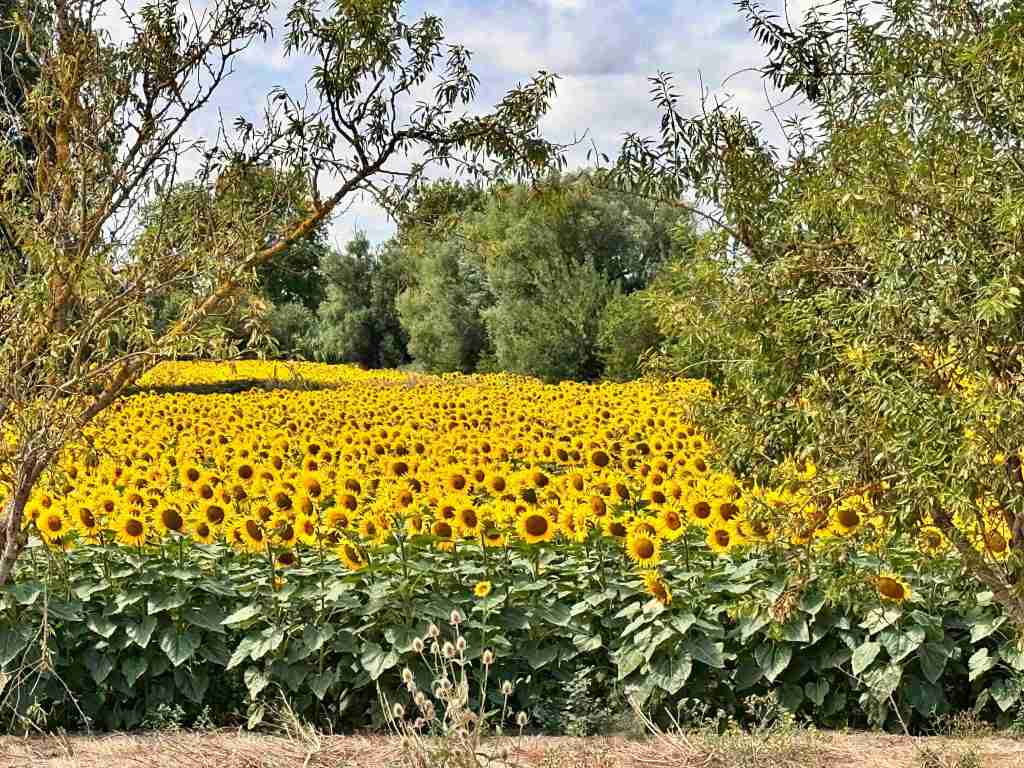
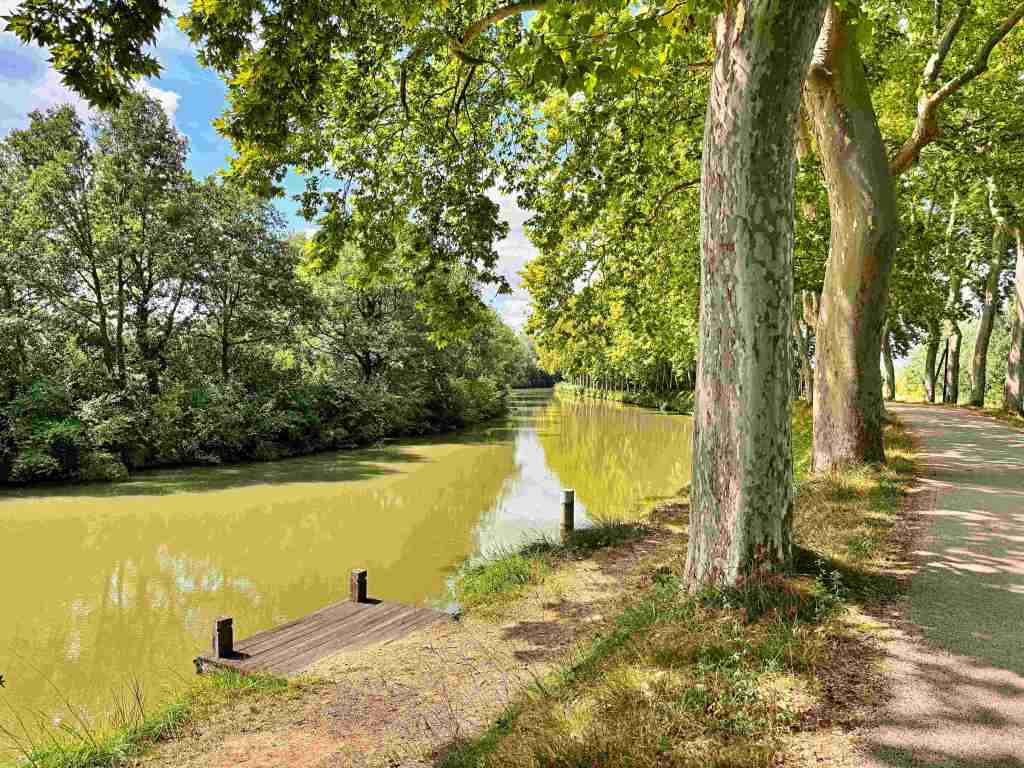
For lunch, we took the cheese, olives, pate, bread, cucumbers and tomatoes that we had purchased to enjoy a picnic by the Canal du Midi, delighting in surrounding fields bathed golden with sunflowers — a quintessentially French summer afternoon, you might say.
The next day, we drove into the hilly region west of Mirepoix to see the Chateau de Montségur, famous as the site of the last stand of the Cathar heretics in 1244. (For more on this tragic period of French history, known as the Albigensian Crusade, see our blog on Albi). Few traces remain, however, of the Cathar fortification that held out on this mountain for nine months; the structure you see today was actually constructed over the following three centuries.
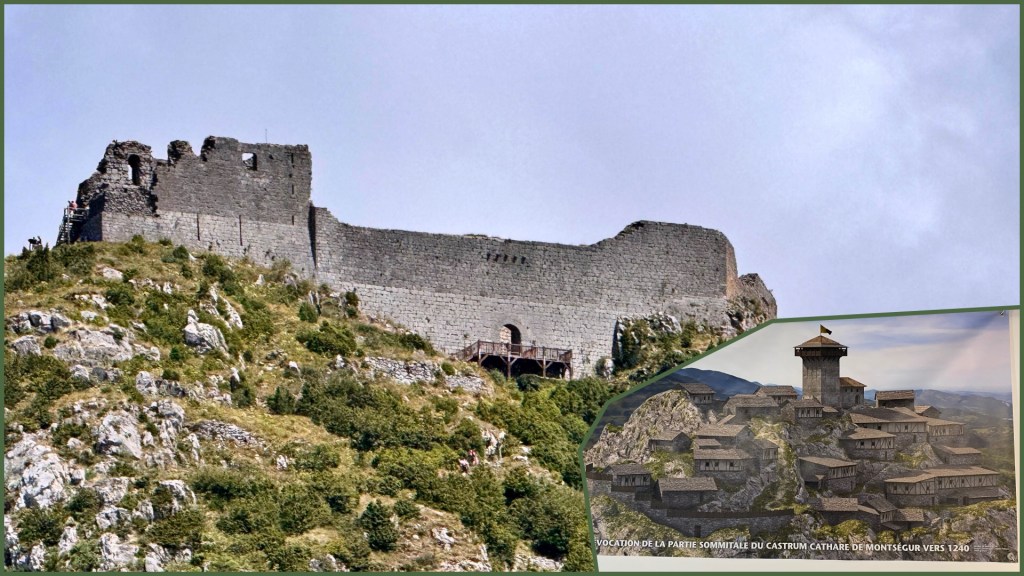
To view some actual Cathar relics, we visited the museum in the small village of Montségur at the foot of the mountain. This includes skeletons of two individuals, a man and a woman, who likely died of wounds during the siege. More than 200 of their compatriots were burned alive after the siege for refusing to renounce their Cathar faith.
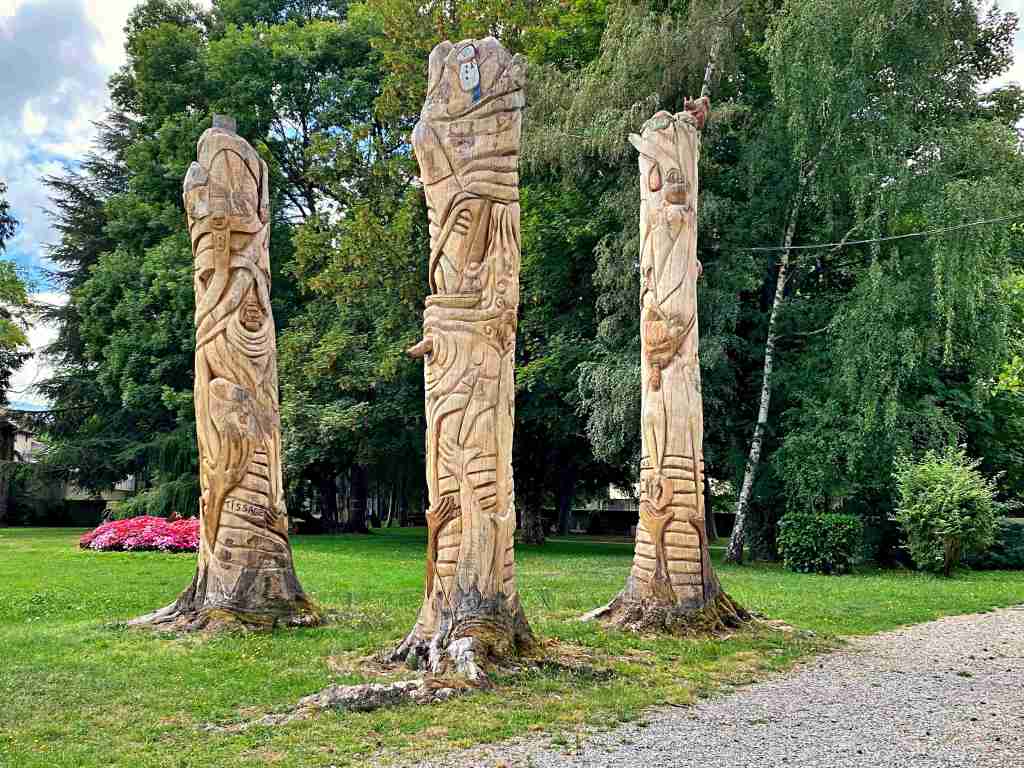
Other sites we visited on this drive included the town of Lavelanet, where we had a picnic lunch in a park near the former Hotel deVille, built in the 19th century and now repurposed as the Mairie, or city hall. This site was notable for three sculptures carved from trees by a local artist, Christophe Farragut, who works under the name Chris Le Farfadet, farfadet denoting a kind of mischievous imp in French. And his sculptures are indeed playful and pixie-ish.
On our last day in the Mirepoix area, we visited the large town of Foix, a lovely place in the foothills of the Pyrenees at the confluence of two rivers, the Ariége and Arget, and overlooked by a well-preserved castle. Saturday market day, however, was probably not the best time for us to drop in. It took us more than half an hour to find a parking space, on the fringes of town, and another 20 minutes to walk into the center, where the market covered several city blocks. Elbowing our way through the crowds, we managed to obtain most of the items we needed for a picnic lunch.
By noon, when most of the street vendors began shutting down, we escaped by driving our car to an ecluse (lock) 45 minutes away on the Canal du Midi. And there, in peaceful, wooded surroundings, we enjoyed our lunch of cheese, tapenade, tomatoes, cucumber and bread. Chalk up another quintessential French afternoon.
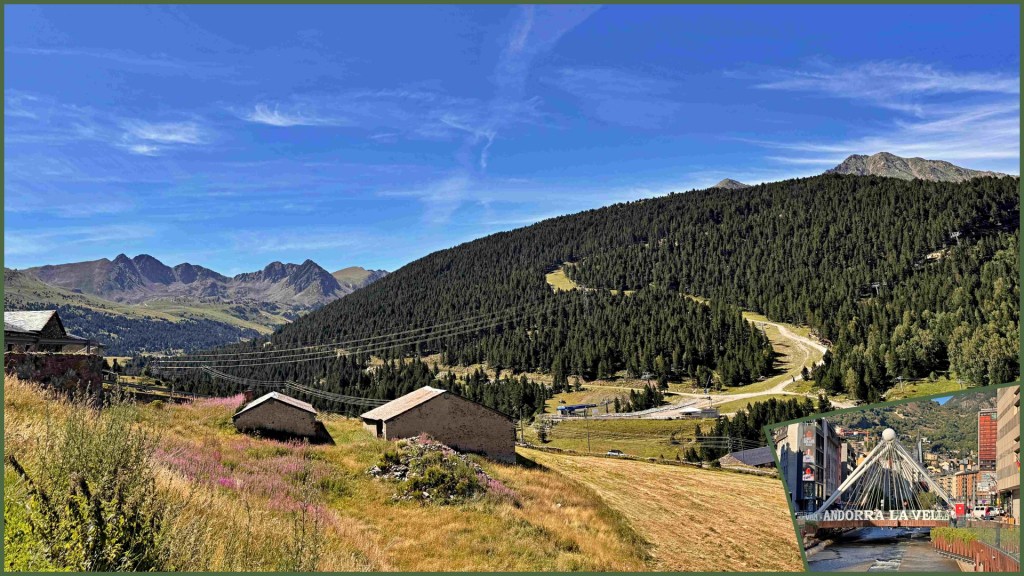
While Mirepoix provided the main focus for our trip to Occitanie, shorter visits to Andorra and Perpignan also deserve mention. The former is an independent country nestled in the Pyrenees between France and Spain. Indeed, Andorra la Vella, its capital, is perched at a higher elevation than any in Europe, 1,023 meters, or 3,356 feet, above sea level.
Andorra la Vella today is mostly known for its winter skiing, duty-free shopping and thermal baths. But we also noticed some scenic trails into the mountains that might tempt us on a longer visit. In any case, we enjoyed taking in the mountain scenery of Andorra during our drive there and celebrating the country as the 50th we have visited as a couple.
The road from Andorra to Perpignan through the foothills of the Pyrenees — the D66 — proved quite scenic as well. We enjoyed a picnic lunch at a roadside aire or park near the town of Saillagouse as two eagles wheeled about in the sky overhead.
Perpignan, with a population of 200,000, is the last French city you encounter heading west along the Mediterranean coast before reaching the Spanish region of Catalonia. Until it was acquired by France in 1659, Perpignan had been under varying political authorities in both countries and even today retains a strong Catalan influence in its dialect and culture.
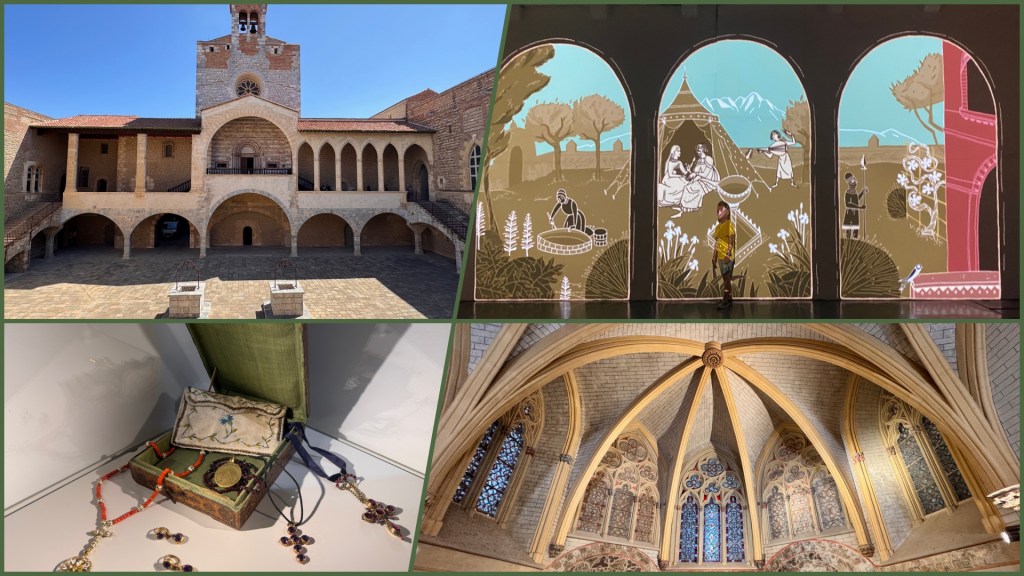
The city’s most notable historic site, the Palace of the Kings of Majorca, reflects that history. The Kingdom of Majorca, which included the Spanish islands of Majorca and Ibiza, along with Perpignan and Montpellier in France, was a vassal state of the Spanish Kingdom of Aragon. The castle and its attached gardens, completed in 1309, include Spanish and French design features. A museum inside presents the history of Perpignan’s garnet industry, famous for its rose cut designs (the “Perpignan cut”) between the 18th and early 20th centuries.
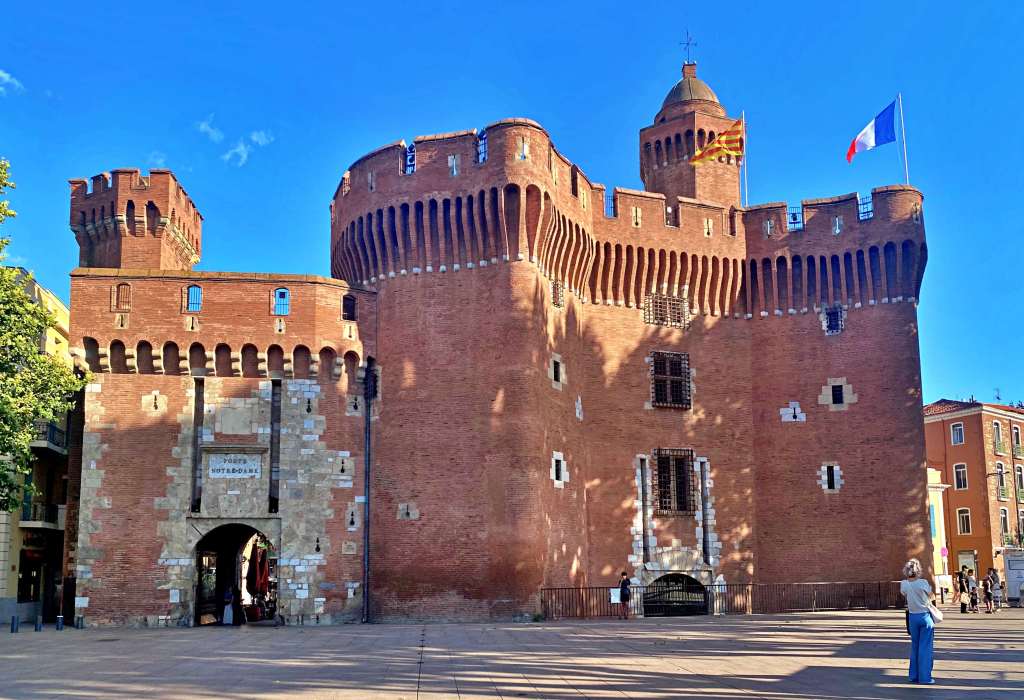
Perpignan itself is noted for canals, squares lined with palm trees, and the Castillet, a gate and fortified wall begun in 1363. Modern problems intruded here, as we watched two policemen running after some youths amidst taunting shouts from other young people watching from the sidelines. We don’t know what caused this disturbance but our hotel owner indicated a history of tension between the municipal authorities and some of the gitans (gypsies) who reside here.
The Perpignan region is also known for the seaside town of Collioure, beloved by tourists for its beaches and art galleries. Unfortunately for us, Collioure was so inundated with beachgoers the day we tried to visit that we had leave after a futile attempt to find a parking space that wasn’t located several kilometers outside of town.
Summer in France is sometimes like that.
Travel Tips:
For sightseeing in the part of Occitanie that we visited, a car is helpful. You can reach a few key places (Narbonne, Carcassonne and Perpignan) by train from Toulouse, but that leaves out a lot of the gorgeous countryside in between, such as the Mirepoix area.
We noticed that hotels with air conditioning are scarce in this region, which may be a problem in late July and August. We were very glad to have A/C at our lodging in Mirepoix, both for the climate control and to block out some street noise.


Thank you for another great travelogue. This area just moved to the top of our must visit list!
PE & DL
LikeLiked by 1 person
Thanks, PE and DL. This region has lots of great hiking trails that I know you would enjoy. Feel free to reach out anytime for more detailed info.
LikeLike
This one sent me to Google Maps again. I’d been around the area but never in that corner of France. Thanks for the intro to it. No telling where you’ll turn up in 2026, but happy new year. 😉
LikeLiked by 1 person
Thanks, Clint. Mirepoix is definitely not an anyone’s list of top tourist spots but sometimes you can find the most value in off-the-beaten path kind of places. As for 2026, well, we hope to come up with a few “wow” spots. A most Happy New Year to you and Anne!
LikeLike
What fabulous sights you were able to see! The picture of the two of you is really great! Thanks for sharing it all.
LikeLiked by 1 person
Thanks for your kind words, Anonymous.
LikeLike