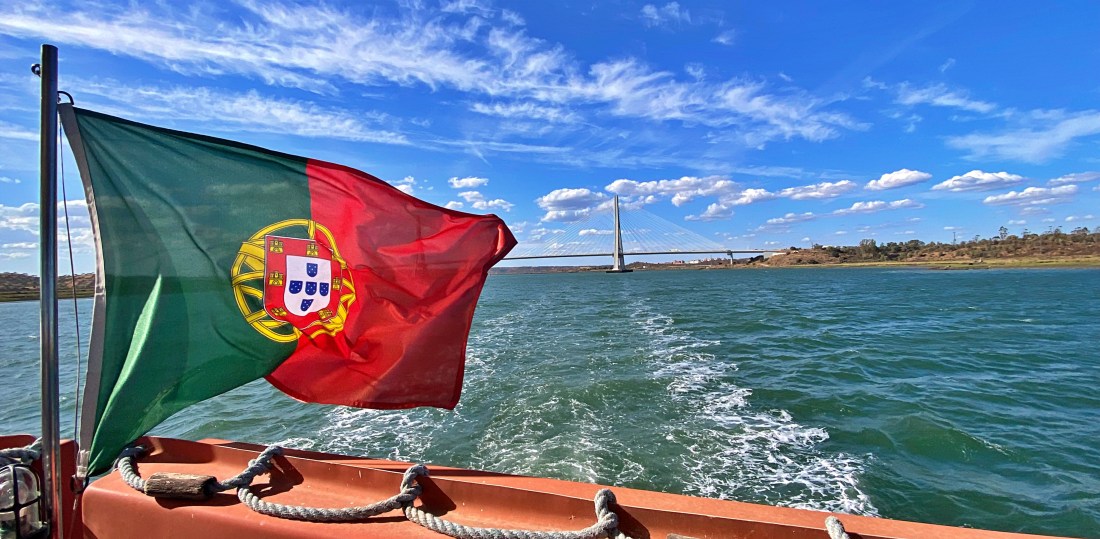
November 14 marked an anniversary date for Bina and me — the fifth anniversary of our arrival in Portugal in 2020. And it has been an amazing ride so far!
One of the key benefits of living here is that Portugal provides a convenient platform for visiting the rest of Europe and parts of Africa. No transatlantic flight needed to reach Vienna or Marrakesh, for example, just a few hours’ direct flight from our local airport in Faro. A look at the posts under the “Rambling the Globe” menu tab in our blog (TwoClinesTraveling.com) shows how we took advantage of that.
Portugal enjoys one of the lowest crime rates in the world, while our region — the Algarve — vies with southern Spain in boasting the warmest year-round climate in continental Europe. Add in a relatively low cost of living (certainly when compared to the U.S.), a relaxed lifestyle and friendly locals that often know their way around English* and what’s not to like?
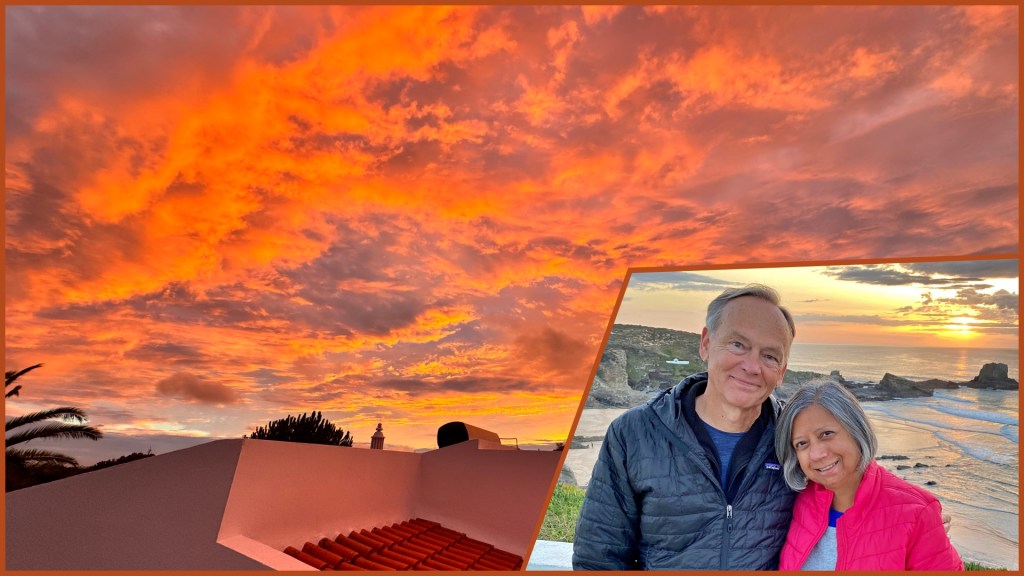
Well, there are a few things but we’ll get to those shortly.
It’s serendipitous that we’re here at all because moving to Portugal was never part of our long range plan back in the early 2000s. After selling our house in Atlanta in 2018, we embarked on a lifestyle of “global nomading” that ended abruptly in March 2020, when Covid drove us out of New Zealand back to Atlanta.
And there we sat in a rental house for eight months wondering what to do next as the Covid era restrictions drove us crazy. Fortunately, Bina, came across a Facebook page, Americans and Friends PT, that offers advice for retirees looking to take up residence in Portugal.
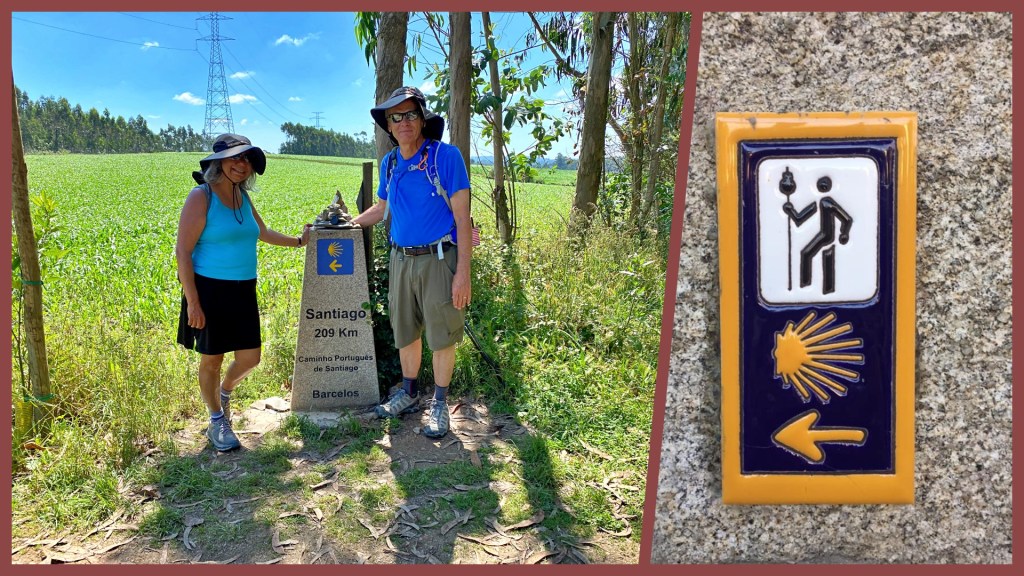
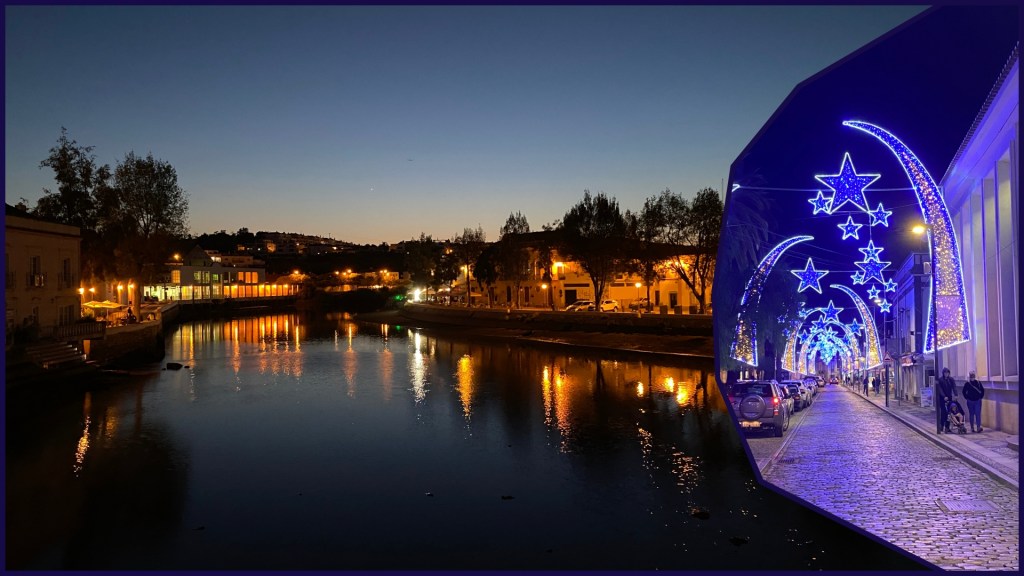
Hmm, Portugal. We knew Portugal, having walked the Camino de Santiago twice, in 2018 and 2019, from the northern city of Porto. We also carried fond memories of a month-long stay in Tavira, a coastal town in the eastern part of the Algarve near Spain. Bina’s research now showed us how, in 2020, Portugal offered one of the most convenient paths for obtaining a residence visa in all of Europe. She also found a group of Atlantans going through the application procedures so we started networking with them and sharing tips on Whatsapp and Zoom.
Looked at objectively, this seemed the worst possible time to cross the pond to Portugal. Covid was raging worldwide, with no vaccines yet available. And it was indeed an eerie experience to pass through nearly deserted airports in Atlanta, Paris and Faro on our way to Tavira wondering, what have we got ourselves into?
Yet, paradoxically, Covid proved a good time to make the move. It might have something to do with enduring 40 years of dictatorship (the Salazar era, 1933-74), but the Portuguese were compliant about following government Covid restrictions so the country’s infection rates were low compared to other European countries. Bina and I didn’t actually get the virus until 2022, and that was after multiple vaccinations, so it wasn’t too bad.
The low level of immigration at this time also gave us a head start on what we call the “Portuguese paper chase,” which is obtaining the necessary residence cards, drivers licenses and other documents needed to live here. Hat tip to our Portuguese-American friend Rui, who provided excellent advice on navigating the bureaucracy.
People considering a move to a foreign country always need to keep in mind the huge difference between visiting a place and actually living there. A country tends to show its best behavior to tourists. Residents, however, experience daily life as the locals know it, which in Portugal means bureaucracy, a shortage of skilled craftsmen, and fewer choices for consumer products, whether groceries or automobiles.
The weather also caught us by surprise. We had arrived in Portugal at the beginning of winter assuming light jackets would suffice for the Algarve. It’s true we can usually count on a sunny afternoon here, even in the depths of winter. But mornings and evenings can be chilly, a result of the high humidity and the fact that housing in the Algarve is oriented to summer temperatures. Forget about central heating.
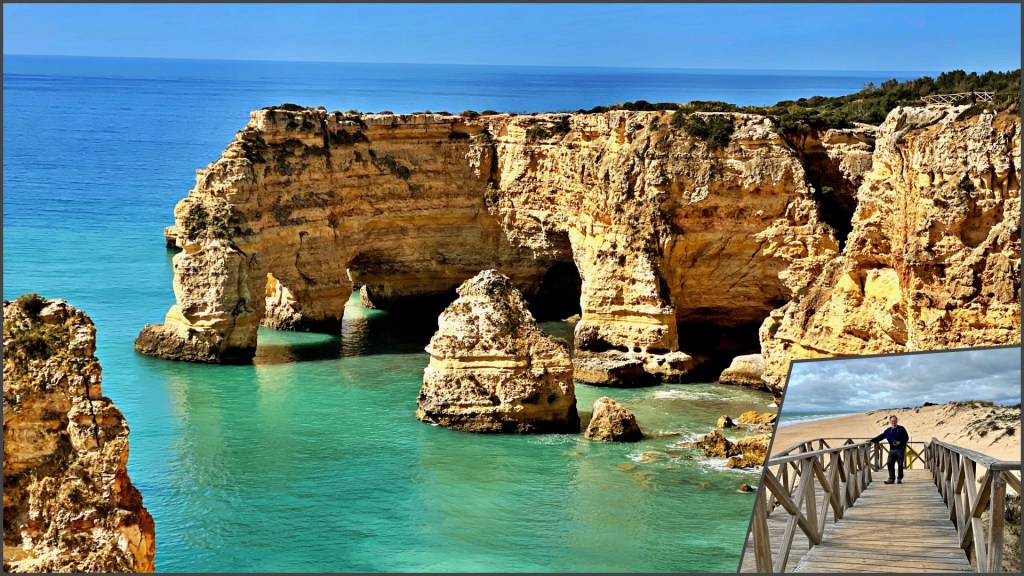
We loved Tavira as a place to live, with its scenic riverfront area and good shopping/services infrastructure. But post-Covid, we also found its booming growth in both tourism and expat immigration to be a nuisance.** By August, the peak of the tourist season, it’s nearly impossible to find a parking spot around town and restaurant reservations have to be made days in advance.
In 2023, Bina and I decided we needed a change, some place quieter and low key, with more affordable rental properties but sufficient expat activities. We found that combination in São Brás de Alportel, which is located about half an hour’s drive west of Tavira and further inland.
São Bras rose to prominence in the late 19th century as a processing center for Portugal’s cork industry. While most of the factories have long since shut down, the town prospers as a services and center for the surrounding region. Tourists are scarce here but the local municipal museum hosts a non-profit expat group that offers concerts, classes and other events year-round.
Bina, for example, works with a painting group at the museum and is able to show her work at periodic exhibitions. I enjoy monthly lectures of the Algarve Archaeological Association. There’s always something going on around here, which includes frequent dinners and outings with friends, since the expat lifestyle promotes networking and bonding over shared activities.
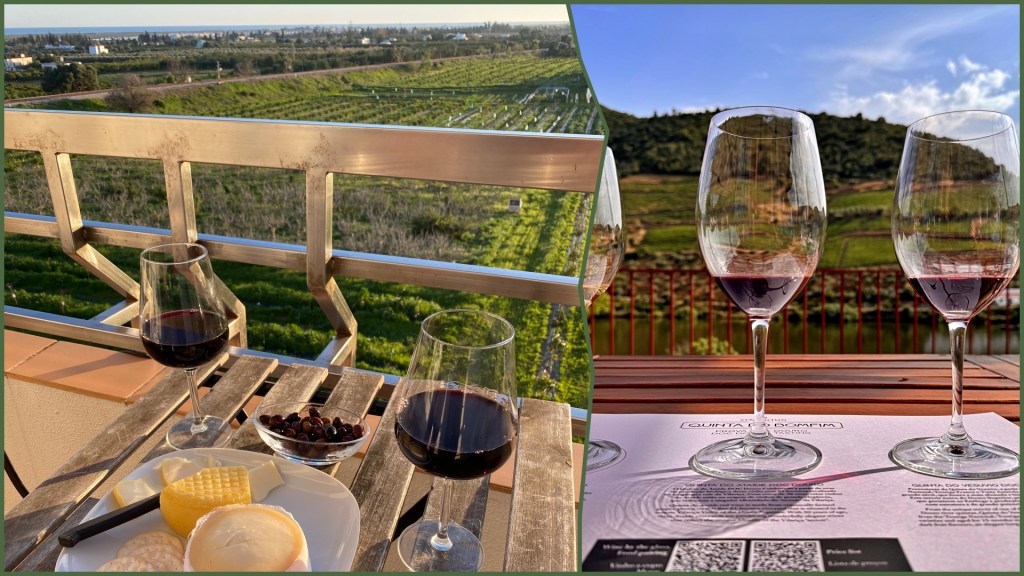
The downside for us is that Atlanta is a long way away. Any visit takes us at least two days, with flight connections, and we do miss our two and a half-year old granddaughter, and our daughter and son-in-law. But for now, we consider ourselves blessed to be living in a country where life moves at a slower pace.
* Portugal ranks fifth in Europe for English proficiency among non-Anglophone countries, behind the Netherlands, Norway, Sweden and Croatia.
** An estimated 14-15% of Portugal’s population is now foreign-born, reaching 1.1 million in 2024 from a little over 400,000 in 2017. This surge has severely overburdened the immigration agency.
 Two Clines Traveling