
We are now walking a section of the Camino Portugués known as the Variante Espiritual (Spiritual Variant). It connects the two “Via Jacobi”, the traditional Camino route with the Sea route. In 44 AD, it is purported that a ship carrying the body of apostle St. James crossed the estuary of Arousa from where his remains were taken to Iria Flavia (now the village of Padron).
Not being as popular as the Camino Portugués, we encountered very few pilgrims as the route winds through woodlands and beautiful little villages, ending our first day in the adorable little coastal town of Combarro.
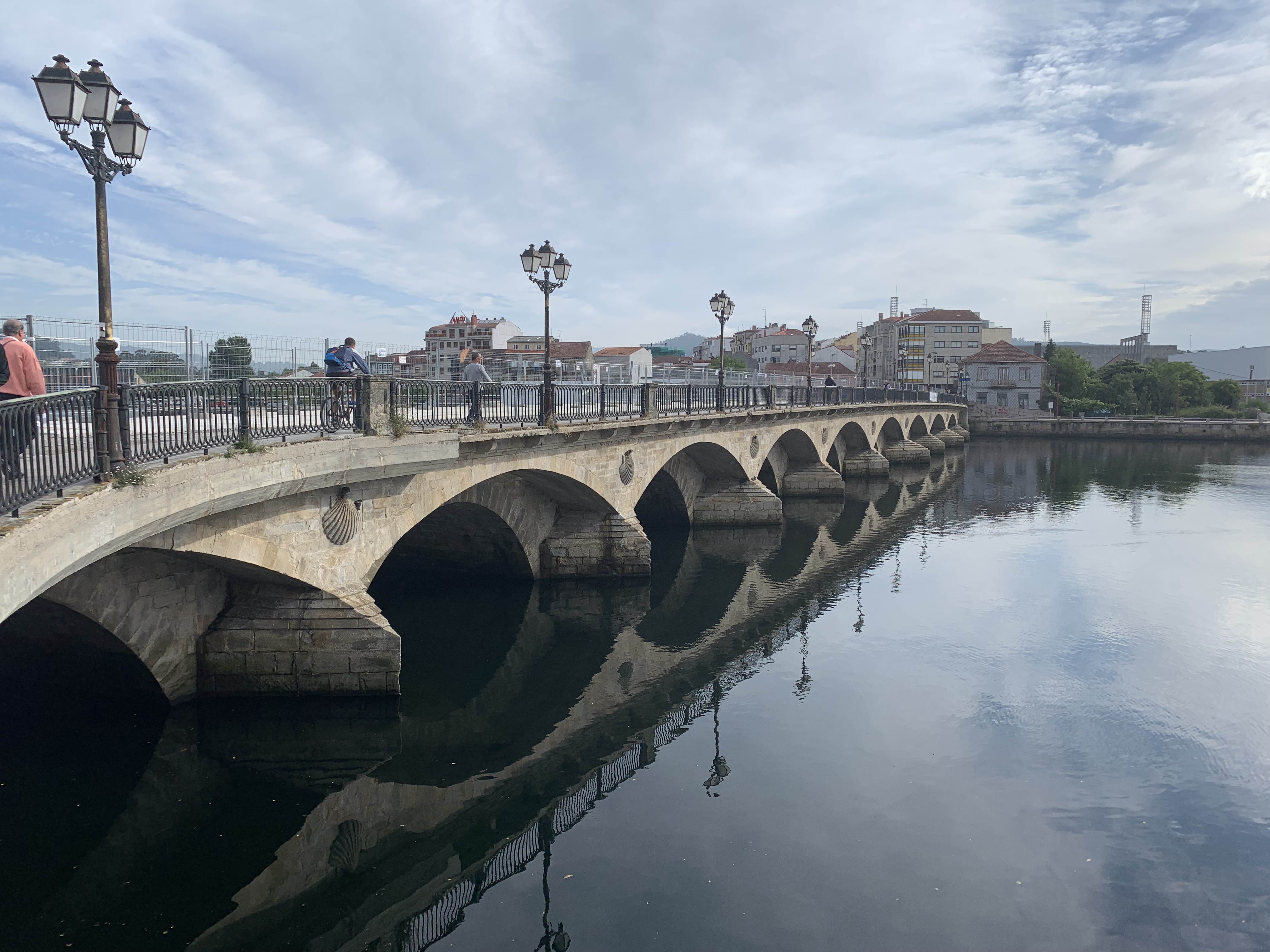
Crossing the bridge out of Pontevedra.
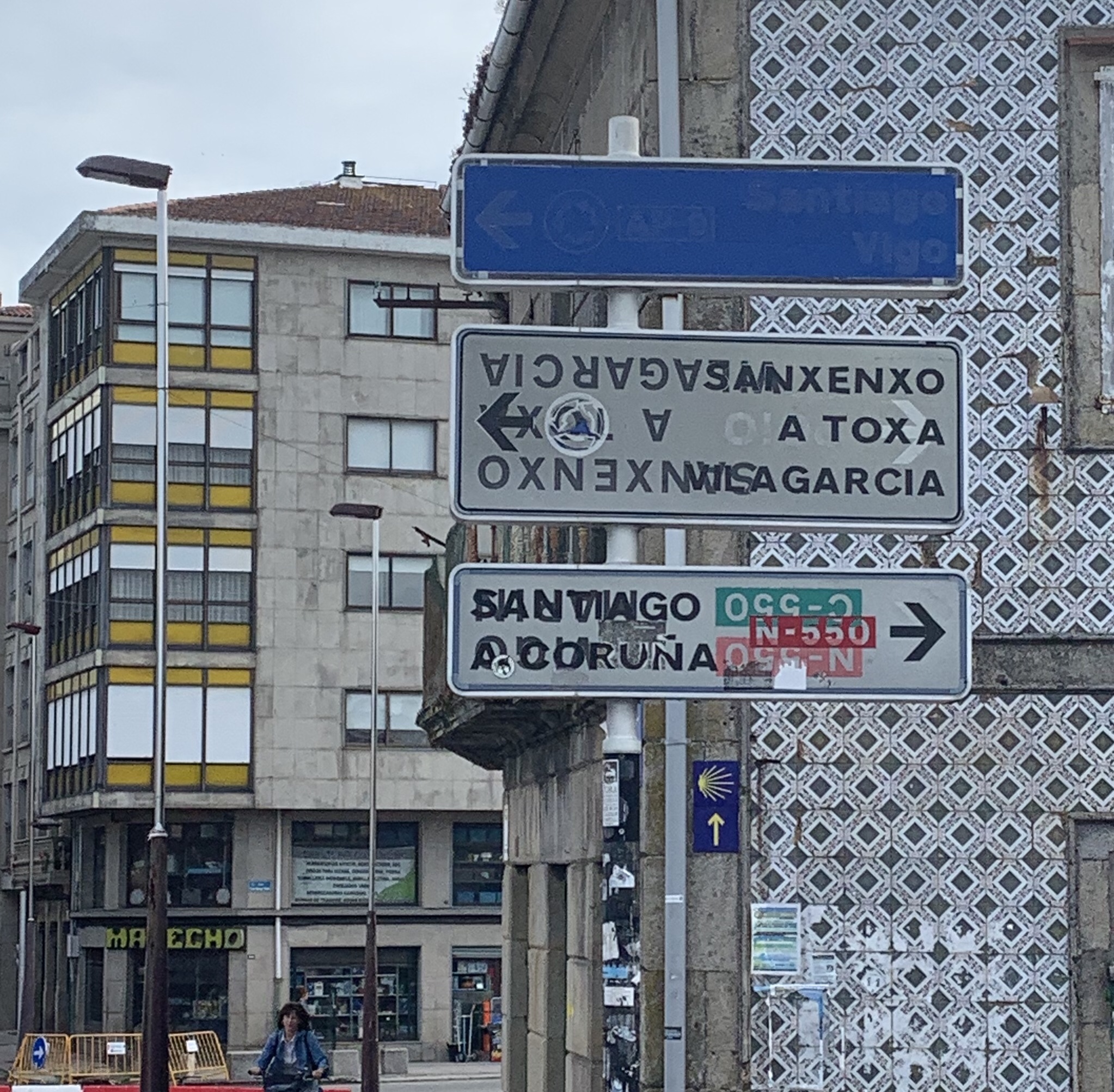
And a year later, our favorite sign is still there! We call it the “Estrella Galicia” sign after the popular beer.
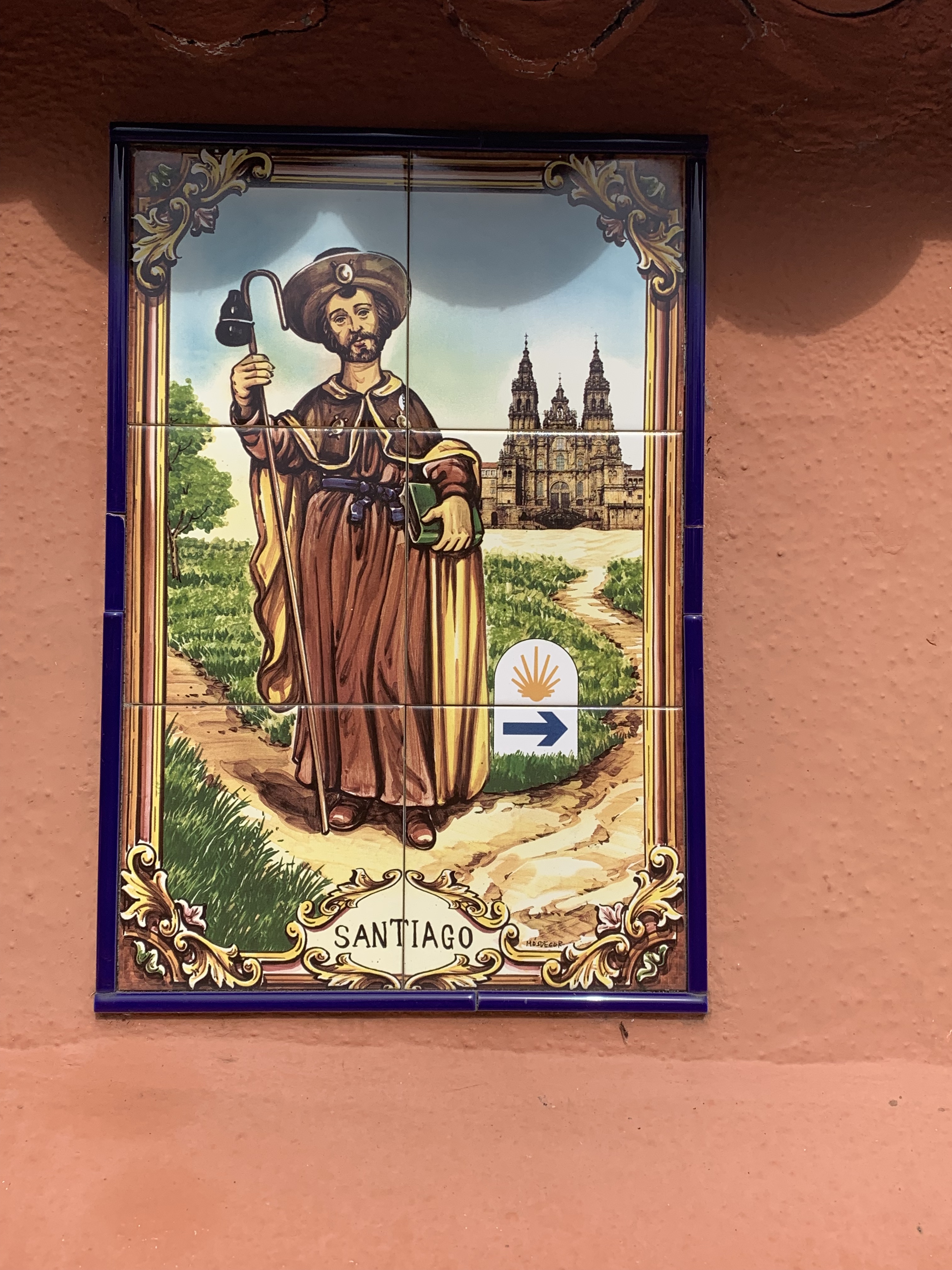
A lovely tile portrait of St. James along the way.

Oh those eucalyptus trees shed like crazy and make a mess along the path, but is sure makes for good walking!
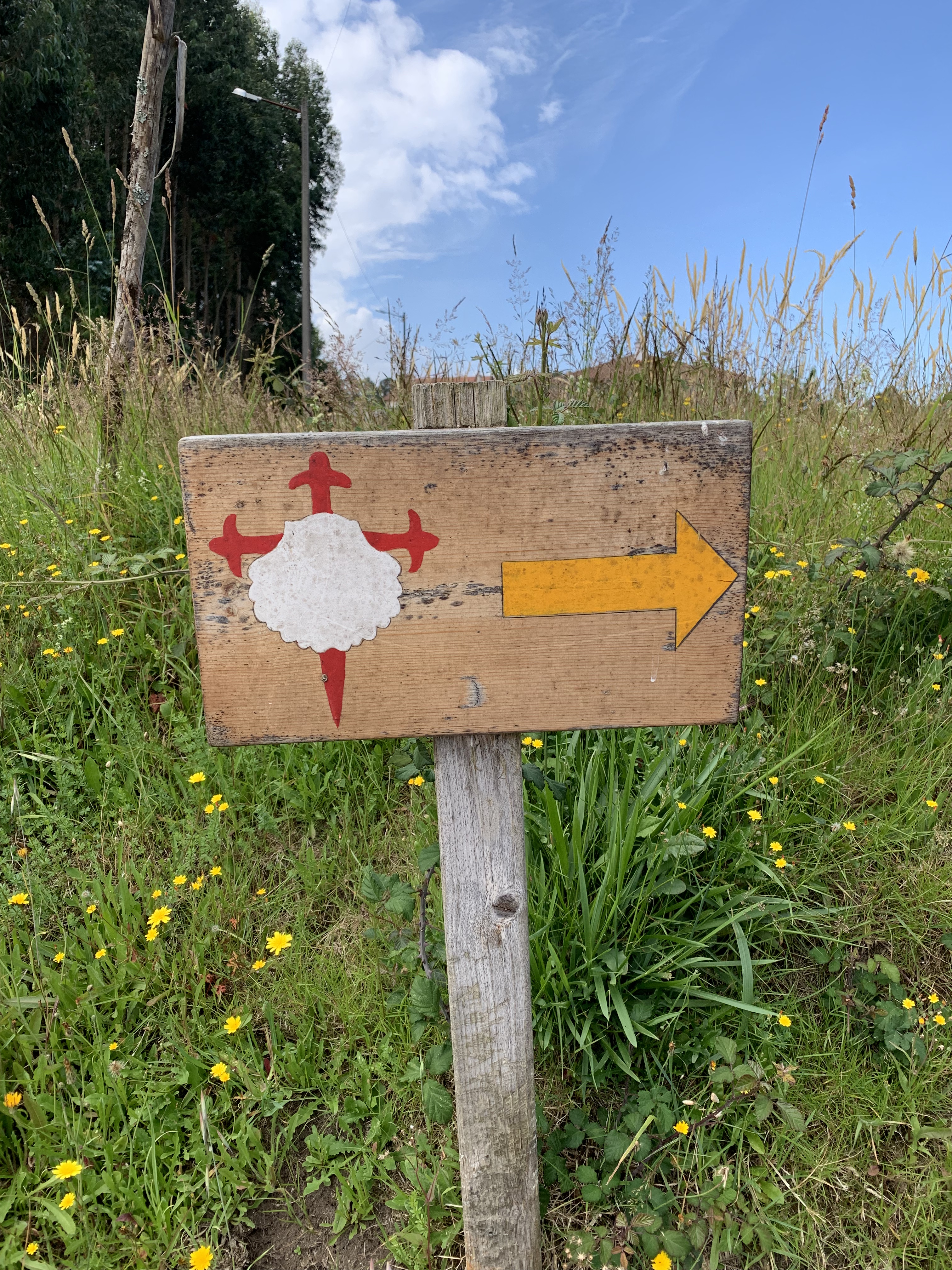
The Spiritual Variant has it’s own lovely signage and is well marked.
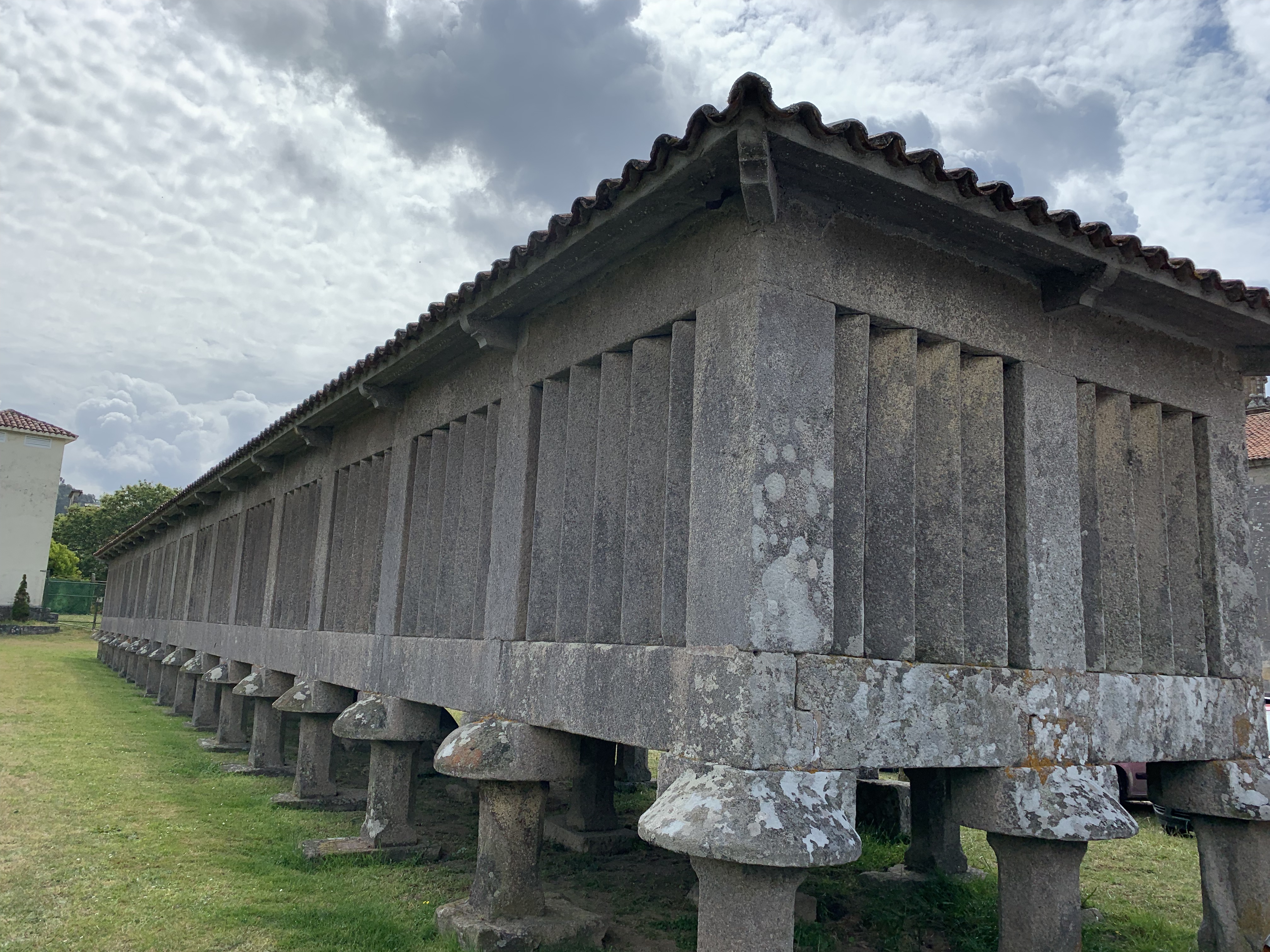
This is the largest horreo in Galicia, in the town of Poio, on the grounds of the Monastery, 33.5 meters long and 3.4 meters wide. Horreos seen all over Galicia, were used as a granary and raised off the ground to keep grain safe from rodents.
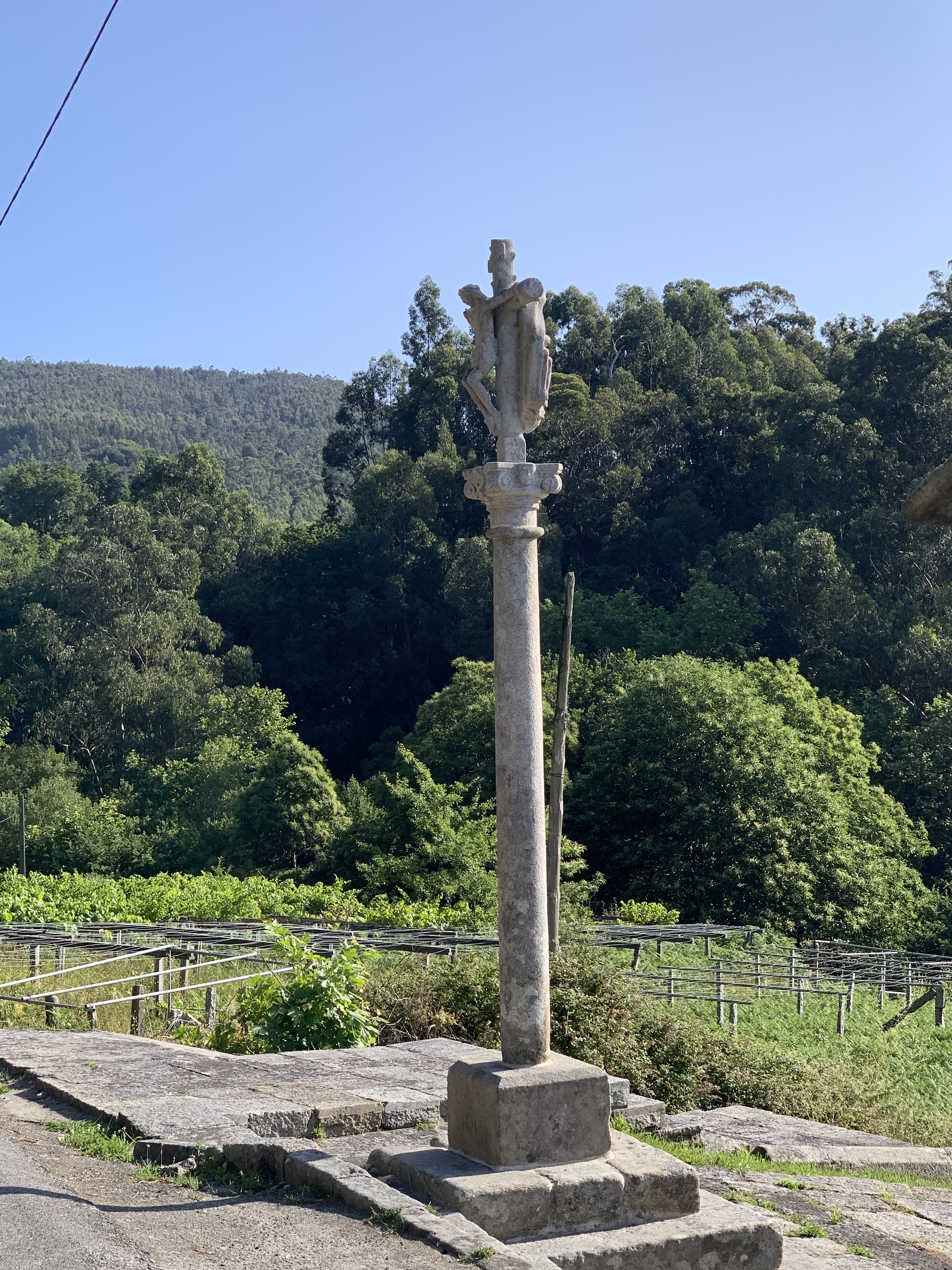
These cruceiros are found all over Galicia. From a sign in Combarro “Cruceiros are one of the most genuine expression of Galician architecture. Frequently situated at cross roads, their initial function was to Christianize pageant cult places. Because of this, they are identified with magic places where ‘meigas’ or witches gathered. The ones in Combarro represent Christ’s crucifixion at their front side (with an inland orientation), and the Virgin’s image at their back side (facing the sea).
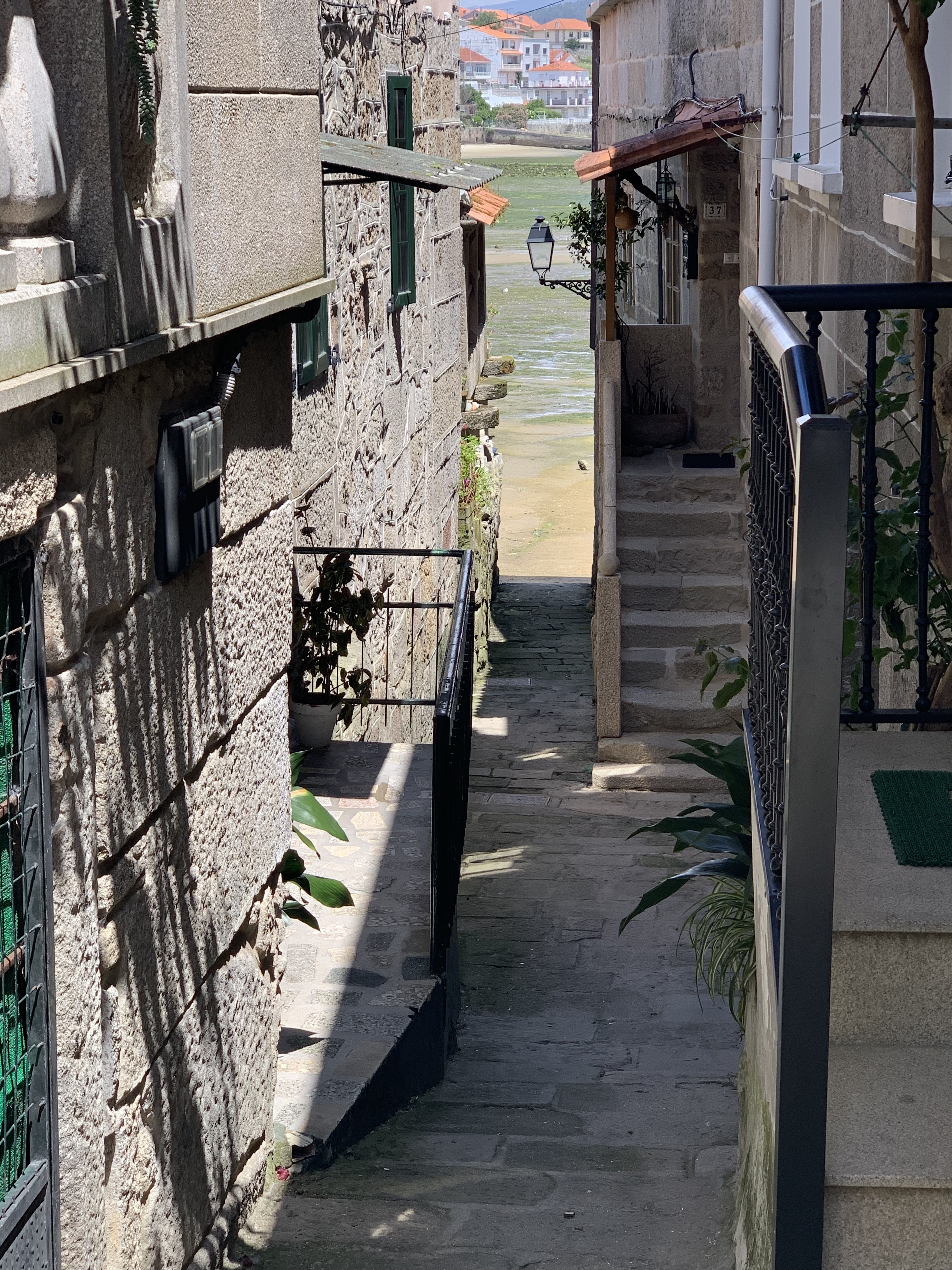
The old town of Combarro
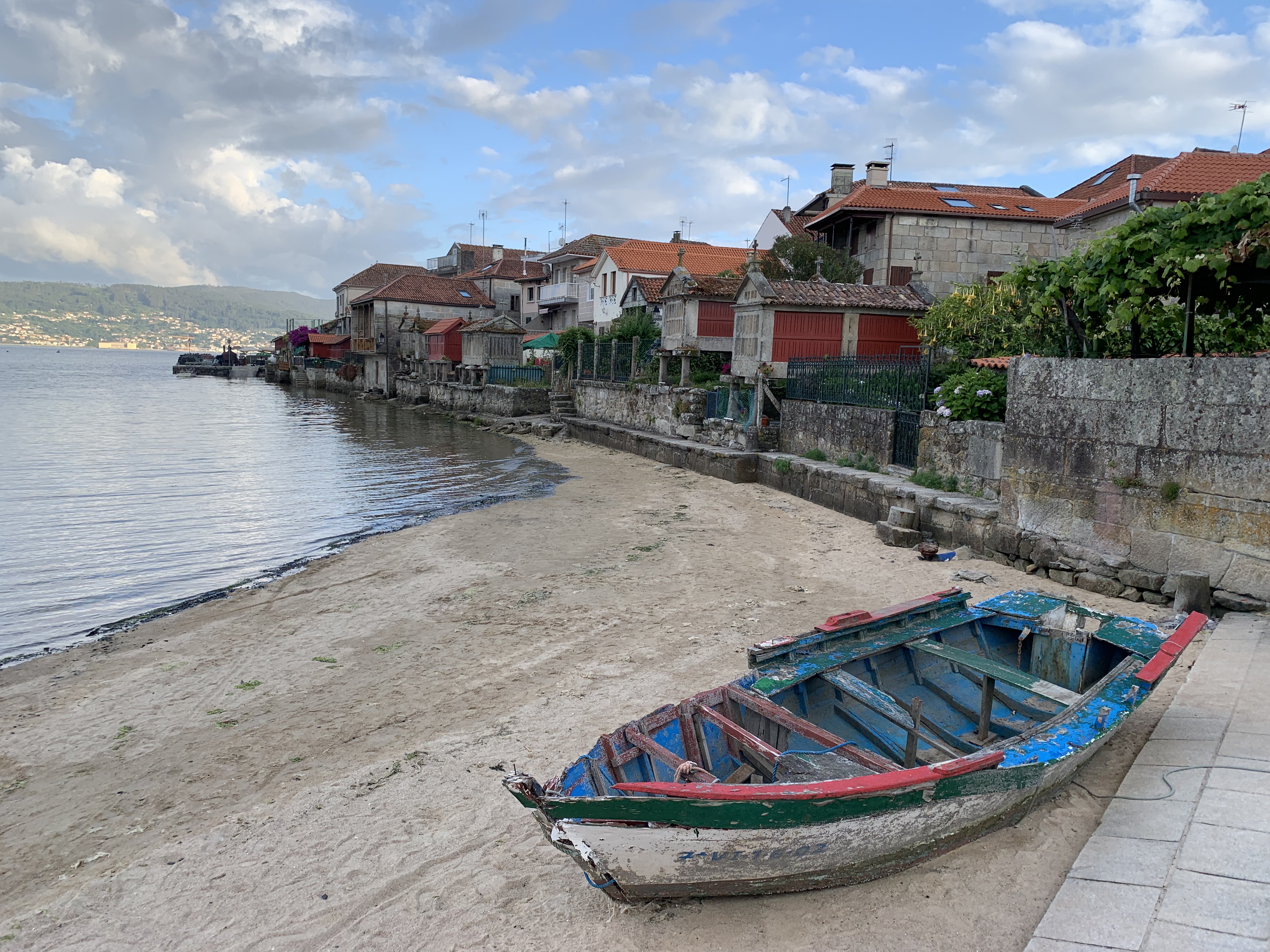
You can see all the horreos along the waterfront that are so prolific in Combarro.

Even the decorative lights along the street highlight the horreos.
 Two Clines Traveling