The hustle-bustle vibe of Bangkok hits you the minute you step off the plane. Suvarnabhumi Airport is so packed with shops, foods stands and crowds of people rushing about that the whole place feels like a shopping mall.
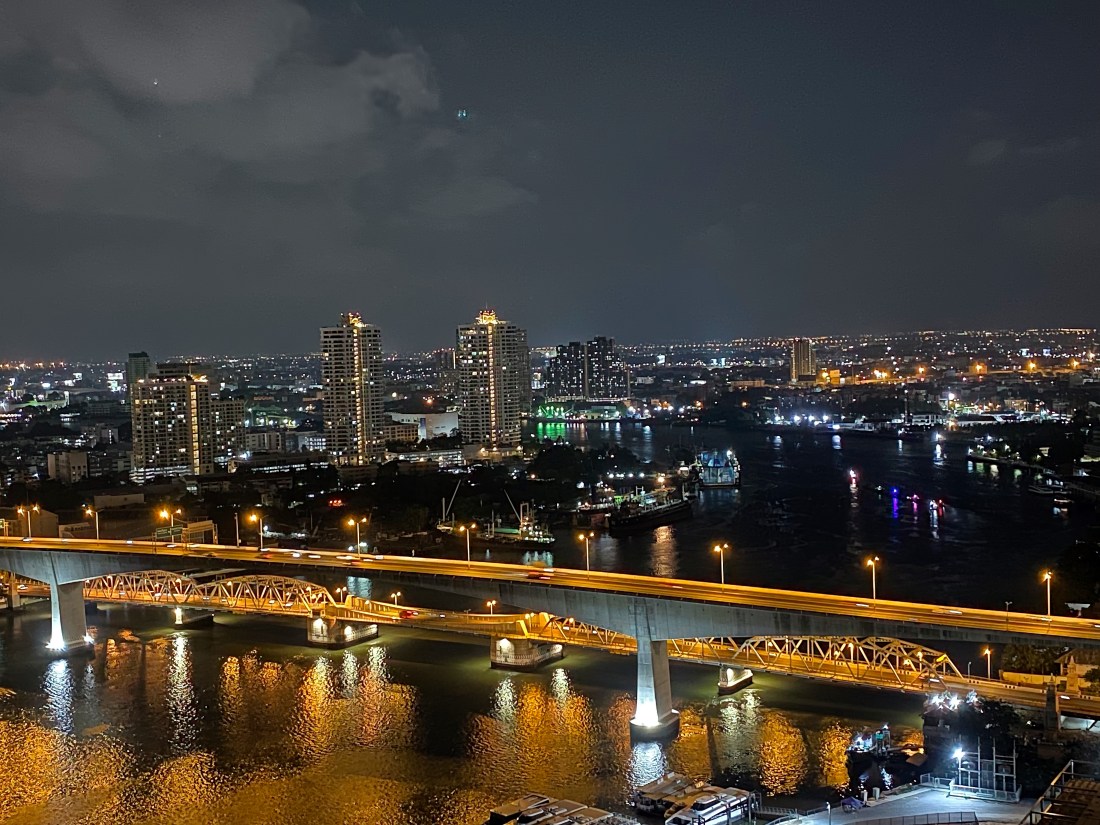
Linking up with our hired transport van at the exit gate took nearly an hour but we finally made it to the Avani Plus Riverside Hotel. Our room proved to be a good one, overlooking Bangkok’s main river, the Chao Praya. The lower two floors of the building also contained numerous shops and restaurants, including some familiar names: a 7-11, Burger King, Dairy Queen and Krispy Kreme donut stand. Not very exotic Asia, so far.
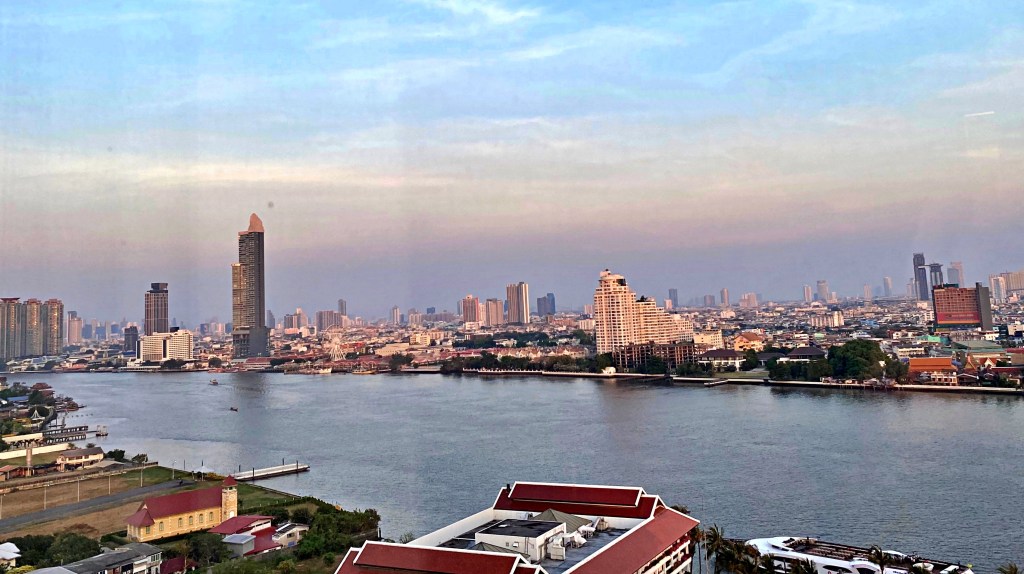
The Avani, however, is well positioned for seeing the city, with the historic district about half an hour’s drive across the river. The next day around noon, we used Grab, Southeast Asia’s popular alternative to Uber, for a ride to Bangkok’s Grand Palace. Our first stop was at a sidewalk shop to buy Bina a scarf needed to cover her bare arms, a necessity for visiting temples in Thailand.
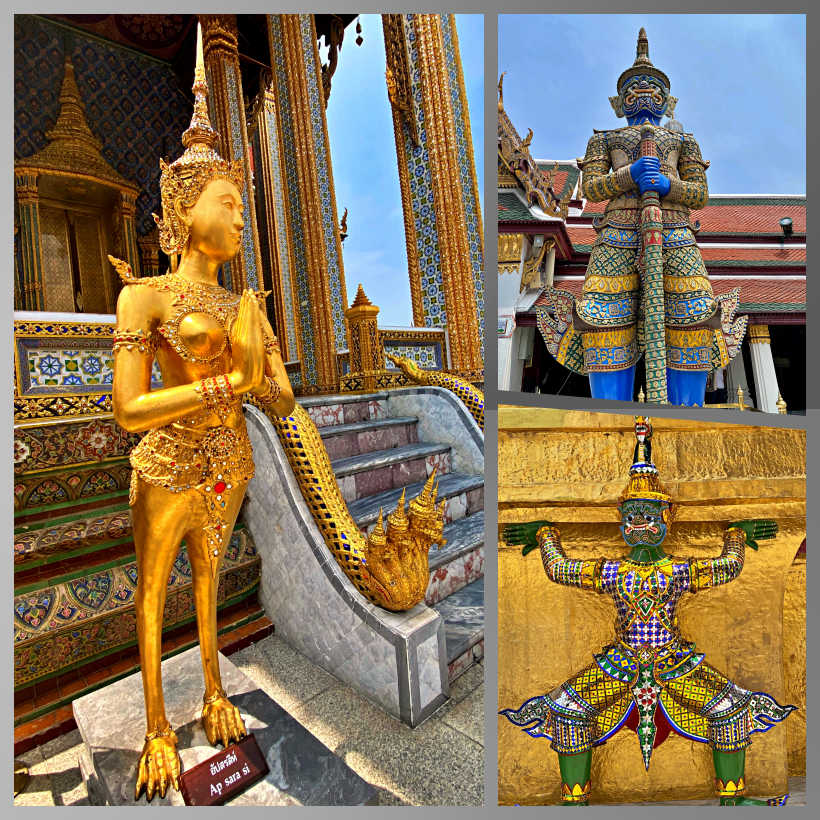
Dating from the 18th century, the palace is a complex of buildings and gardens set within a walled enclosure covering 218,000 square meters (54 acres). The place is so vast that we saw only about a fifth of it, focusing on the most popular temples, such as the Convocation Hall with Emerald Buddha and the Royal Pantheon.
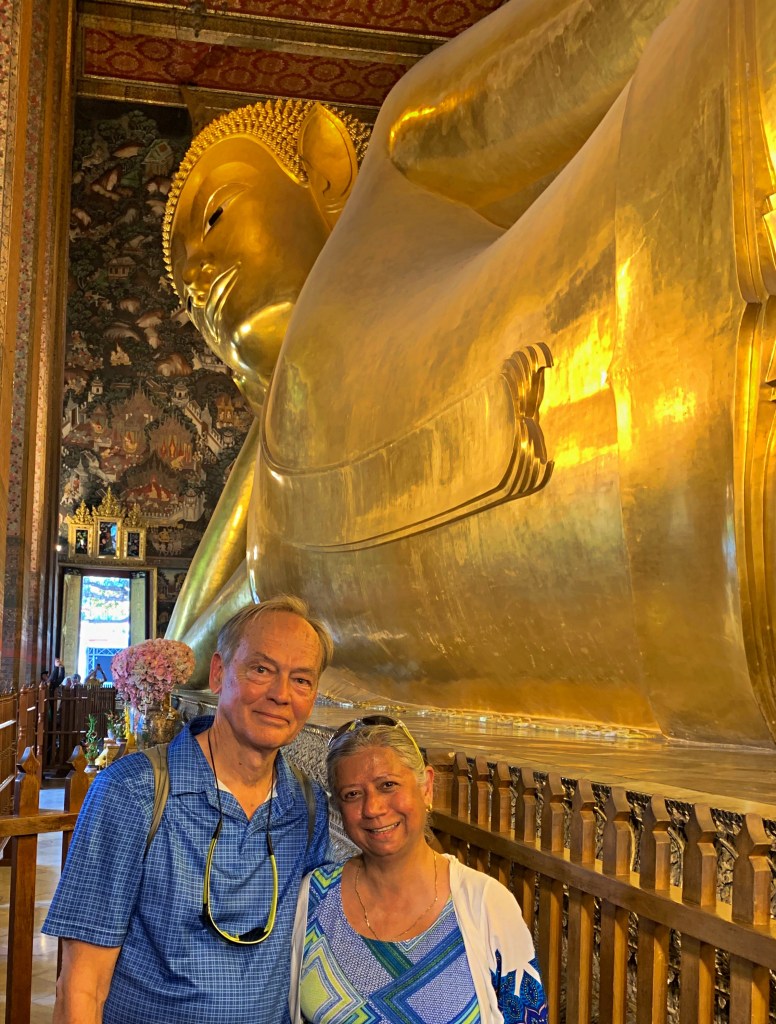
After an hour or so, reeling from both jet lag and the midday heat (36 C. or 97 F.), we exited the palace and walked for 10 minutes around its perimeter to visit one more attraction: Wat Pho, the temple of the the Reclining Buddha. This 19th century gold-plated sculpture is the largest representation in Thailand of a Buddha in the “reclining pose,” which depicts the great teacher’s passage into Nirvana, aka death.
By the time we emerged from the Wat Pho, Bina and I were both “templed out” and ready for lunch. So we hired a tuk-tuk to take us to IconSiam, Bangkok’s luxury mall, which we assumed would have a food court. Did it ever!
On the mall’s basement floor, we entered “Sook Siam” (Happy Thailand), an array of 3,000 vendors selling hot meals, food products, handicrafts and other items from the country’s four major regions. It was like walking through a street market, albeit with higher standards of hygiene and sanitation.
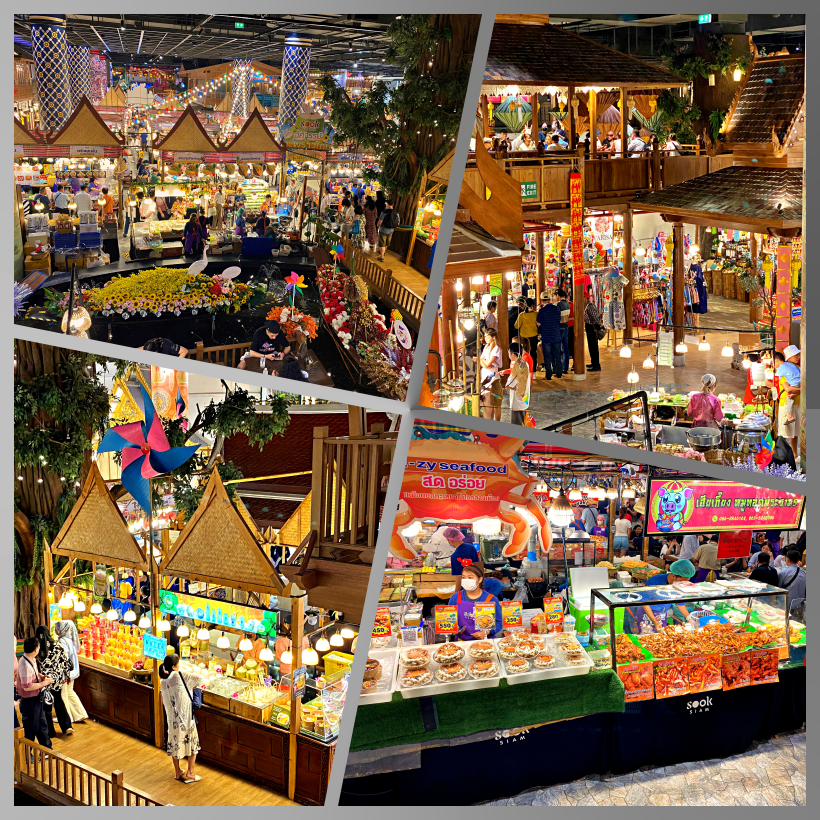
We soon found a kiosk with a woman offering bowls of curry for 80 baht ($2.20) apiece and sat down for lunch — green curry with chicken for Bina and goat curry on rice for me. Food constitutes one of the delights of traveling in Thailand. We can’t think of any country we’ve visited where high-quality meals are available at such affordable prices.
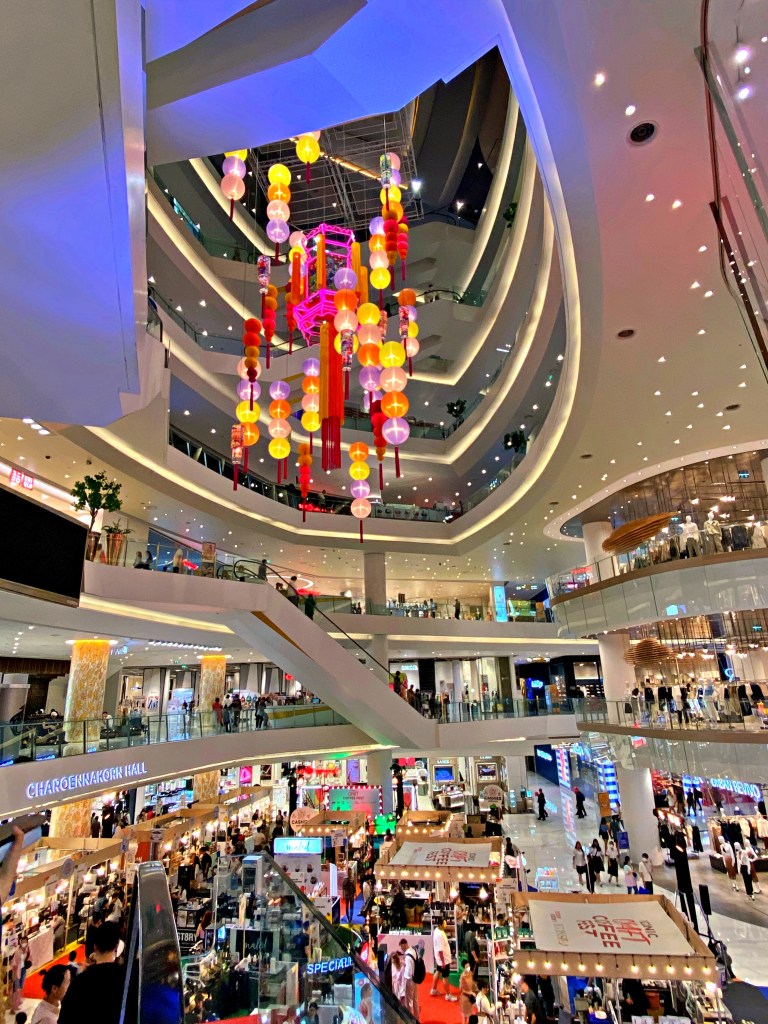
Following lunch, Bina and I went upstairs to view what else the IconSiam might offer, which was a lot: 1,000 plus stores, with most of the big global names in haute couture, including Hermes, Dior and Louis Vuitton. Quite a difference from the food court, which had been more “Asian market” in character.
For our second day in Bangkok, Bina and I scheduled only one activity: an afternoon cooking class. This is something we do frequently on trips to acquaint ourselves better with the local cuisine and culture. We have fond memories of making chicken tagine in Marrakesh and paella in Barcelona.
The location was near Khoasan Road, a Bangkok neighborhood famous for attracting the backpacker crowd with its cheap hostels and restaurants.
The Maliwan Thai Cooking Class featured a well-equipped kitchen and Matinee Charoendee, a young Thai woman we called “Mai” for short. After introductions, Mai took us and our four classmates, Dutch and English couples, downstairs to pile into tuk tuks and visit a nearby farmers market, where she bought the fresh vegetables and spices needed for the meal.

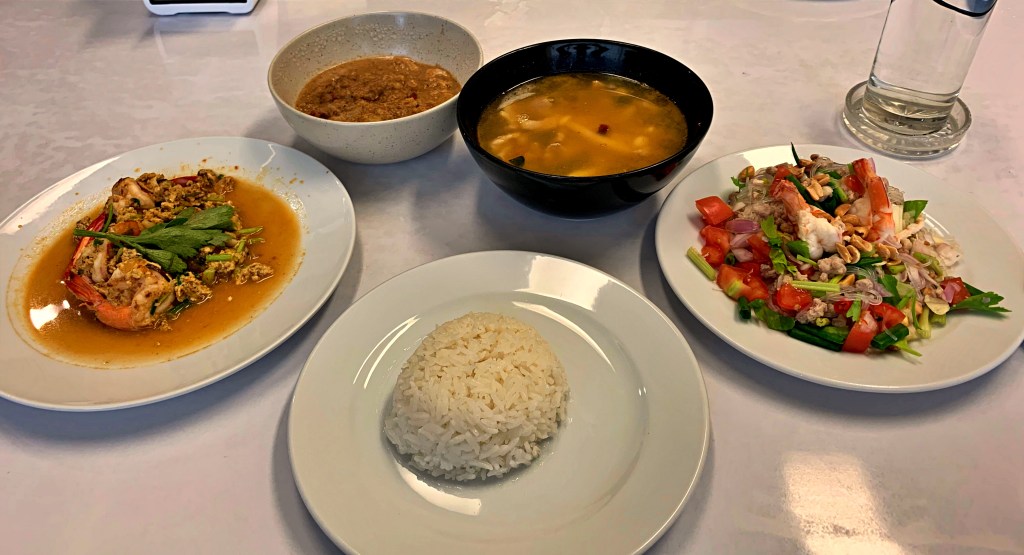
The afternoon passed in a lot of slicing, dicing and wok-ing as we made Massaman Curry with Chicken, hot and sour pork soup, stir-fried prawns with curry powder and egg, and spicy glass noodle salad. With the help of Mai and her two assistants everything turned out very well, even for me, although I over-spiced my soup. By 4 p.m. we were all tucking into a sumptuous late lunch.
Mai also gave us recipes so we can continue to enjoy Thai food back home. Bina has already sourced the not-so-common ingredients and I am looking forward to some good eating!
The next day, we flew to Siem Reap in Cambodia to visit Angkor Wat and an elephant sanctuary (see next post), returning to Thailand on March 13 to land at Krabi, on the southern coast, for a totally different experience of the country.
Broadly speaking, tourists in Thailand focus on three areas: Bangkok in the center of the country, Chiang Mai in the north and Krabi in the south. We had to skip Chiang Mai because March and April is “burning season” there, when farmers clear their land by incinerating crop and forest waste, temporarily producing some of the worst air quality in the world. But this is a good time to head south to the beaches near Krabi, the peak November-to-February tourist season having just ended.
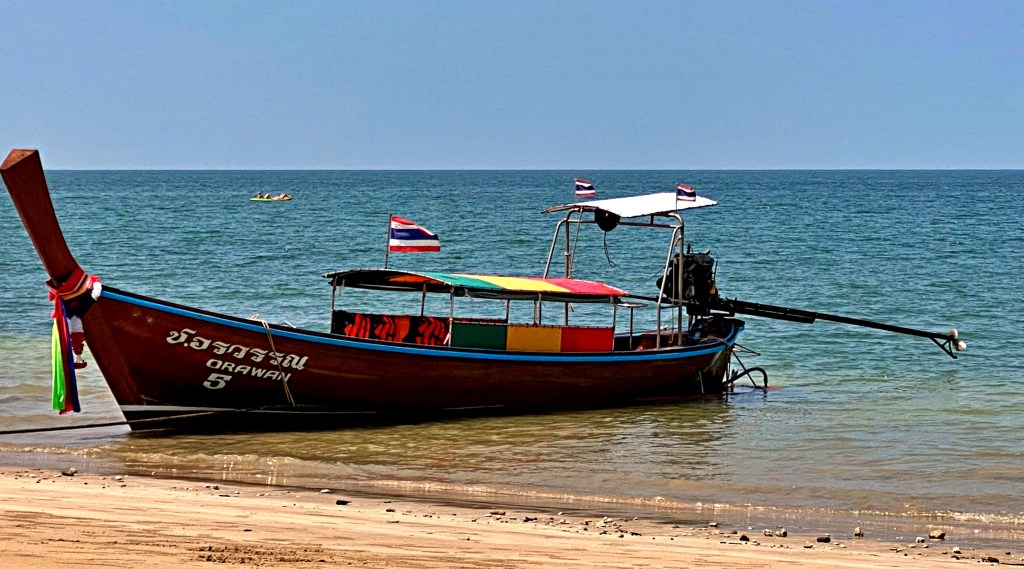
We chose Koh Jum Island, one of the quieter coastal tourist spots, which is just offshore from Krabi. Some friends had kindly recommended a hotel there, the Wynn Kohjum, which proved ideal. Getting there requires a 20-minute taxi ride from Krabi airport to the coast, then transfer to a motorized “long boat” for the half-hour trip to a pier in Koh Jum, where you can take a tuk tuk to your lodging.
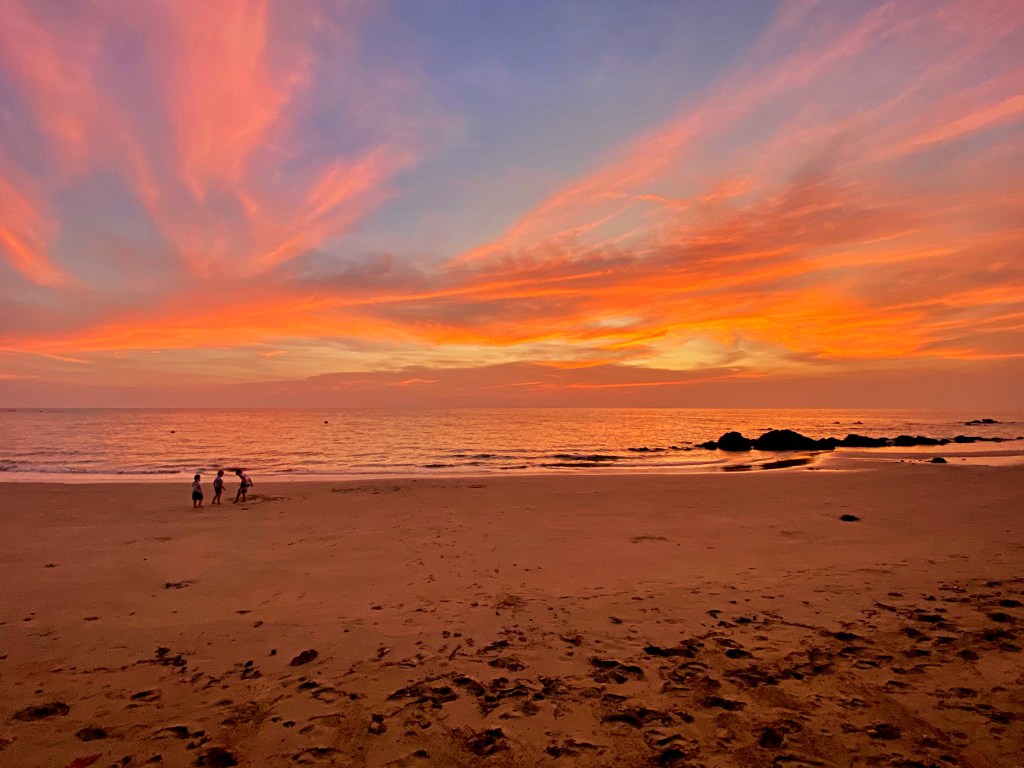
The beach in front of our hotel proved to be one of the nicest on the island, particularly good for sunrise or sunset strolls. And every evening, we enjoyed eating dinner at a table overlooking the beach, with a very extensive menu of Thai food.

While we did take one tuk tuk tour of the island, we spent most of our four days there at the hotel, enjoying the beach, pool and food. For us, this was the perfect way to end our trip to Southeast Asia, particularly since we faced a strenuous two-day journey back to Portugal (flying Krabi-Bangkok-Dubai-Lisbon), beginning on March 18.
 Two Clines Traveling