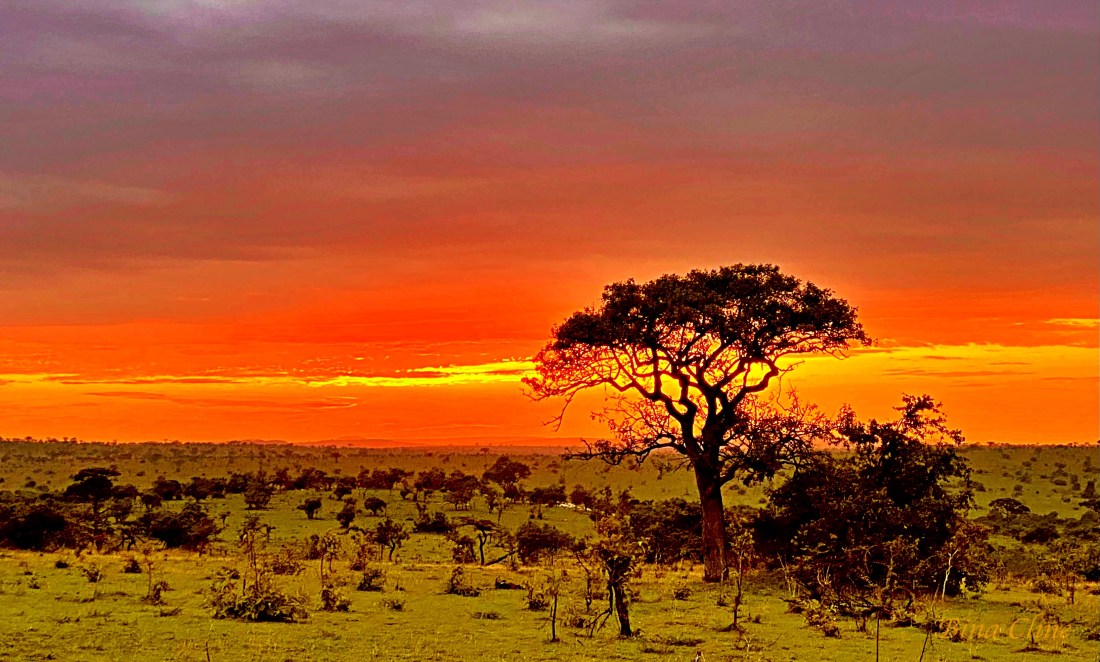
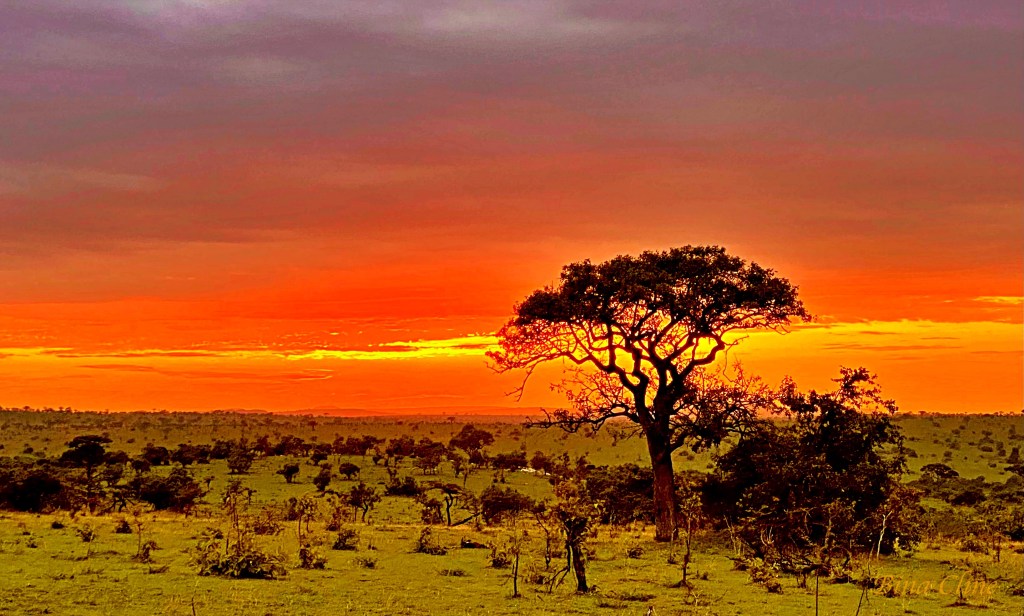
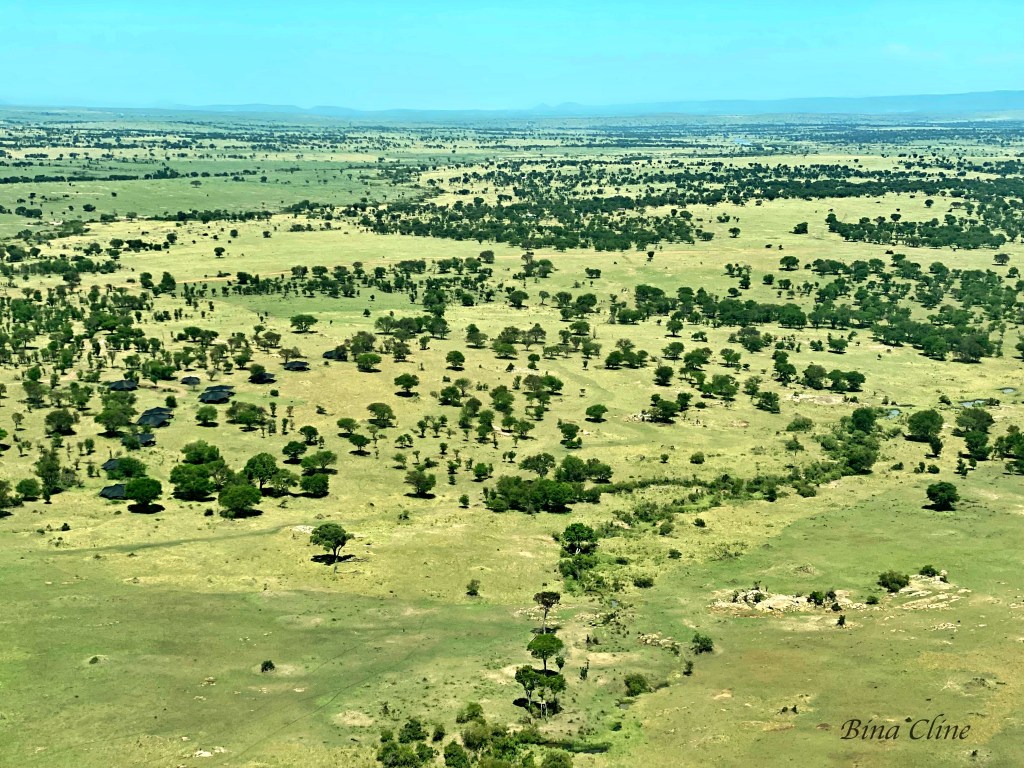
When people think about East Africa, the word “Serengeti” inevitably comes to mind. This vast game preserve, encompassing 14,763 square kilometres (5,700 miles) of open grassland and scattered acacia trees, is certainly Tanzania’s iconic tourist destination for wildlife viewing.
Because the national park is so large, with continual migration in and out, the number of animals is impossible to count. But consider these recent estimates: 1.5 million wildebeests, 500,000 gazelles, 200,000 zebras, 4,000 lions and 550 cheetahs.
One can also spot 530 different kinds of birds, so there’s no lack of things to see. Patience is required, however, as you often have to cover lots of ground between sightings.
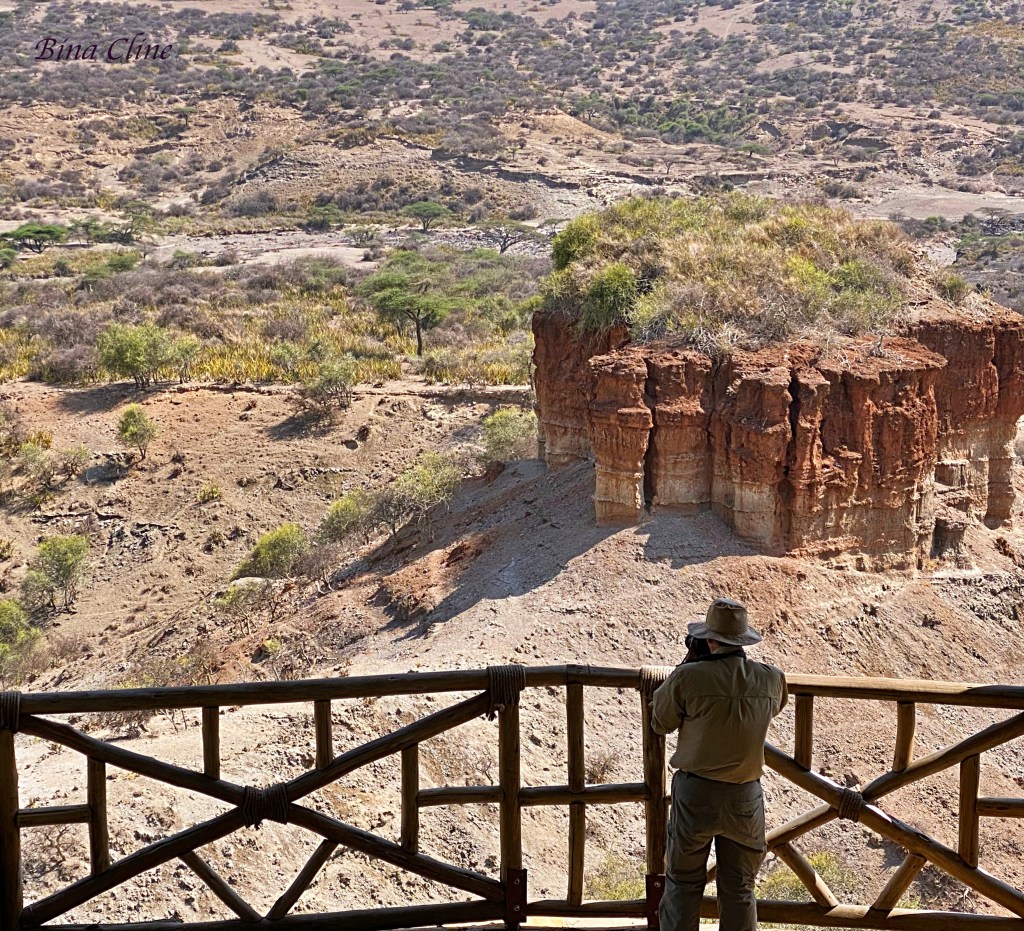
We arrived in the central Serengeti on October 5, after a day-long drive from the Ngorongoro Crater. On the way, we stopped at the Olduvai Gorge, where Mary and Louis Leakey conducted their famous excavations of some of the earliest human fossils (nearly two million years old). The on-site museum explaining the discoveries found in the gorge helps you contemplate humanity’s apparent common ancestry in Africa.
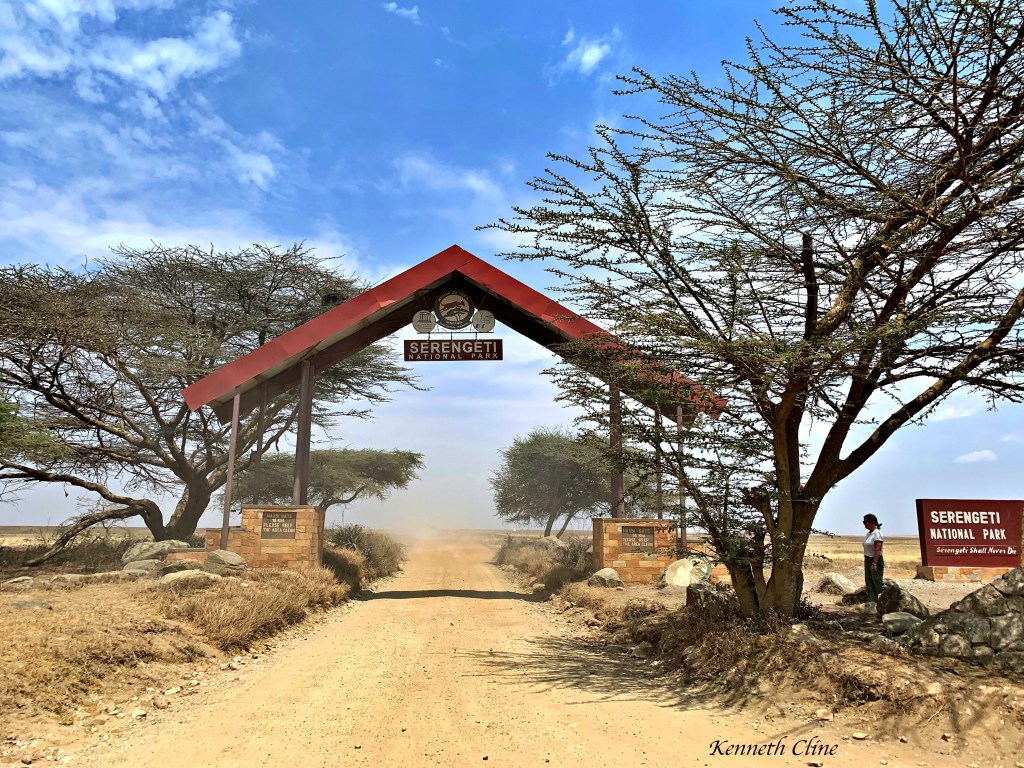
From Olduvai, our guide and driver Hassani continued on to the Naabi Gate, which marks the eastern entry to the Serengeti park. This stretch of road proved to be a white-knuckled experience on that day due to the enormous clouds of dust kicked up by other tourist jeeps (and some trucks) on the narrow dirt road. With visibility reduced to a few feet at times, we were glad to have an experienced driver behind the wheel.
By 4:30 p.m., we reached the Acacia Seronera Luxury Camp, which provides “glamping” at its best: large tents equipped like hotel rooms with furniture, showers (bucket) and electricity and a separate tent for dining. At night, we could hear zebras snuffling outside our tent, like horses, and the low murmur of nearby lions. With the lions so close, the zebras felt safer near the camp and we saw many still grazing on our “front lawn” the next morning.
Unlike the Tarangire and Ngorongoro parks, the Serengeti features few easily recognizable landmarks and the dirt tracks are often hard to follow through grass that stretches to the horizon. I couldn’t imagine trying to navigate the Serengeti without an experienced guide, like our Hassani, who’s been doing these tours for nearly 20 years.
Around noon, we encountered a group of jeeps clustered around a tree that featured a gazelle carcass draped on a limb and a large leopard sleeping on a limb higher up. We returned to the spot later in the afternoon to find the leopard snacking on the carcass.
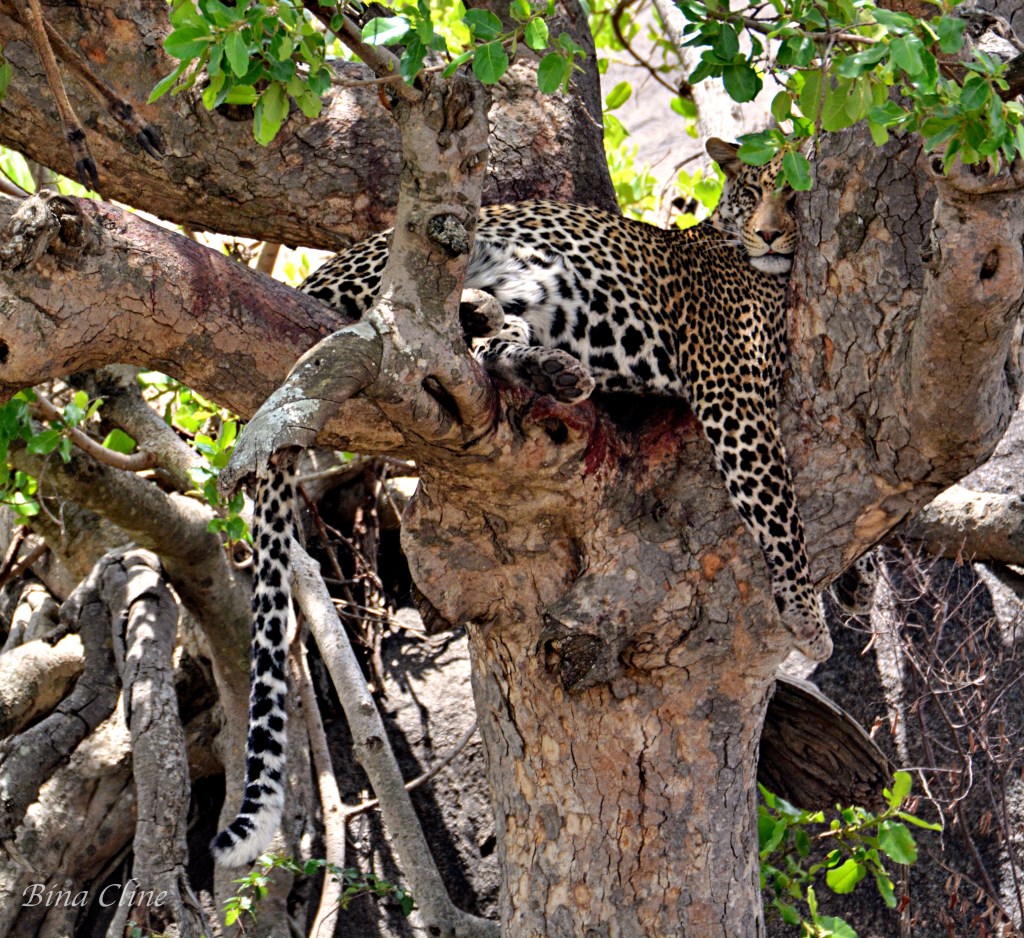
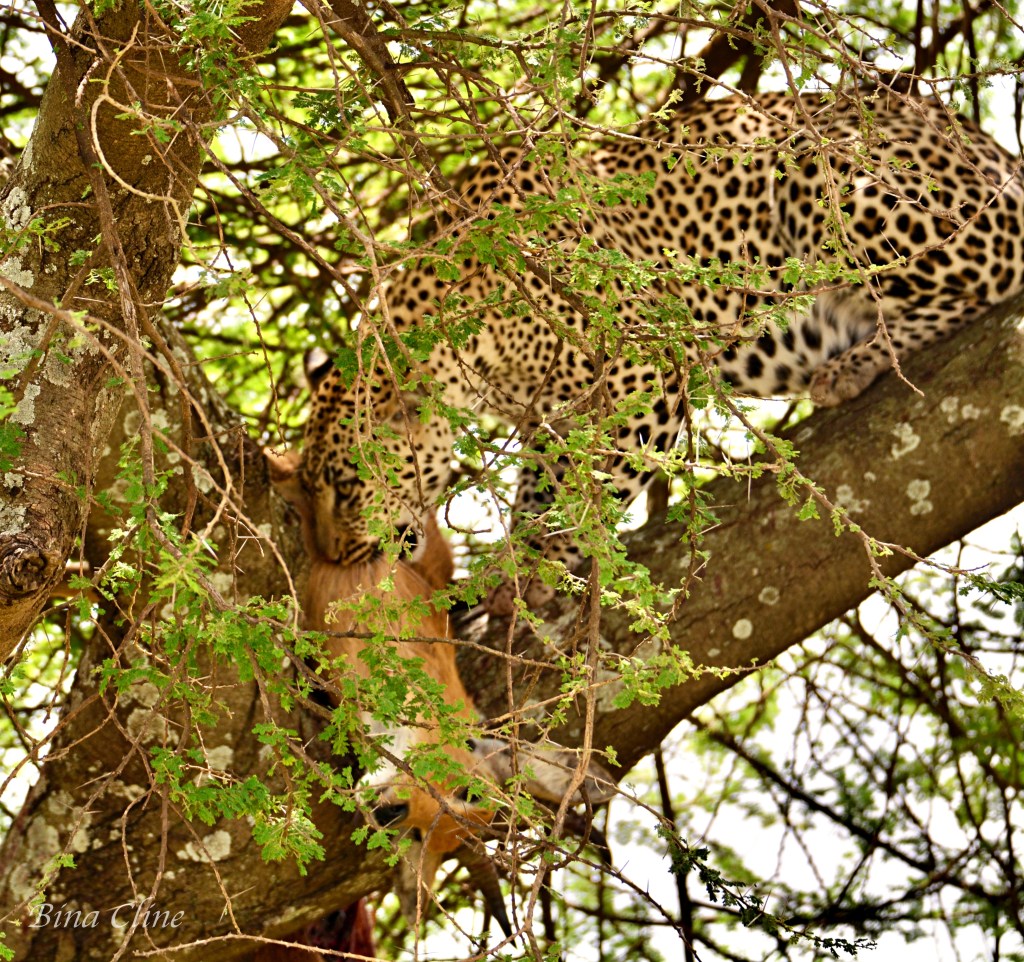
Leopards tend to spend much of their day sleeping in trees after hunting in the late afternoon or at night. Researchers estimate an individual leopard makes about 20 kills a year, mostly antelopes, which works out to a diet of 400 kg of meat annually.
Although all of the big cats are able to climb trees, the leopard, with its retractable claws, is the most proficient. Lions, and particularly cheetahs, are more clumsy at it, which is why leopards stash their kills high enough in the trees to discourage interlopers.
Cheetahs, who hunt during the day, spend most of their time at ground level, relying on their keen eyesight and speed (over 100 kph) to run down prey. While on these hunting expeditions, momma cheetahs often have to leave their cubs behind, hidden in the grass.
In the middle of the afternoon, Hassani drove up to a spot where 12 other jeeps were lined up along the road, the tourists watching a lioness in the grass. One of the other drivers told Hassani this lion had just killed four cheetahs cubs and he gestured up the road to where the mother cheetah could be found. We drove over to view the momma as she sat forlornly on a termite mound, perhaps hoping that a cub or two had survived.

“Lions kill because they’re predators,” Hassani remarked, noting that the lion had likely not even bothered to eat the cubs. “Cheetahs only kill when they’re hungry.”
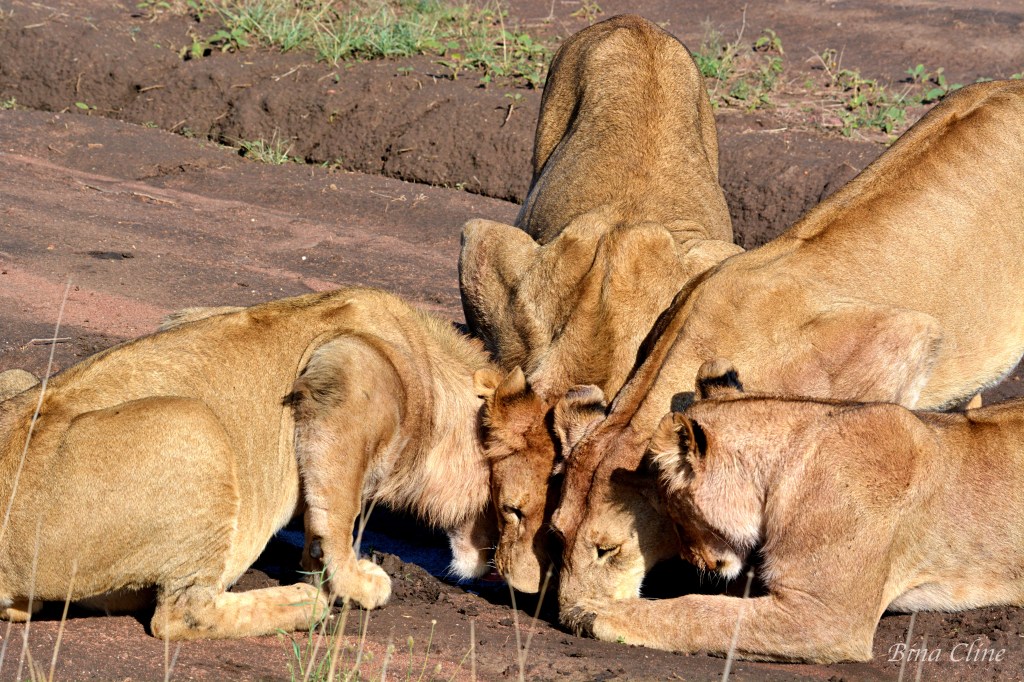
Shortly afterwards, we encountered a group of lions drinking from a puddle in the middle of the road. It had rained the previous evening and they were taking advantage of this rare appearance of water before the coming rainy season.
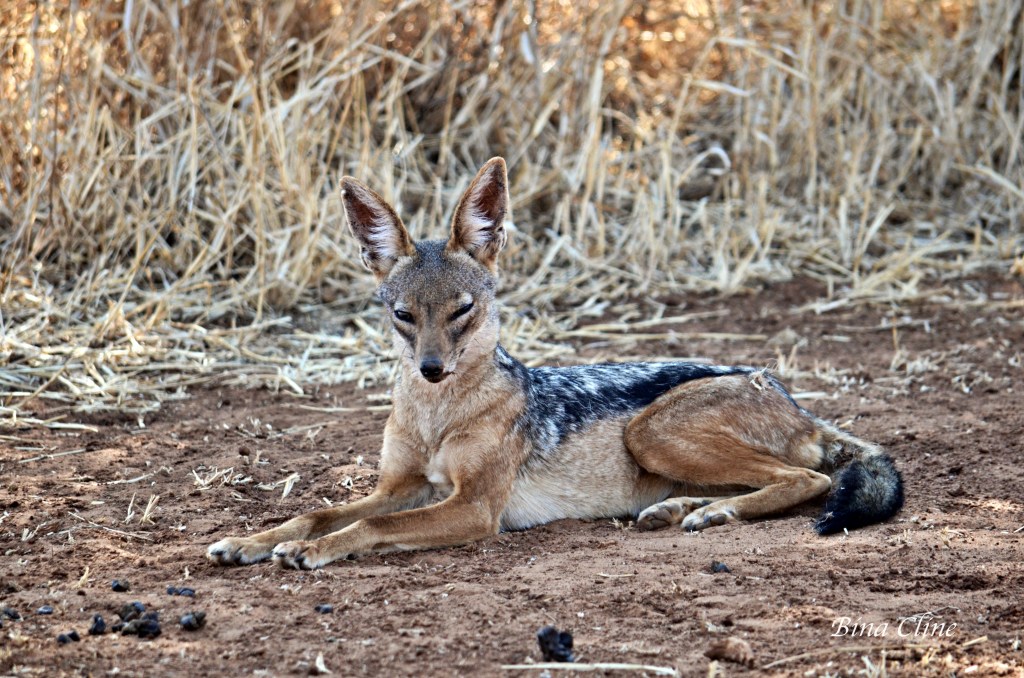
Big cats aren’t the only predators in the Serengeti. Leaving camp the next morning, we watched a jackal chasing a Thomson gazelle, which bounded out of its way fairly easily. Jackals, which look like a cross between a dog and a fox, are opportunistic eaters and will also consume reptiles, insects, ground-dwelling birds, fruits, berries and grass.
By 2 p.m, we reached the park’s Ihoma Gate, where a paved road winds through an inhabited area before reaching the Serengeti’s northern section. Our plan (and hope) for the next day was to view the vast wildebeest herds crossing the crocodile-infested Mara River during their annual “Great Migration.”
 Two Clines Traveling