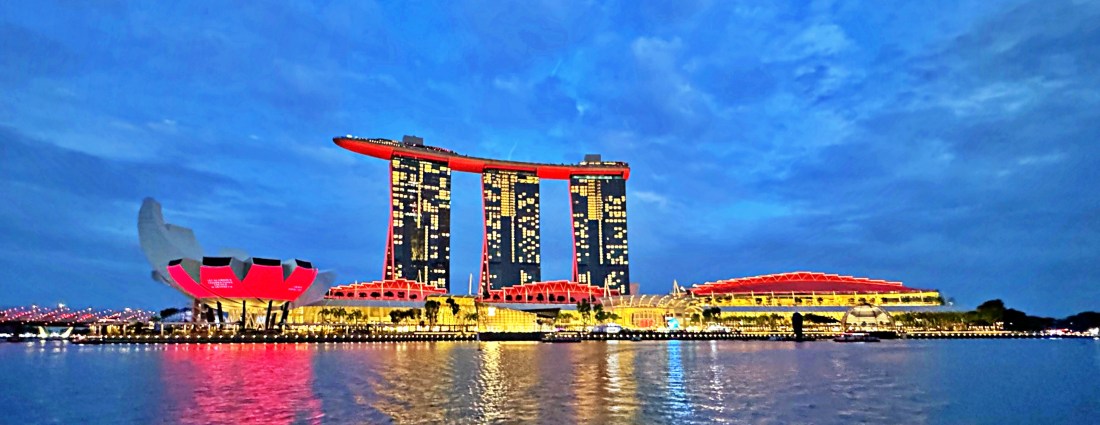
We had several reasons for picking Singapore as our first destination. As a major international air hub, it provided a good base for flights to our other stops in Vietnam and Malaysia. Bina also had both a cousin and friend to visit.
We loved our evening with Bina’s cousin, Radhi, and her husband, Abhishek, over dinner at a Greek restaurant in Dempsey Hill, a retail center with colonial style buildings dating from its years as a British Army barracks. Lunch with Nita, on our last day in Singapore, provided an opportunity for Bina to rekindle a childhood friendship from their time together at the Queen Mary School in Mumbai. For Bina, both visits were heartwarming opportunities to renew old ties.
We also needed time to recover from jet lag. The long journey from Lisbon to Singapore took 17 hours and crossed four time zones. We wanted to relax for a couple of days to adjust our circadian rhythms before tackling Vietnam. Singapore proved perfect for that.
If you’ve traveled a bit in Asia, you’re familiar with noise, congestion and a fair amount of random confusion. Singapore, by contrast, is a model of First World prosperity and efficiency. In its role as Asia’s primary financial and business center, the island ranks as one of the world’s wealthiest countries (fourth in gross domestic product per capita).

Bina and I stayed in a hotel located in the Marina Bay area, home to Singapore’s main harbour, business district and most of the major tourist attractions. To our pleasant surprise, we also found this hotel surrounded by no less than three modern, multi-level malls, providing many food and shopping options.
The variety of those shopping options, in fact, is stunning, with familiar brand names from the U.S. and Europe, as well as a plethora of not-so familiar vendors from Asia. One mall even had a Tim Hortons diner, the Canadian equivalent of Waffle House.
A short Grab ride away was the waterfront district, an ideal place to walk, particularly at night, to enjoy the restaurants, bars and spectacular views. A 45-minute boat ride around the bay gave Bina a chance to take photos of the city’s iconic urban architecture just as the lights came on at dusk.
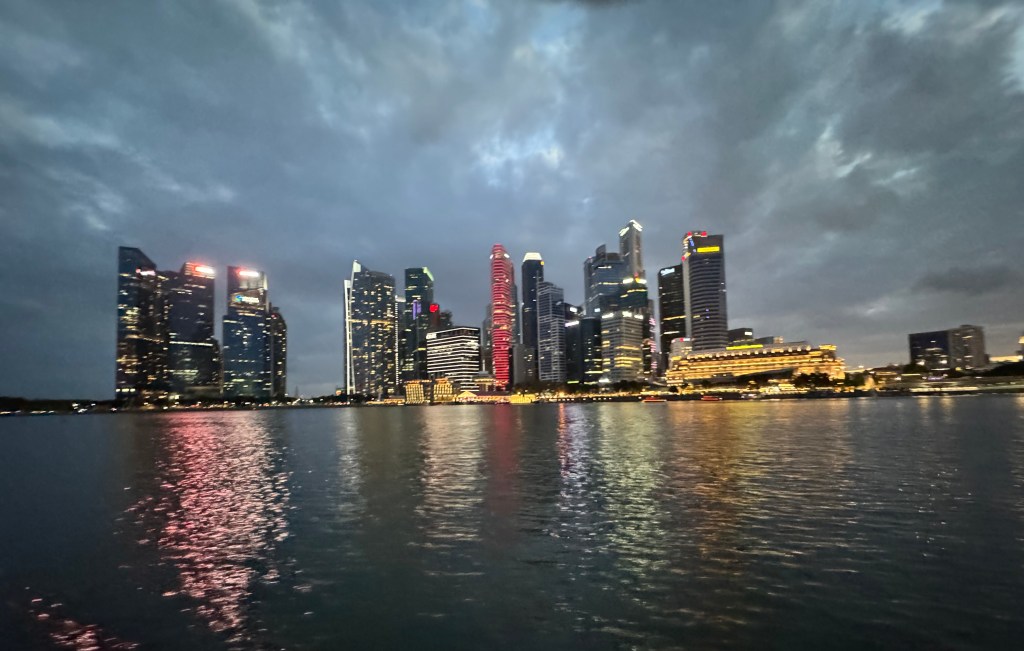
Singapore’s population today is mostly comprised of Chinese (73%), Malays (14%) and South Indian Tamils (9%). That could have resulted in linguistic chaos had not the city retained English as its de facto main language. While Mandarin, Malay and Tamil are also accorded status as “official” languages, English enables the three groups to interact on equal ground — and makes the tourist’s life much easier!
English is a legacy of Singapore’s 144-year status as a British colony, which ended in 1965. Traces of that colonial past can be see in the old ethnic enclaves of Chinatown, Little India and Kampong Glam, the Muslim Malay quarter. While Singapore’s racial groups nowadays don’t necessarily segregate themselves residentially, their old neighbourhoods continue to provide lively centers for shopping, dining and tourism.
We found Kampong Glam to be the most interesting. Highlights here include the Sultan Mosque, built in 1929 on the site of a 19th century predecessor, and the artisanal shops, cafes and restaurants lining Arab Street and Hajii Lane. Many of these establishments are located in repurposed 19th century storefronts, lending the area an old world charm.

Little India, which is mostly situated along Serangoon Road, is known for its shops focused on gold jewelry, clothing and Indian food. The key monument here is the Sri Veeramakaliamman Temple, a shrine built in 1855 dedicated to the Hindu goddess Kali.
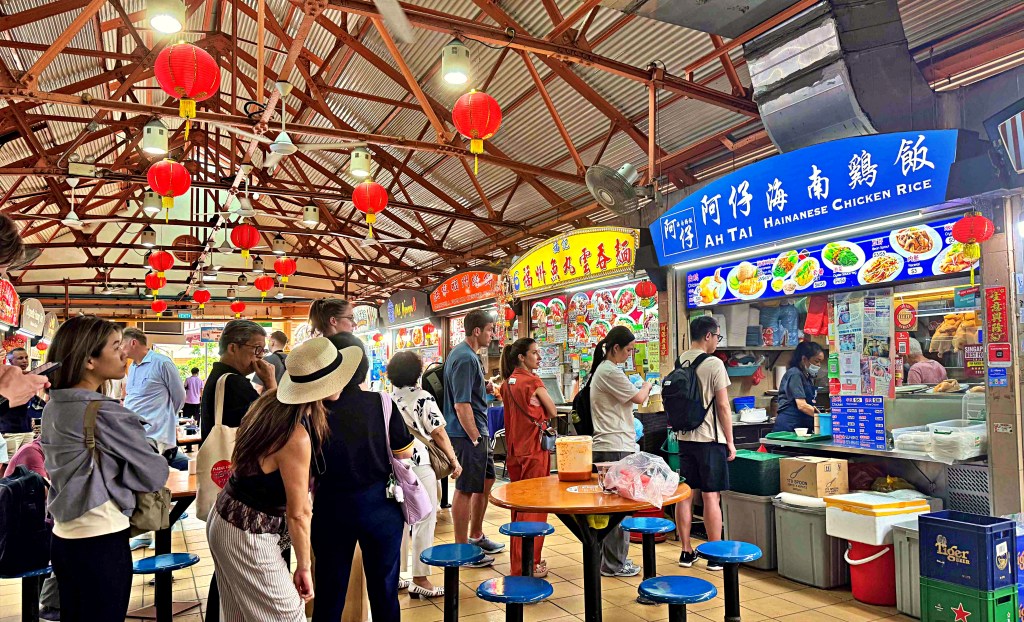
Chinatown is the largest of the historic neighbourhoods, also full of shops and restaurants, including several of Singapore’s famous “hawker centers.” These semi-enclosed spaces resemble mall food courts and were built to house Singapore’s old street food kiosks in more sanitary surroundings. They are also great places to get an inexpensive meal. Bina and I visited one called “Maxwell Food Centre,” where we shared a delicious chicken-and-rice dish flavored in the “Hainan” style.
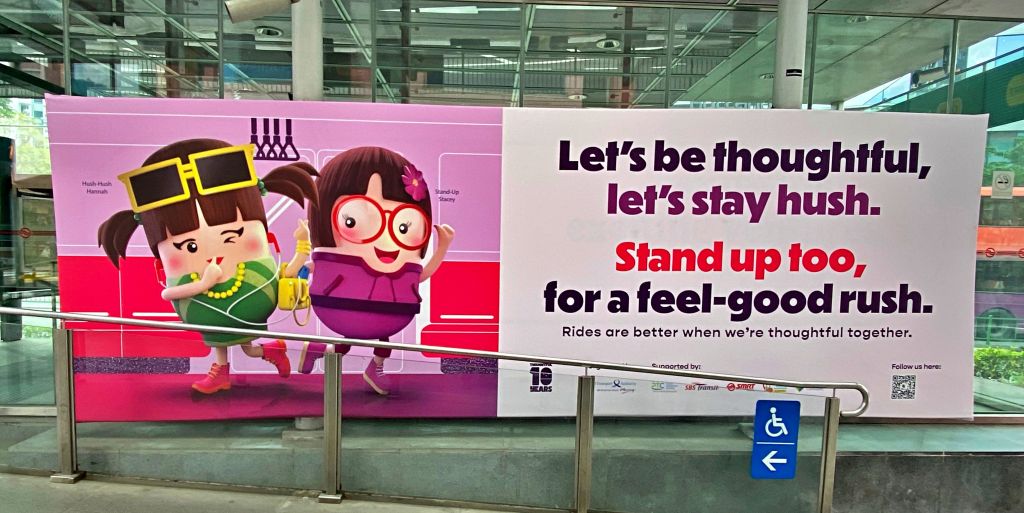
Cleanliness, by the way, is a priority in Singapore. Streets and public areas are virtually free of litter and signs at metro stops exhort passengers to be polite and tidy with each other. In 1992, the government even banned the importation and use of chewing gum to keep sidewalks and metros free of the sticky residue so unsightly in other cities.
When a BBC reporter once suggested to former prime minister Lee Kuan Yew that such paternalistic and authoritarian laws “stifle creativity,” Singapore’s long-time leader responded: “If you can’t think because you can’t chew, try a banana.”
Visitors to Singapore will also be surprised/delighted at the lack of traffic congestion. Streets are relatively quiet here, even at rush hour. And there’s a reason for that: cars are prohibitively expensive. Just the right to own one requires purchasing a 10-year license that reached a record high of over $100,000 in 2023, enough to buy four Toyota Camry hybrids in the US.
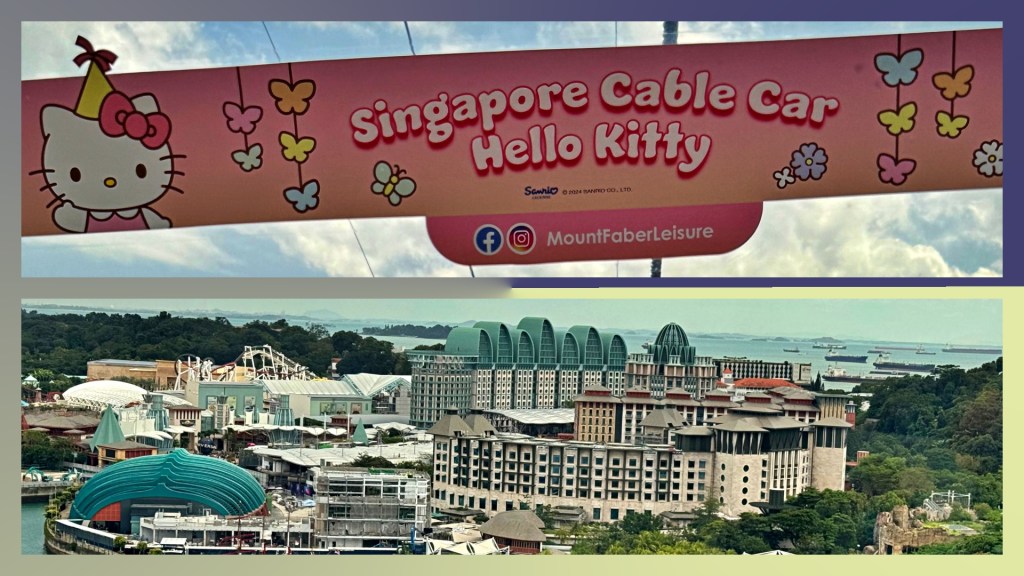
Bina’s cousin and her husband sold their personal car a few years ago and now get around entirely by Grab and the metro, as did we during our visit. One day, for example, we took the metro from Chinatown to the Harbor Front station, where we disembarked to walk through yet another shopping mall (of course!) to pick up the cable car to Sentosa Island.
This small island functions as one huge entertainment center, including a casino, two golf courses, 14 hotels and Southeast Asia’s largest Hollywood movie theme park (Universal Studios). It’s a great place to take the family for a day’s excursion but, as a Grab driver warned us, “a bit hard on the budget.” We were happy just to view it from the cable car.
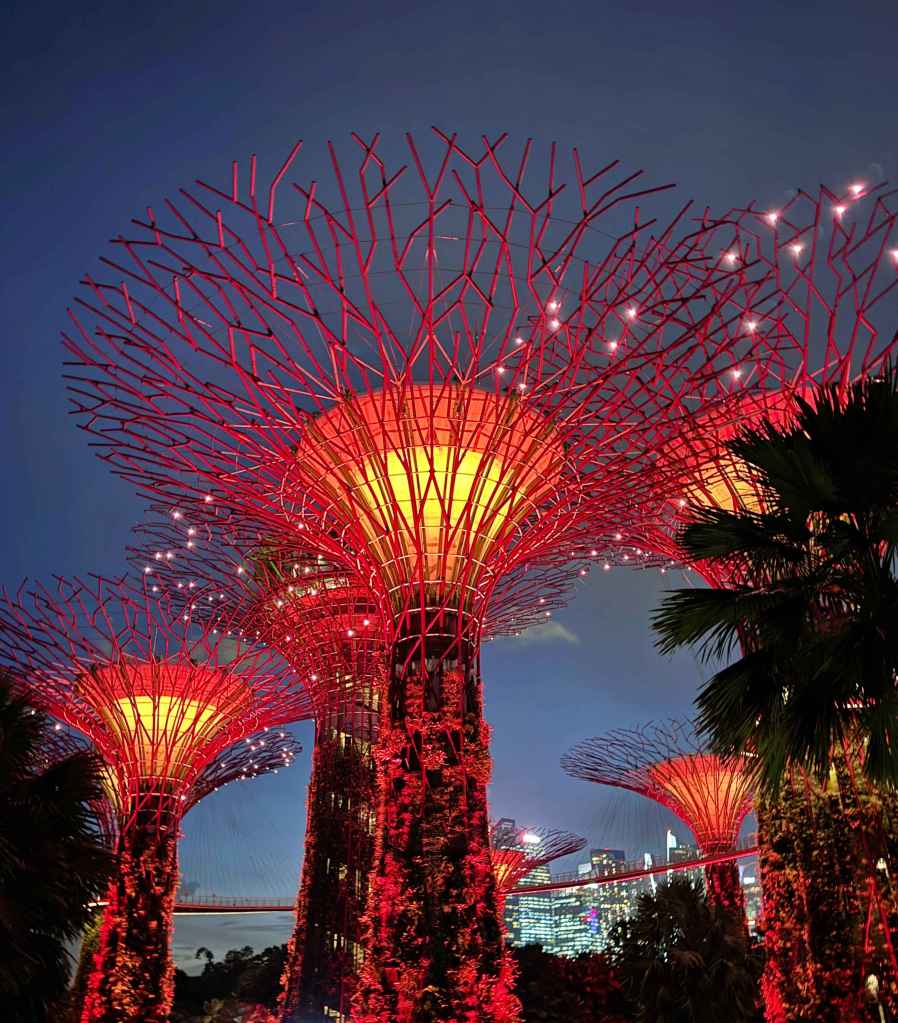
We also visited Gardens by the Bay, an urban park of 105 hectares (260 acres) that includes the largest glass greenhouse in the world. While we did not have time to walk through much of the gardens on that occasion, we did take in the nightly light show, which provided a nice finale to our Singapore stay.
The next morning, February 11, found us free of jet lag and ready to encounter new adventures in Vietnam.
 Two Clines Traveling