
Our five-day stay in Albi included a day-trip by rental car to some medieval villages north of town. The ones on our planning list — Cordes-sur-Ciel, Penne, Bruniquel, Puycelis and Castelnau de Montmiral — were reputed to be very scenic. In fact, Cordes had been voted the country’s “favorite village” in 2014 by viewers on a French TV program.
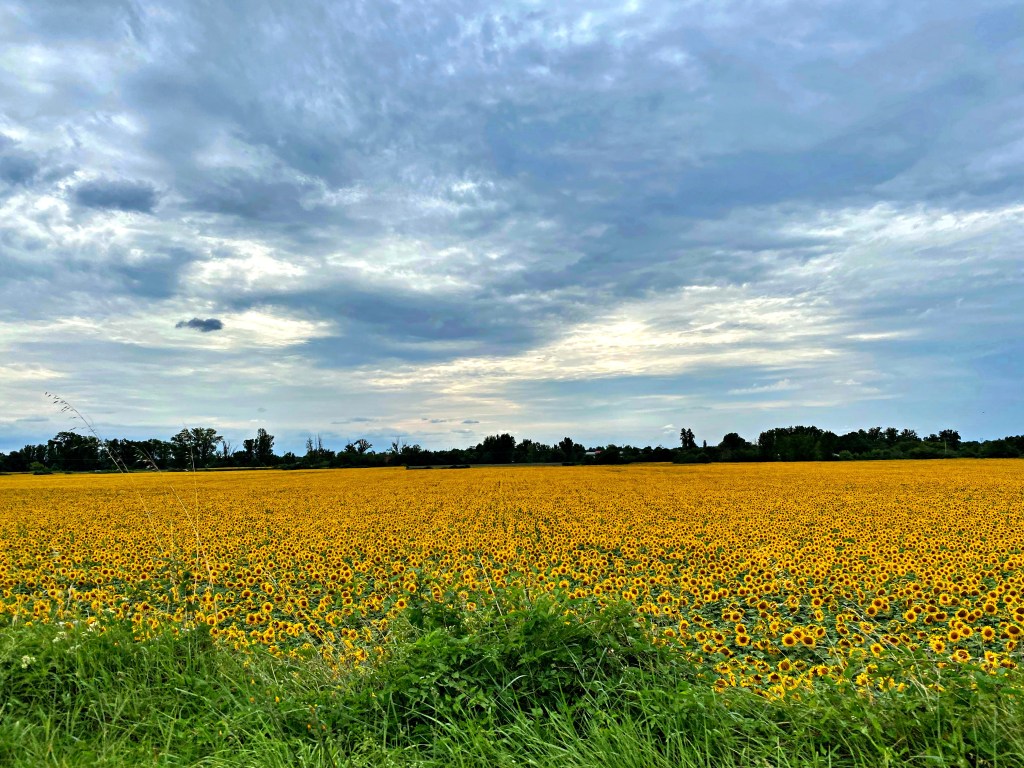
Cruising down the country roads in our Opel Corsa became a treat in itself as we passed fields washed yellow with blooming sunflowers, bales of corn and hay neatly stacked in the sun, and green rows of grape trellises awaiting a fall harvest.
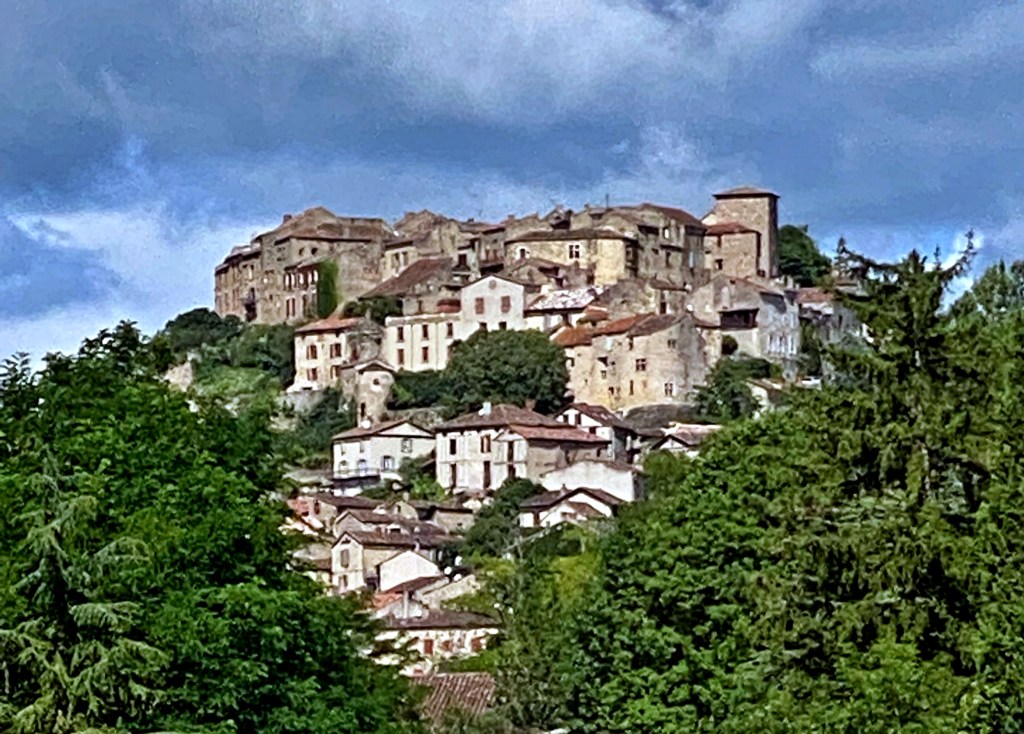
We drove into Cordes with a lot of anticipation. Situated on a hill overlooking the Cérou Valley (the full name means “rocky heights in the sky”), the fortified town was built in 1222 by Raymond VII, the Count of Toulouse, who supported the heretical Cathars during the Albigensian Crusade. Still preserving architecture from the 13th and 14th centuries, Cordes became a favorite of artists such as the writer Albert Camus in the 20th century and is today considered a must-see destination in southern France.
Unfortunately, must-see destination means must-deal with lots of fellow visitors. Part of our problem was timing. It was now August 2 and France’s annual summer get-away period had just begun in earnest. We knew we were in trouble when we had trouble finding a parking space amid all the tour buses and other cars.
The narrow and steep pedestrian lanes of Cordes did have their charm but not when you’re constantly jostling for elbow room with other gawkers. Also, after a while, all the gift shops and artisanal food stores started to look the same. We called it quits after an hour or so and headed back to our car to drive on to the next village on our list, Penne.
We liked this place a lot more. Yes, Penne had its share of visitors, but far from the numbers we saw in Cordes.
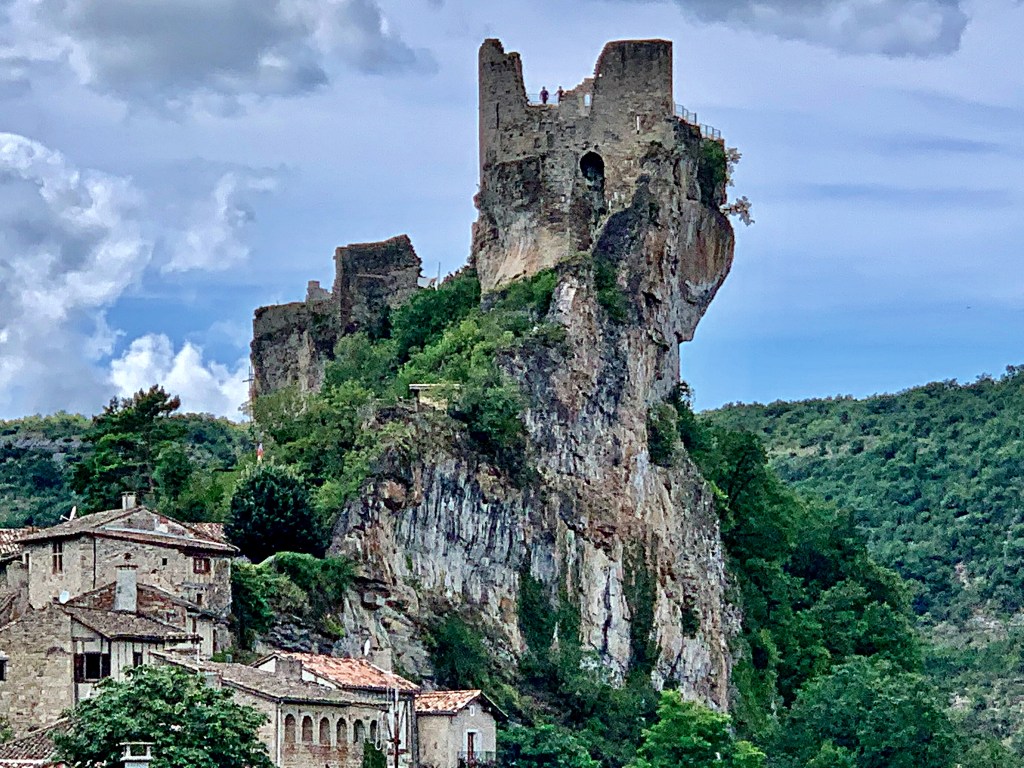
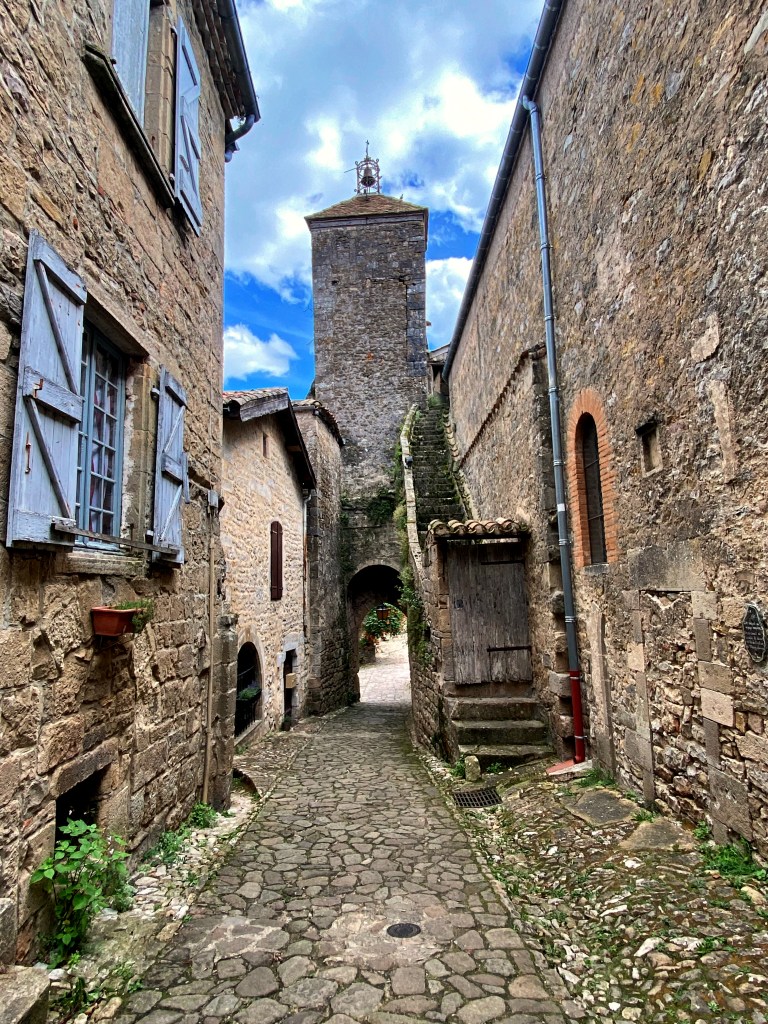
Penne (from the Occitan word meaning “feather”) is smaller than Cordes, only 500 inhabitants compared to 850. It’s also exhibits more of a lost-in-time look, with narrow streets lined with timbered-framed houses, wooden corbels supporting the roofs and mullioned, or divided, windows. Overlooking everything, perched on a steep, rocky crag, is a ruined castle whose origins have been dated to 825.

On the day we visited, Penne was hosting a medieval reenactment in the castle. I watched a blacksmith demonstrate how you heated metal back in the day and some of the armoured soldiers having a go at swordplay. Descending back into the village, we found seats on the patio of the Café des Mesures to enjoy a coffee and the view of the surrounding hills and the Aveyron River, which runs alongside the village.
On our way back to the car, we saw a woman in a blue dress and straw sun bonnet relaxing in a camp chair as she sketched the iconic scene of Penne’s castle looming over the village. Quintessential southern France!
Our trip to the Albi area ended with a night in Toulouse before flying back to Faro the next morning. This gave us time to stroll around the old quarter to see the Place du Capitole (central square), where we had lunch, and the Basilica Saint Sernin.
This structure, which dates from the 11th century, is the oldest Romanesque church in Europe and constructed of red brick. As with Albi, Toulouse’s old quarter features extensive use of a terracotta brick type known as “foraine,” which is larger than the red brick most of us are familiar with. Lacking good stone for building purposes, Toulouse and Albi utilized red clay common to the region to make these foraine bricks.
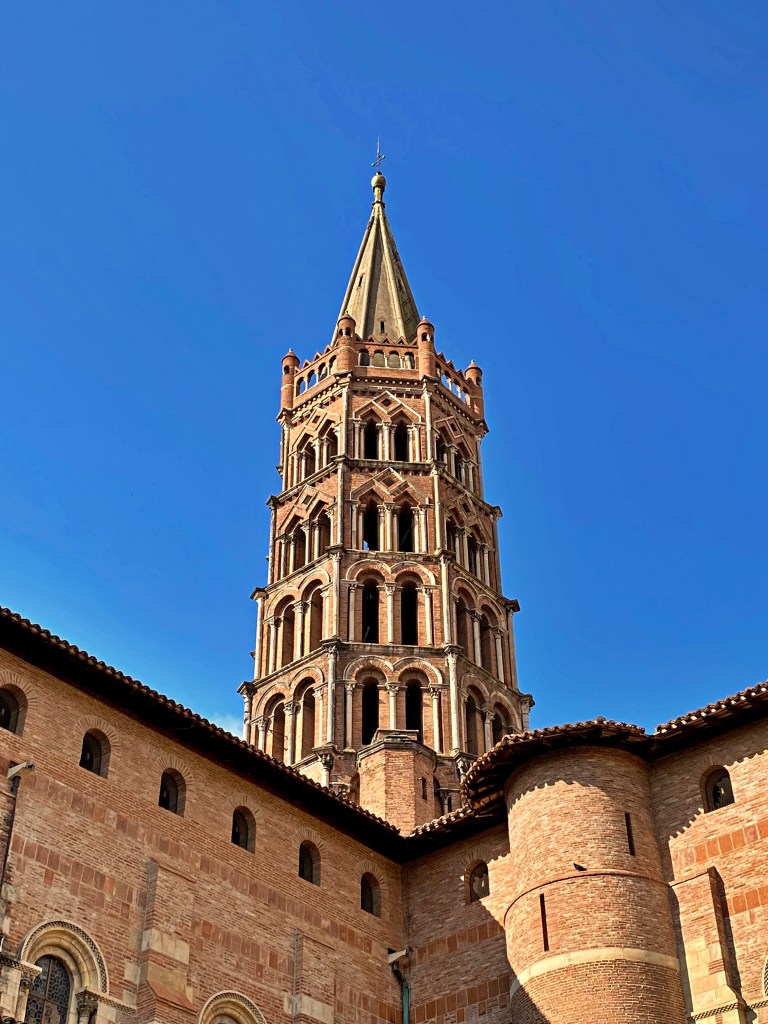
One of the intriguing features of this brick is that the color varies depending on the type of clay used and the play of light on the surface at different times of the day. Albi is typically referred to as the La Ville Rouge (“Red City”) and Toulouse as La Ville Rose (“Pink City”).
Another good example of foraine brick construction is the St. Michel Abbey in Gaillac, a town about midway between Albi and Toulouse that we visited by train one morning. The abbey dates from the 10th century but was substantially rebuilt 600 years later and is an impressive sprawl from across the opposite bank of the river Tarn.
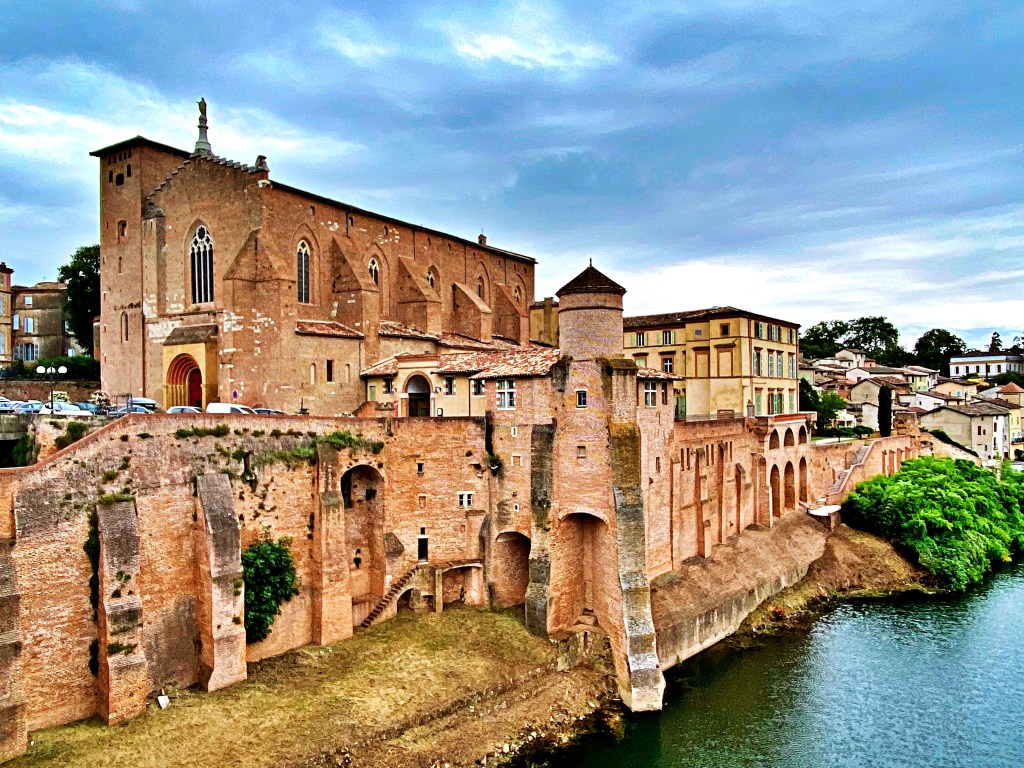
Gaillac’s other claim to fame is wine. The town is surrounded by extensive vineyards that have been cultivated since Roman times, one of the earliest viticulture regions in France. The wine produced here, which is marketed and sold under the “Gaillac” appellation, consists of a blend of several different grapes, primarily Duras (believed to have been brought by the Romans), Fer and Syrah, with small amounts of Cabernet or Merlot sometimes thrown in. We sampled a few varieties in the tasting center/shop attached to the abbey and found it to be good, but not Bordeaux.
 Two Clines Traveling