
Reaching the Galapagos by air requires departing from one of two Ecuadorian airports, Quito, the capital, or Guayaquil on the coast. We chose the latter because it’s located at sea level; Quito perches in the mountains at 2,850 meters (9,350 feet), exposing you to possible altitude sickness.
As for destinations, we decided to visit San Cristóbal first because it’s a smaller island (pop. 4,500) with a more low-key atmosphere. We thought it best to get our Galapagos grounding there before transitioning to the more hectic Santa Cruz (18,000 people).
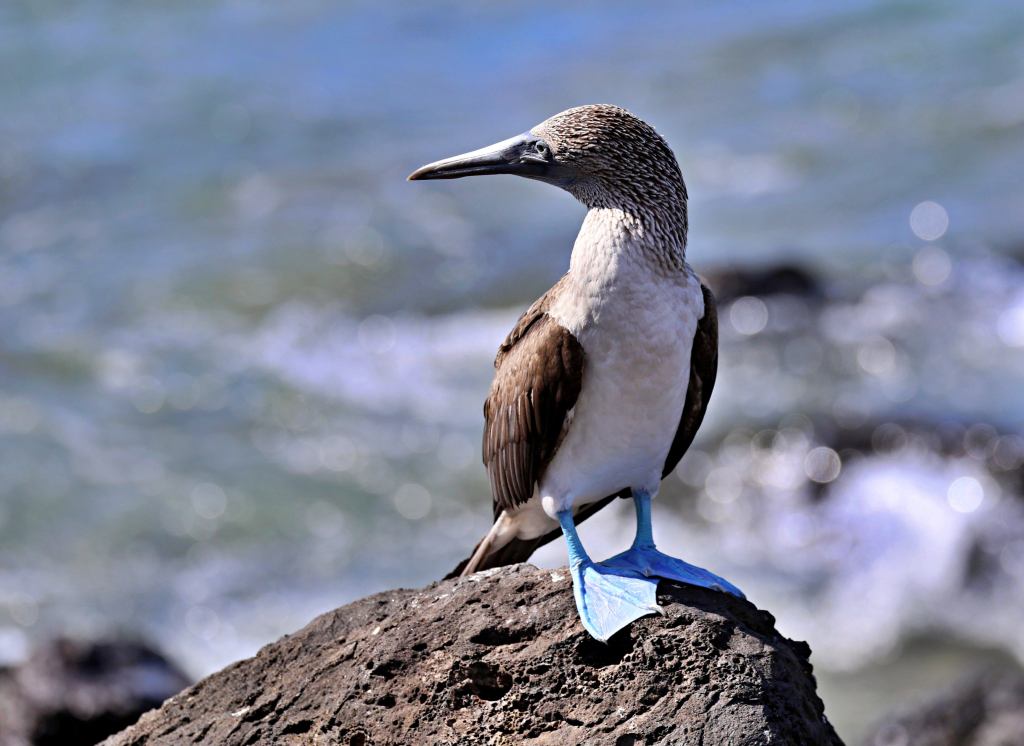
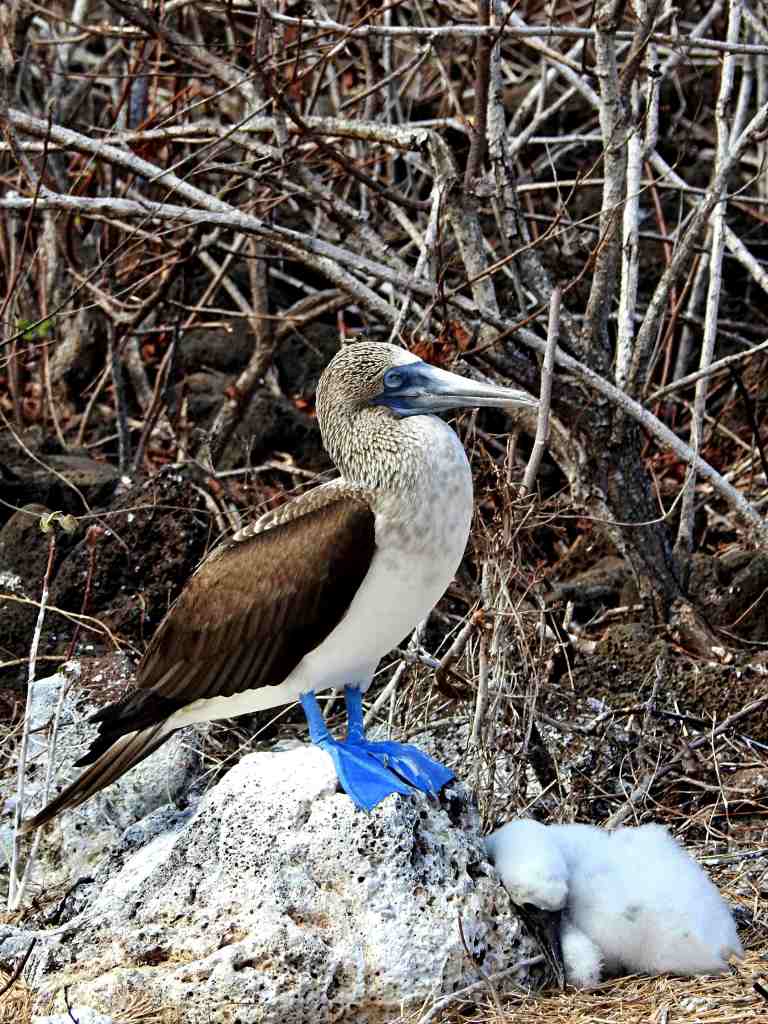
After landing at San Cristóbal’s small airport, we picked up a taxi for the five-minute ride to our lodging on the outskirts of the island’s major town, Puerto Baquerizo Moreno. The modest but comfortable family-owned hotel proved to be a good base for our stay, located in a quiet district but within walking distance of all the major spots in town. Within an hour of checking in, we spotted our first Blue-Footed Booby on a pier at the malecón (waterfront esplanade), which was only a few blocks from the hotel.
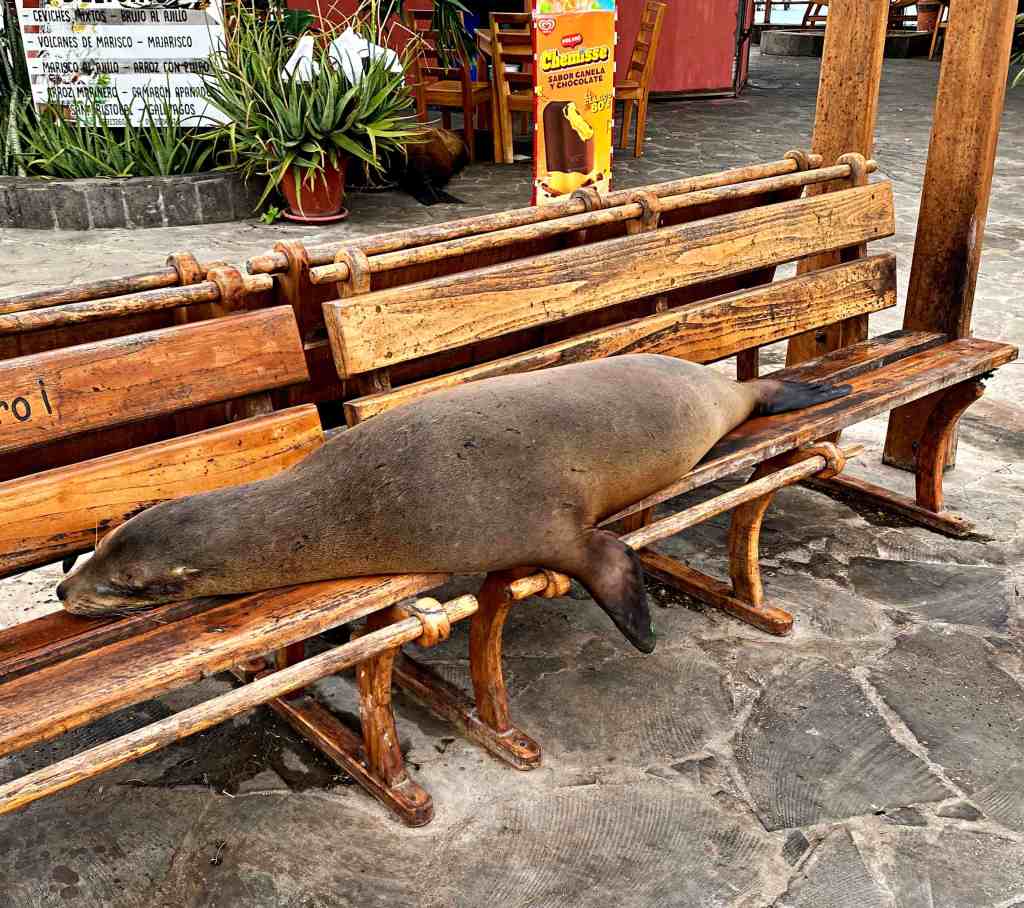
The malecón is also notable for the mob of sea lions lazing about. And I do mean “lazing.” Beaches, sidewalks, benches, most any open space along the waterfront is likely to be occupied by recumbent sea lions enjoying a good snooze. The noise of their barking — which sounds like someone groaning over a very upset tummy — is a constant audio backdrop in Puerto Moreno.
After lunch, we walked on to the Environmental Interpretation Center, a government-run project that features exhibits on the history of the Galapagos and the ongoing efforts to preserve it from overdevelopment. Behind the center are boardwalk trails over the desert-like scrub where we wandered an hour or so looking for birds to photograph.
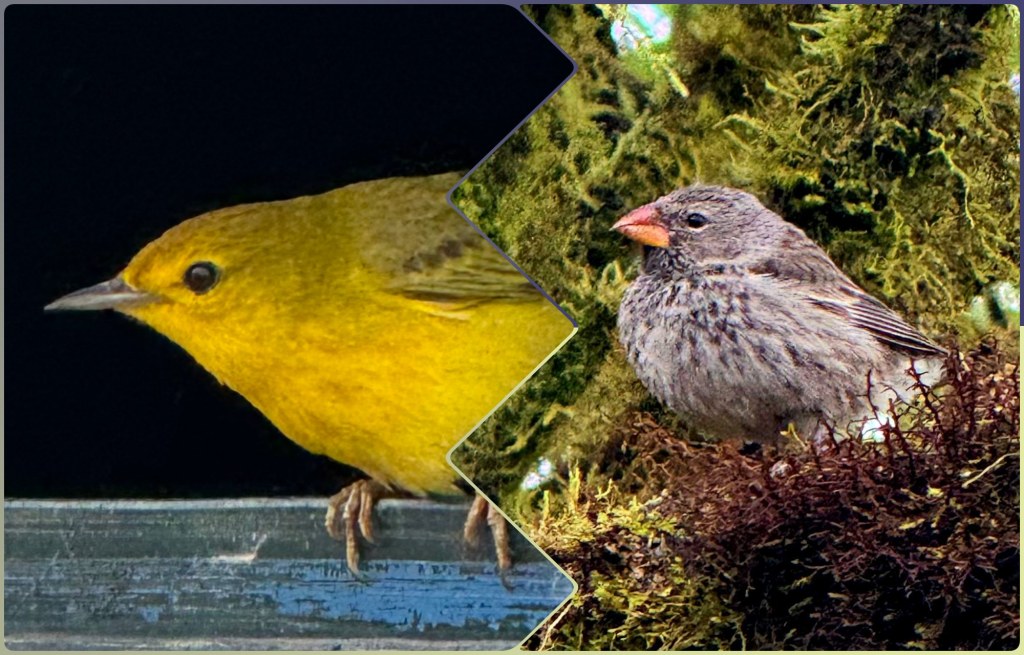
That’s when we discovered another feature of the Galapagos: a plethora of finches, the famous “Darwin Finches” to be exact. Seventeen of the 18 species found on the islands are endemic to the Galapagos. The outlier is a “Cocos” Finch that can also be found on the island of the same name in Costa Rica.
Not to get too much into the taxonomical weeds here, but these Darwin Finches are not true finches at all but belong to the tanager family. They were important to Darwin’s research on evolution because they showed how all these species, which likely evolved from one ancestor millions of years ago, adopted to different environments and food sources on the different islands, which is shown by the minute variations in the size and configuration of their beaks; beyond that, they look very much alike.
That may be interesting, but it’s a nightmare to amateur birders such as Bina and myself, who like to identify the birds we photograph. So, is that a large, medium or small ground finch perching on that limb over there? Beats me. To be honest, we became seriously finched-out by the end of this trip!
That evening at dinner, we enjoyed another feature of these islands: lobster. Our trip, happily, coincided with lobster season (Aug. 1 to end of year) in the Galapagos and Bina, particularly, took advantage of that culinary bonus throughout our visit.
San Cristóbal is a small island (215 square miles) but large enough to feature two major climatic zones, desert scrub coastal and rainforest highlands (this is true of Santa Cruz as well). One of our activities involved a “Highland Tour” with a taxi driver named Eduardo in his white pickup truck — all taxis on the Galapagos are white pickups because you need something rugged to navigate the often poor, non-paved roads.
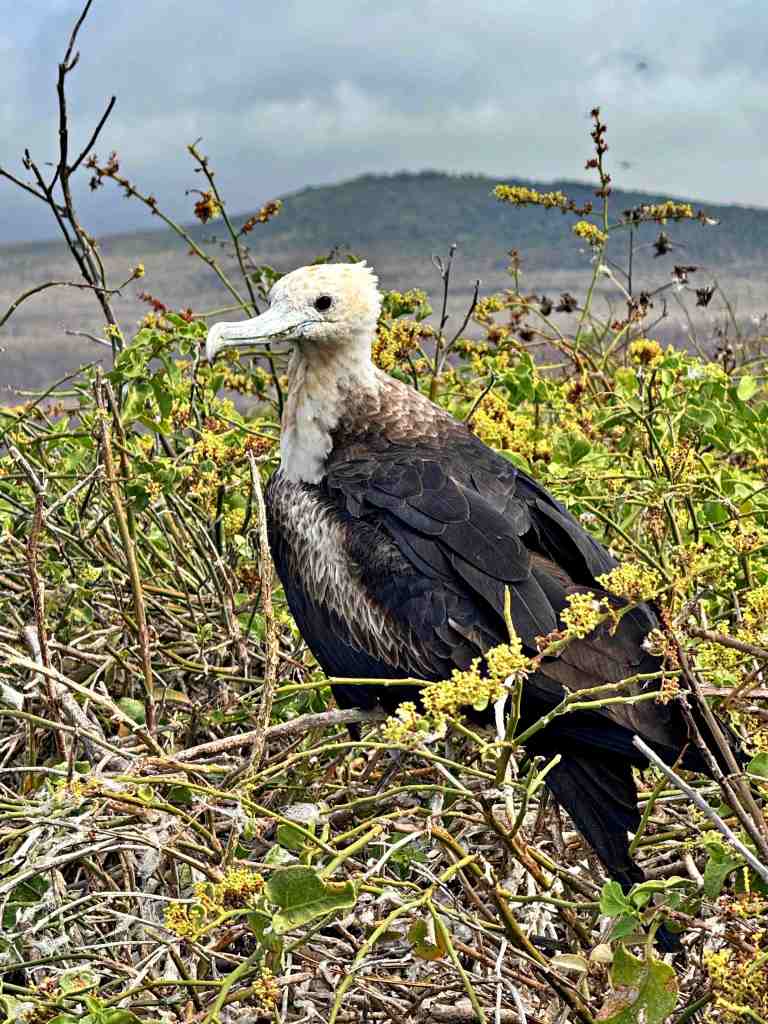
We began with the Junco Lagoon, which is a volcanic crater formed from a collapsed caldera. There are many of these calderas in the Galapagos islands, which were formed about five million years ago. Junco’s interior lake is notable for being one of the archipelago’s few large sources of fresh water, which Frigatebirds use to clean their feathers.
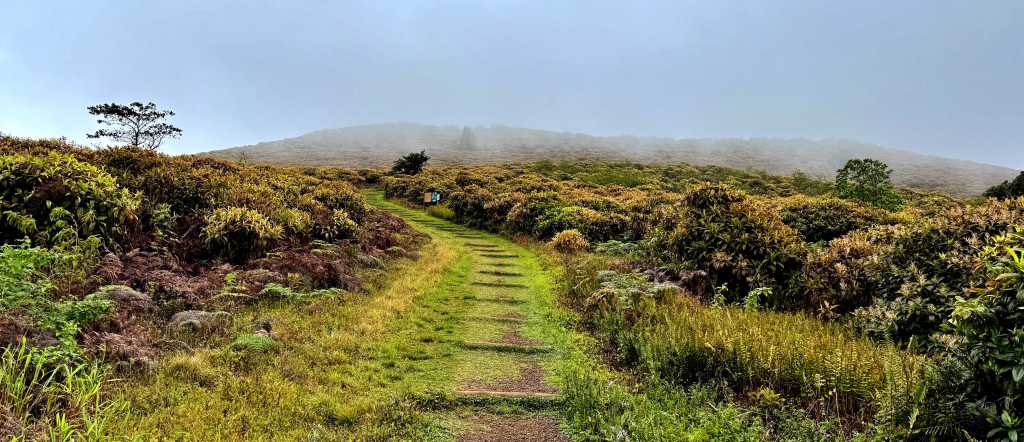
During the hour long walk around Junco’s rim, we could only occasionally see the water below us because of the thick fog covering the highlands. We did hear the ghostly sound of Frigatebirds whooshing about us and occasionally glimpsed them through the fog.
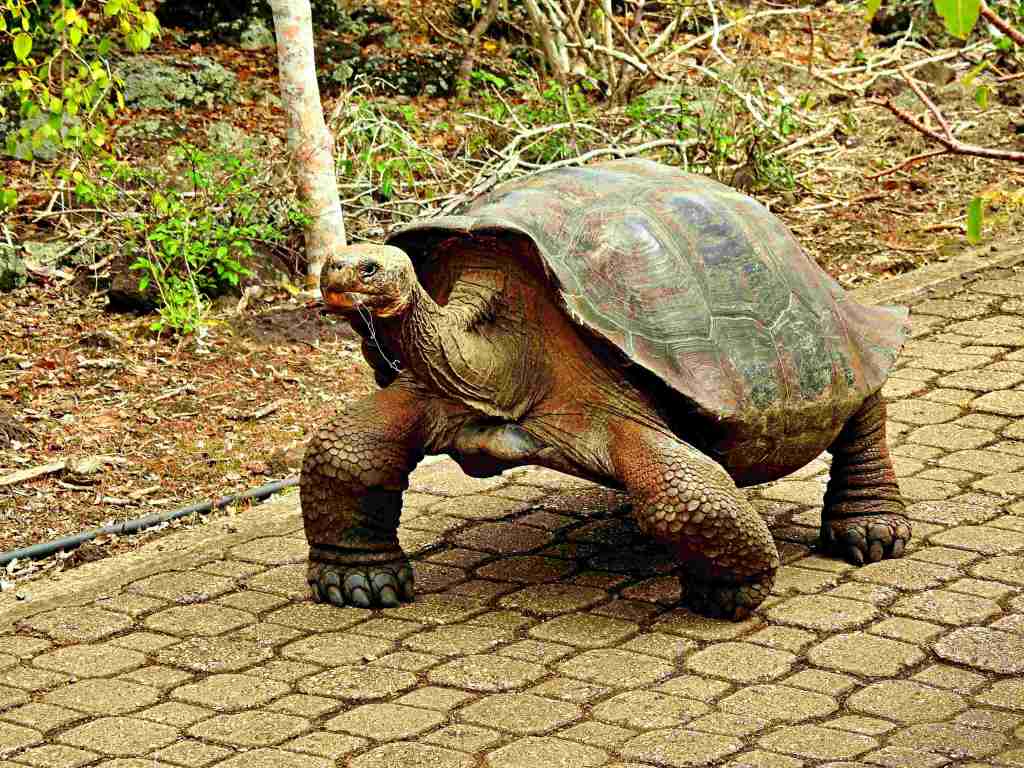
Next up was the Cerro Colorado Tortoise Reserve, a six-hectare (15 acre) breeding area for giant tortoises. We arrived on a Wednesday, which was a good day to be there because it’s one of three feeding days on the reserve (the others being Monday and Friday). This gave us plenty of opportunity to see them lumbering around the feeding locations.
One of our disappointments while staying on San Cristóbal was missing the opportunity to visit Punta Pitt. This volcanic plateau at the island’s northeastern tip can only be reached by boat and is one of the few places in the Galapagos where you have the possibility of seeing all three Booby species: Blue-Footed, Red-Footed and Nazca (whose feet are greyish).
We expected that we could easily join a boat excursion to Punta Pitt while staying on San Cristóbal. Alas, our research missed the fact that those trips had recently been restricted to just once a week, which happened to be Sunday, the day we arrived.
We compensated by taking another boat trip, an afternoon jaunt to the Isla Lobos, which hosts a sea lion colony and provides a nesting place for Blue-Footed Boobies and Frigatebirds. After enjoying a hot lunch on the way (chicken, tuna, lentils, rice and salad), we piled into a dinghy, five or six at a time, to disembark on some flat rocks.
Wilson, our official naturalist guide (required on all island expeditions in the Galapagos) then took us on an hour-long walk, which meant threading our way very carefully over black volcanic rocks with sharp edges. A slip or fall would likely result in a cut. Bina and I, thankfully, had taken care to bring our thick-soled hiking shoes and the boat crew also provided useful walking sticks.
The walk gave us our best opportunity of the trip to see Blue-Footed Boobies and Frigatebirds up close, since those birds nest on Isla Lobos and display no fear of human visitors. The two species themselves, however, do not get along. Frigatebirds, known as “pirate birds,” look for any opportunity to snatch Booby eggs and chicks.
Life on Isla Lobos can be harsh for the sea lions as well. When we reached their colony, Wilson pointed to the dried-out husk of a placenta and noted that sea lion mothers lack the time and energy to protect more than one baby at a time, so only the strongest survives, a good example of the natural selection Darwin was talking about.
After our island tour, the boat took us to a spot nearby where most of the group, including myself, went snorkeling for half an hour in chilly water (21 C., or 70 F.). Our tour company provided wet suits, but mine was a bit too large, enabling water to seep in, so I was about done by the end of the swim.
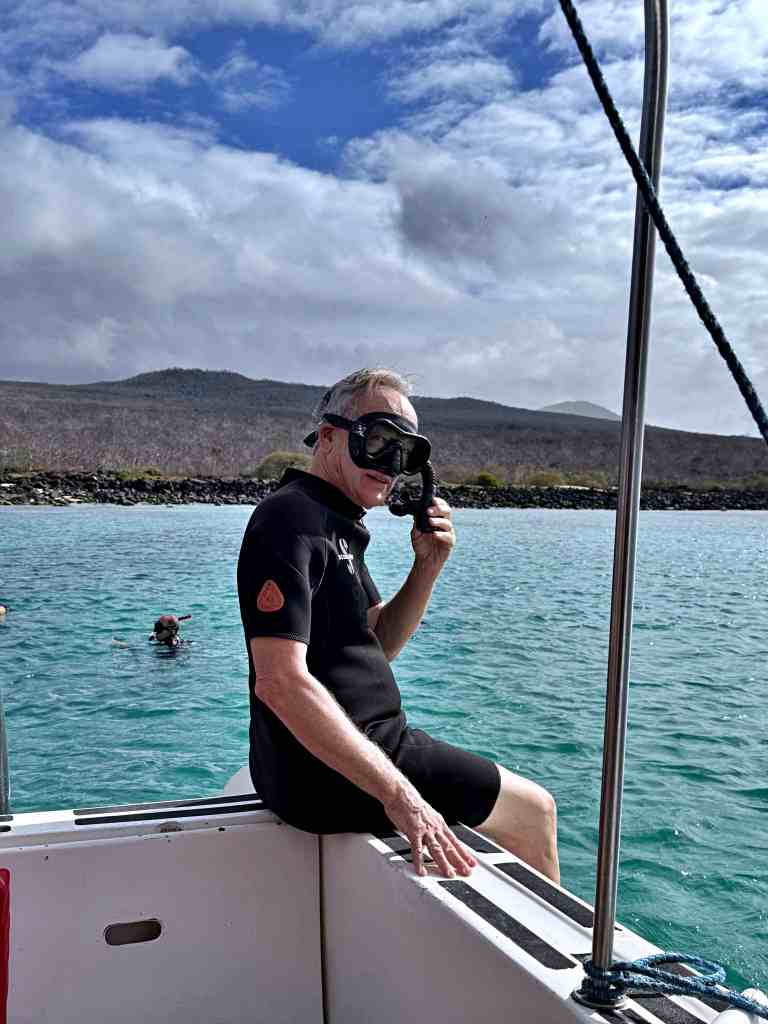
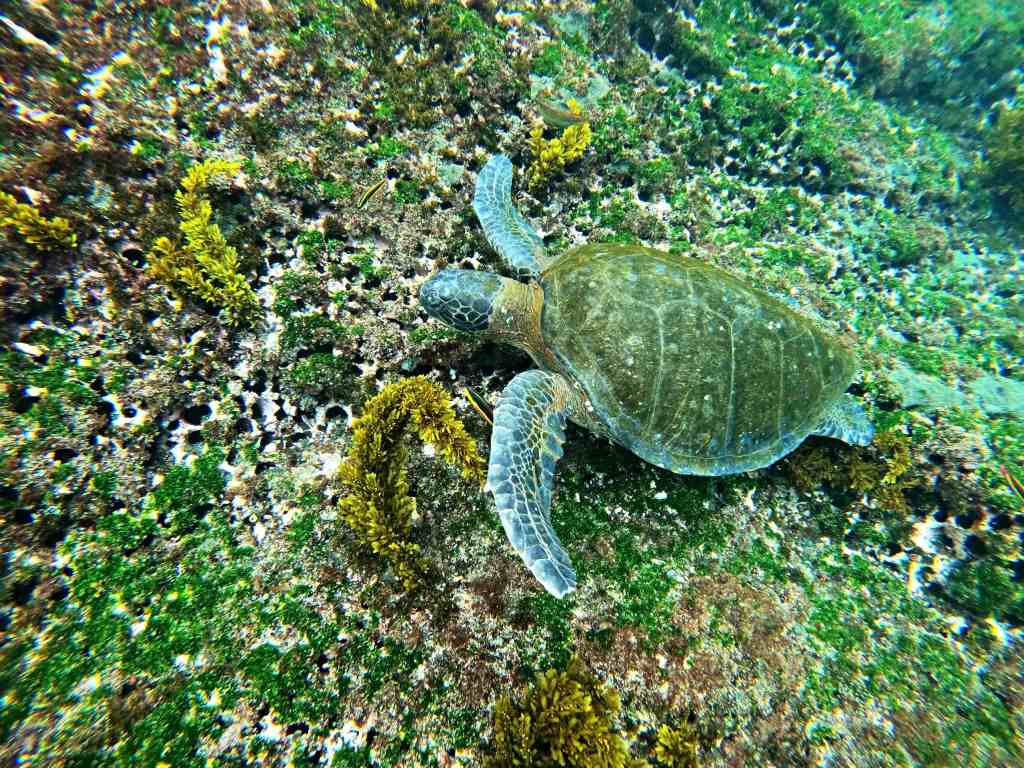
The snorkeling views included some of the colorful tropical fish you see in the Caribbean, as well as a rock fish that could barely be discerned in its rocky lair below. I also glimpsed the largest live sand dollar and starfish I had ever seen. But the highlight was swimming alongside a Galapagos Green Turtle, the only species of marine turtle endemic to the archipelago.
Wilson, our guide, spotted him first. Another guy and myself were close enough to catch up with the creature, who paddled along with steady strokes, seemingly unconcerned with us keeping up with him on each side. As a communion-with-nature experience, it hit the mark.
 Two Clines Traveling