
It’s probably unwise to make general observations about a country or region based on a short touristic visit … but here goes. Slovenia, Croatia, Bosnia and Montenegro all share a lot in common as parts of the former Austro-Hungarian Empire (1867-1918) and the country known as Yugoslavia (1918-92). Despite some linguistic and religious differences, these are mostly Slavic peoples with a shared history (the name “Slovenia” means “land of the Slavs.”)
But you do notice the differences as you travel south from Slovenia to Montenegro. Starting with Germanic tidiness in Slovenia, you transition to a looser-but-still-European vibe in Croatia to a more parochial or Balkan feeling in Bosnia and Montenegro. Put another way, the “issues” accumulate.
Bina and I particularly noticed this when we hired a car-and-driver from a company called DayTrip to take us from Dubrovnik to Kotor Bay in Montenegro. We could have gone by bus but the DayTrip itinerary included a side trip into Bosnia to see the 15th century Tvrdos Monastery, which is just over the border near the town of Trebinje.
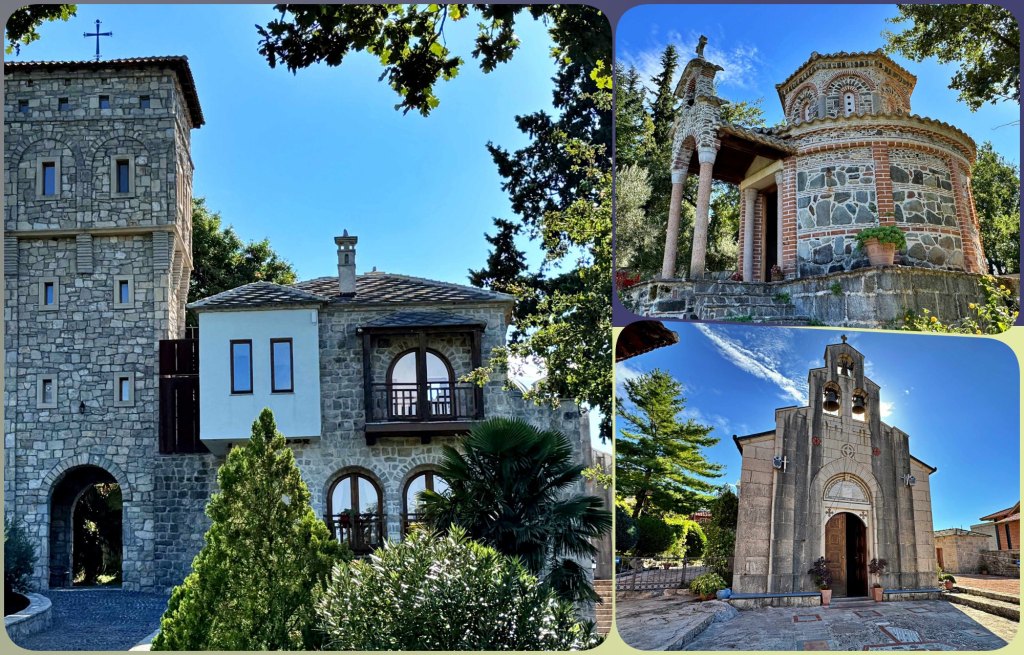
We found the monastery interesting, but even more absorbing was the crash course in Balkan history we got from our Croatian driver, named Božo. This guy was so passionate on the topic that he even brought laminated maps and photos with him, which he would pass to the back seat for us to examine as he talked. We definitely gained a better understanding of the word “Balkanized” — lots of people living in close, but edgy contact with each other, nursing historical grievances that are never truly resolved and can potentially lead to trouble at any time.
Bosnia, for example, was the only country, of the four we visited on this trip to feature a checkpoint at its border; Božo had to get out of the car and show his papers and our passports both when entering and leaving. Soon after crossing the border, we passed signs proclaiming our entry into the “Republika Srpska” (Serb Republic), a kind of state within the country of Bosnia-Herzogovina. Speaking of issues, road signs here often feature spray-painted graffiti consisting of just the letter “Z,” which means, according to Božo, “We have support from Russia.”
Oh …
Montenegro, thankfully, seems to have put these ethnic conflicts aside for now — at least in the Kotor Bay area, which emerged as tourist mecca in the 2000s and is now booming with new construction. No wonder, when you see the scenery: a 28 km (17 mi)-long bay bounded by towering bleak mountains that change colour throughout the daily arc of the sun. The apartment we rented, in the village of Prčaju, gave us a balcony-wide view of the cruise ships gliding in each day.
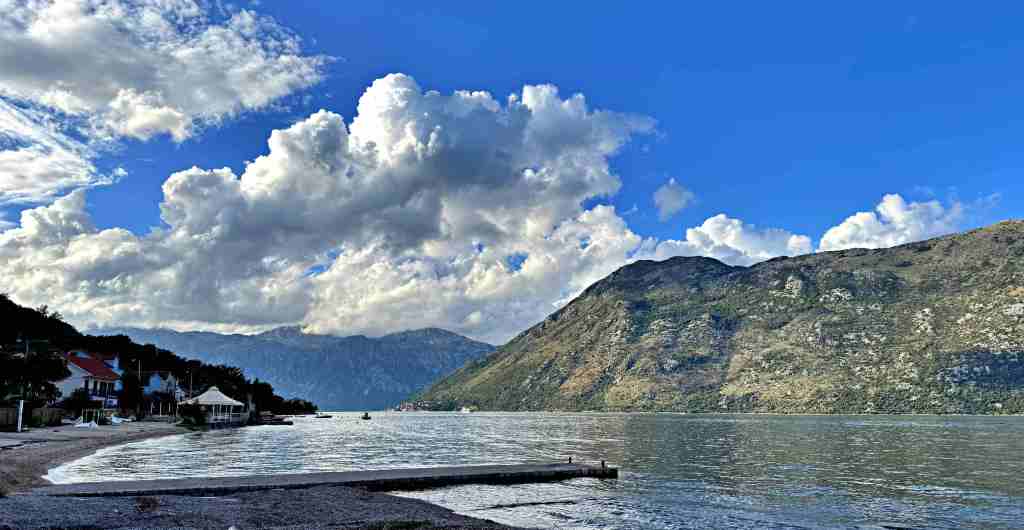
After more than a week of active touristing in Slovenia and Croatia, Bina and I viewed Kotor Bay primarily as a place to relax, enjoy the scenery, eat good food, and view the sights in a leisurely manner. We rented a car since public transport is limited here, although the roads rimming the bay are white-knuckle narrow, often lacking any barrier between you and the water.

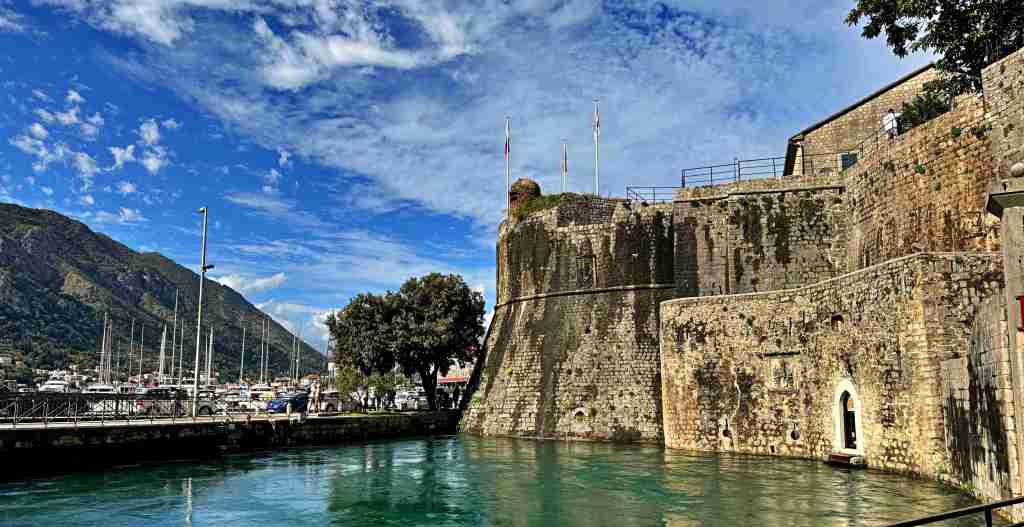
Our activities included a stroll through the town of Kotor itself, which has been inhabited since Roman times, but is primarily known for fortress walls built by the Venetians in the 16th and 17th centuries. This was the fourth walled town we visited on the Illyrian coast, after Zadar, Split and Dubrovnik.
We also took a boat trip to Kotor Bay’s most celebrated attraction, the Lady of the Rocks, an 18th century church sitting on an artificial islet in the bay. The story goes that local seamen found an icon of the Virgin Mary floating on the shallow waters at this spot and subsequently starting dropping rocks there, or sinking boats filled with rocks, gradually creating solid land upon which the small church was constructed. Every year, on July 22, local residents hold a festival in which they take their boats to the site and throw in more rocks to commemorate the church’s creation.
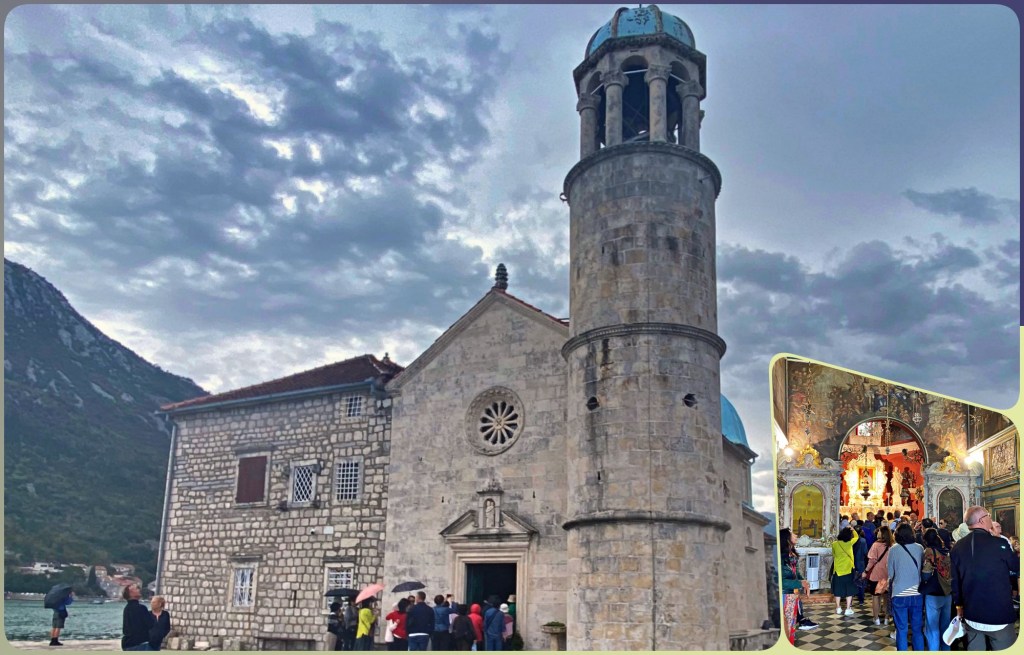
Unfortunately for us, this trip marked the day the weather turned against us. We encountered a slight drizzle while crossing the bay on the motorized boat shortly after 10 a.m. By the time we reached the Lady, our driver/guide was handing us yellow rain jackets. Despite the rain, other boats kept bringing in fellow tourists so it was shoulder-to-shoulder trying to squeeze into the the church and museum.
Our tour included an hour-long stop in the nearby town of Perast, which dates back to the 14th century. We disembarked at the pier and walked along the waterfront hoping to dry ourselves and warm up with some coffee in a sidewalk cafe. But other tourists had already claimed all the available spots, leaving us to wander the strip amid an increasingly blowsy rain.
Finally, we had enough of this and returned to the pier to wave our boat over and cross back to our pick-up point on the opposite shore. And wouldn’t you know it, the sun came out later that afternoon!

At least we had great weather for our 37th wedding anniversary dinner, held on the veranda of the Hyatt Regency Hotel’s Lighthouse Restaurant with a front row view of the bay. We enjoyed beef and falafel rolls, tagliatti beef and a side of grilled vegetables with tiramisu for dessert. All this was washed down by glasses of Proseco and samples of Montenegrin, Serbian and Croatian wine, of which we liked the Serbian the most.
And the icing on the cake, so to speak, was the beguiling beauty of Kotor Bay in the background.
 Two Clines Traveling