
It’s probably fair to say that most tourists arriving in Peru use the capital of Lima as a quick stop before continuing on to Machu Picchu and the Sacred Valley. That was certainly the case with us. We decided to stay in Lima for a few days to help with jet lag, with a bit of sight seeing thrown in.
To be sure, a visitor does not get a positive perception of Lima disembarking at the hectic and jammed airport with its surrounding urban sprawl. One third of Peru’s population lives in Lima (10 million people), making this the fifth most crowded city in South America.
It’s not until you get deeper into the city that you begin to appreciate some of the things that Lima does have to offer. The two neighborhoods where tourists generally congregate are Miraflores, on the Pacific waterfront, and San Isidro, further inland. Hotels in Miraflores can be quite pricey, particularly if they offer ocean views, so we chose to stay in San Isidro, the modern business district.
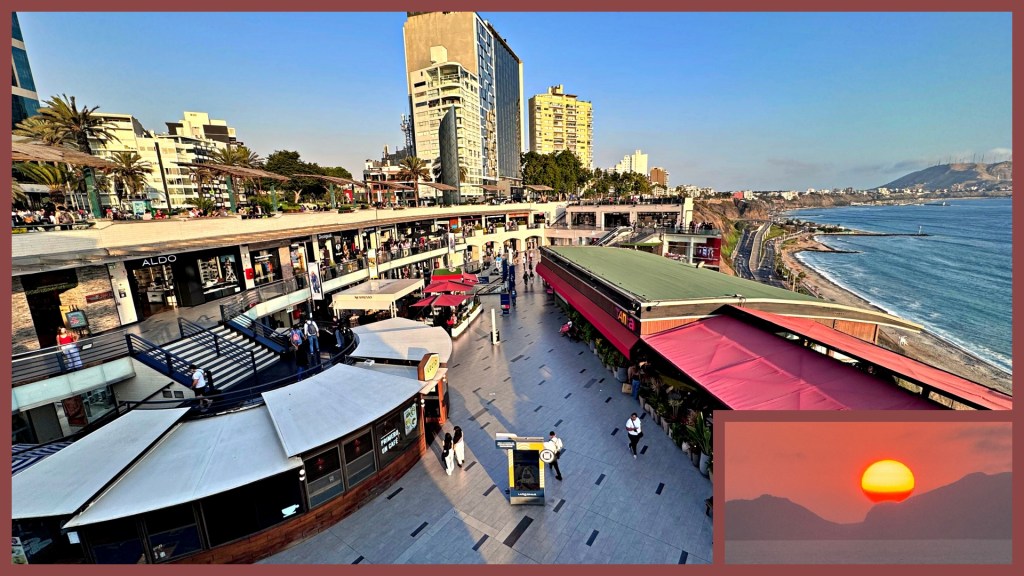
That worked out fine, since we could reach the more scenic Miraflores in a 20-minute Uber ride. We had dinner, ceviche (marinated raw fish) and corvina (a Pacific Ocean fish), one evening at the Mango Restaurant in the Largomar Mall, which is built into a hillside overlooking the beach.
Ceviche, by the way, is the national dish of Peru and this version was the best we had ever had. After the meal, we strolled along the Malecón (waterfront esplanade) to take in the sea breeze and harbor lights.
The next afternoon, we took a tour of the historic district with a guide named Saul in a van load of fellow tourists. This is an area that centers on the Plaza Mayor (main square) next to the Rimac River. A key stop was the statue of this guy …

… Francisco Pizzaro, Exhibit A for ruthless, gold-obsessed conquistadors. Between 1532 and 1533, Pizzaro and his few hundred men conquered the Inca Empire, killing tens of thousands of Indians in the process and effectively destroying their civilization.* Why would the people of Lima want to celebrate such a monster?
Because he founded their city, 490 years ago. Peruvians can’t commemorate that event without acknowledging Pizzaro’s role; he’s part of their history whether they like it or not. In the face of protests over the years, the Lima authorities have moved this statue several times, each time to a less conspicuous place. Today, you can find it tucked away in a quiet little park 400 yards from the Plaza Mayor.
Lima has always been distinct from the rest of Peru — of Spanish rather than Inca origins, coastal rather than mountainous and centering on business and trade rather than agriculture. It enjoyed a reputation as an international and cosmopolitan kind of place until the 1960s, when more low-income people began to migrate in from the mountains.
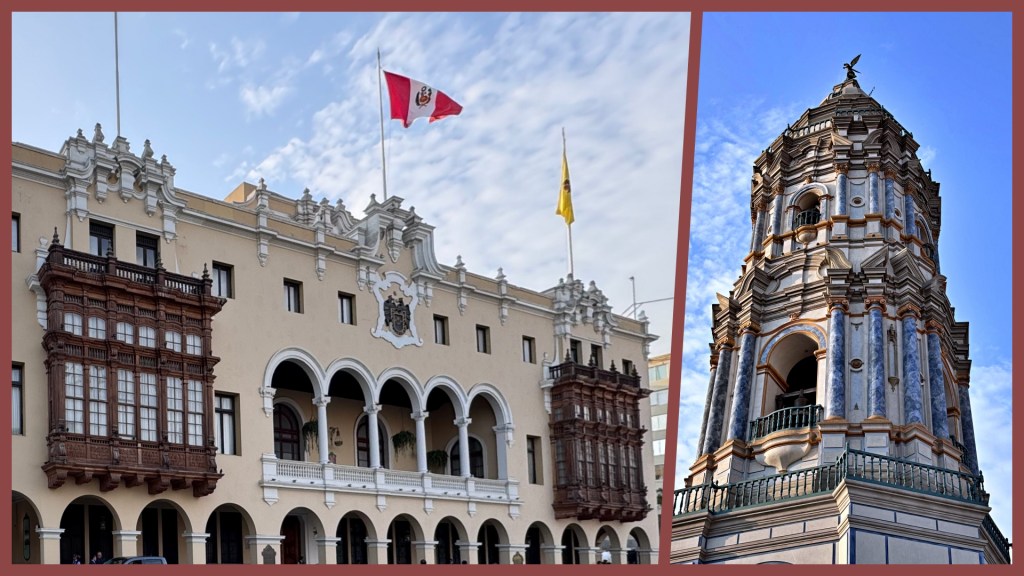
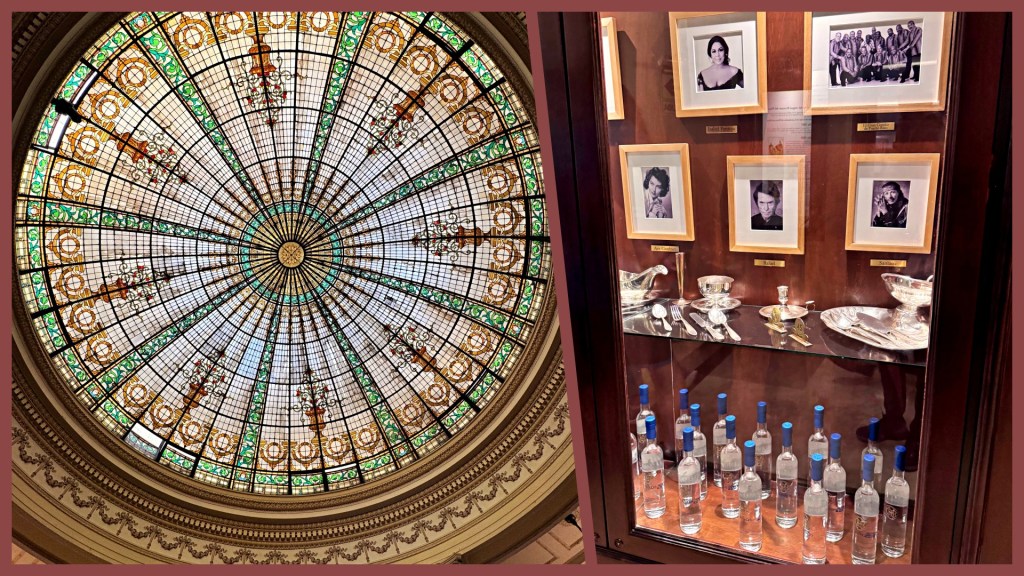
Most of the government buildings and parks in the historic district date from colonial times or the 1920s, a period of heavy foreign investment and government spending. Those glory days can be re-lived at the Hotel Bolivar, built in 1924 as the most exclusive lodging in downtown Lima. Photos of famous guests displayed in the lobby include Clark Gable, Ernest Hemingway, Charles DeGaulle, Pablo Neruda, Walt Disney and, in more recent times, Carlos Santana.
Our tour also took in the museum and catacombs at the San Franciscan convent, which dates to the Spanish period of the late 17th century. The catacombs, location of the city’s cemetery during colonial times, features displays of hundreds of bones and skulls neatly arranged in geometric patterns.
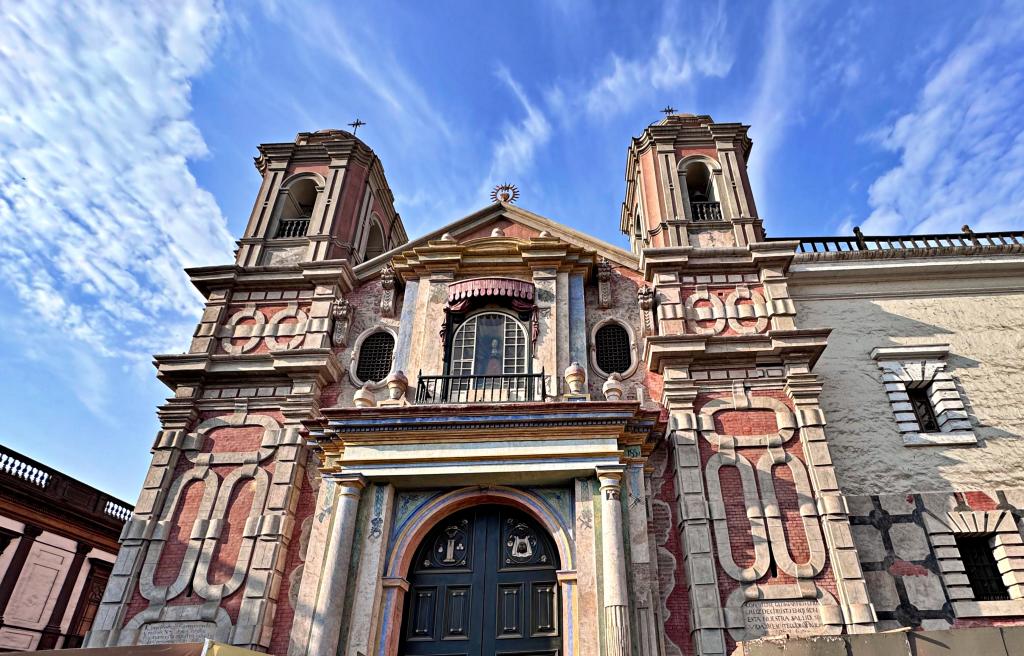
Scaffolding and cranes scattered around the district stem from ongoing government efforts to restore the historic area, which received the UNESCO World Heritage Site designation in 1989. Over time, Lima may emerge as more of a tourist destination in its own right, rather than just a stop on the way to Machu Picchu.
Travel Tips: Like large cities everywhere, Lima features safe and not-so-safe neighborhoods. Tourists do need to be on the alert for purse snatchers and sidewalk scams, but generally should feel safe walking around Miraflores, San Isidro and the historic district.
Lima was being governed under an emergency decree while we were there, to help the police crack down on criminal gangs extorting money from local businesses. This situation proved invisible to the average tourist like us … until the day we left Lima to fly back to Lisbon, when we noticed the sidewalks crowded with unusually large numbers of people trying to hail taxis to get to work. It seems Lima’s bus drivers were on strike to protest the government’s failure to protect them from armed robbers while driving their routes.
We found Uber to be the best way to get around Lima. Traffic congestion is an issue here, as is a nonchalance in following traffic rules. Intersections are particularly hairy since drivers seem to take stop signs as suggestions.
*This is one of the great mysteries of Incan history. How did such a small number of Spaniards under Pizzaro defeat Inca armies many times larger? The Incas, after all, had developed a sophisticated civilisation with impressive achievements in architecture, agriculture and astronomy, which helped them map out the appropriate cycles for seeding and cultivating crops. There are many reasons for this failure but one of the biggest involved military technology. In terms of metallurgy, the Incas were still living in what we would call the Bronze Age; they had not yet learned to produce iron and steel. When the Spanish showed up, their steel swords, armour and rudimentary firearms and artillery proved irresistible against Inca warriors wielding bronze spears and wooden clubs. Add armoured cavalry into the mix — the Incas had never seen horses before — and you begin to understand why the Spanish rarely lost a battle, particularly on level ground where they could deploy those horsemen. The only advantage the Incas possessed was numbers and that just wasn’t enough.
 Two Clines Traveling