Ireland is packed with interesting places to visit but they’re spread around the island. After spending a day in Dublin, we rented a car on July 26 to make a loop around the country, returning to Dublin on August 3 and flying back on the 4th.
The weather treated us well: overcast generally, with some occasional drizzle and fog but long patches of sunshine on several afternoons. Daytime highs ranged from 17 to 23 (62 to 73 F.), which gave us the cool respite from Portugal we had been looking for.
During our first day of driving in Ireland, heading west from Dublin, we stopped for lunch in the town of Athlone, home of the country’s reputedly oldest pub, Sean’s Bar. Archaeological surveys indicate that the oldest parts of this building were constructed around the 17th century.
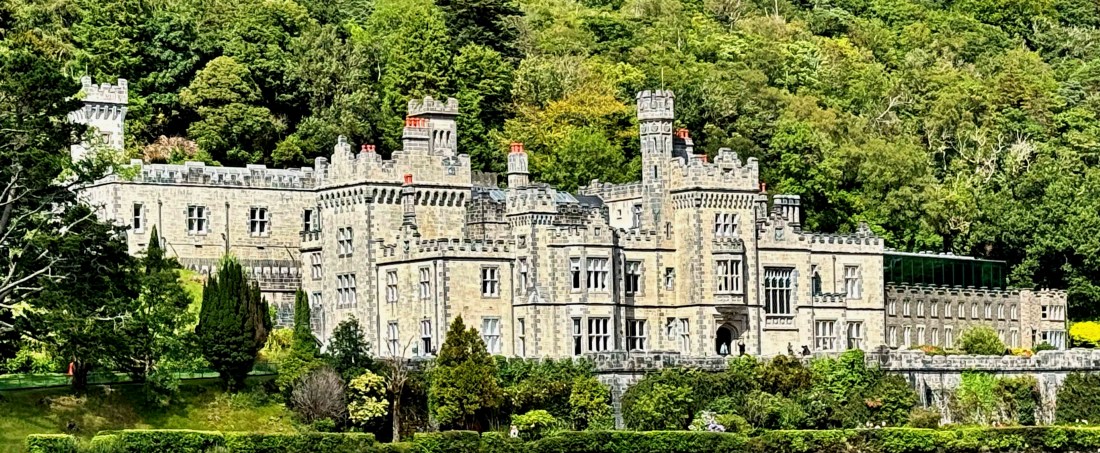
While visiting the Athlone visitor’s center, we learned about the ruins of the medieval abbey Clonmacnoise, located just a half hour to the south, so we made a detour there. Clonmacnoise was founded in the 6th century on a strategic spot overlooking the banks of the Shannon River, becoming one of Ireland’s most celebrated religious centers. Pope John Paul II visited the site during his trip to Ireland in 1979.
The grounds include a stone watchtower that was built, no doubt, to warn of Viking raiders approaching up the river — unfortunately, a frequent occurrence between the 9th and 12th centuries.
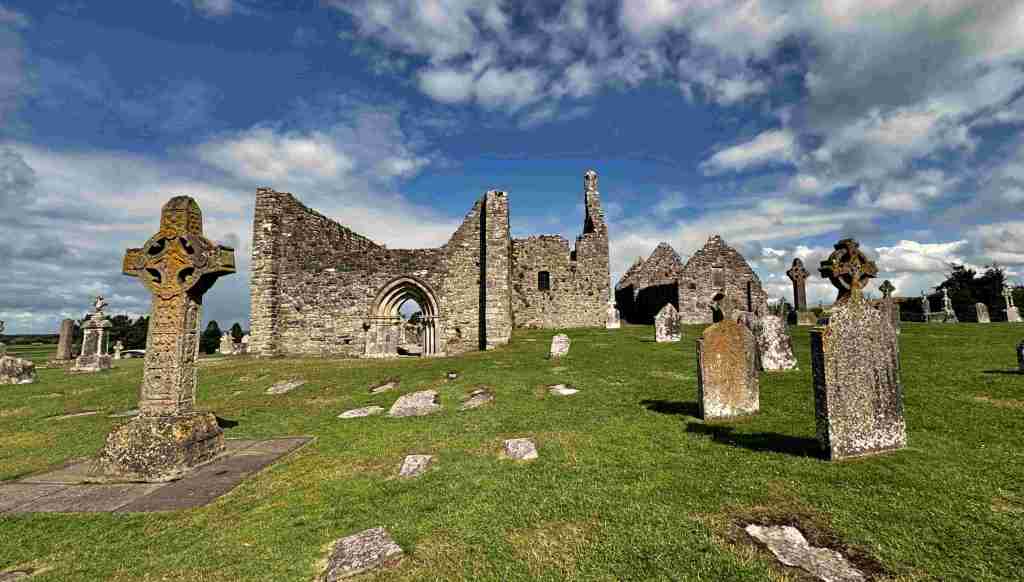
Next, on to Connemara, a county located on the northwestern coast of Ireland, near Galway, where we visited the Kylemore Abbey. A former 19th century mansion now owned by Benedictine nuns, this location is often touted as the most beautiful spot in Ireland — a tranquil lake surrounded by verdant forest.
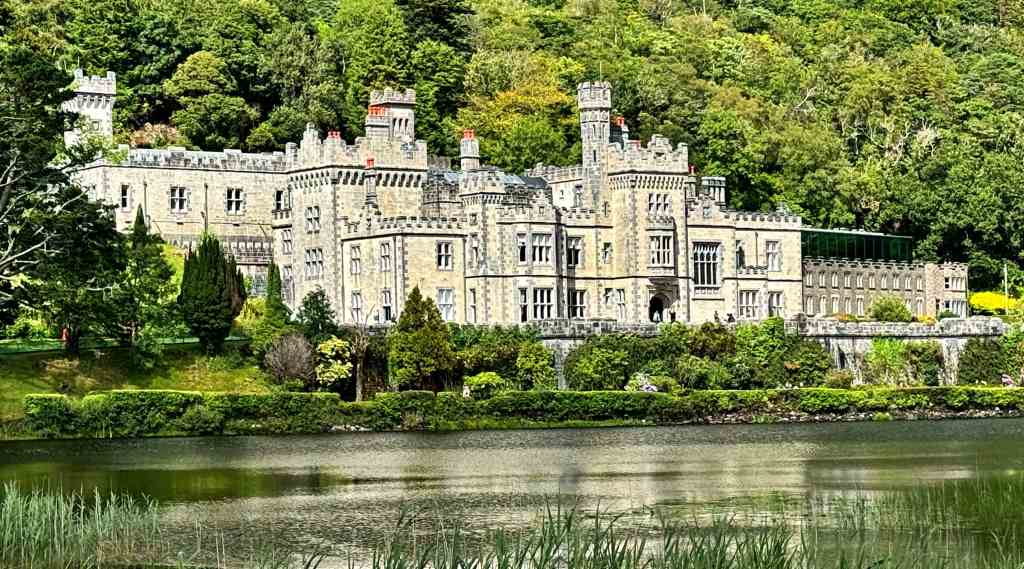
With the nuns now living elsewhere on the 1,000-acre property, the house itself has been restored to look as it did in the 19th century. We enjoyed walking through the house viewing the rooms and exhibits, learning about the families that lived there, and strolling around the eye-catching grounds.
Killarney, further south, proved to be the perfect place from which to explore the Ring of Kerry, the famously scenic peninsula on the western coast. One highlight of driving around the Ring was the Skellig Experience, a museum that tells the story of the medieval monks who assembled by hand, stone by stone, a monastic retreat on the nearby island of Skellig Michael, which is also known as a nesting area for Atlantic Puffins. The museum offers boat tours of the island but the fog and drizzle we encountered that day, our worst of the trip, precluded such a visit.
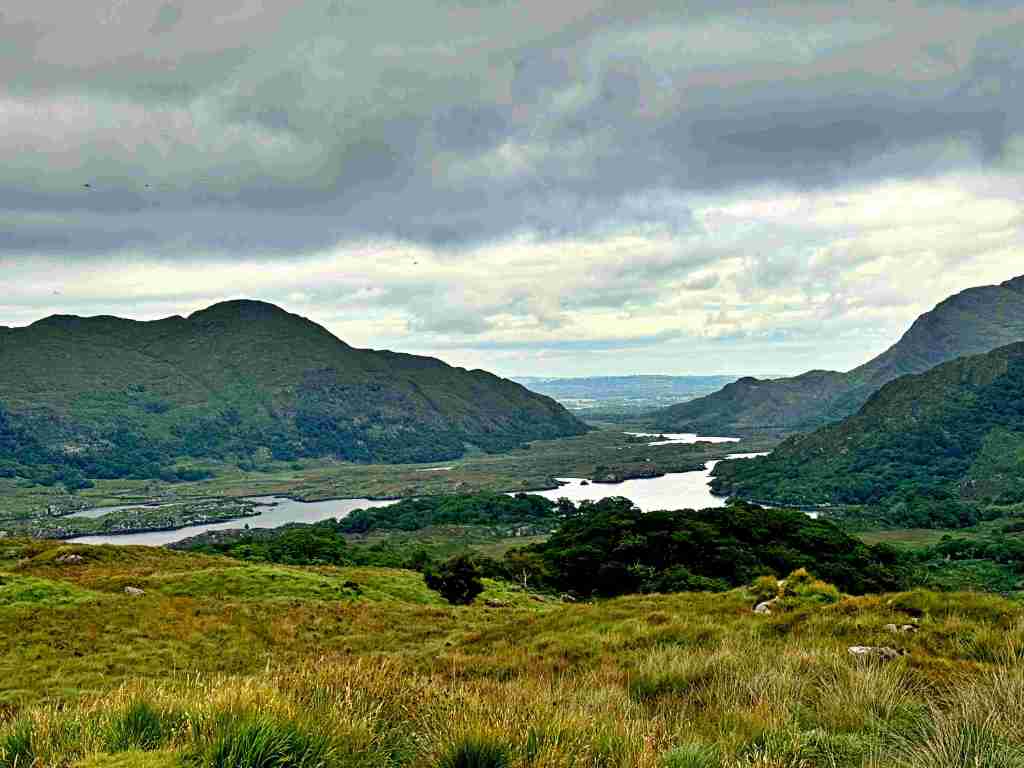
The skies did clear in the late afternoon by the time we made it back to Killarney and stopped at the “Ladies View” overlooking the Killarney national park. This spot is so named because of the admiration expressed by Queen Victoria’s ladies-in-waiting during the queen’s visit to Ireland in 1861.
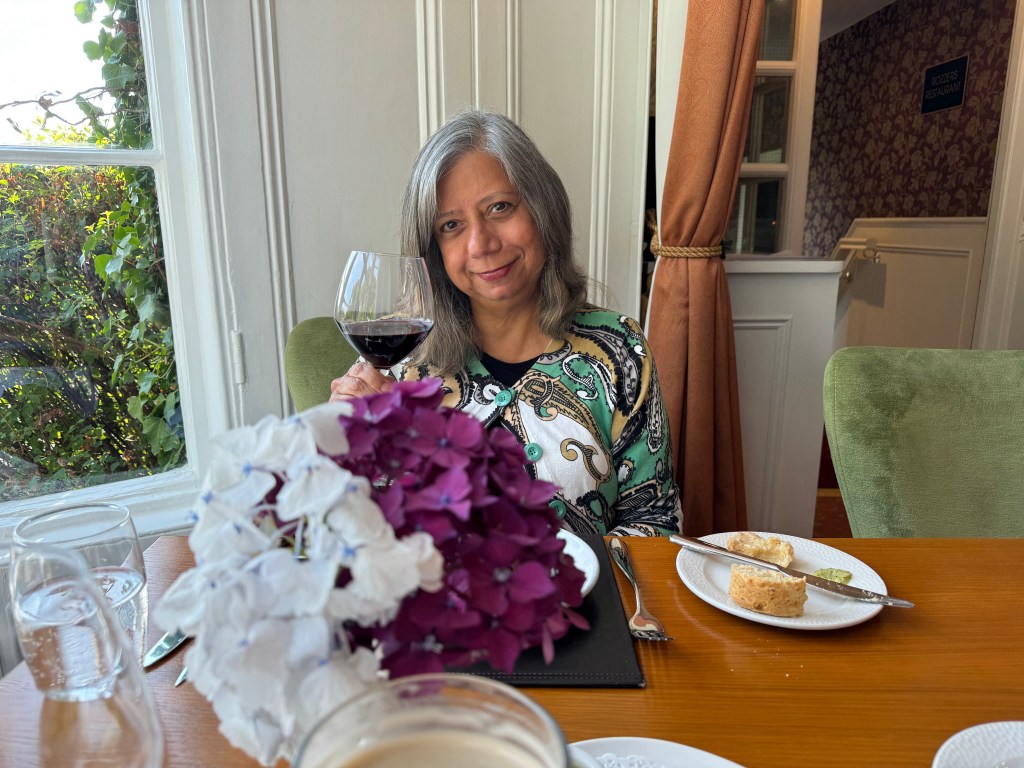
We enjoyed our stay in Killarney, celebrating Bina’s 65th birthday in a quaint restaurant called Rozzers, which is located in a former 19th century rectory now functioning as the Killeen House Hotel.
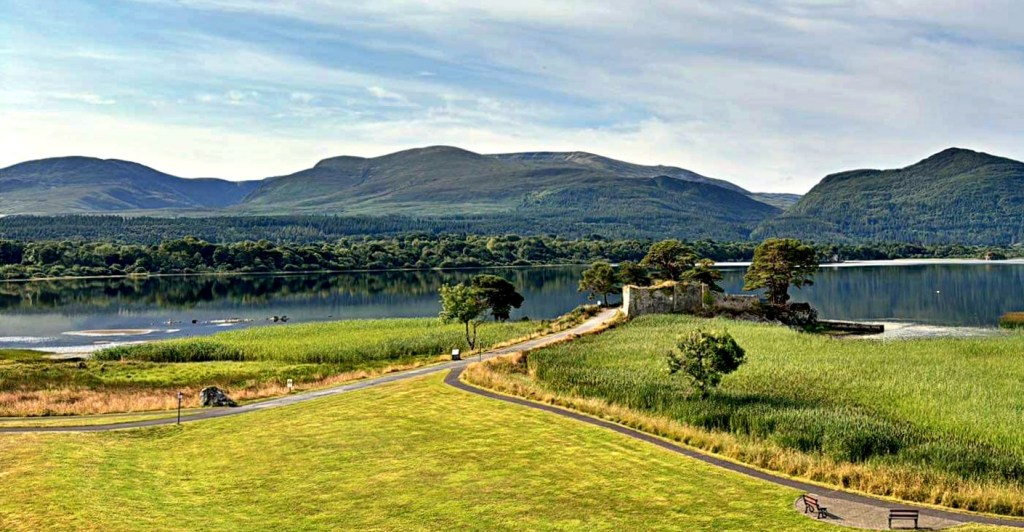
Our lodging in Killarney, the Lake Hotel, was aptly named; the view from our window took in a lake that’s part of the Killarney National Park, as well as the ruins of Castlelough, the 12th century home of the McCarthy clan, which once ruled the surrounding area.
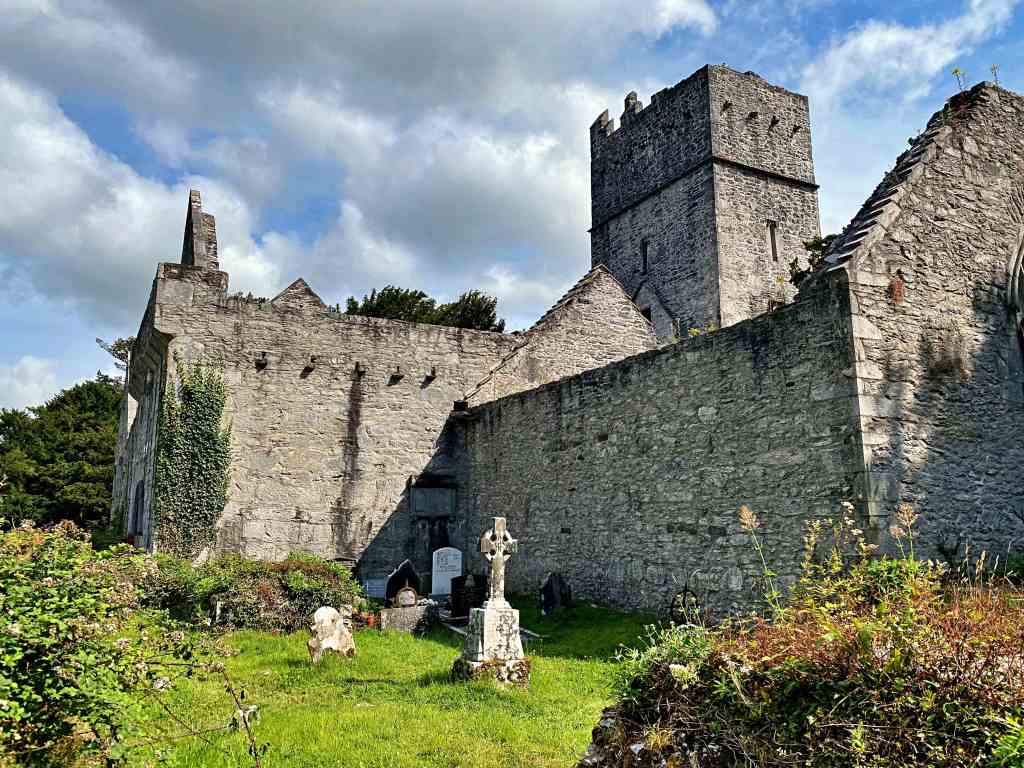
From the hotel grounds, we could walk directly into the national park and visit the ruined 15th century Muckross Friary and Muckross House, which dates from 1843 and has been restored to prime 19th century condition.
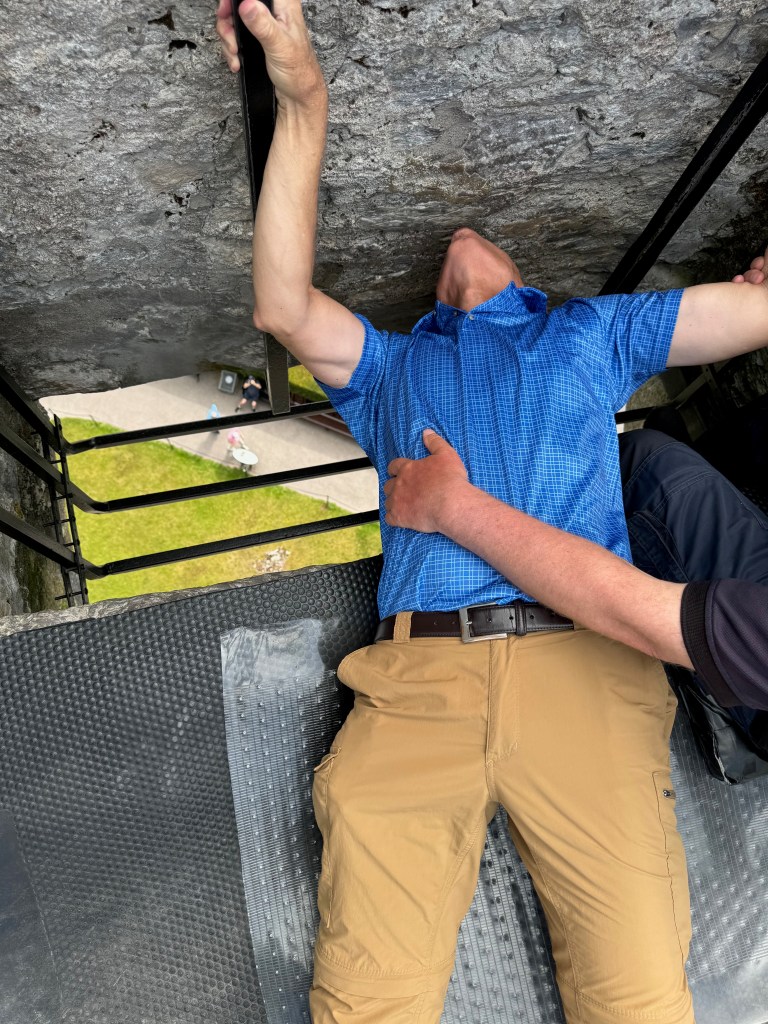
We just had to stop at Blarney Castle, of course, to interact with you-know-what. Yes, it seems a silly waste of time to stand in line for 45 minutes to kiss a rock but … since we’re here … Unfortunately, you have to get pretty low to kiss the “correct” Blarney Stone (a limestone block built into the castle’s upper battlements), given that one rock looks like another when you’re being held upside down and the blood’s rushing to your head.
The 15th century castle itself is worth a look, with the surrounding gardens offering a pleasant walk. We were particularly intrigued with the garden devoted to poisonous plants, some of which could kill you if ingested.
We visited Waterford, on Ireland’s east coast, primarily to tour the crystal factory. Bina had been interested in Waterford Crystal since reading about it as a child in India. The guide took as through all the stages of making the fine glass — moulding, blowing, cutting, sculpting and engraving — enabling us to watch the craftsmen at work. Those craftsmen, by the way, spend eight years in training, four as apprentices and the rest teaming with one of the master craftsmen.
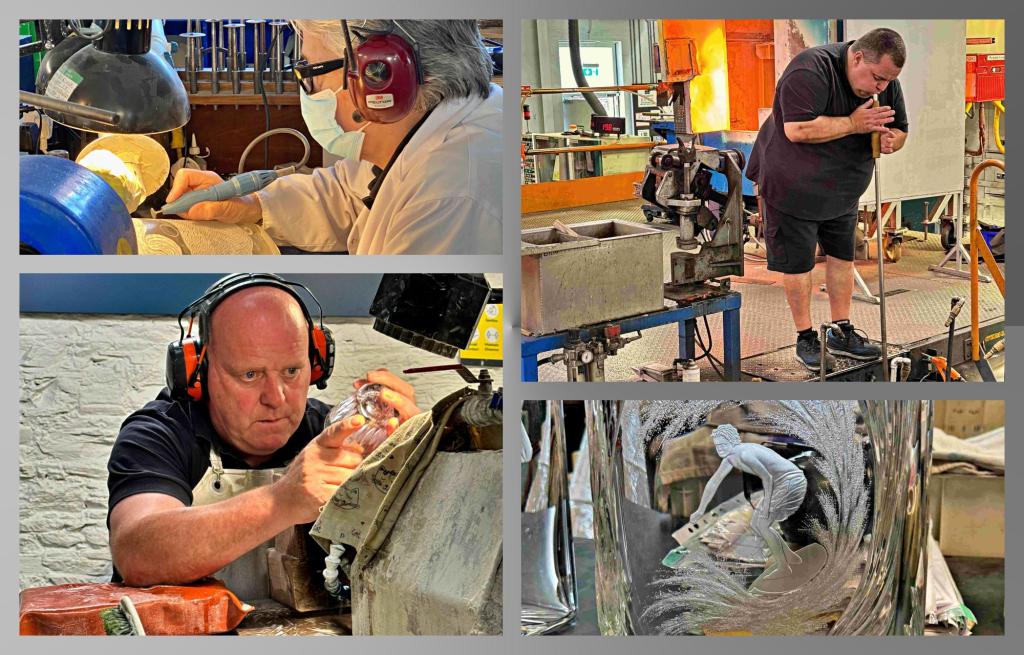
The Waterford Crystal glasses that we drank from while having lunch in the factory’s cafe were not made here, however. The flagship facility in Waterford is reserved for crafting the company’s high-end, special-order products, some of which can cost tens of thousands of dollars. The other more prosaic, day-to-day items are manufactured in places like the Czech Republic, Slovenia and Germany.
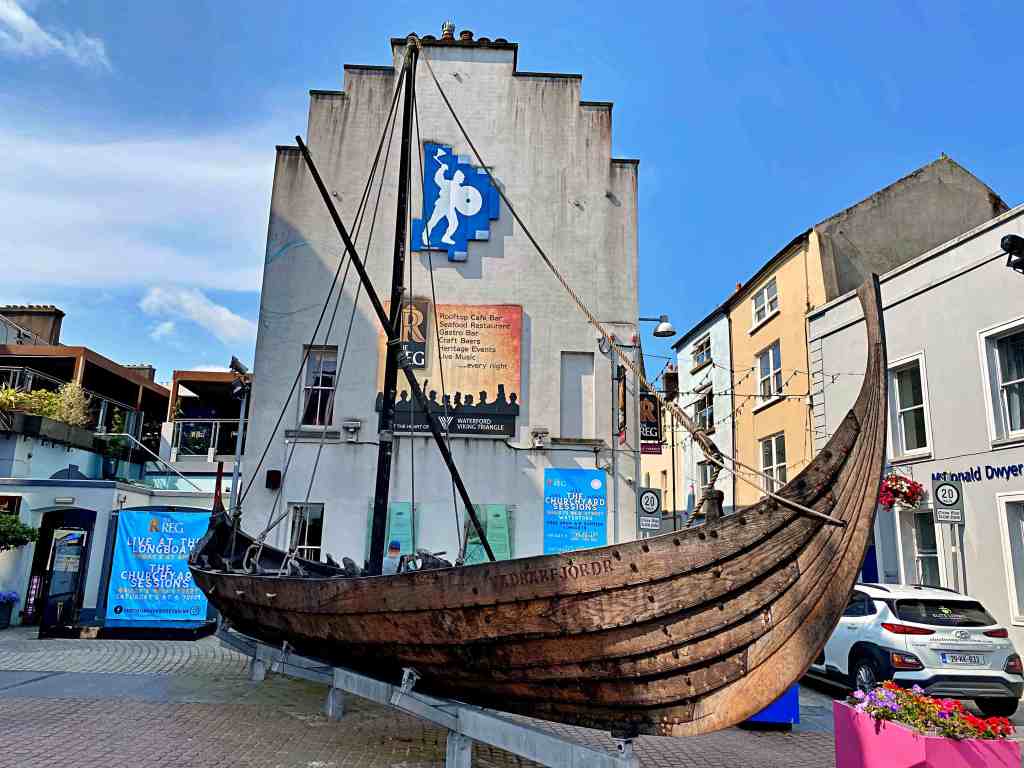
During our two days in Waterford, we discovered there’s more to see here than crystal. Waterford is the oldest city in Ireland, founded by the Vikings as a base for their marauding longboats in 914. A district downtown is still called the Viking Triangle and features a replica of one of those boats.
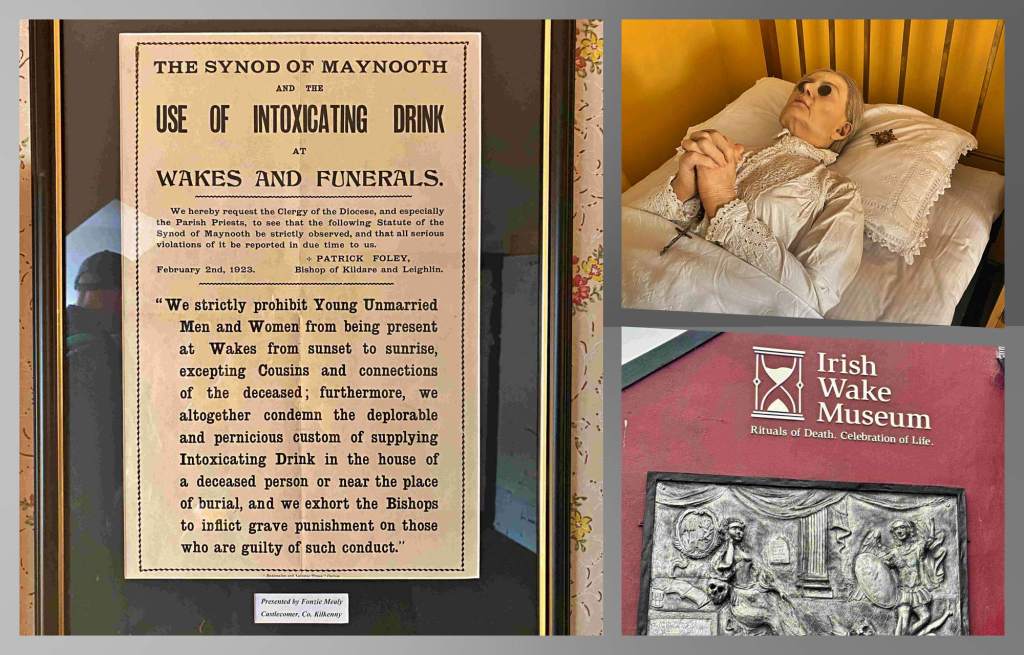
The Viking Triangle also includes a museum devoted to the Irish Wake, one of Ireland’s most famous customs. A half-hour guided tour through this small museum showed us how the Irish, since medieval times at least, have managed to combine the solemnity of mourning for the dead with abundant alcoholic comfort for the living. The wake is less practiced today, particularly in urban areas.
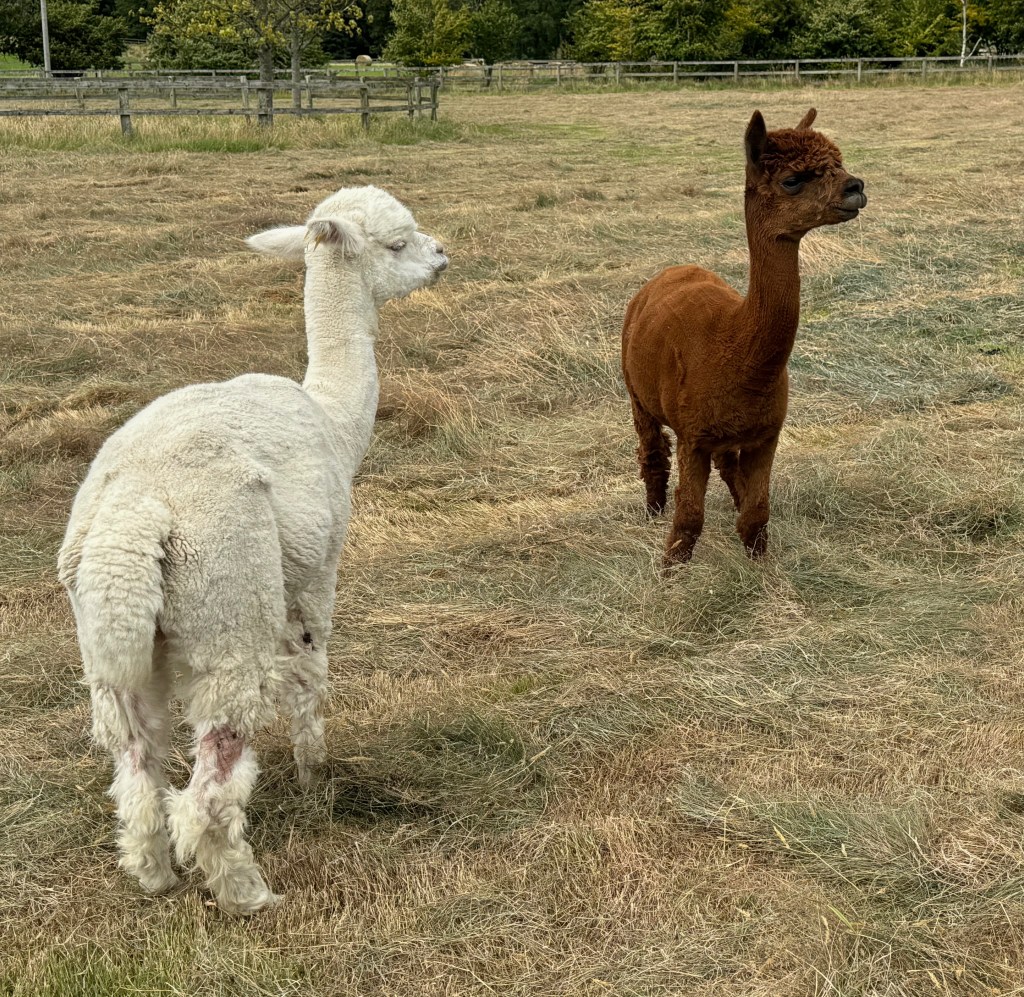
Wicklow was the final stop on our driving tour. This lovely area on Ireland’s northeast coast is a favorite weekend destination for Dubliners. We stayed at the Powerscourt Springs Health Farm, a combination hotel and spa located on 38 acres of woodland with miles of trails to explore and two alpacas to visit. We also saw a herd of wild deer skittering across a meadow.
 Two Clines Traveling