We could have flown to Copenhagen from Stockholm but decided to take the train to enjoy the view, which mostly consists of woodland and lakes, interspersed with occasional farms and small towns. Sweden is a sparsely populated country, once you get outside of the main cities.
Upon arriving at Copenhagen’s main station at 3 p.m., a friendly worker showed us how to purchase and download a 48-hour transit pass to our phones, which gave us access to the city’s very efficient metro system. Never once during our stay did we have to use a taxi or Uber, which was helpful as our hotel was located on the fringes of the downtown area.
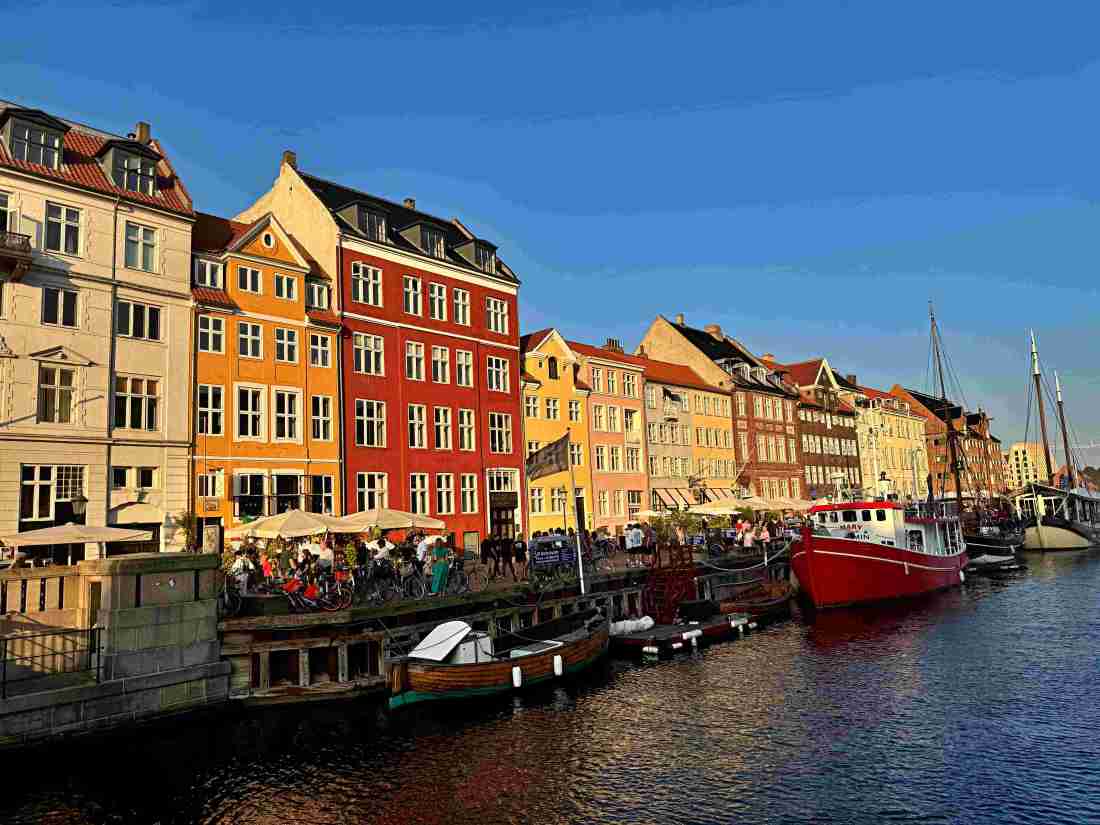
After riding the metro to check in to our hotel, we reversed the trip to do a canal cruise from Copenhagen’s iconic Nyhavn district, which was once a seedy, brothel-filled harbour where ships could unload and sailors frolic. Nyhavn’s restored 17th and 18th century houses, bars and restaurants now provide a perfect setting for tourists to frolic.
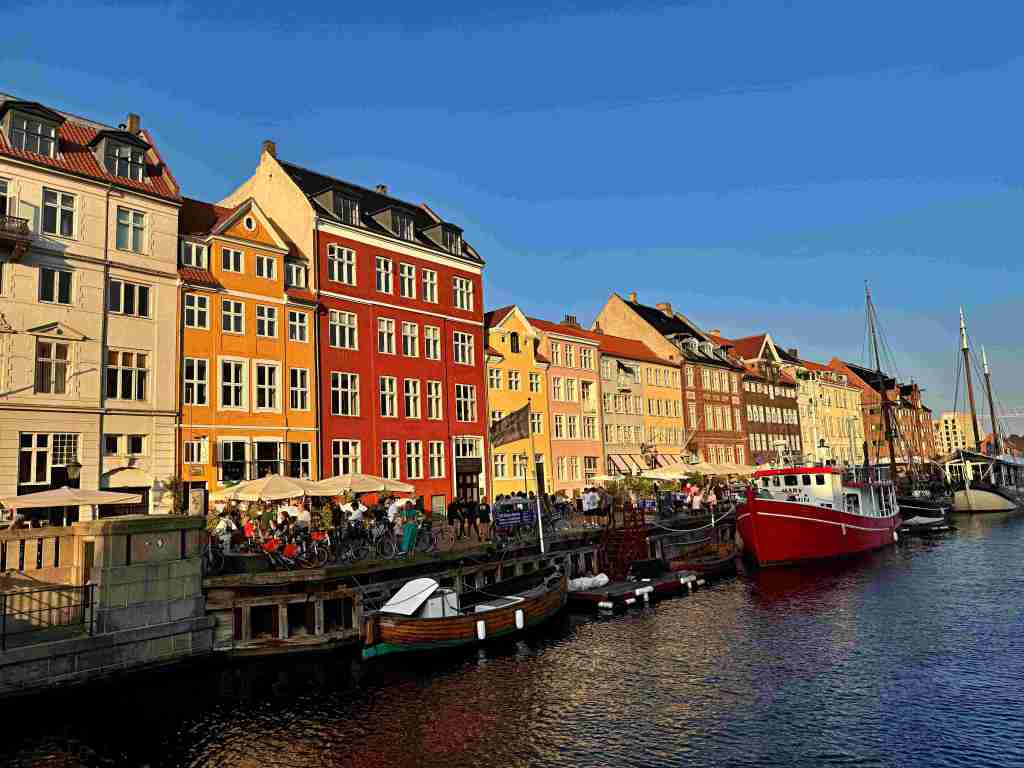
We arrived there about 5 p.m. The lines for these boat tours can be long so we were lucky to snag a 5:30 departure. During the hour-long cruise, our barge-like vessel nosed its way into the main harbor and then ducked into some of the adjoining canals. A Danish couple sitting across from us said we we were lucky to see Copenhagen on a sunny day, since the previous weeks had been marked by constant rain. In fact, our entire Scandinavian trip benefited from clear skies, to the point where the harsh sunlight hindered our photo-taking.
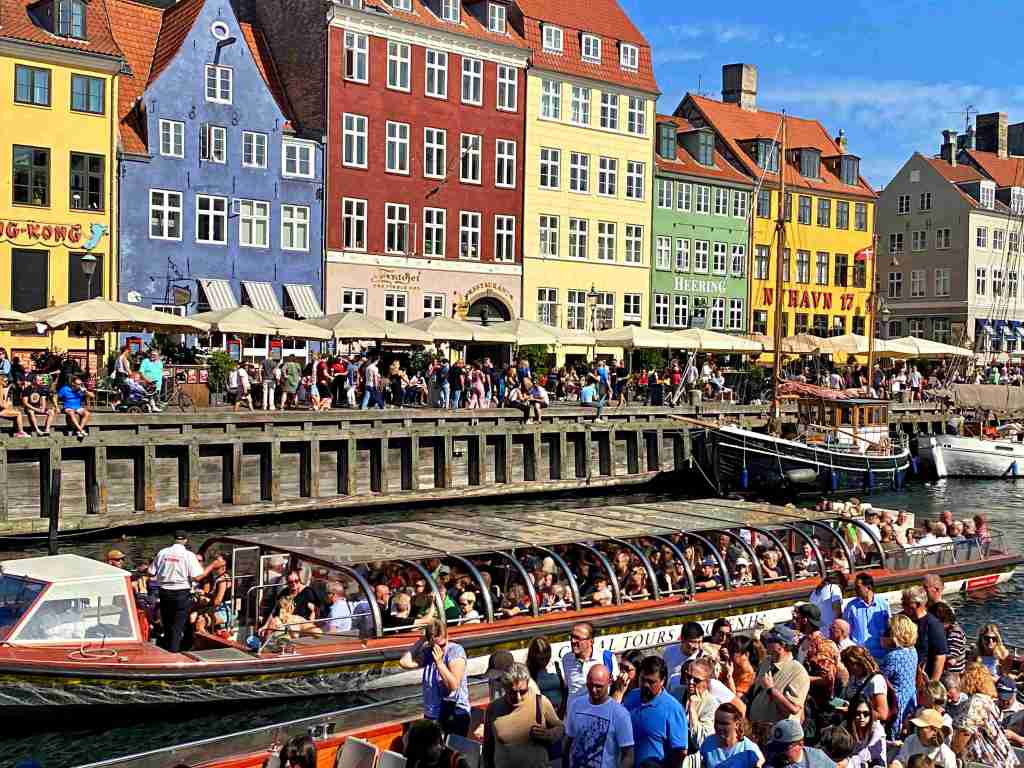
Following the cruise, we walked along the Nyhavn waterfront looking for a place to have dinner. The crowding in some spots was literally elbow to elbow and it took us a while to find a sidewalk bistrot with an empty table. The view of the boats in the harbour slip was indeed quaint, but we ended up spending $80 on a few appetizers and a small plate of monkfish, not a good value. We later shared a hotdog at a sidewalk kiosk just to fill up.
Peak summer tourist season, we concluded, is not the best time to see Nyhavn. In addition to the high prices, the pedestrian walkway was littered with empty beer bottles and people sprawled by the railing with coolers and packages of more adult beverages close at hand. Now we understood why Swedes go party in Copenhagen, which does not restrict public drinking. As for us old fogeys, we were back in our hotel by 9 p.m. and better off for it.
We returned to the waterfront area the next morning for a more comprehensive walking tour of the city’s historic district. Our guide, Jacqueline, proved to be funny and engaging as she took our group around the sites. She also provided interesting insights into Danish culture, notably why the Danes don’t mind (so much) paying the highest tax rate in Europe, up to 56% in the highest tier, with 46% on average.
It’s because of the free stuff they get in return: healthcare and education, entrance to public museums, even concerts and shows throughout the year. One potential downside, however, is that young people in Denmark don’t feel a lot of pressure to move on with life. Jacqueline herself was in the third year of what other countries call a “gap year” (singular), the sabbatical between high school and college.
This is very common in Denmark, where a study in 2018 showed that 86% of students starting university had already experienced one or more gap years.
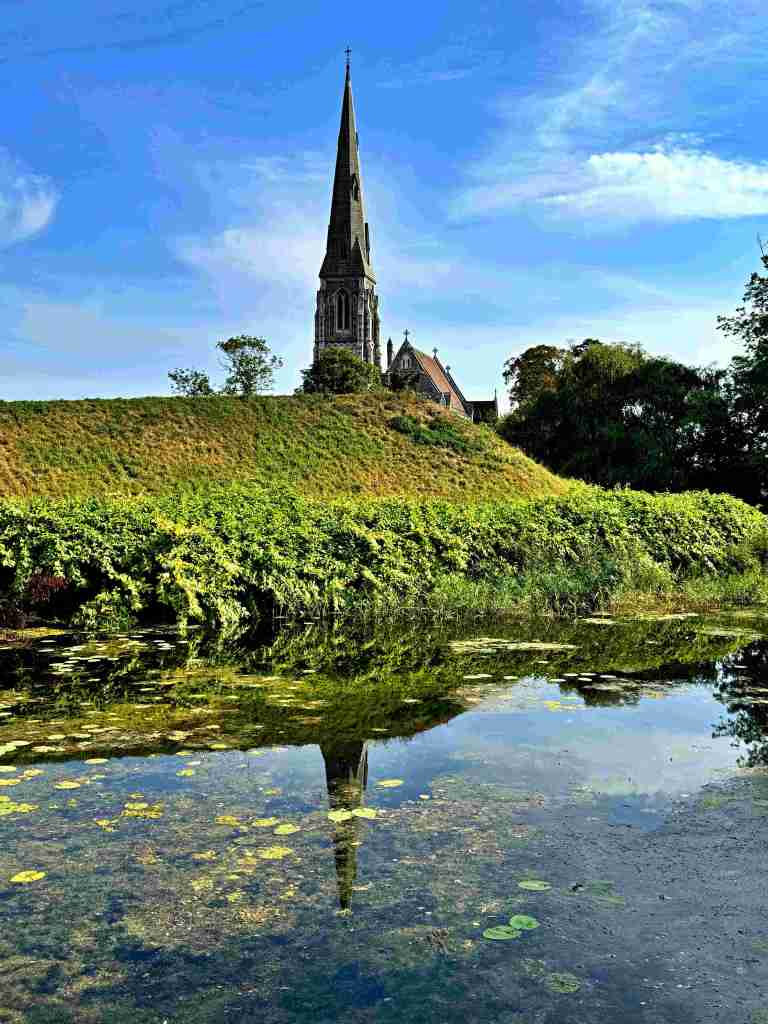
We began our sight-seeing at the Little Mermaid, which Jacqueline described as the “second most disappointing sculpture in Europe,” after the Manneken Pis (peeing boy) in Brussels. She was referring to how both statues attract attention more for their celebrity status than artistic merit. The Little Mermaid, from the Hans Christian Andersen story, was installed in 1913 to greet ships entering Copenhagen harbor and has since become the city’s iconic symbol, familiar world-wide.
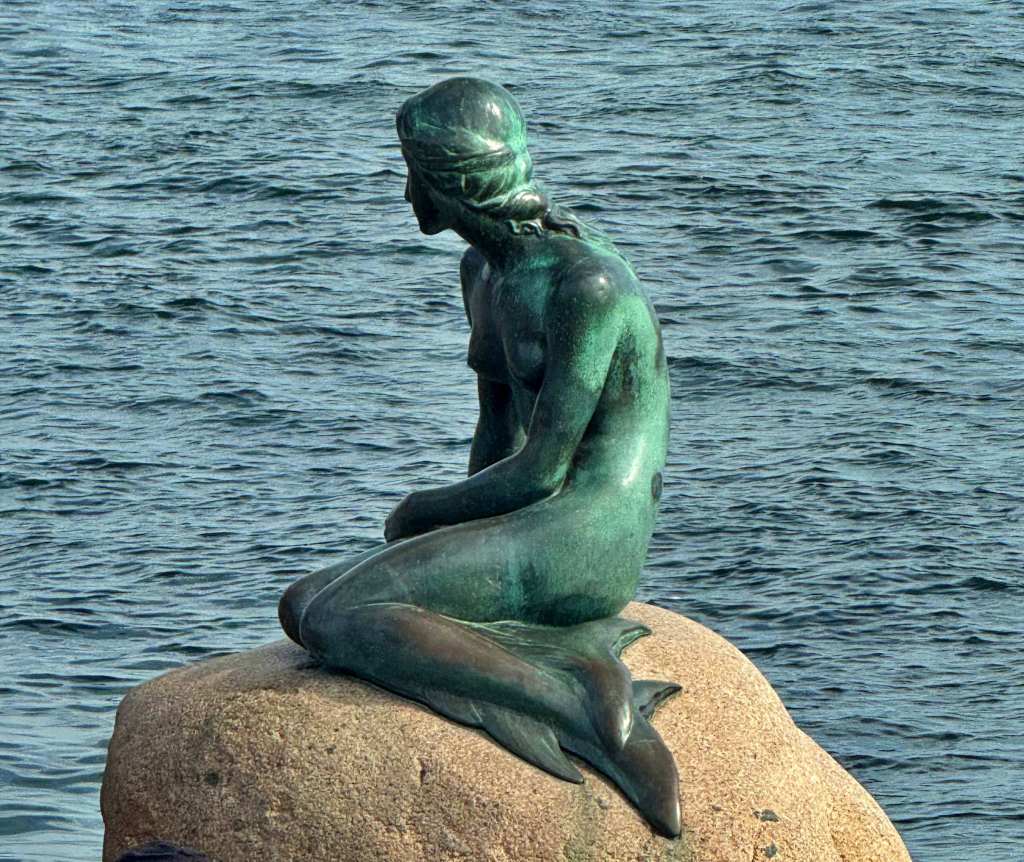
From there, we walked through the Kastellet, or Citadel, which is one of Europe’s best preserved 17th century fortresses. It’s still used by the Danish military but open to the public (obviously nothing top secret here). Then, on to the Amalienborg, four imperial palaces built around an octagonal courtyard right by the waterfront. Even though the Danish royal family resides in one of these buildings, the public can wander freely about these grounds as well.
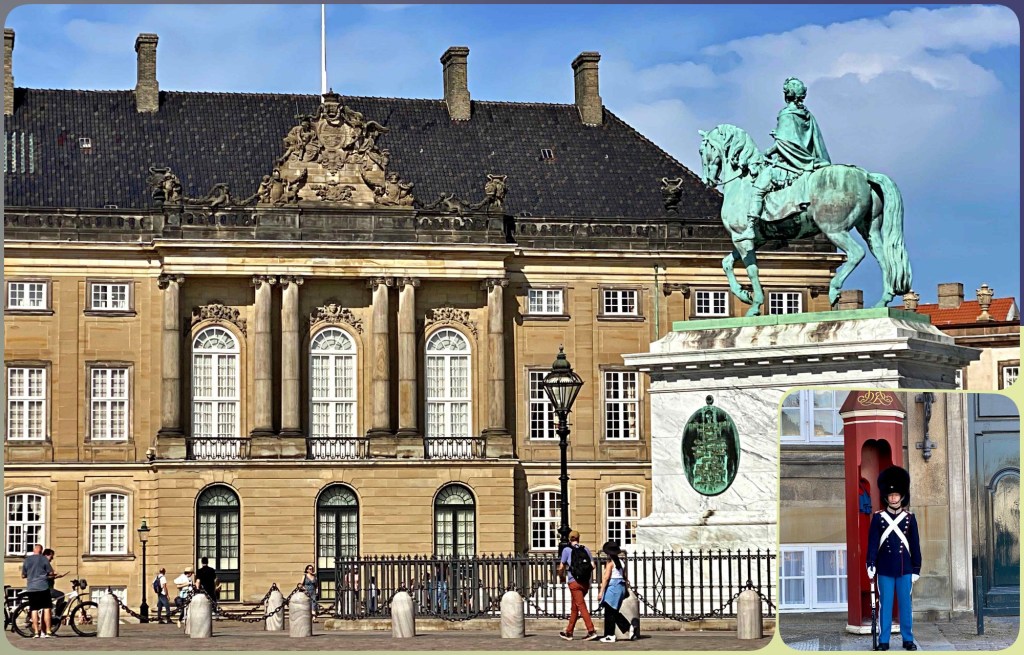
Compared to the British royal family, the Danish royals (King Frederick X and Queen Mary, an Australian commoner born in Tasmania) are very approachable and “lead normal lives,” Jacqueline told us. “It’s not a paparazzi culture here.”
We then moved on to Nyhavn for a few obligatory photos and finally ended up at the Danish parliament, Christiansborg Palace, at about 2:30 p.m. Noting that 10 political parties are represented in parliament (!), Jacqueline said most issues are handled quite amicably and that public protests or demonstrations are rare.
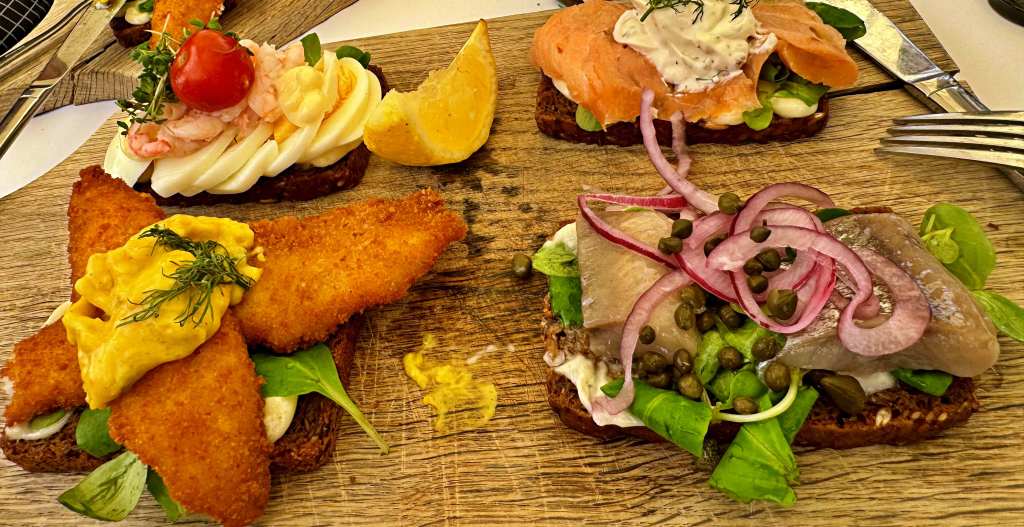
For our now late lunch, we returned to Nyhavn because we knew some of the restaurants there served Smørrebrød. This is the traditional Danish dish consisting of a slice of rye bread piled with various toppings such as pickled herring, roast beef, eggs and shrimp; we could not leave Denmark without trying that, at least once. It is tasty and filling.
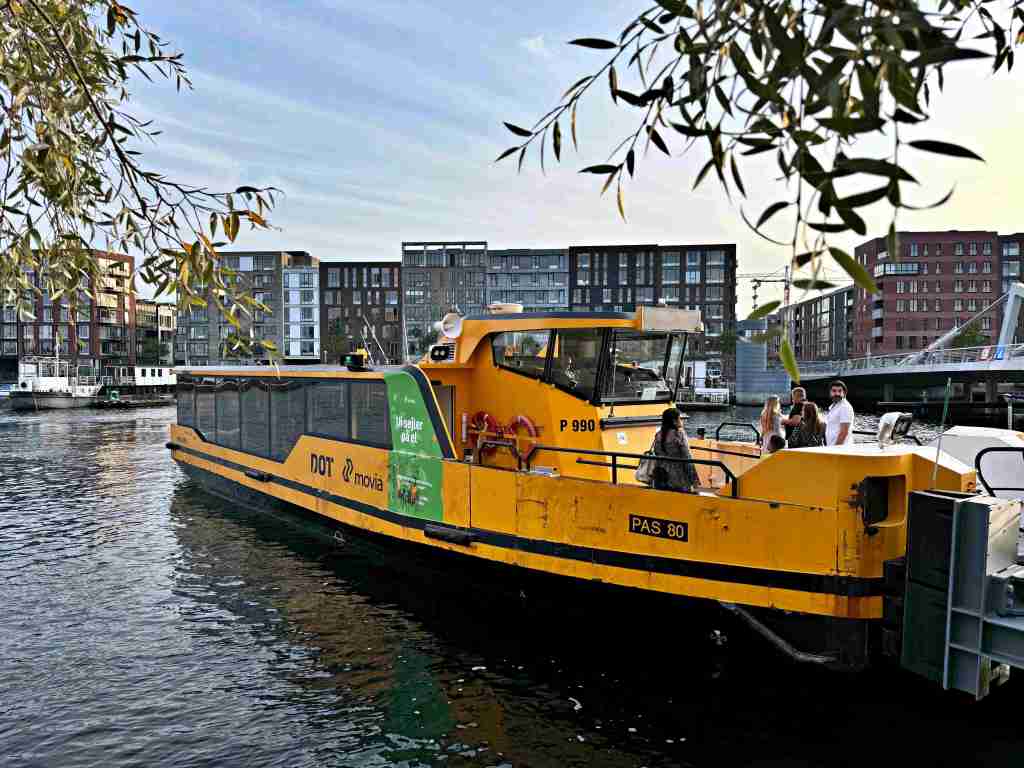
To finish our wander around Copenhagen, we followed up on one of Jacqueline’s suggestions and boarded a “water bus” at the pier near the royal theatre. These large yellow boats, all electric-powered, do indeed operate like buses, stopping at various locations along the canals. It’s the cheapest way to move around the harbor.
Other tourists have figured that out as well, so a large crowd on the pier blocked us from boarding two boats before we were able to nudge our way aboard a third. But once ensconced on the water bus, we sat back for an hour or so and viewed a long stretch of the harbour — covering all the scenic parts — from Orientkajen (north) to Teglholmen (south).
Travel Tips: Traveling in Sweden and Denmark is about as easy as it gets in Europe. Everyone seems to speak some English; in fact, quite often, Swedes or Danes chatting with their own countrymen will slide effortlessly into English and then out again, typically throwing in a common English word or phrase, like “you know what I mean?”
Since both countries are outside the Eurozone, they do use their own currencies, but nearly all transactions are electronic, via credit cards, so the traveler rarely needs cash. Public transportation in both countries is reliable and efficient, making it easy to get around.
And yes, prices are high, but that’s northern Europe.
 Two Clines Traveling