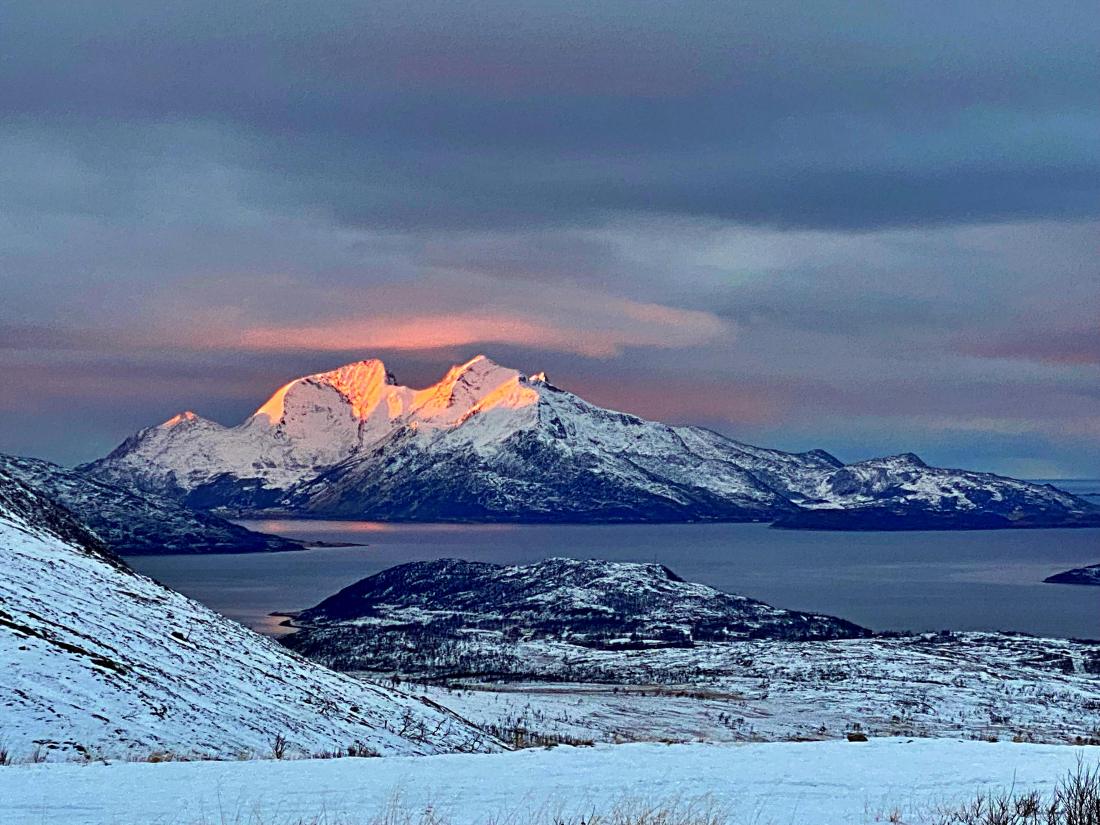
One of the delights of this trip was our discovery that Tromsø has more to offer than just the Northern Lights. There’s also “winter wonderland” scenery, reindeer, seals and good seafood.
Some of the best scenery we saw was to the west of Tromsø, where several offshore islands provide the port with a protective barrier from north Atlantic storms. Mid-November proved a good time for viewing this coastal landscape because we had some snow on the ground and daylight hung around until about 3 p.m. That light would shrink to nothing over the week following our departure, when Tromsø enters the “Polar Night” (24 hours of darkness) that lasts until the end of January.
Alex, our Norwegian friend, spent one afternoon driving us around Kvaløya (Whale Island), the largest of these offshore islands. Since his family had lived on Kvaløya and he still maintained a summer cottage there, Alex knew the best photo opportunities on the island. And we enjoyed re-connecting with Alex, whom we had not seen since 2019, when the three of us volunteered for two weeks at the Pilgrims Office in Spain’s Santiago de Compostela.

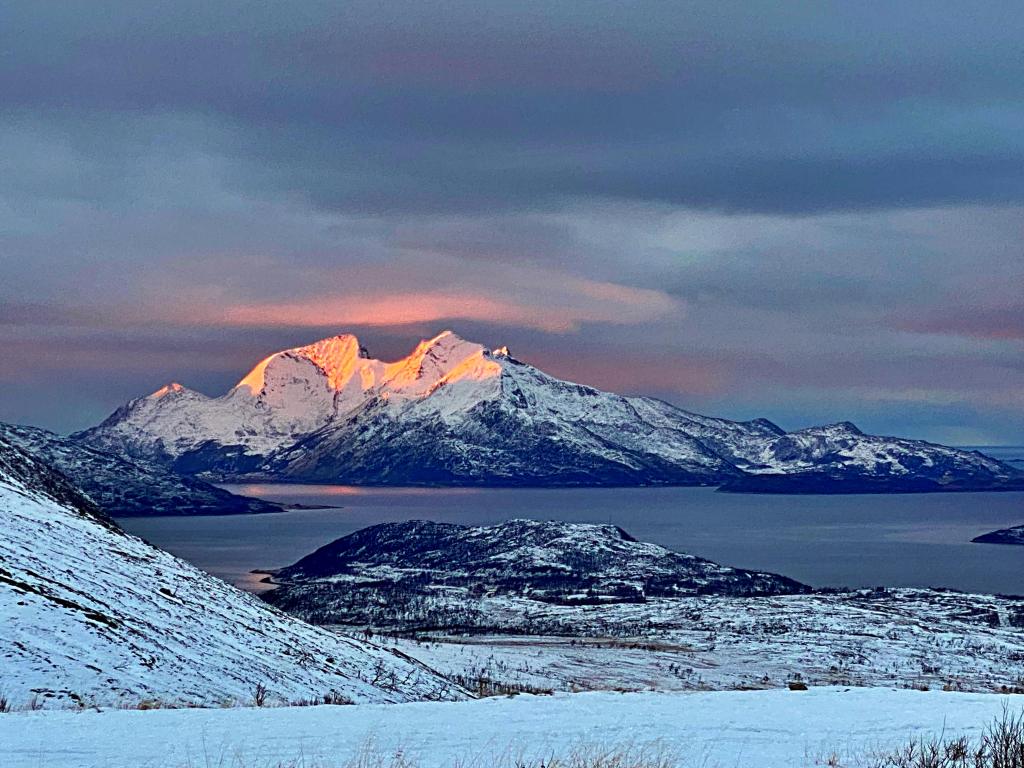
On another day, we took a minibus “Fjord tour” that included both Kvaløya and Hillesøy, which is the farthest western island that can be reached by vehicle from Tromsø.
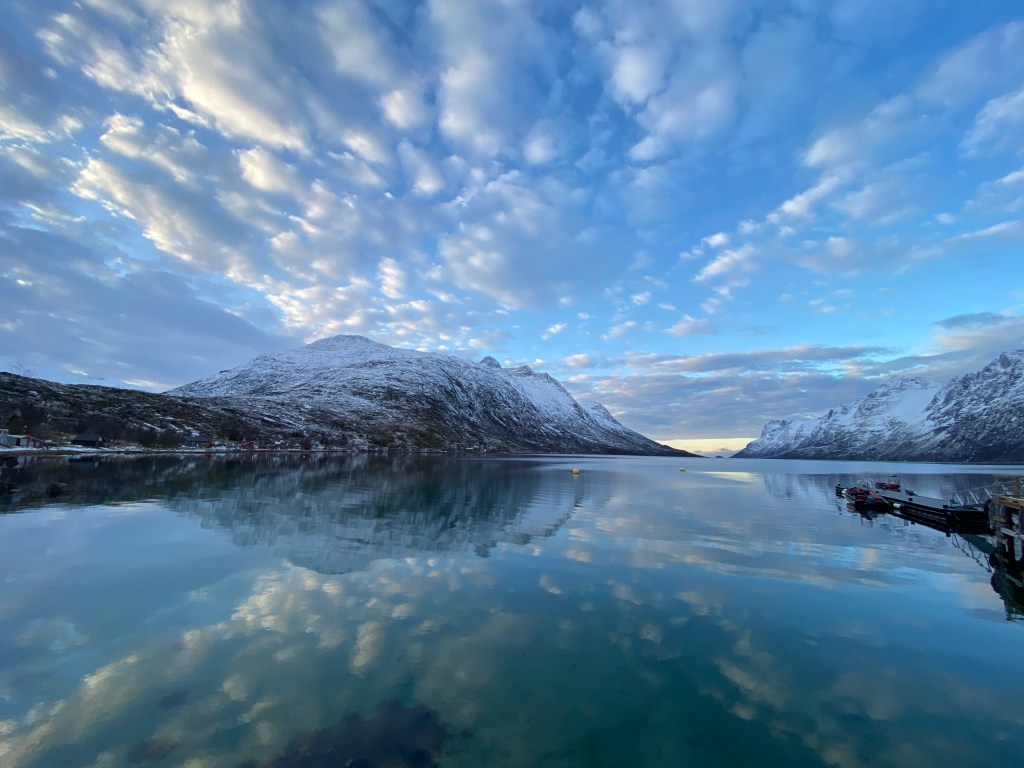
With direct views of the north Atlantic, the bleak landscape on Hillesøy, which has a full time population of about 20) features some remarkable beauty.

Christmas being a month away, Bina and I were keen to see some reindeer up close and personal. So, we took an excursion to an area east of Tromsø known as Ramfjordbotn that hosts a reindeer ranch called “Tromsø Lapland.” Here you can feed the animals and participate in a sleigh ride.
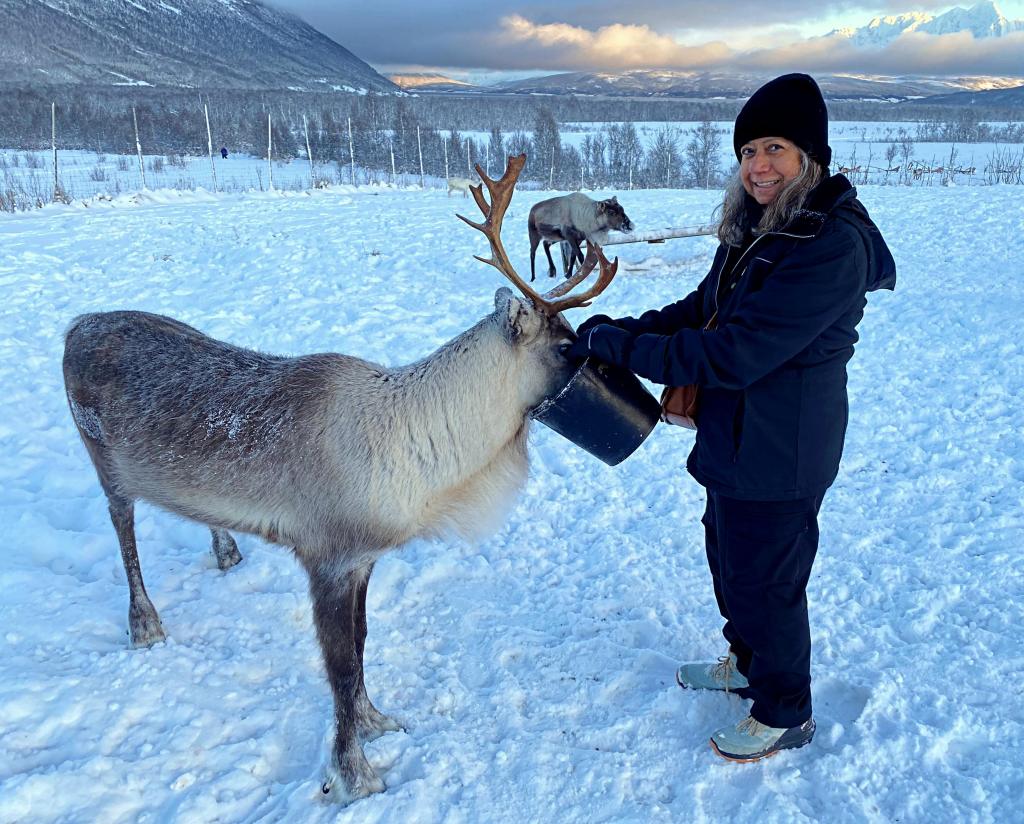
The reindeer sleigh ride was great fun, although we only went in a circle for about 20 minutes. We did experience a sudden jerk at the beginning, when the animals strained at their harnesses, heaving the guy in the first sleigh into the snow. Overall, however, unlike dogs, reindeer plod rather than run. Santa is fortunate that his reindeer can fly because otherwise he’d never finish his Christmas Eve deliveries.

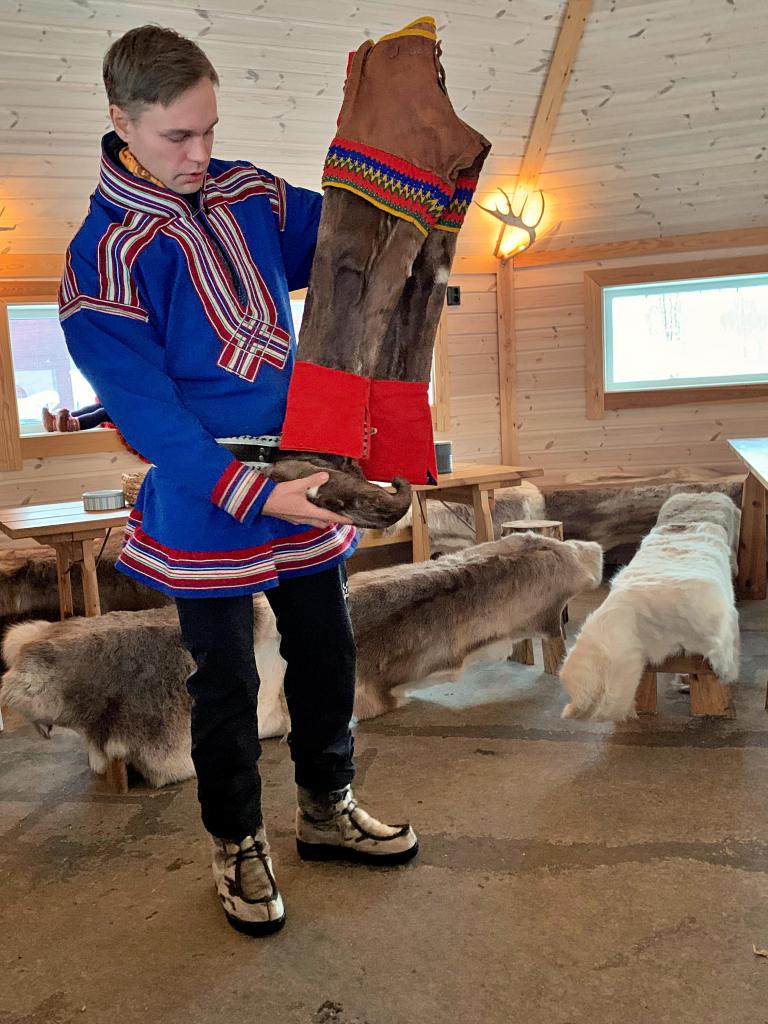
In northern Norway, the raising of reindeer is restricted to people of Sami origin (previously known as Lapps), who are Scandinavia’s indigenous people. Our reindeer camp visit included a presentation by a young Sami in full native costume. The light-skinned Jan Christian (actually of mixed Sami and Norwegian parentage) said that most Sami today live in cities rather than follow their traditional nomadic life. Those that still herd reindeer use snowmobiles and gps navigation, which makes for a different life than experienced by their ancestors.
Jan added that Sami parents often warn their children that the Northern Lights can sweep you up and whisk you into the skies if you go out at night, and specially if you wave at the aurora. “That story got my attention!” he said. One often-quoted Norse myth is that the lights constitute a “rainbow bridge”’ that connected Midgard and Asgard — the home of the humans and the home of the gods.
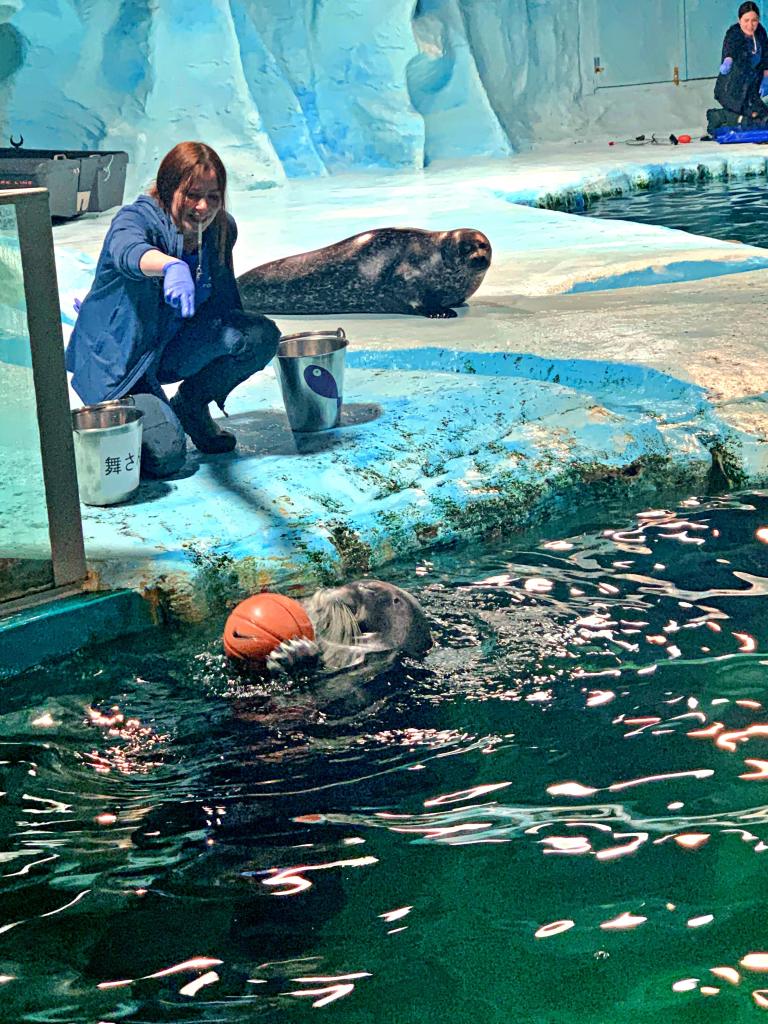
One other animal we got to see up close was the seal, at the Tromsø aquarium known as the Polaria. During the lunchtime feeding session, we watched several staff members get the seals to perform for their meal by doing various tricks such as jumping for balls suspended from the ceiling and doing flips in the water. As they explained beforehand, these activities help keep the seals physically fit and mentally alert, which is important for animals living in captivity.
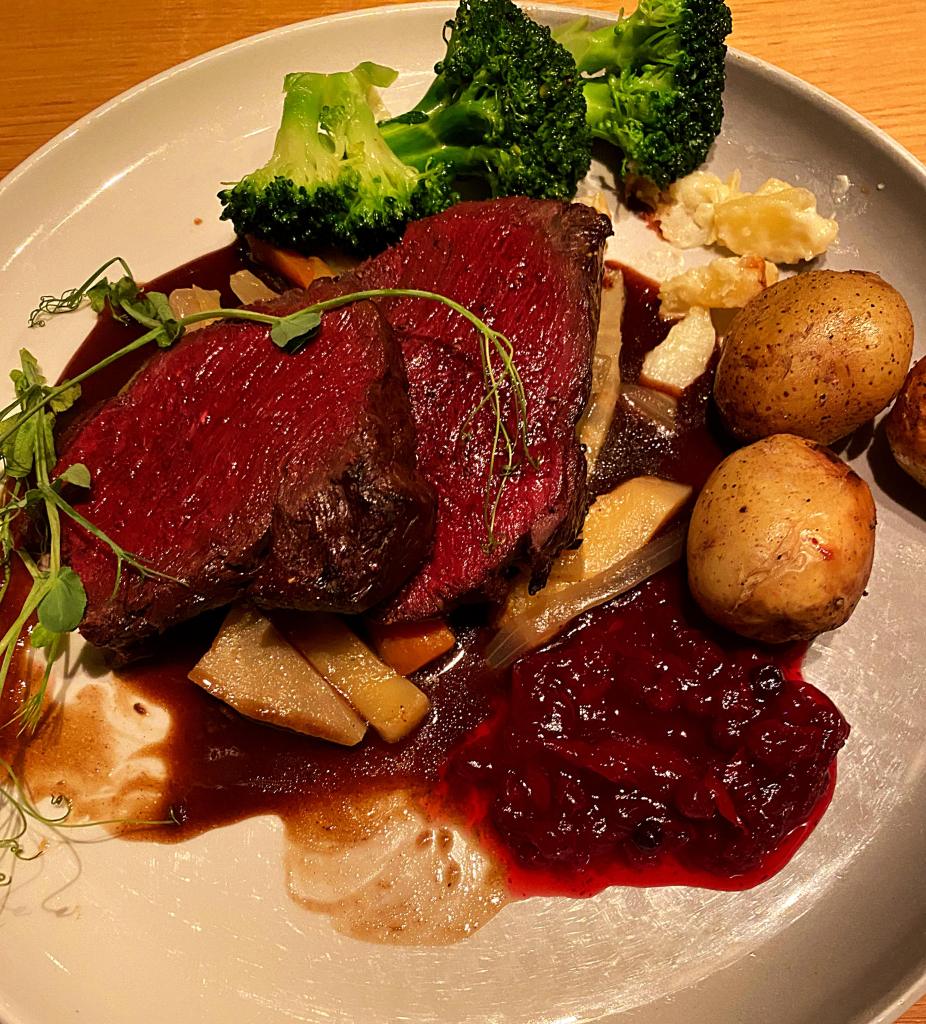
Speaking of food, virtually every restaurant we patronized tended to offer a few standard items: reindeer stew or hamburger, whale steak, fish currently in season and a fish soup. I enjoyed the reindeer meals I ordered — whether in the form of filet, burger or stew. Bina, more into seafood than me, appreciated the mussels, King Crab and whale steak, which was surprisingly non-fishy in taste, more like a beef steak. We were told that searing whale meat lightly, like tuna, prevents too much fish oil taste.
Norway, by the way, is one of only three countries that still allows commercial whale hunting, the other two being Iceland and Japan. Whale hunters in Norway target the minke whale, which is not an endangered species.
One surprise for us was the discovery that Norwegians also love cod, or bacalhau, as we call it in Portugal. Norwegian waters hold the world’s largest stock of cod, which Norwegians call torsk. However, they also use the Portuguese term Bacalhau da Noruega (“cod from Norway”) to designate dried and salted cod, which is the version favored by the Portuguese.
Since the 1990s, when overfishing prevented the Portuguese from obtaining their bacalhau off the coast of Canada, they have imported most of it from Norway. It’s a huge business. Despite being a small country (population nine million), Portugal consumes 20% of the world’s cod.
 Two Clines Traveling