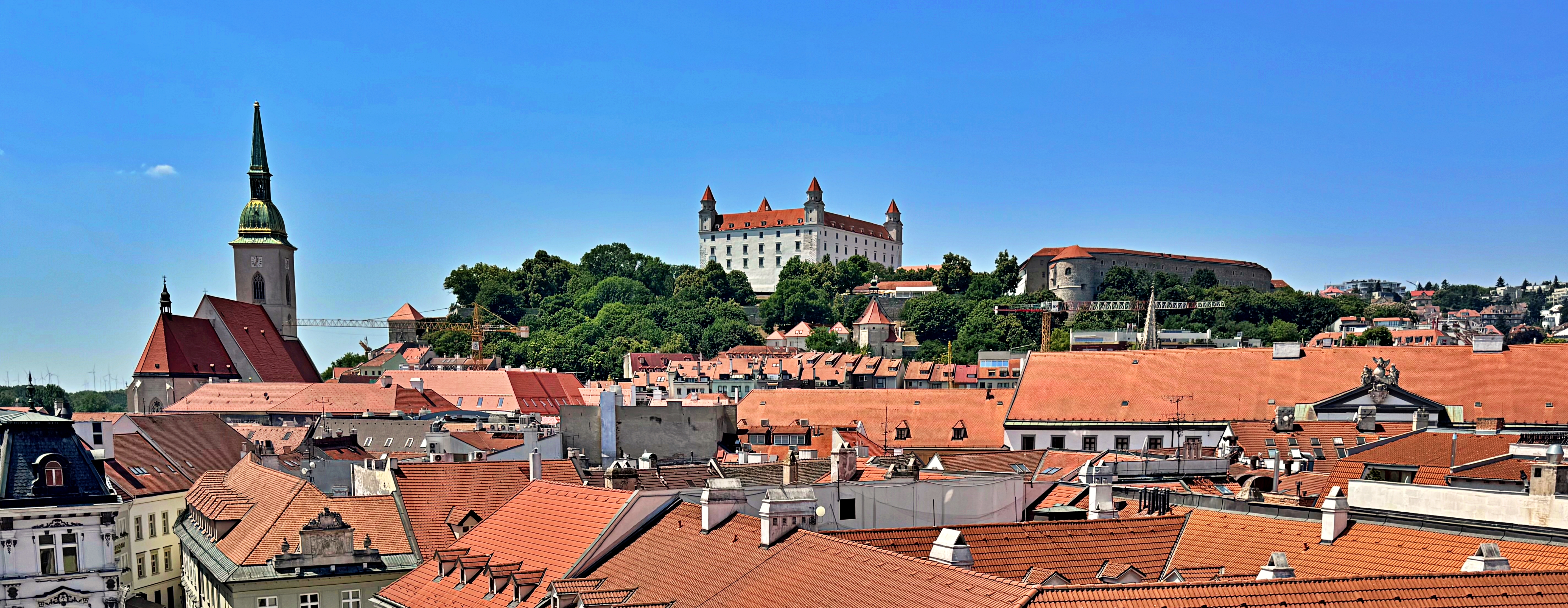
Our trip to Bratislava started from Vienna, where we stayed for a night, and then boarded the Twin City Liner ferry around 12:30 the next day. This huge catamaran took us down the Danube past the the outskirts of Vienna to cruise through forests and the occasional hilltop castle. The Danube, by the way, is green not blue — at least this stretch of river, at this time of year.
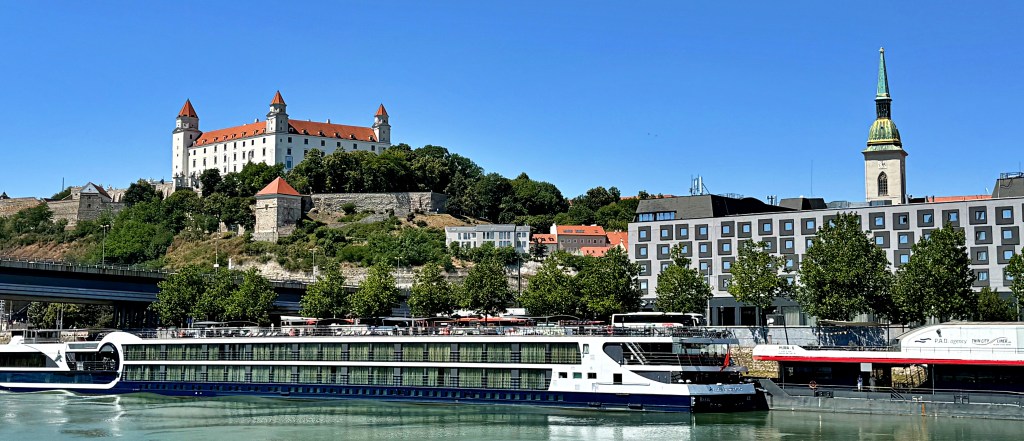
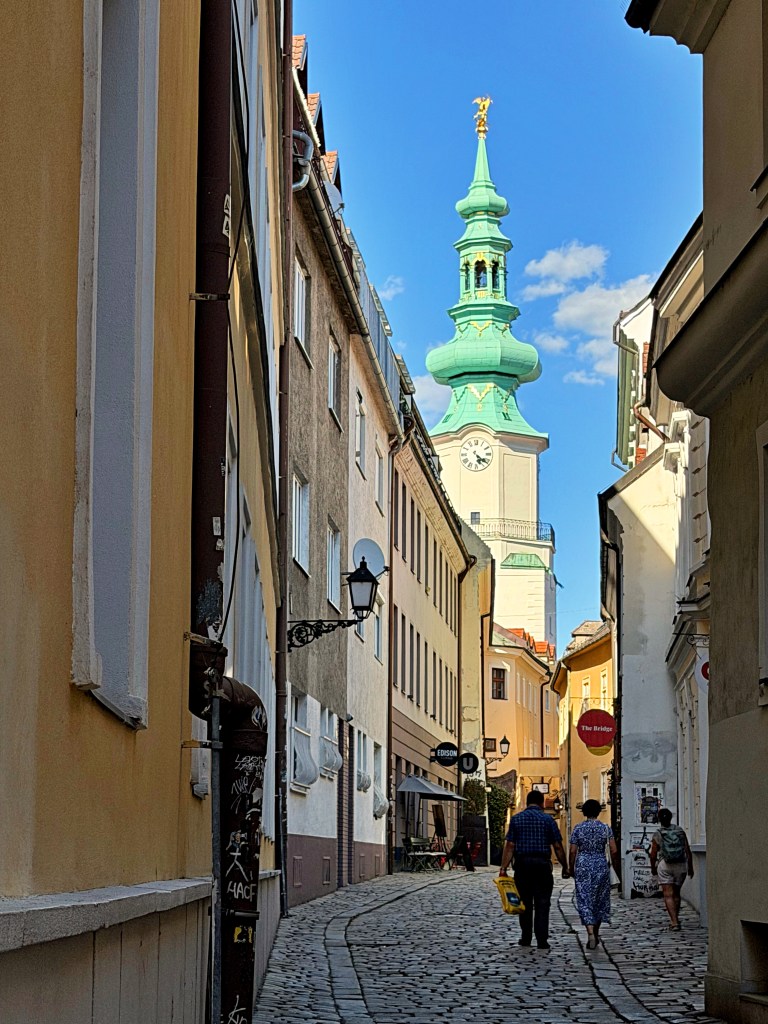
Bratislava, where we arrived about an hour and a half later, catches the eye first with its white castle overlooking the old town. After checking into our rental apartment, we explored some of the old quarter’s pedestrian lanes flanked by pastel-coloured buildings, ending the day at a restaurant that served traditional Slovakian food. For me, that meant venison steak with cranberry and orange sauce and cheese perogis; Bina had a pork shank with sauerkraut.
The next day brought a deeper dive into Bratislava on a walking tour with a guide named Paras, who hailed from Calcutta, India. That’s actually not unusual; many of these city guides in Europe turn out to be immigrants from other places. It’s kind of like the history of these cities — a story of different ethnic groups coming and going.
Consider Bratislava itself. The city today is mostly known as the capital of Slovakia, a small country that split off from Czechoslovakia in 1993, with the other half being the Czech Republic. In the latest census (2021), 83% of Bratislava’s population described themselves as Slovaks.
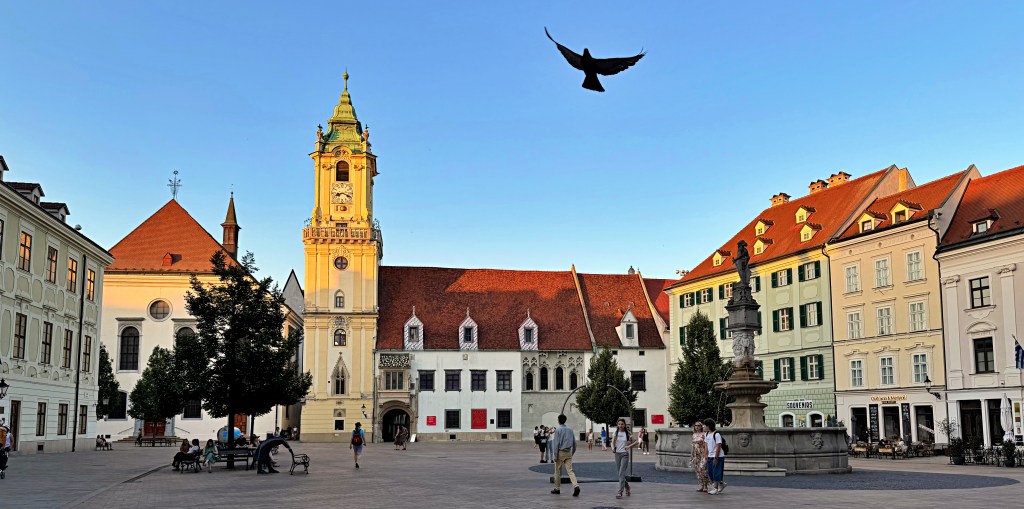
What you might not expect is that this city didn’t take on the name “Bratislava” until 1919. During the preceding 1,000 years, it was actually known as “Pressburg,” reflecting the fact that Germans rather than Slavs made up the majority of its population. And to make things even more complicated, Hungarians became the second largest group. That’s because the kings of Hungary made Pressburg their capital after Buda (the precursor of modern Budapest) fell to the Ottoman Empire in 1536.
So, for over 250 years, Hungarian kings and queens were crowned in this mostly German city which was ruled from Vienna by the Austrian Hapsburg monarchy (later the Austro-Hungarian Empire). As seen in exhibits at the municipal museum, locals still look back wistfully at this period, using the phrase “the Pressburg way of life” to describe the city’s urban elegance in the late 19th and early 20th centuries.
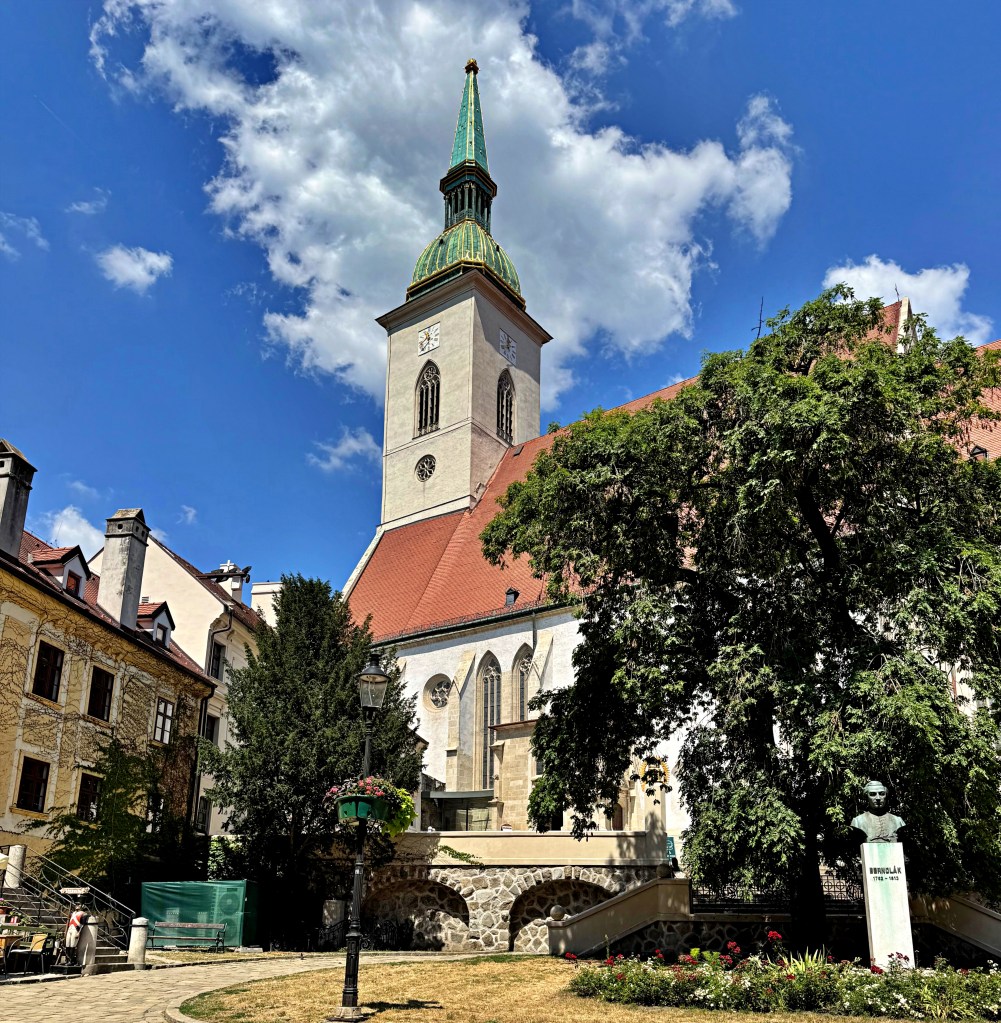
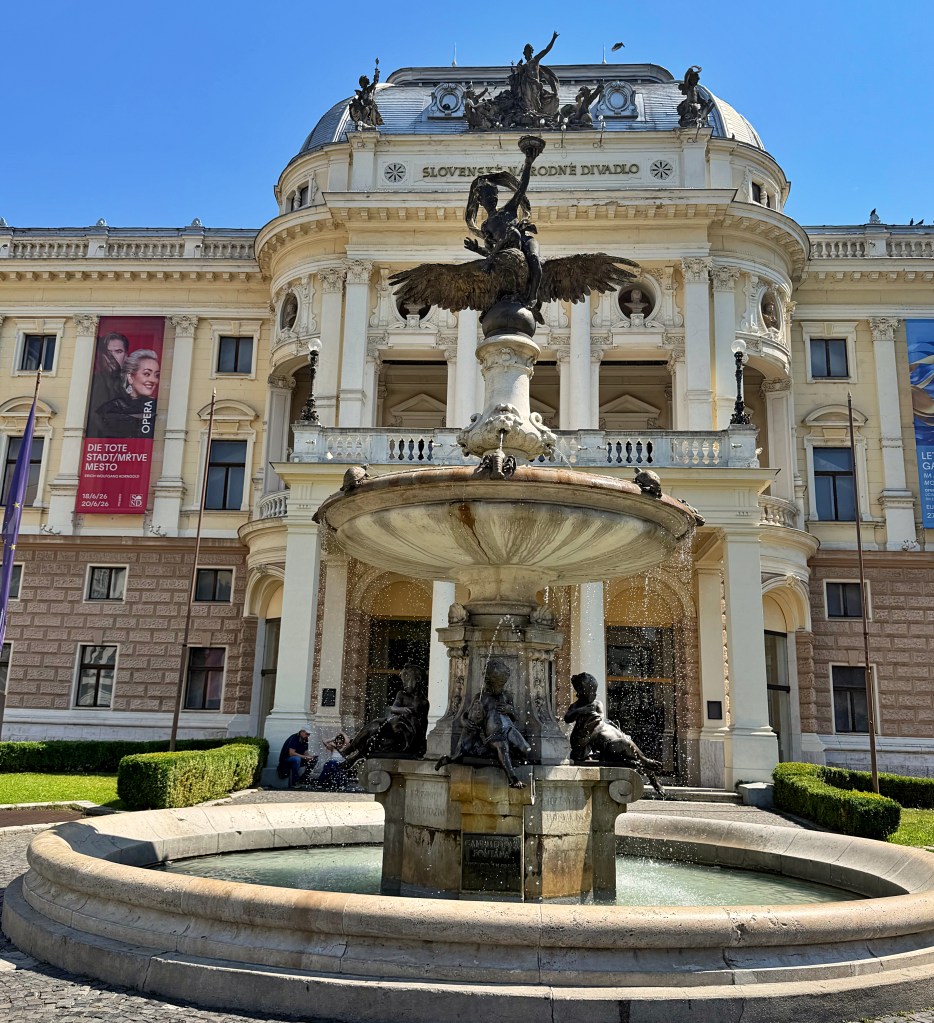
Paras summed Bratislava’s architecture this way: “the pretty buildings all date from the Hapsburg times, the ugly ones from the more recent Communist period.”* The ornate opera house, for example, was built in 1886 by two Austrian architects who were also responsible for the empire’s great opera houses in Budapest and Sofia.
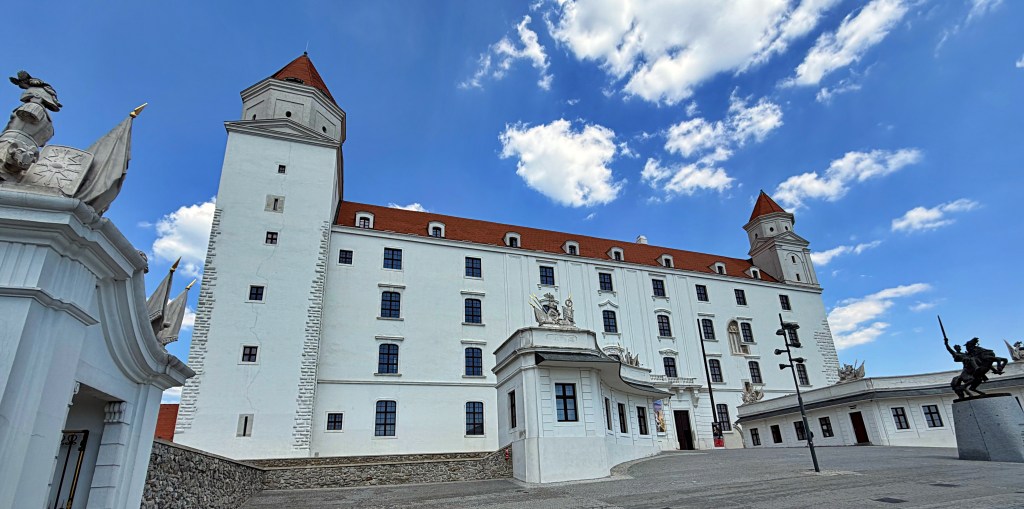
Bratislava’s most distinctive structure is the castle that we saw crowning the city when we first approached it on the ferry from Vienna. Dating from the 10th century, with major makeovers in the 15th and 18th centuries, the building transitioned over time from a military installation into a Baroque palace, nearly all of which burned down in 1811 in an accidental fire caused by careless soldiers.
The castle remained a charred shell for 150 years until being restored during the Communist period. Locals aren’t entirely happy with the results, describing it as “an inverted IKEA table” because the four towers do indeed looked like upturned table legs.
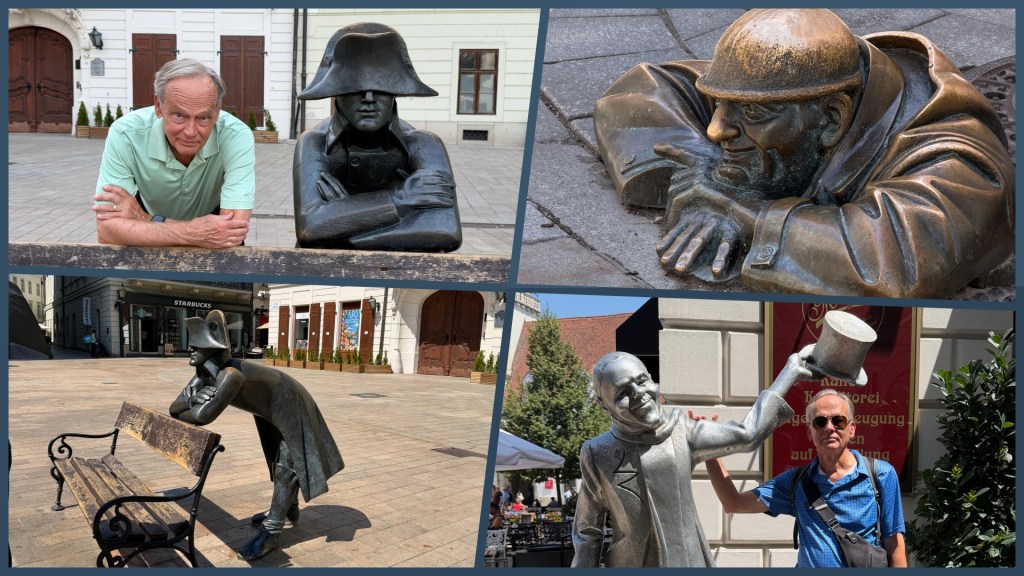
Bina and I appreciated the low-key ambience of Bratislava during our two full days there. We ate some good meals here, including traditional Slovakian and Georgian food (that is Georgia in the Caucasus region, not southern U.S.A.). We also enjoyed some of the quirky art work in the streets, which includes an irreverent statue of Napoleon leaning on a bench with his backside to the French embassy (!). This is a sly comment on the Siege of Pressburg during Napoleon’s 1809 campaign against Austria, when French troops unsuccessfully besieged the city.
The Slovakian government may have its parliament and administrative buildings here, but Bratislava doesn’t feel like a capital city. We found it a good place to relax before tackling the tourist frenzy of Prague.
- This is true all over central and Eastern Europe. Go to Prague, Budapest, Ljubljana, and Krakow and you’ll find that nearly all of the finest buildings date from the late 19th and early 20th centuries, the heyday of the Austrian Hungarian Empire. You can usually tell how prosperous these places are by how fast they got rid of the Communist-era concrete apartment blocks.


