Why Albania?
Why indeed? This tiny mountainous country, about the size of New Jersey, with a population of 2.5 million, earned an evil reputation during the Communist era as “the North Korea of Europe,” the poorest country west of the Urals. Since Communism went bust in 1991, Albania has become a top tourist spot, now often hailed as “the next Croatia.”
Having enjoyed out visit to Croatia in 2024, we decided to check out that claim.
Albania has indeed come far in the last 35 years. We entered the country through Tirana’s modern airport, Tiranës Nënëe Tereza, which is named after Mother Teresa. While the history of this airport dates back to 1955, the terminal is only 20 years old and now receives about 10 million passengers a year, one of the busiest in the Balkans.
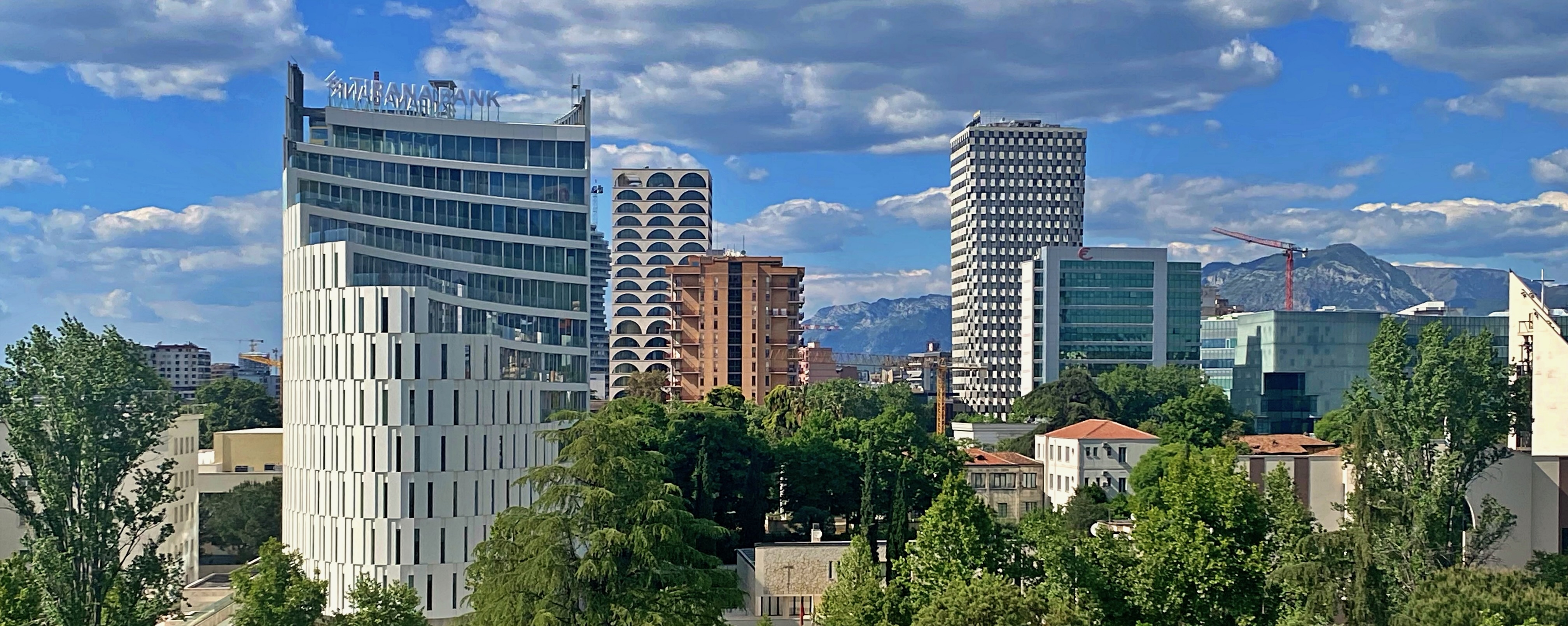
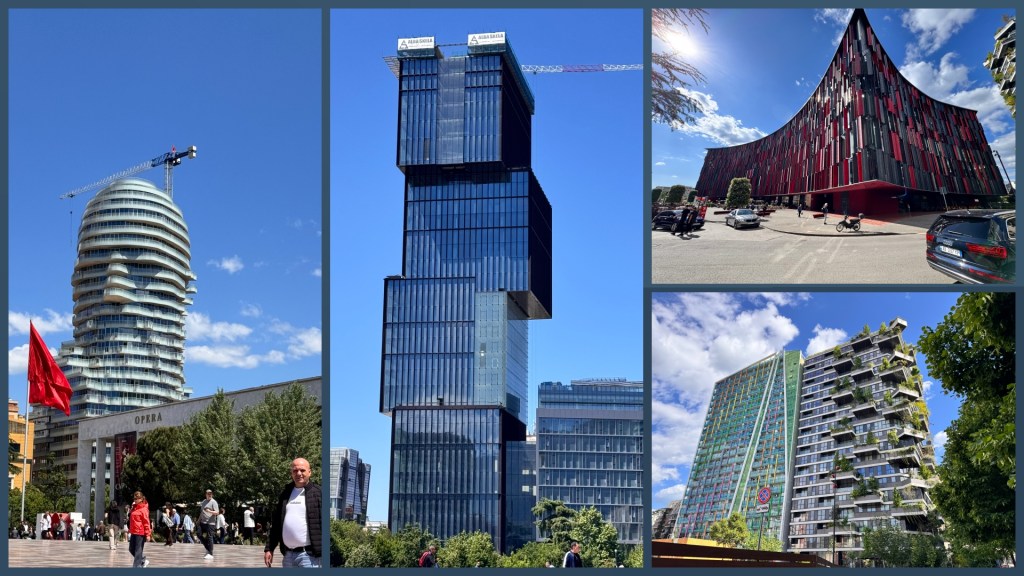
Tirana itself, about 17 km away, impresses with an abundance of modern buildings. Yes, you can still spot the Communist-era concrete apartment blocks here and there. But the center of the city is dominated by gleaming new towers, many of an avant-garde design.
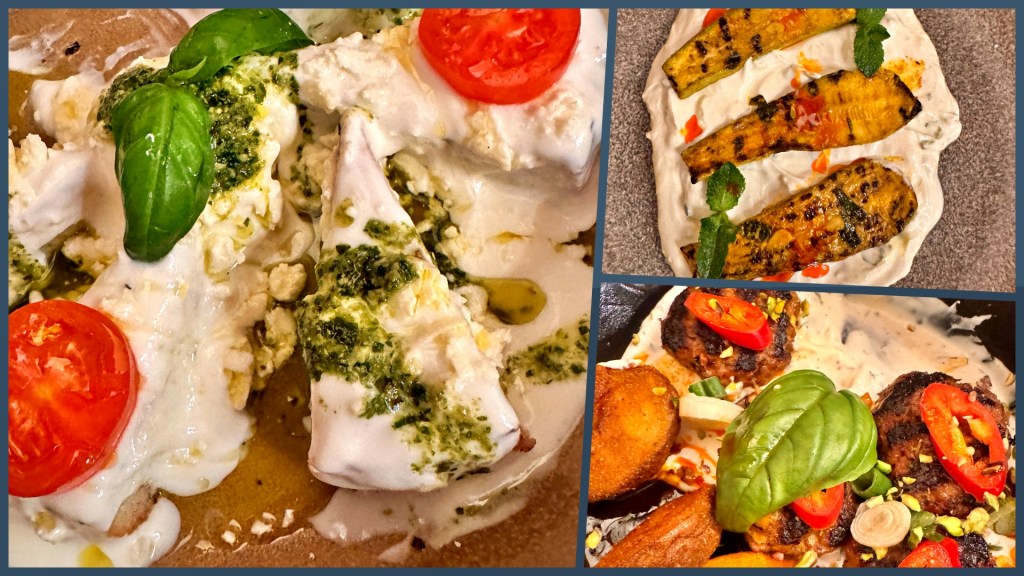
And we loved the food. Albanian cuisine mixes Italian, Balkan and Turkish influences, with yogurt used in a wide array of dishes, from cornbread to zucchini. Our favourite meals included green and red peppers stuffed with cheese, lamb shank flavoured with beetroot and a “Tirana Style” beef casserole slow-cooked in a creamy sauce of onions, garlic, roasted red peppers, tomatoes, and tangy cheeses, including feta.
This eclecticism in food reflects cross-currents in Albania’s history: a province of the Ottoman Empire for 400 years (1385 to 1912), then heavily influenced by nearby Italy after World War I, finally opening up to the larger western world after the Communist period (1946-91).
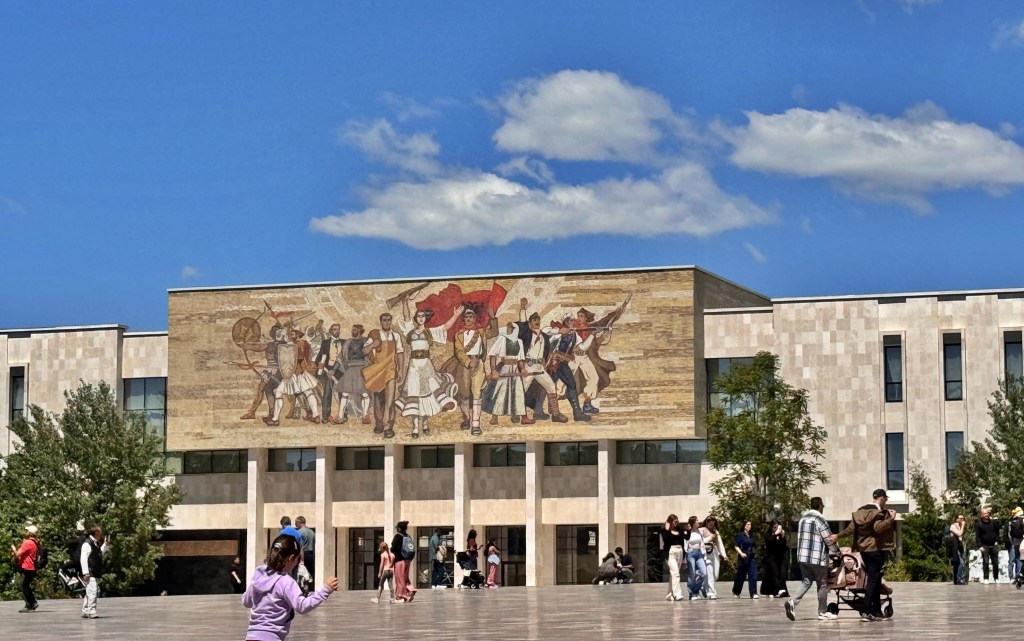
We learned more about that history during a two-hour walking tour of central Tirana led by a young man named Ergys. Our large group, about 25 people, began the tour in Skanderbeg Square, the central point in downtown Tirana. Most of the city’s major historical and cultural sites are located around or near this 40,000 square meter expanse, which features a large statue of Skanderbeg himself. He’s the country’s 15th century national hero, who briefly kept Albania out of the hands of the Turks.
A relic of the Ottoman period can be viewed at the 18th century Et’hem Bey Mosque. Although the Communists destroyed most of Albania’s religious buildings, they kept this one for its exterior frescos produced by an Italian artist. Unusual for a mosque, these paintings depict natural subjects, such as a river, trees and bridges.
The post-independence period after 1912, when Albania was ruled by King Zog I, Europe’s only Muslim monarch, is represented by Italian-designed government buildings that cluster along the city’s main boulevard leading south from the square. King Zog, who initiated this close connection with Italy, had to flee Albania when Mussolini invaded in 1939.
“The Italians gave us three things — coffee, bureaucracy and corruption,” Ergys joked. “We improved on each one.” Albanians cafes do indeed serve great expresso-based coffee. But a high level of corruption, among other things, bars it from gaining entrance to the European Community.
The Communist era is represented on the square by the Tirana Hotel, the Opera House, and a history museum now under renovation. The 15-story hotel, built in 1979, once constituted the tallest building in the country and included escape tunnels for the Communist officials who used to meet there.
Escape tunnels?
That derives from the paranoia of dictator Enver Hoxha, who ran the country from 1944 to his death in 1985 and obsessed about the possibility of an invasion from either NATO or Yugoslavia or both. That’s why 173,000 domed concrete gun emplacements and underground bunkers still blanket the country. Two of them in Tirana have been turned into museums under the name “Bunk’Art.”
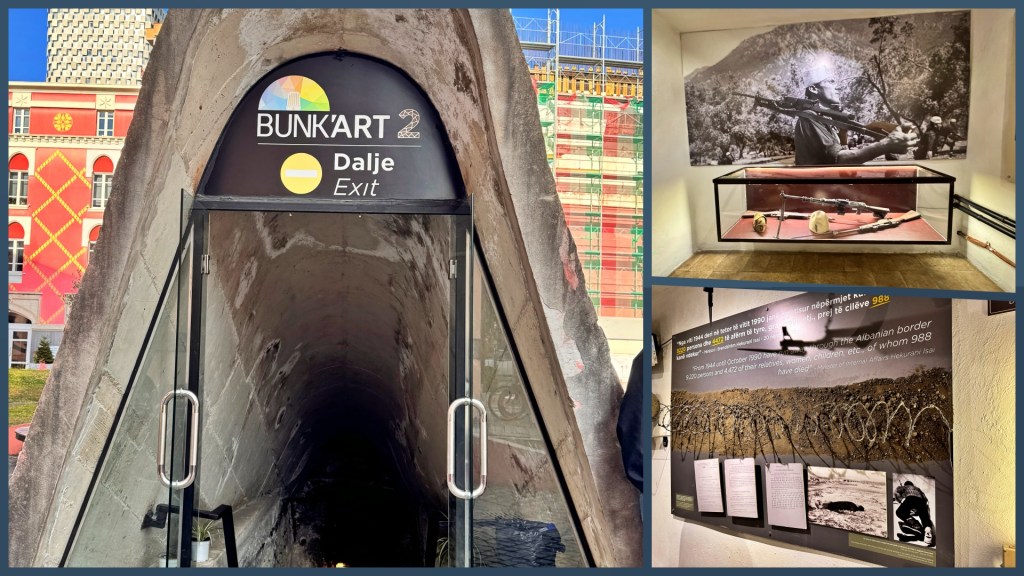
The one we visited, Bunk’Art2, close to the square, showcases the insane paranoia of Hoxha’s rule. This was a country where informers spied on their neighbours by hiding microphones in walls adjoining their apartments. Nobody was safe from the ubiquitous secret police.
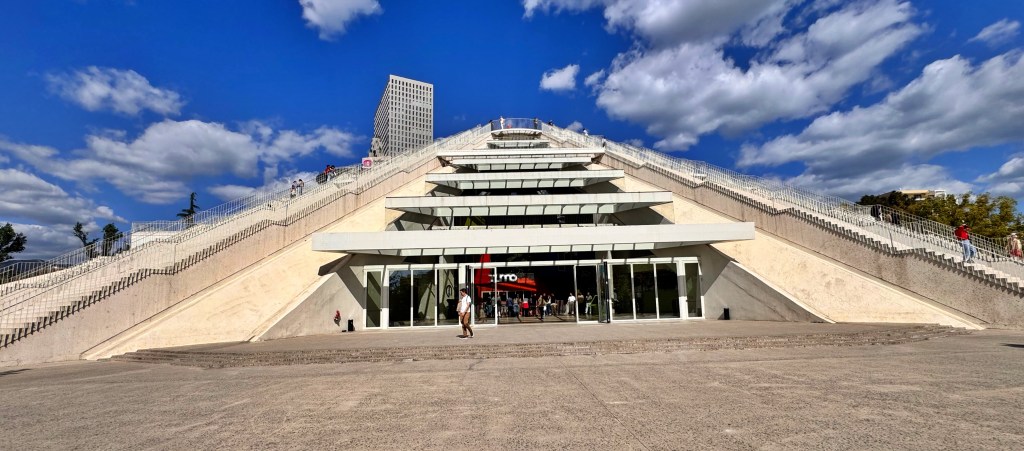
The Skanderbeg Square includes a pyramid that was originally built as a museum honouring the megalomaniac-in-chief but now functions as an open-air sculpture that you can climb for 360-degree views of the city.
Bina and I gave ourselves two full days in Tirana before hiring a driver to take us to North Macedonia. On the way, we briefly visited one other Albanian city, Elbasan, which is best known for its 15th century Ottoman castle. We walked through the old town that lies within the castle walls, which includes a cobblestone lane that had once been part of the Via Egnatia, a major Roman road linking Constantinople (Istanbul) with the Adriatic coast.
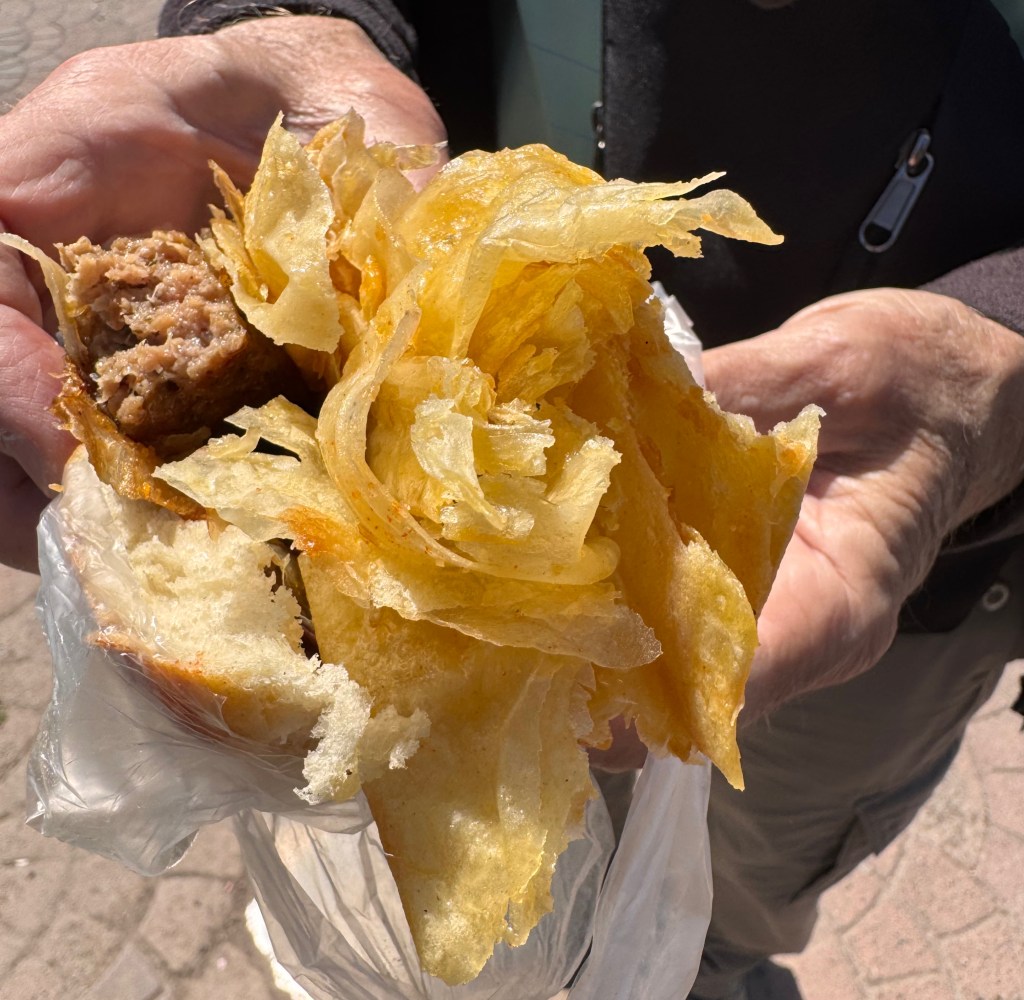
For a souvenir of Elbasan, our Albanian driver, Max, ducked into a cafe to buy us a Bugace, a breakfast treat found only in Elbasan. It can be described as a “sandwich with bread,” where a buttery, flaky piece of byrek (stuffed pastry) is placed in the middle of a soft, baked bread roll called simite. It comes with different fillings, including minced meat.
Crossing the border between Albania and North Macedonia took about 40 minutes because of the long queue of traffic. During the Communist period, this border had been totally sealed off and militarised; any Albanians attempting an escape would be shot on sight or mauled by vicious guard dogs. It is estimated that 13,700 people managed to escape Albania between 1946 and 1991 while about 1,000 died in the attempt.
Today, immigration officers of both countries work side by side in a kiosk. The Albanian guy takes your passport, scans it into his computer, and then hands it to the officer from North Macedonia, who returns it through his window.
Just another sign that Albania has resumed normal European life.
Travel Tips:
Albania still uses its own currency, the Lek, so it’s helpful to purchase a small quantity while you’re in the country to use in small shops or taxi cabs. We carried about $50 worth. Vendors will take euros but at a disadvantageous exchange rate so it’s better to use Leks for cash. Fortunately, major restaurants and hotels in Tirana take credit cards.
Bina and I enjoyed our visit to Albania and regretted only its short duration. We agreed that any return visit must include the scenic Adriatic coast, which is where the “next Croatia” buzz originates.


You are both very adventurous!
LikeLiked by 1 person
Thanks for your kind remark, Anonymous. We do like to explore the world and share what we’ve learned.
LikeLike
Yup, my ideas about Albania stem from the Communist days. This was an eye-opener. The whole coast of Balkan countries is a mystery to me, despite the handful of friends who have visited. And I would have traveled with Euros!
LikeLiked by 1 person
Albania was an eye-opener for us. We enjoyed it more than we had expected. We would like to see more of it someday.
LikeLike