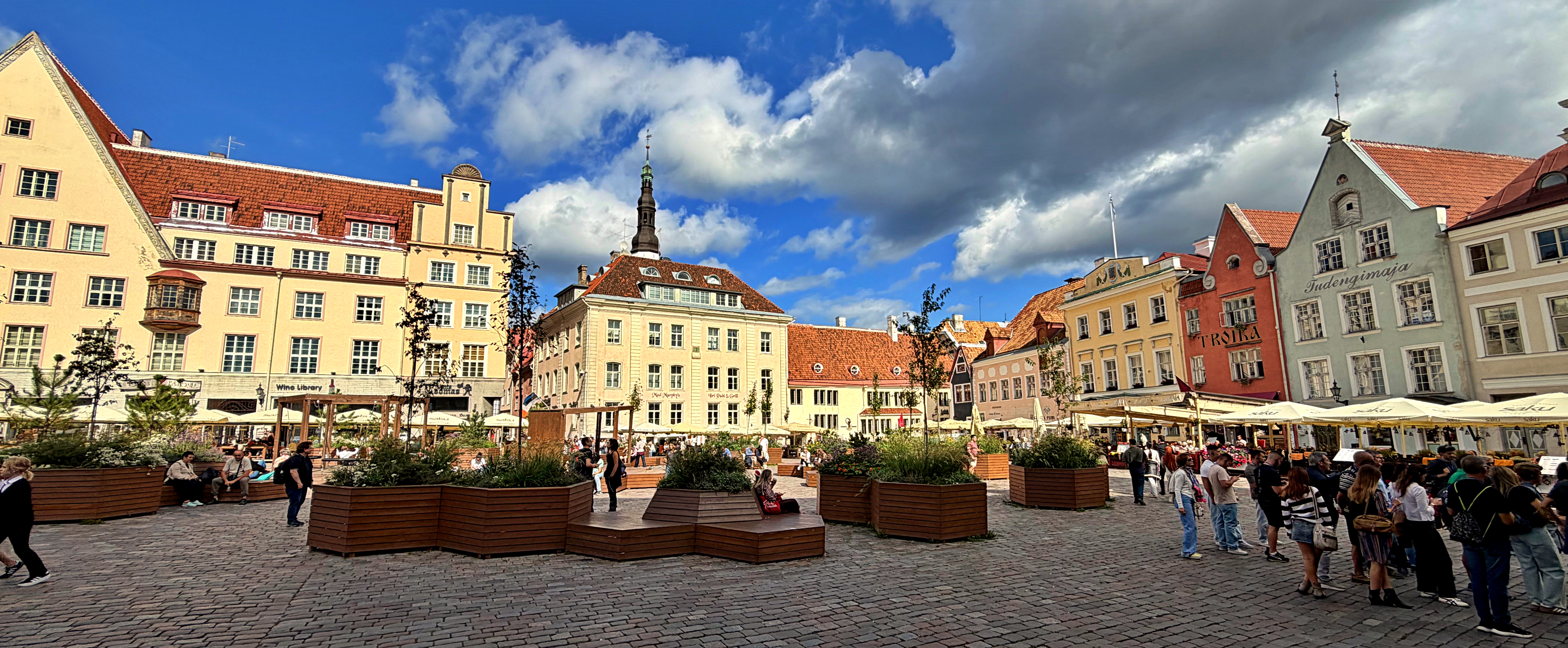
On August 27, I was having my morning cup of coffee and checking out news on the Internet when I saw a story in the Wall Street Journal. The American CIA chief, John Raticliffe, had made a surprise trip to Moscow to warn Vladimir Putin’s government against attacking Nato countries, including the Baltic States.
It so happened that Bina and I were scheduled to leave later that very afternoon on a trip to Estonia, Lithuania and Latvia, the three Baltic States.
Conferring with Bina later that morning, we decided to continue with our plans. Putin’s government had been making menacing moves against the Baltic States for the past year — sabotage, cyber warfare — and no western country was yet warning its citizens against traveling there. The U.S. State Department’s travel advisories still ranked all three countries at level one, “exercise normal precautions.”
Still, given this fraught situation, readers may be wondering: why the Baltic States? And why now? It was simply a scenic part of Europe that Bina and I had not seen before. Earlier in the year, we had identified these countries as places to visit in early September, just after the peak tourist season, and had planned accordingly.
The logistics were complicated. We had booked flights on Norwegian Air first to Oslo, Norway, and then the following day to Helsinki, Finland. We planned to cross the Gulf of Finland by ferry to Estonia’s capital of Tallinn on August 31. The rest of the trip would be by Baltic Air: Tallinn to Vilnius (Lithuania), Vilnius to Riga (Latvia), and then finally back home in Portugal from Riga on September 5.
There was no way we wanted to undo all that if war did not seem imminent; Chat GPT assured us the situation was quiet for now. But we did tell friends, with a bit of graveyard humour, that we would occasionally glance skyward to “watch for Russian drones.”


