We did not pick the ideal time to visit Prague. In fact our entire trip took place in a period when most of Europe was sweating through a heat wave. The temperature hit 102 F. during our last day in Bratislava and increased by two degrees when we reached Prague one day later.
At least we journeyed to Prague in comfort, taking an air conditioned train called the “Hungaria,” which links Budapest, Hungary, with Kiel in Germany and stops in Prague, Berlin and Dresden along the way. We enjoyed a lunch of goulash and veal in the white table cloth dining car while watching the flat countryside of Slovakia transition into the forested hillsides of the Czech Republic.
Emerging from the train in the late afternoon was like stepping into a furnace. We got an Uber ride to our rental apartment close to Prague’s national theatre and spent the rest of the day exploring the neighbourhood and finding a restaurant for dinner, saving our energies for a walking tour the next day. We were pleased to find a good selection of restaurants, cafes and shops nearby.
Our tour guide for Prague turned out to be another immigrant, Steve. He had a Czech wife, but hailed from Vancouver, Canada, so we had no issues with his accent. We also liked that Steve provided a knowledgeable and enthusiastic introduction to his adopted home town.
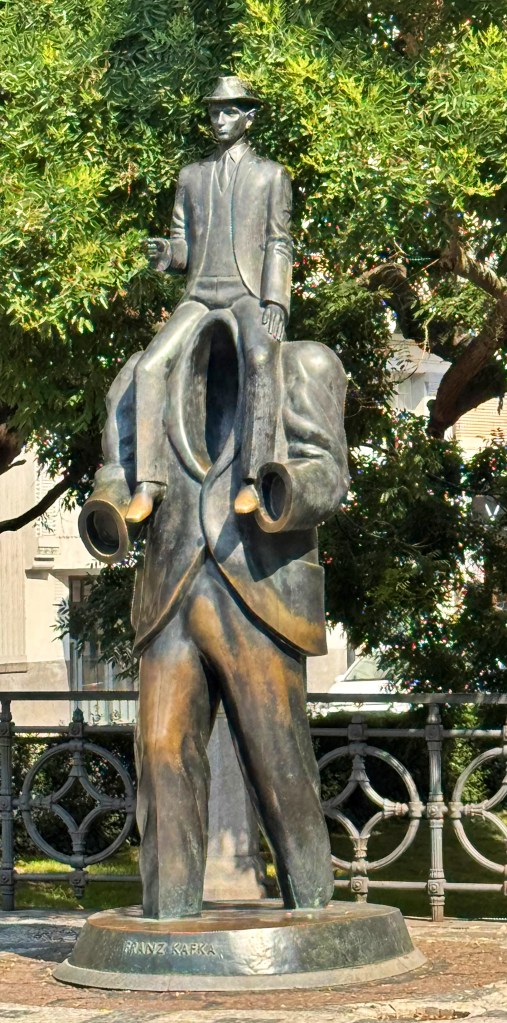
We started in Prague’s old Jewish quarter, which houses very few Jews today, since two thirds of them — about 50,000 — perished during the war. The neighbourhood preserves a few surviving synagogues and a whimsical statue of Jewish author Franz Kafka (1883-1924), who lived most of his life in Prague.
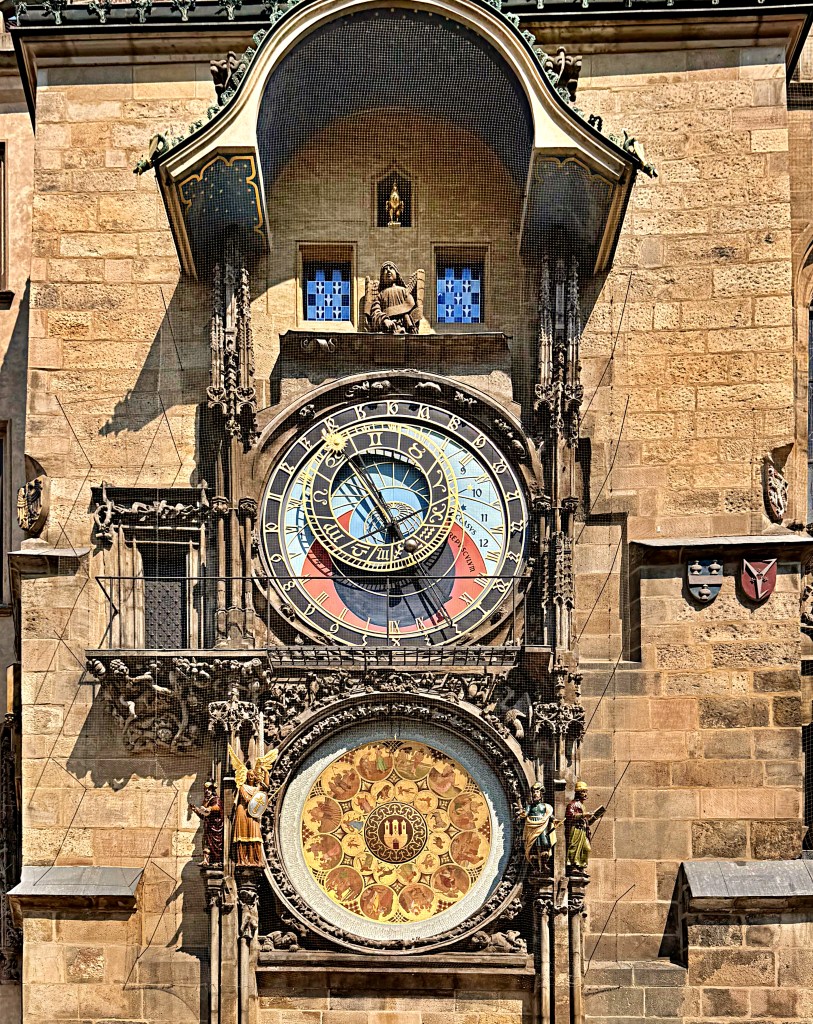
From there it was on to Old Town Square, where we viewed the twin spires of the Tyn Church and the town hall tower’s amazing 600 year-old astronomical clock. This clock is celebrated for its scientific and mechanical sophistication, tracking the relative position of the sun, moon and zodiac constellations as well as time. Tourist love to gather on the hour to watch a statue representing Death strike a bell as wooden figures of the 12 apostles parade past.
With landmarks like that, Old Town Square surely represents Europe at its best. But the square also reminds us of the social and political upheaval that has bedevilled Prague over the centuries, most notably during the Reformation and Counter Reformation (15th through 17th centuries) when religious strife was the rule.
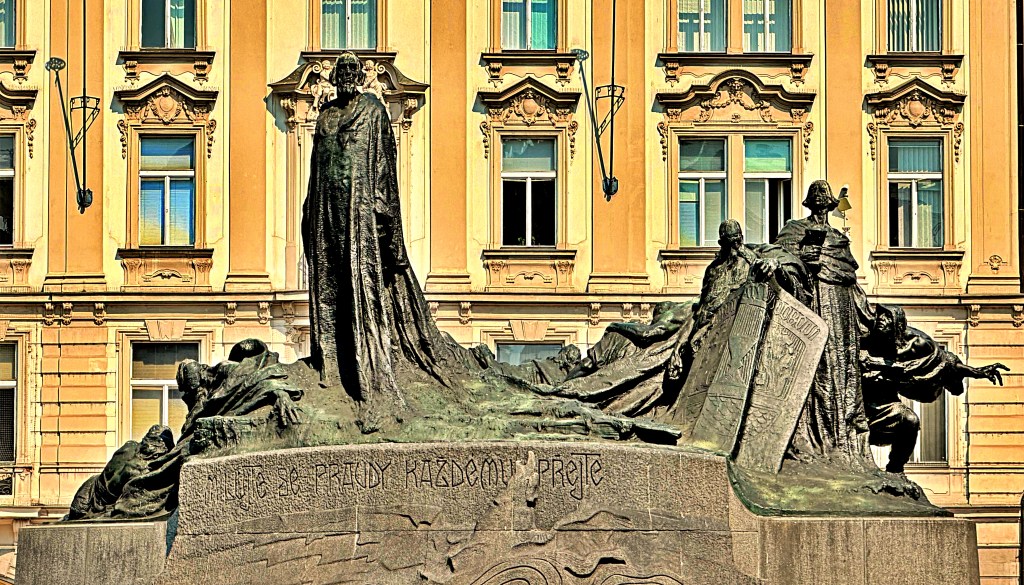
The word “defenestration” (Latin for “out the window”) actually comes from Prague, where locals developed the nasty habit of tossing their enemies out of high windows. This started in 1419 when a Protestant mob stormed the town hall and heaved out the Catholic judge, burgomaster and several town councillors while 13 others were beaten to death in the square below. The Catholics returned the favour in 1621 by publicly torturing and executing 27 prominent Protestant leaders in the square.
The Catholics eventually emerged as the winners of this struggle. But the Soviet Union, which took over Czechoslovakia in 1945, cracked down on all religions. The Czech Republic today is known as one of the most atheistic countries in Europe, with 70% of the population stating in a recent census that they they belonged to no established church.*
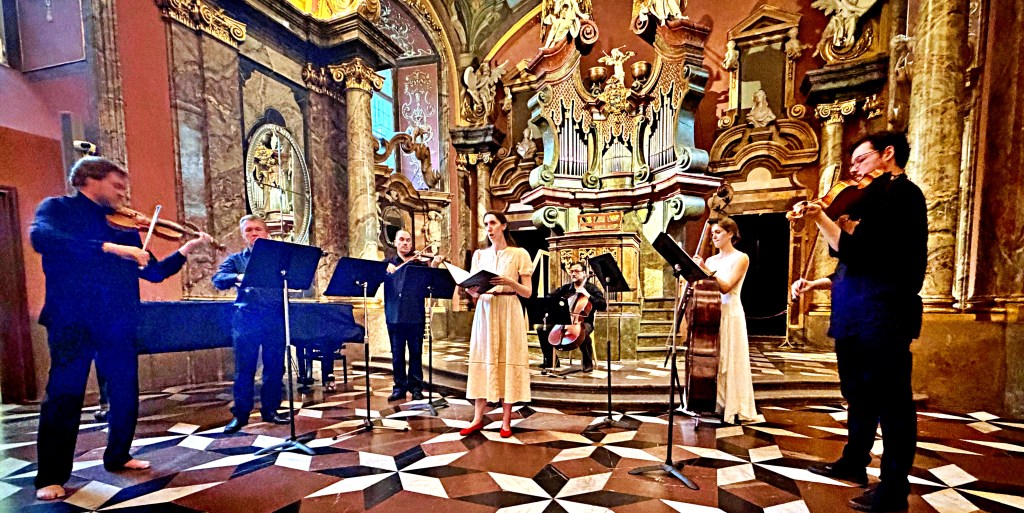
Parishioners may be scarce, but at least you can enjoy great music in Prague’s churches. Later that evening, Bina and I enjoyed a fine sampling of Verdi, Vivaldi and Smetna played by eight members of local orchestras in the 18th century Mirror Chapel of a former Jesuit college. That’s how classical music is meant to be enjoyed — in an intimate setting with excellent acoustics surrounded by Baroque Era art, and in this case, a mirrored ceiling.
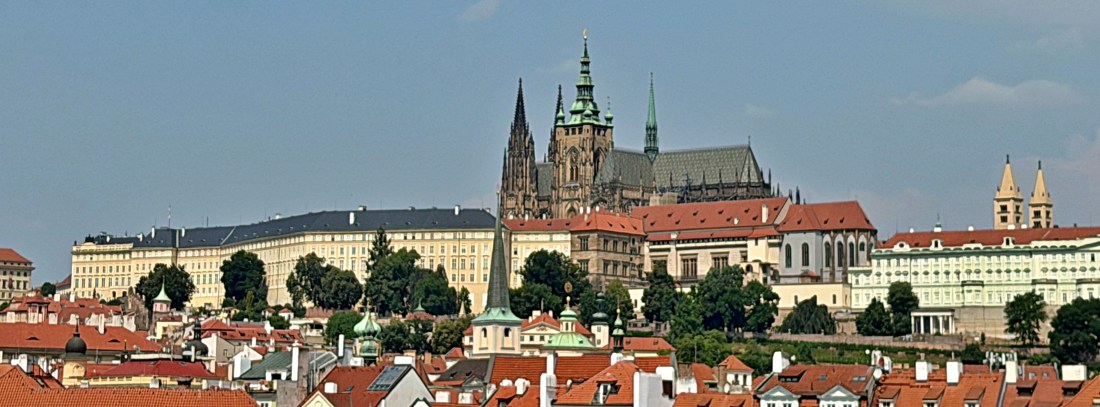
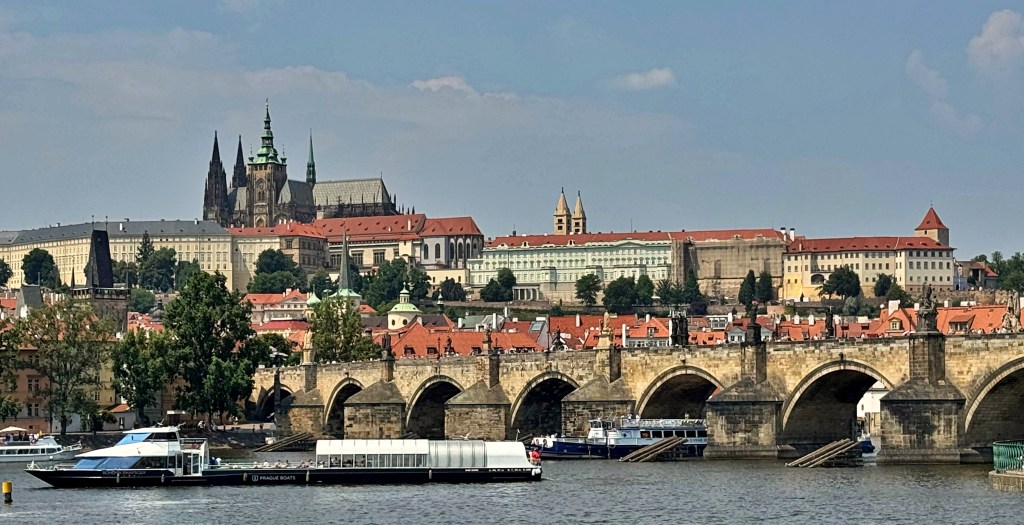
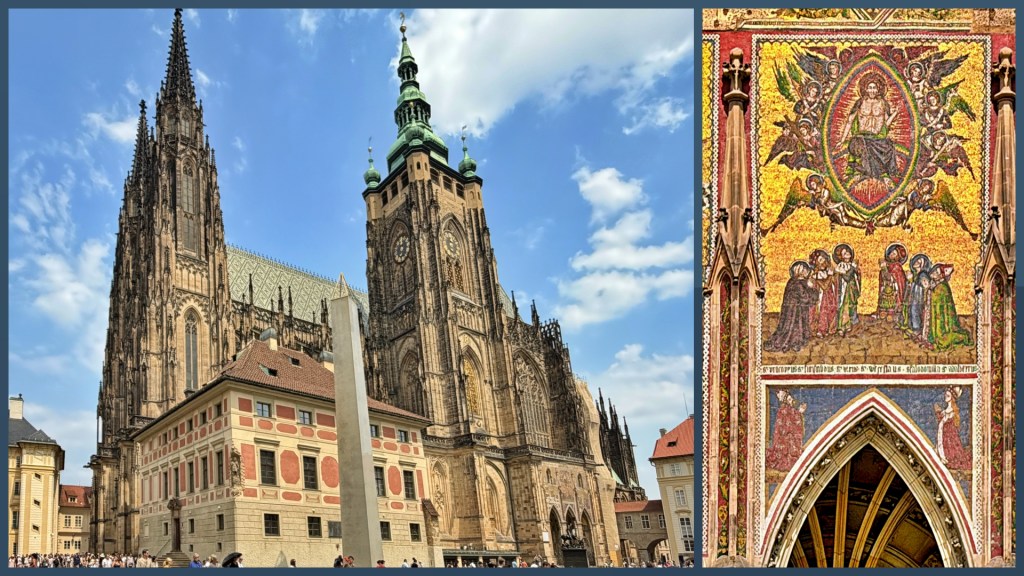
To finish up our walk, Steve took us across the iconic Charles Bridge to view Prague’s castle/St. Vitus cathedral complex. Like all the major historic buildings in the city, these landmarks are in excellent shape. Prague was occupied by the Germans during World War II, but they retreated without a major fight in 1945, leaving the city intact for the advancing Russians.
Steve joked that his children “never have to attend school” because of all the “liberation days,” which commemorate: the end of World War II in Europe; the founding of independent Czechoslovakia in 1918; St. Wenceslas Day, which also celebrates Czech statehood and identity; and the “Velvet Revolution,” which ended Communist Rule in 1989.
- The atheism in the Czech Republic stands in strong contrast to Slovakia, where 60% of people identify themselves as Catholic. There are complex historical reasons for this, but one key point is that the Czech lands became more urban and industrial over the centuries while Slovakia remained centred on traditional rural village life. This cultural, religious and economic division, along with language differences, contributed to the decision to split into two countries in 1993. The countries remain friendly, however, and people routinely travel back and forth.

