Taormina enjoys a well-deserved reputation as one of the most scenic towns in all of Sicily, attracting 1.3 million overnight visitors a year, along with several multiples of that in day-trippers, many from cruise ships. It’s estimated that tourists exceed the local population (15,000) by 17 to one in the peak summer months.
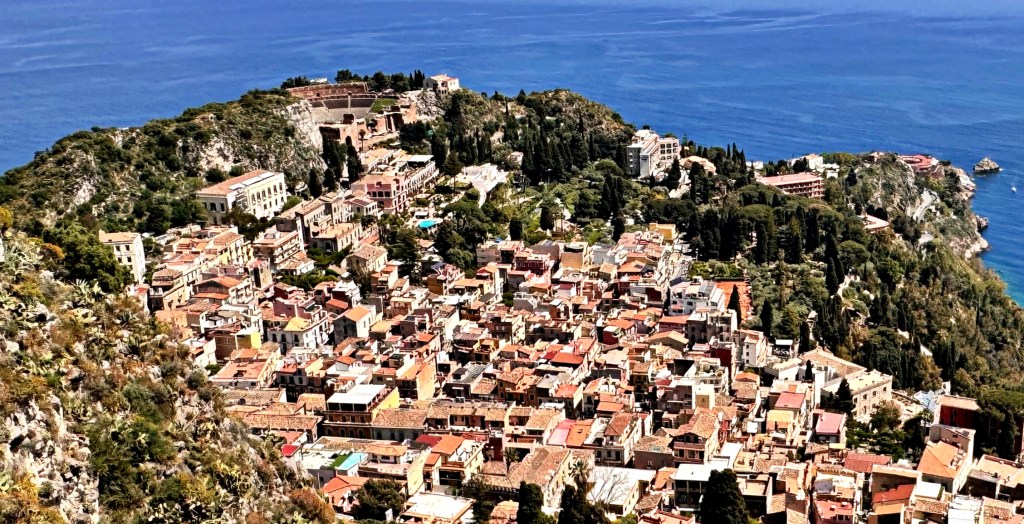
And what’s the reason? Location, location. Taormina perches on a hillside with sweeping views of the Ionian Sea and the snow-capped crest of Mt. Etna looming to the southwest. Those views, along with some of the best beaches in Sicily and a history that goes back to ancient Greek times, have lured travelers for hundreds of years.
In the 19th century, for example, French writer Guy du Maupassant described Taormina as “a landscape where you can find everything on earth that seems made to seduce the eyes, the mind and the imagination.” He never saw all the cruise ships in the harbor, of course, but we think du Maupassant had the right idea. Bina and I counted ourselves as fortunate to be able to visit Taormina at the end of April, when the crowds were still manageable; July and August are supposed to be a different story entirely.
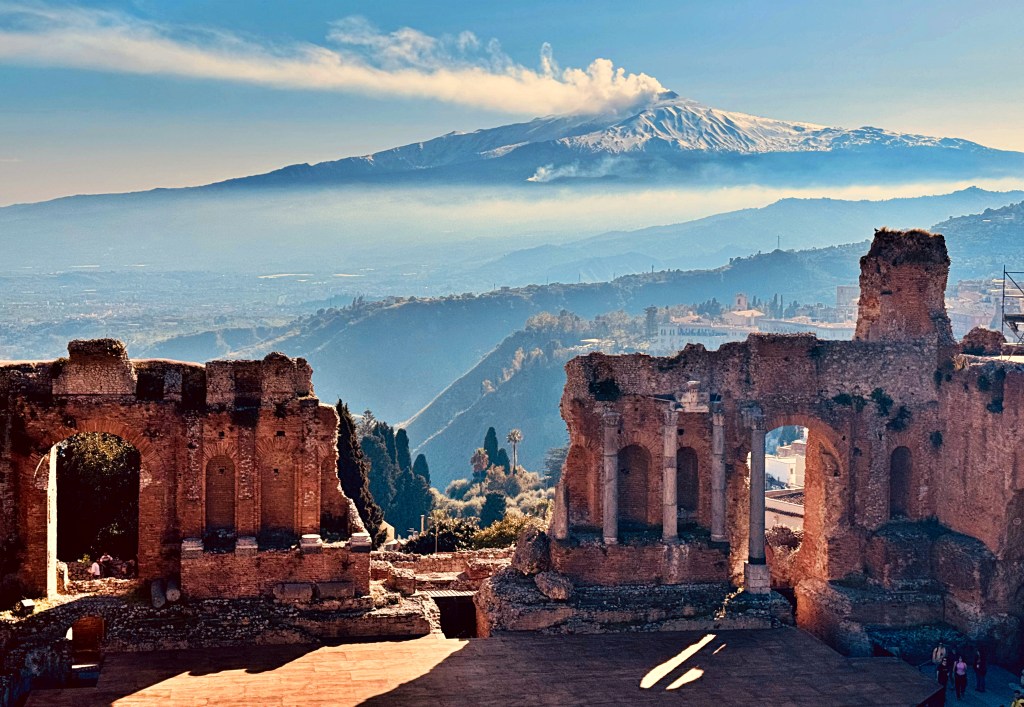
Taormina’s star attraction is the Greek theatre, which is the second largest in Sicily, after the one in Siracusa. The original structure dates from the third century B.C., Hellenistic times. Most of what you see today, however, consists of brickwork laid down by the Romans in the second century A.D.
Climbing to the upper tiers of the orchestra seats enables you to view the ultramarine blue of the sea over the edge of the ancient stage. And yes, you can get a good view of Mount Etna as well. Like the theatre in Siracusa, this one has been retrofitted for modern operatic and theatrical performances.
Another dramatic viewpoint can be found at Castelmola, a village on a hill just to the west of Taormina. It’s possible to get there in a long hike from Taormina, but we preferred to take a 15-minute Uber ride to the town, where we relaxed for lunch and enjoyed views of both Taormina and Mt. Etna.
Etna, by the way, is the tallest active volcano in Europe. Its history of recorded eruptions, both ash emissions and lava flows, goes back 2,700 years. And it’s still active, erupting most recently in July of this year.
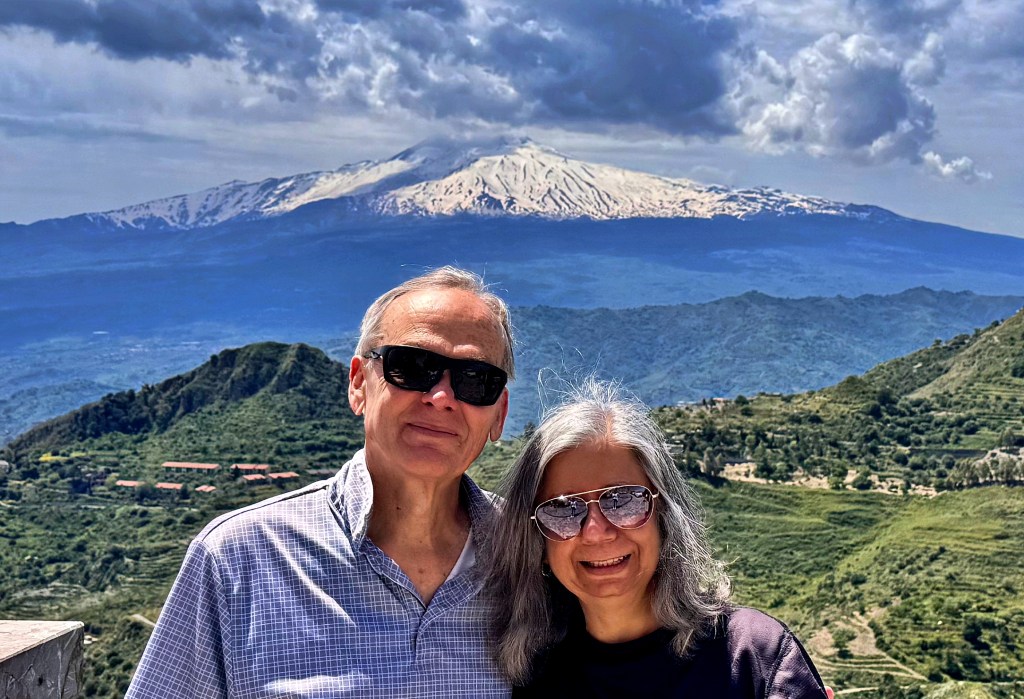
Ken and Bina in Castelmola with Mt. Etna at a safe distance behind us.
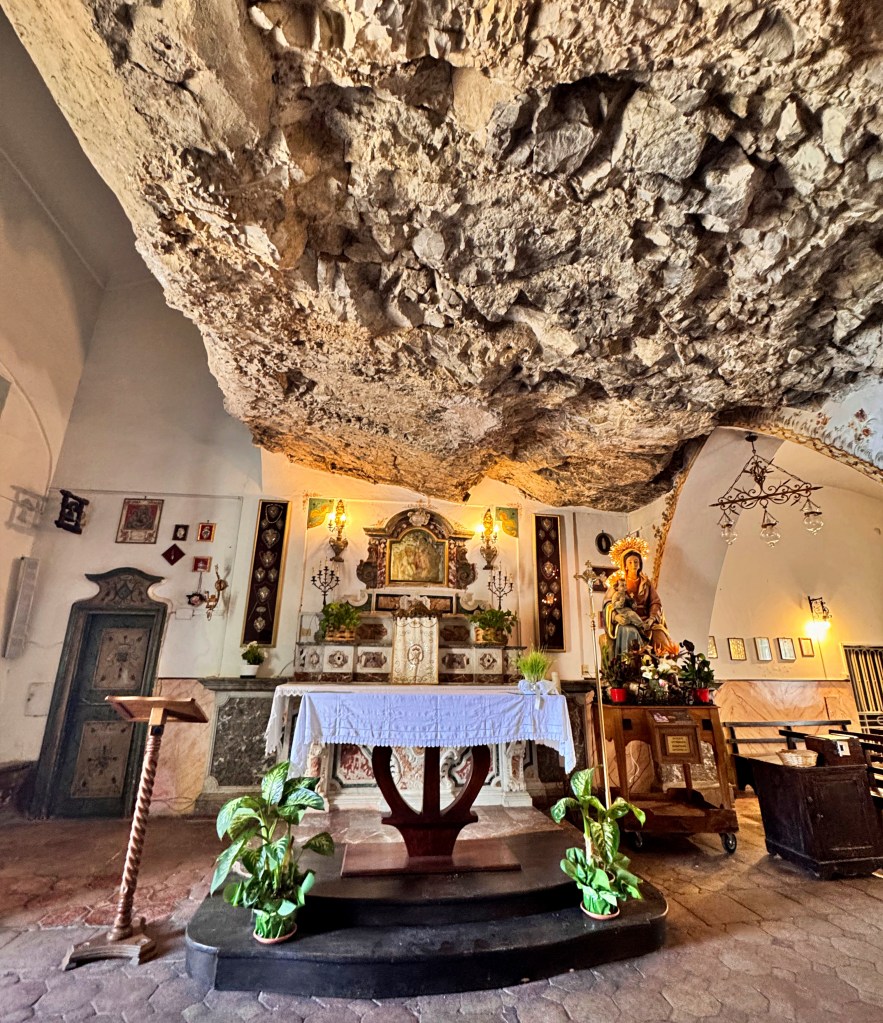
On the way down from Castelmola, we got our Uber driver to stop at the 17th century church of the Madonna della Rocca (Lady of the Rock), which is carved into the solid rock of a hillside.
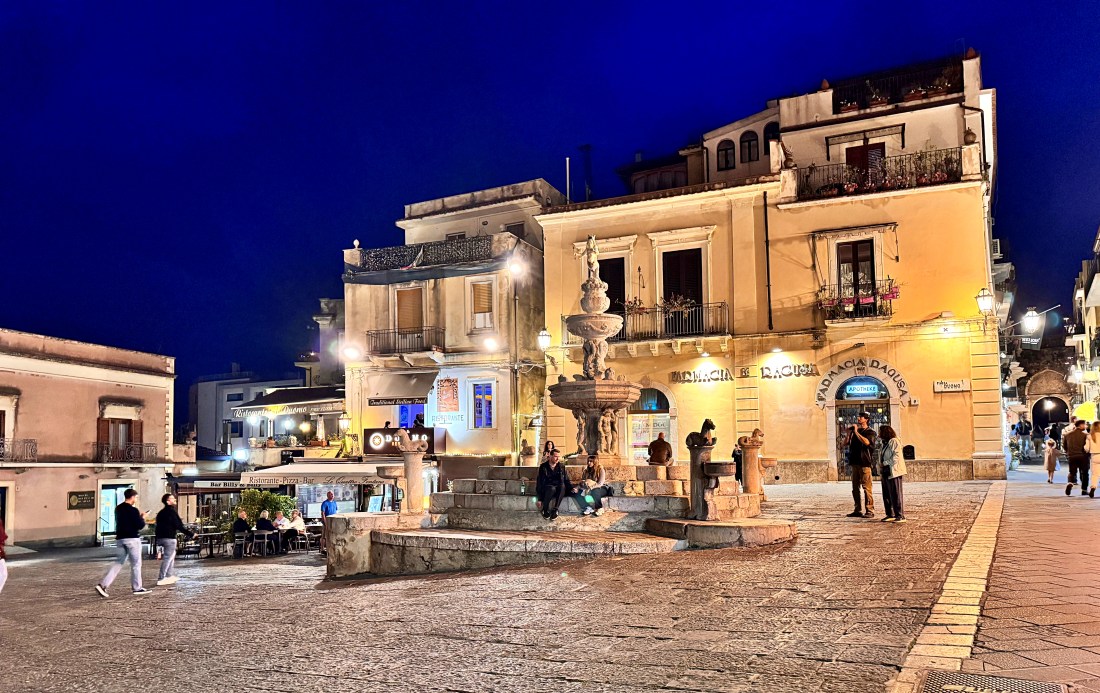
Aside from the views, a major pleasure of Taormina is just strolling down the Corso Umberto, the old town’s main street, which is now pedestrian-only and chock full of shops, bars and restaurants. We liked the shop that gave out free samples of the locally-made chocolate and tapenade, a Sicilian Costco you might say.

We also enjoyed some good meals in Taormina. At the Terrazzo Moro restaurant, for example, we snagged an outdoor table with a view of the bay and began our dinner with two starters: crispy eggplant connoli and Terrine di Spalla di Maialino, a type of pork paté. We accompanied that with a lamb dish in which the meat was prepared three different ways and washed all that down with a bottle of red wine featuring a blend of two local grapes: Nero d’avola and Frappoto.
Delizioso!
Travel Tips: Sicily has a well-developed tourist infrastructure, making it easy to get around by train and bus, at least along the coast. Be aware, however, that the entire world flocks to Italy when the weather is good; you’ll always be sharing the space with other people. We heard a lot of advice to avoid the peak summer months of July and August in particular. Late April, when we visited, was a bit too early to swim at the beaches (that would be late May into October) but we found it a good time to enjoy everything else.

