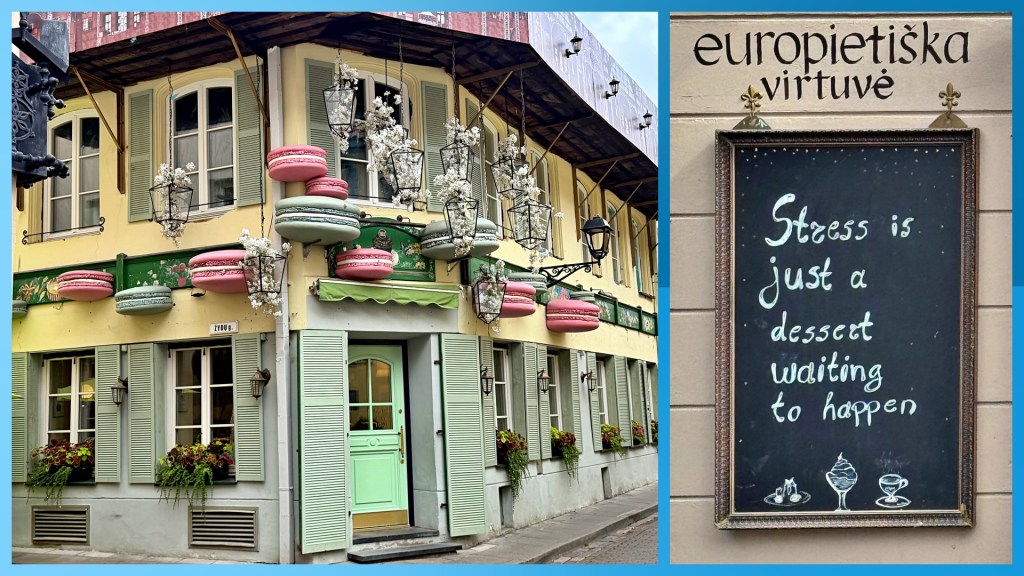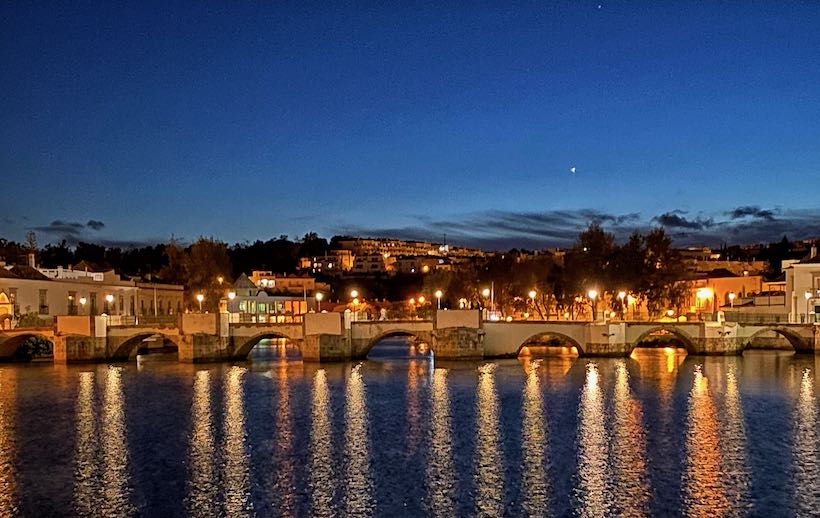
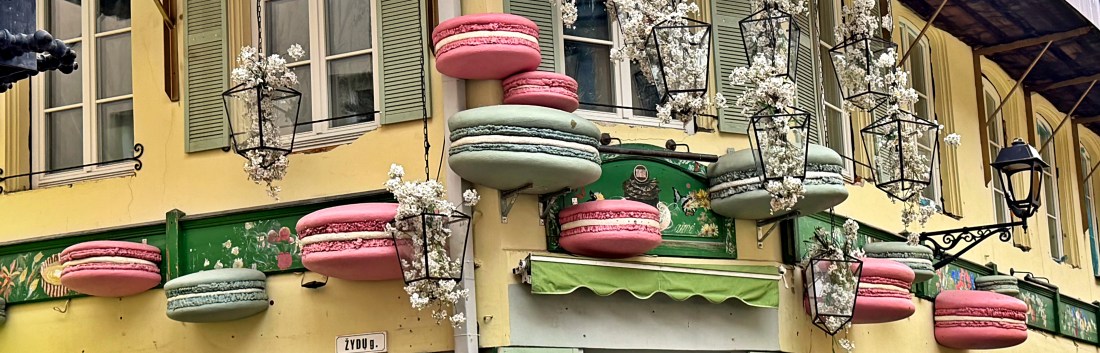
Vilnius, the capital of Lithuania, features an old town to attract tourists, like Tallinn, but the vibe here is different. Whereas Tallinn’s historic center is very compact, covering 113 hectares, the one in Vilnius sprawls across 352 hectares, three times larger.
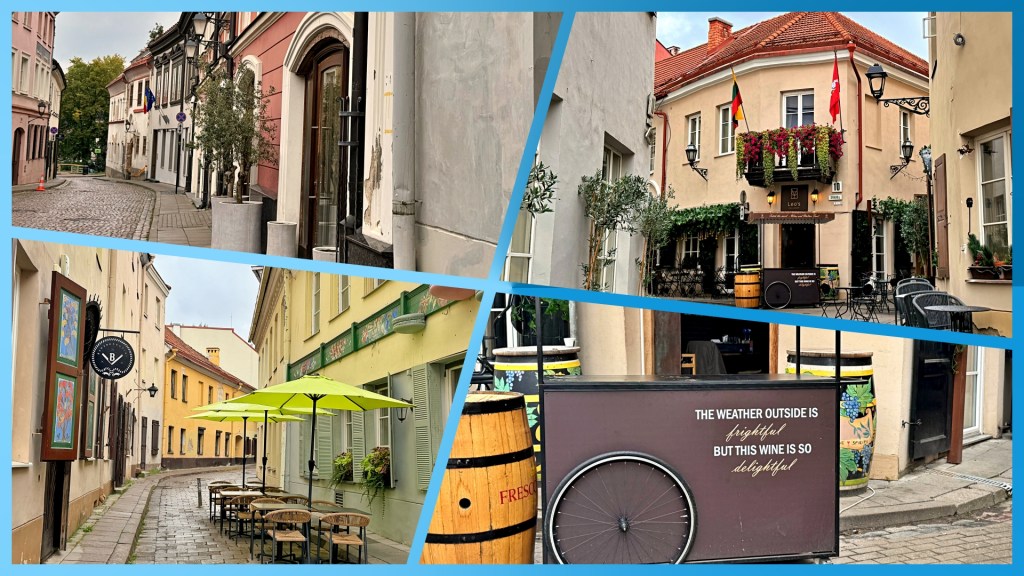
For that reason, our walking tour of Vilnius covered more ground than in Tallinn, and also had to be more brisk and superficial. It didn’t help that our group was larger, about 20 people compared to eight in Tallinn and that our guide, Violeta, had to use a microphone to amplify her voice. At one point, Bina and I glanced at each other to grouse, “There’s too much walking here and not enough talking.”
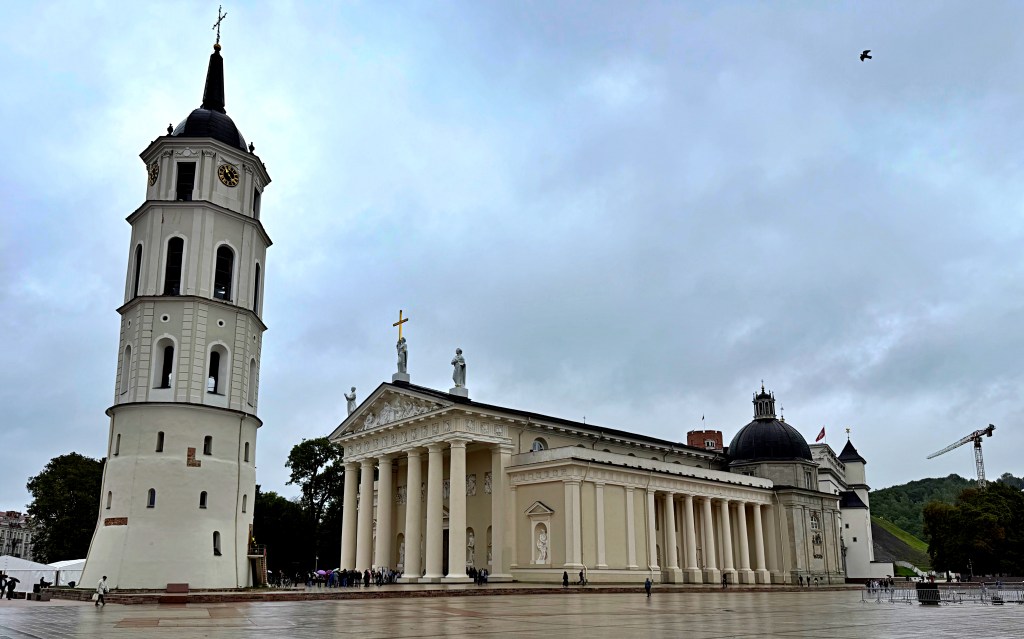
Even so, we discovered there’s more to Lithuania than one might expect. During the 14th and 15th centuries, this country (then styled the Grand Duchy of Lithuania) actually became the largest in Europe, incorporating parts of Belarus, Ukraine, Russia and Poland, with borders that literally stretched from sea (Baltic) to shining sea (Black).
It didn’t last. Threats from both east (Russia) and west (Germany, under the Teutonic Knights) forced a gradual union with Poland, which had a profound impact on Lithuanian society. As conditions of that merger, Lithuania adopted Catholicism, making it the last European country to give up paganism.
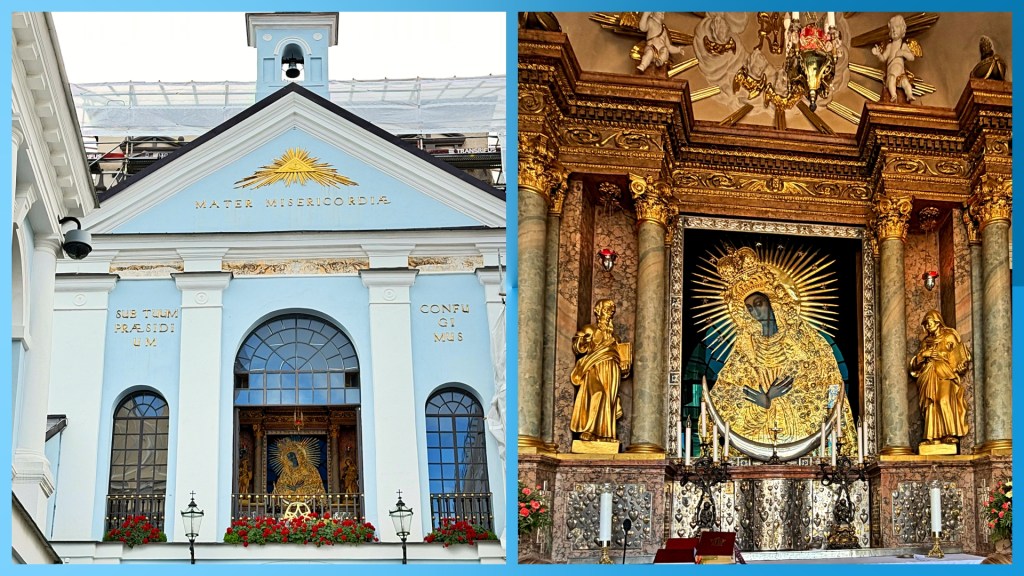
Today, Lithuania is the only majority Catholic country in the Baltic States, up to 80% of the population. Latvia and Estonia, by contrast, feature a more equal Catholic/Protestant mix and also higher levels of atheism. You can see the Catholic influence in Vilnius’ architecture, which is so heavily Baroque that the city has been called “The Rome of the North.”
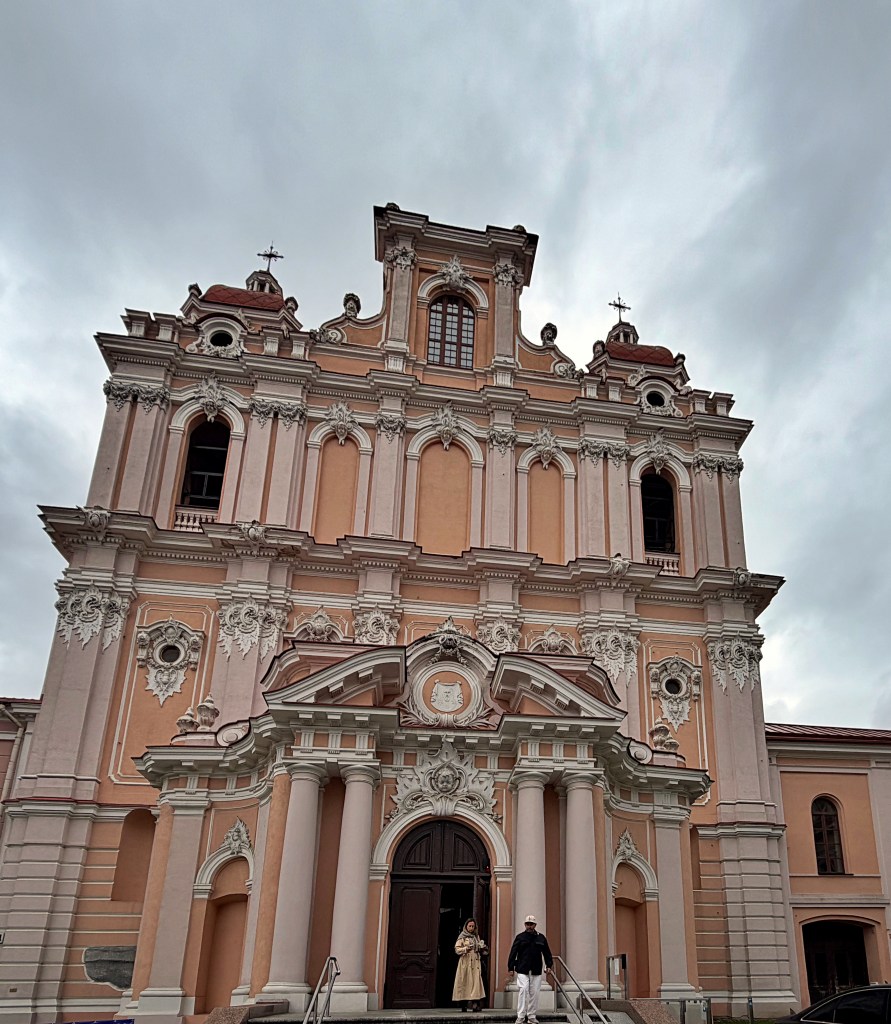
Lithuania suffered the fate of its Baltic neighbours in being constantly invaded over the centuries so that religious affiliation often depended on who was ruling the country at a particular time. The 17th century St. Casimir church, for example, made the journey from Catholic to Russian Orthodox, to Lutheran, back to Catholic, to atheism (styled the “Museum of Atheism” during Soviet times) and now Catholic again.
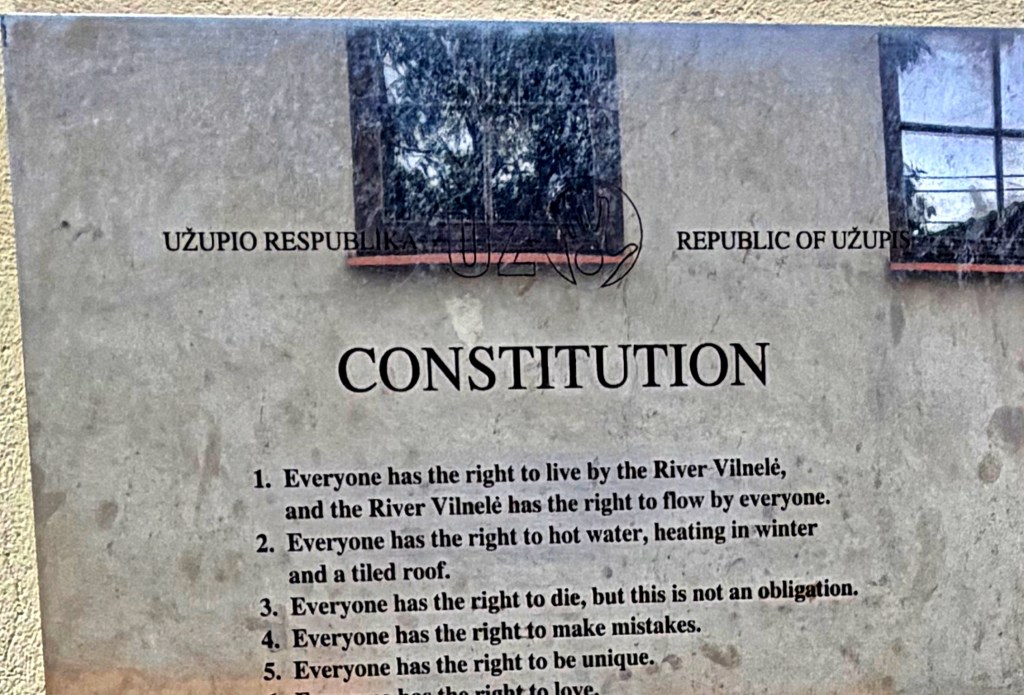
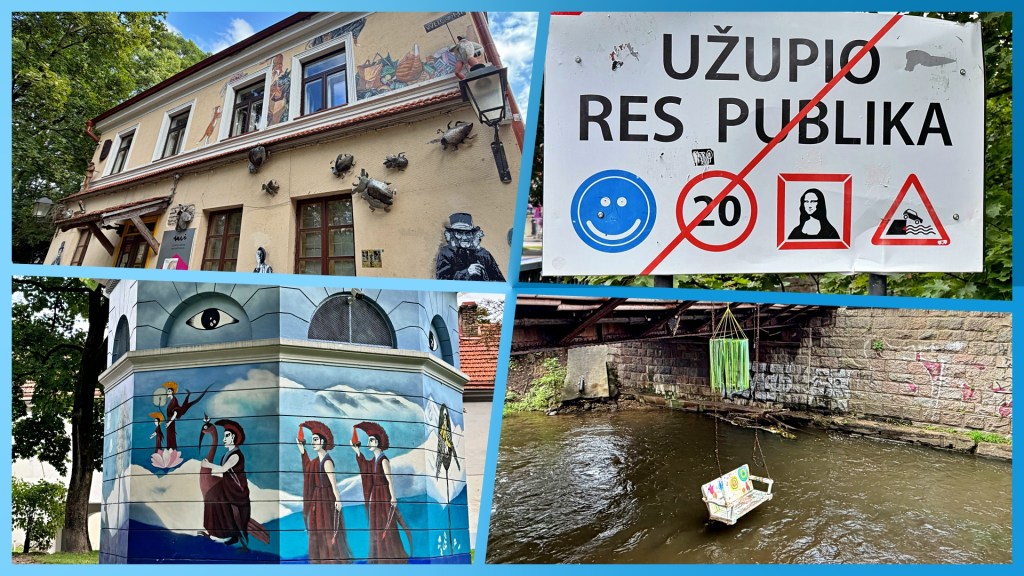
And then there’s the “independent republic” of Užupis. This once-derelict neighbourhood, only 148 acres (0.6 sq. km) in size, declared its independence in 1997 and is known for its cheap housing and high concentration of artists. The 7,000 or so residents claim constitutional rights to “make mistakes,” “to idle” and “to love and take care of the cat.” A cat, however, “has no obligation to love its owner, but must help in times of need.” As for canines: “A dog has a right to be a dog.”
Citizens of Lithuania overall enjoy benefits of their own, including the highest GDP growth rate among the Baltic States (3% compared to 2% for Estonia and Latvia) and one of the best educational systems in Europe. Sixty-one percent of young adults in Lithuania hold university degrees, the third highest in the EU.